

CBSE Students who are preparing for upcoming 12th chemistry exam must practice this class 12 chemistry solved PYQ 2019. This will be very helpful for students in their exam preparation. Students can understand the exam pattern, question difficulty and also can do self analysis with the help of this PYQ.
We have also given solutions of each question so that student can cross check their answer. Practising Class 12 chemistry Previous Year Question papers 2019 before exam can boost confidence in students and students can score better marks in exam. Different set of PYQ has given in this post and CBSE experts have prepared solutions of this PYQ.
Class 12 chemistry PYQ 2019 SET 1 Question
Class 12 chemistry PYQ 2019 SET 2 Solution
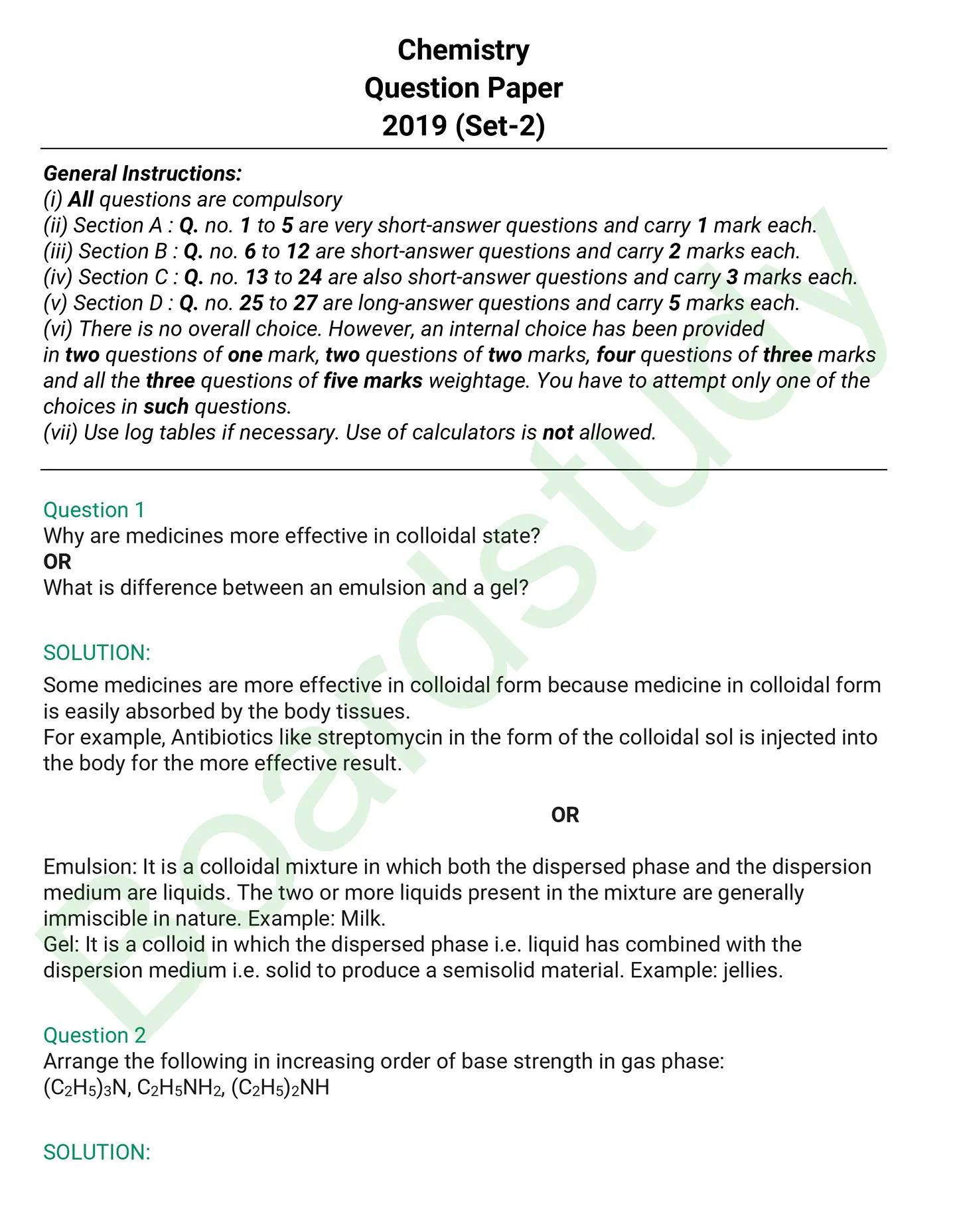
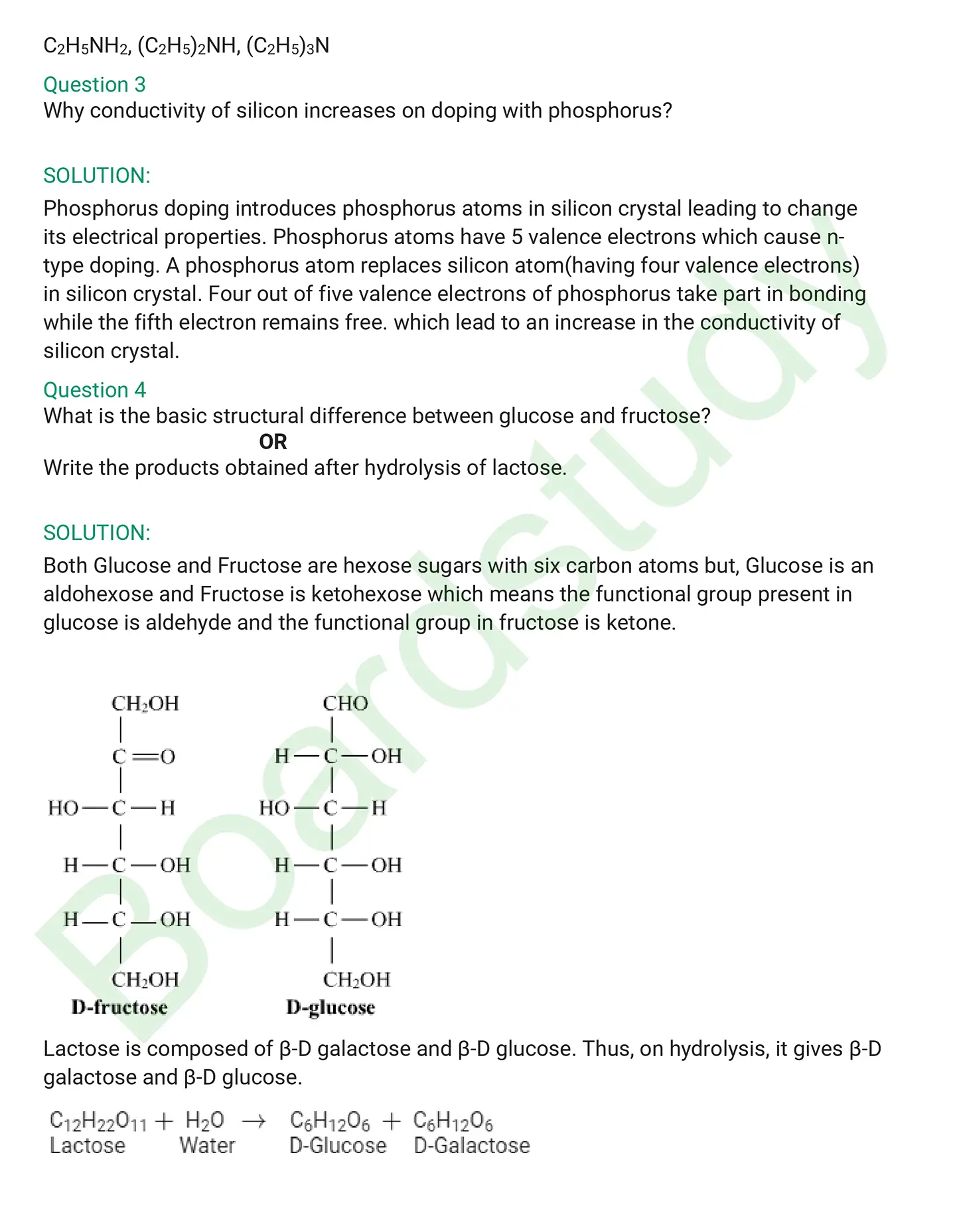
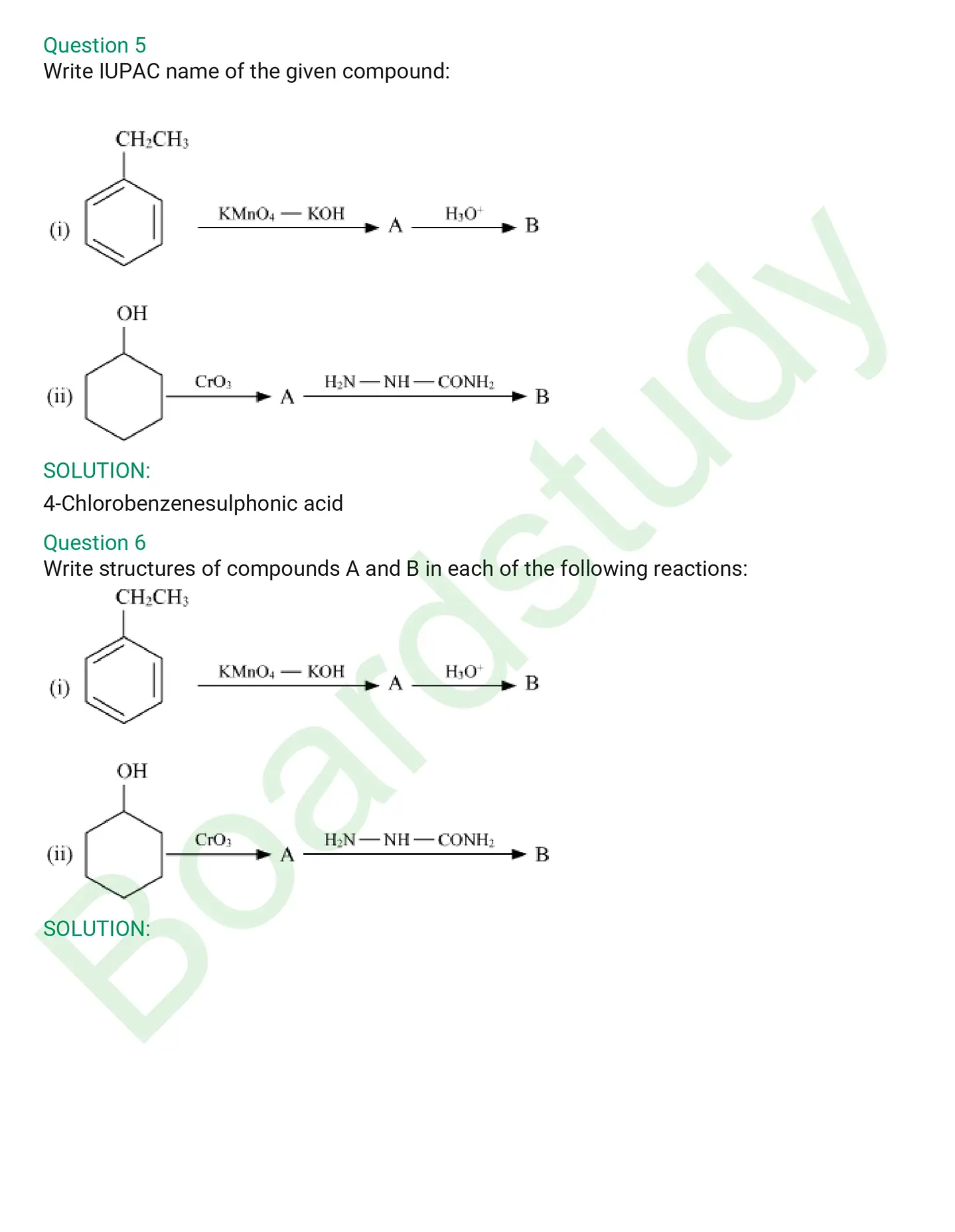
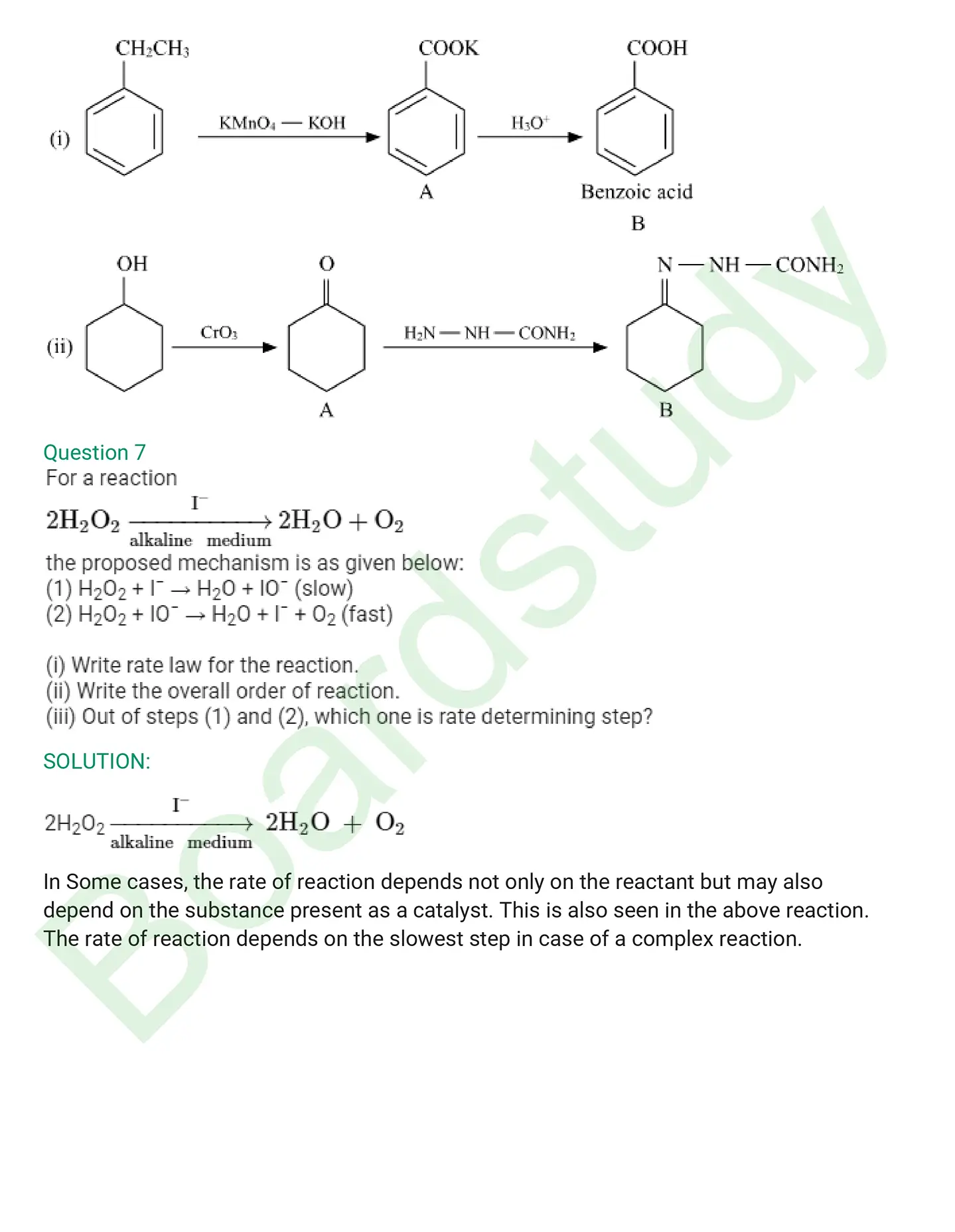
Class 12 chemistry PYQ 2019 SET 2 with Solution
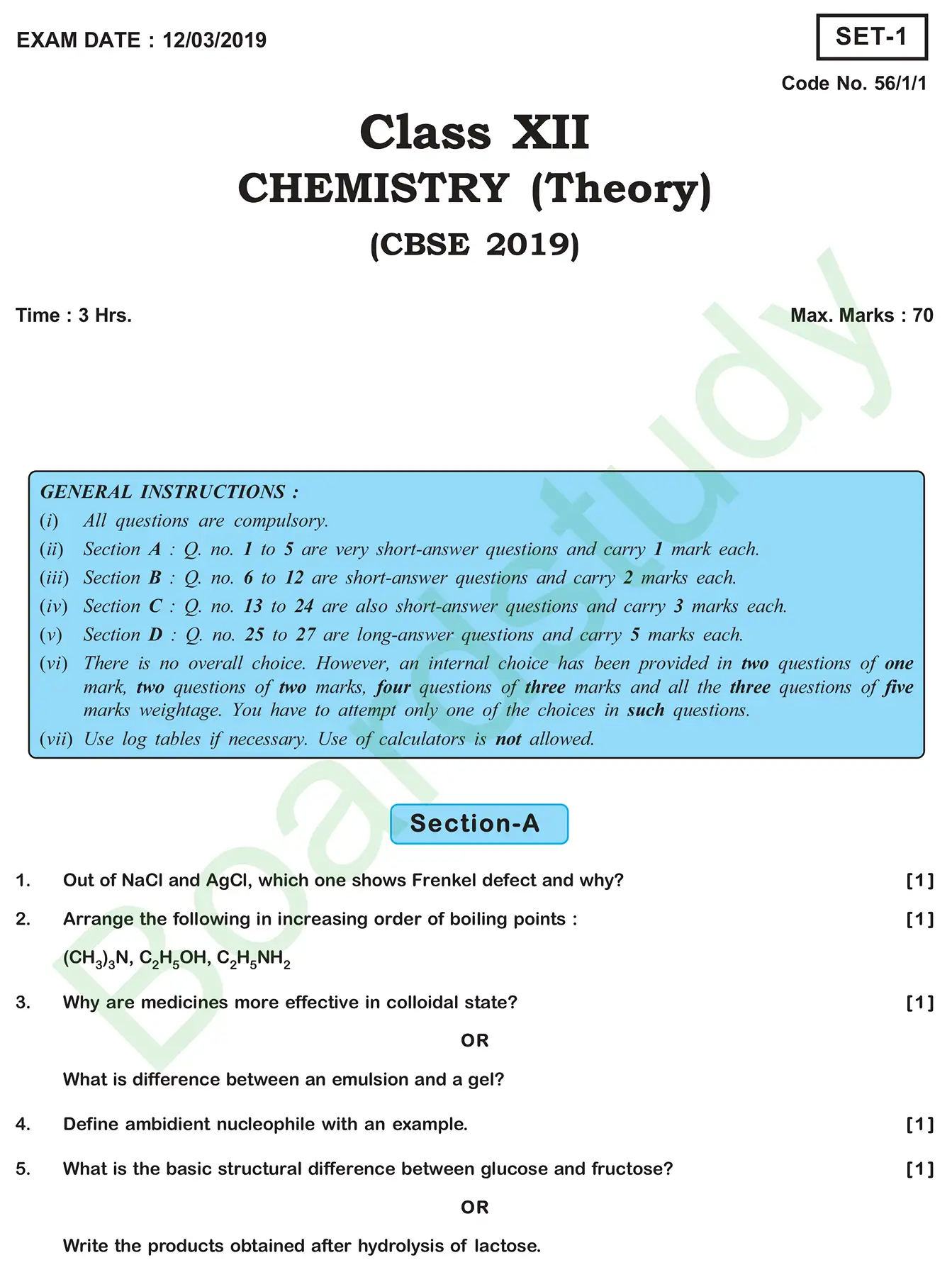
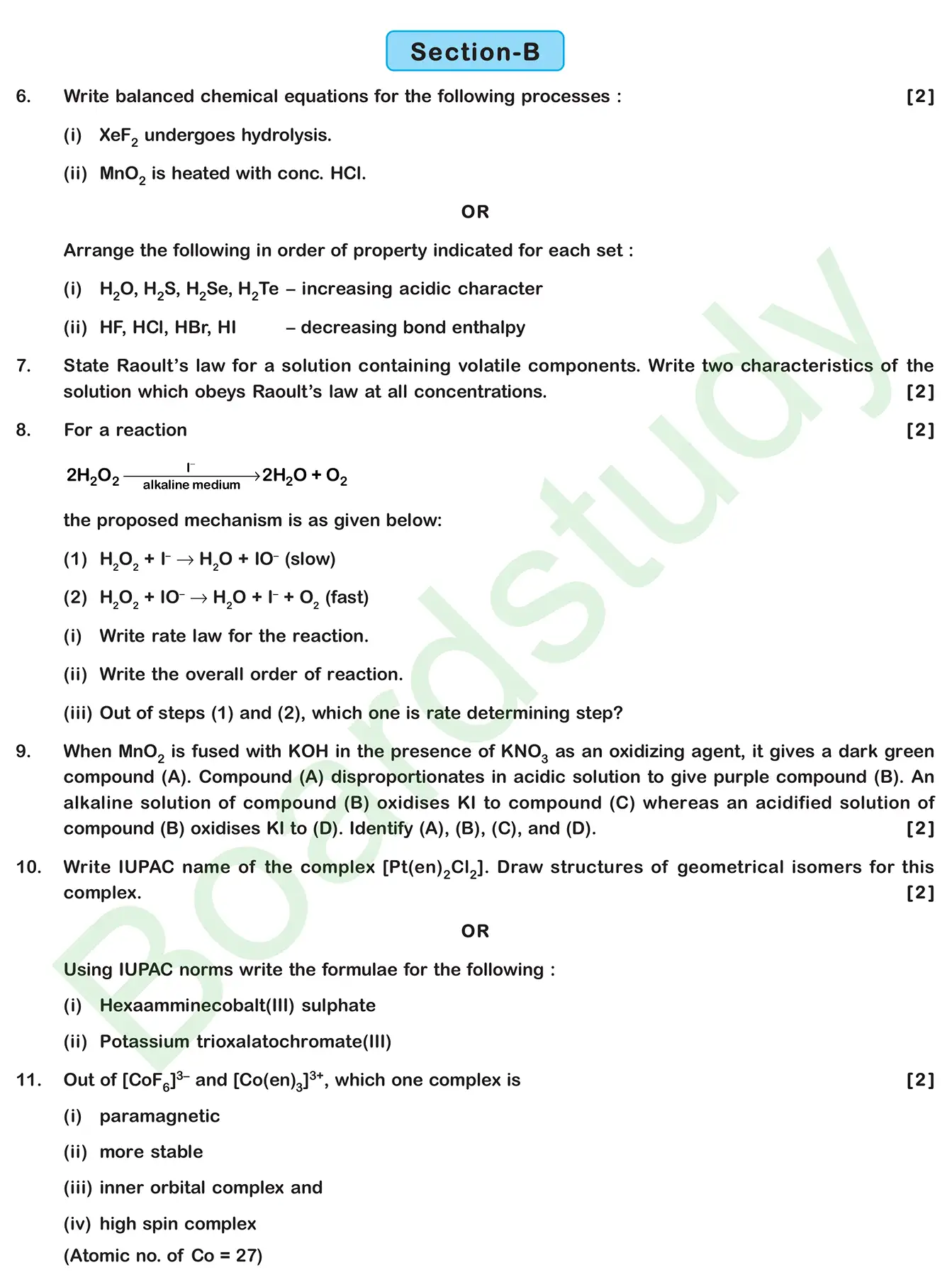
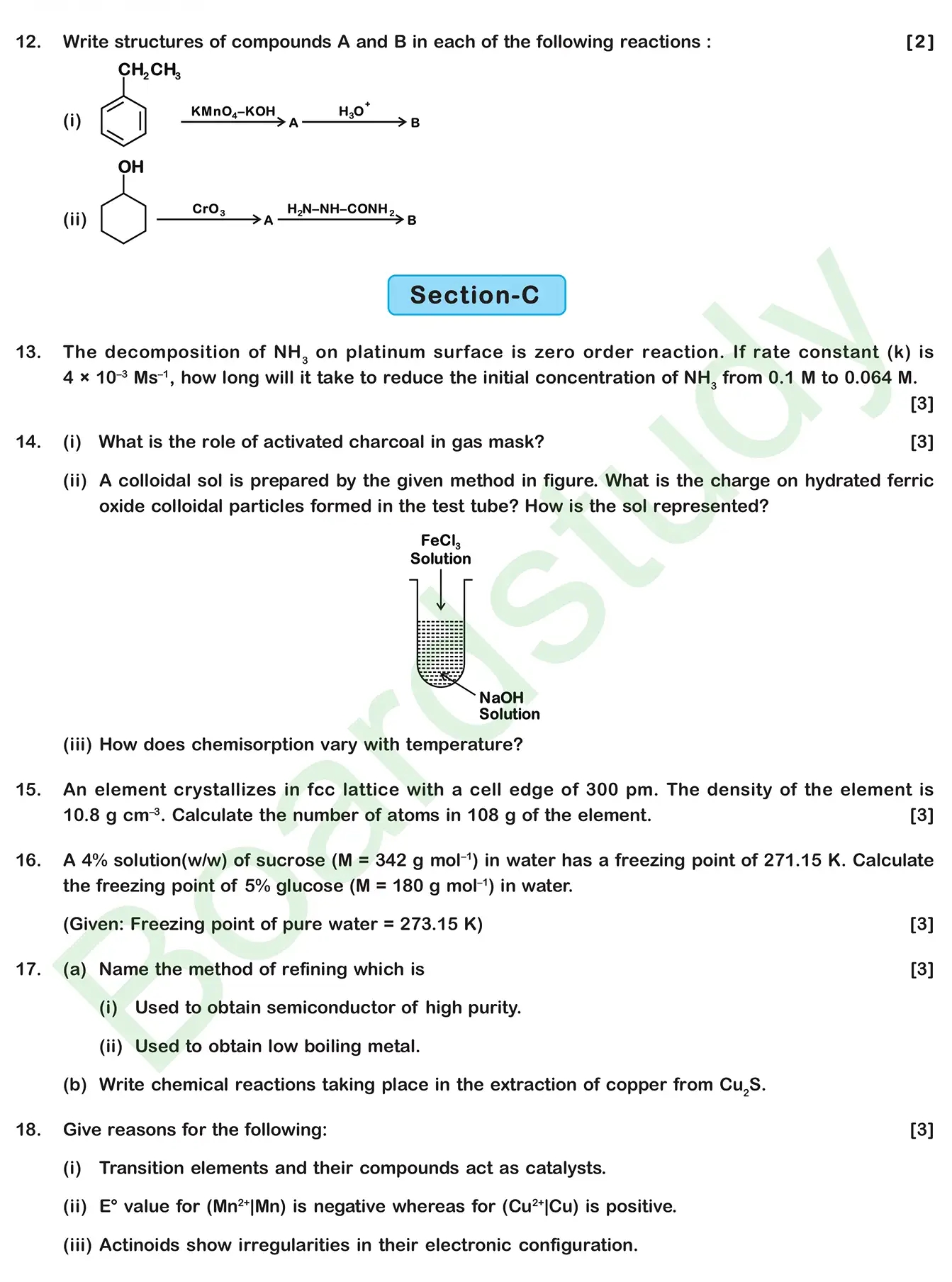
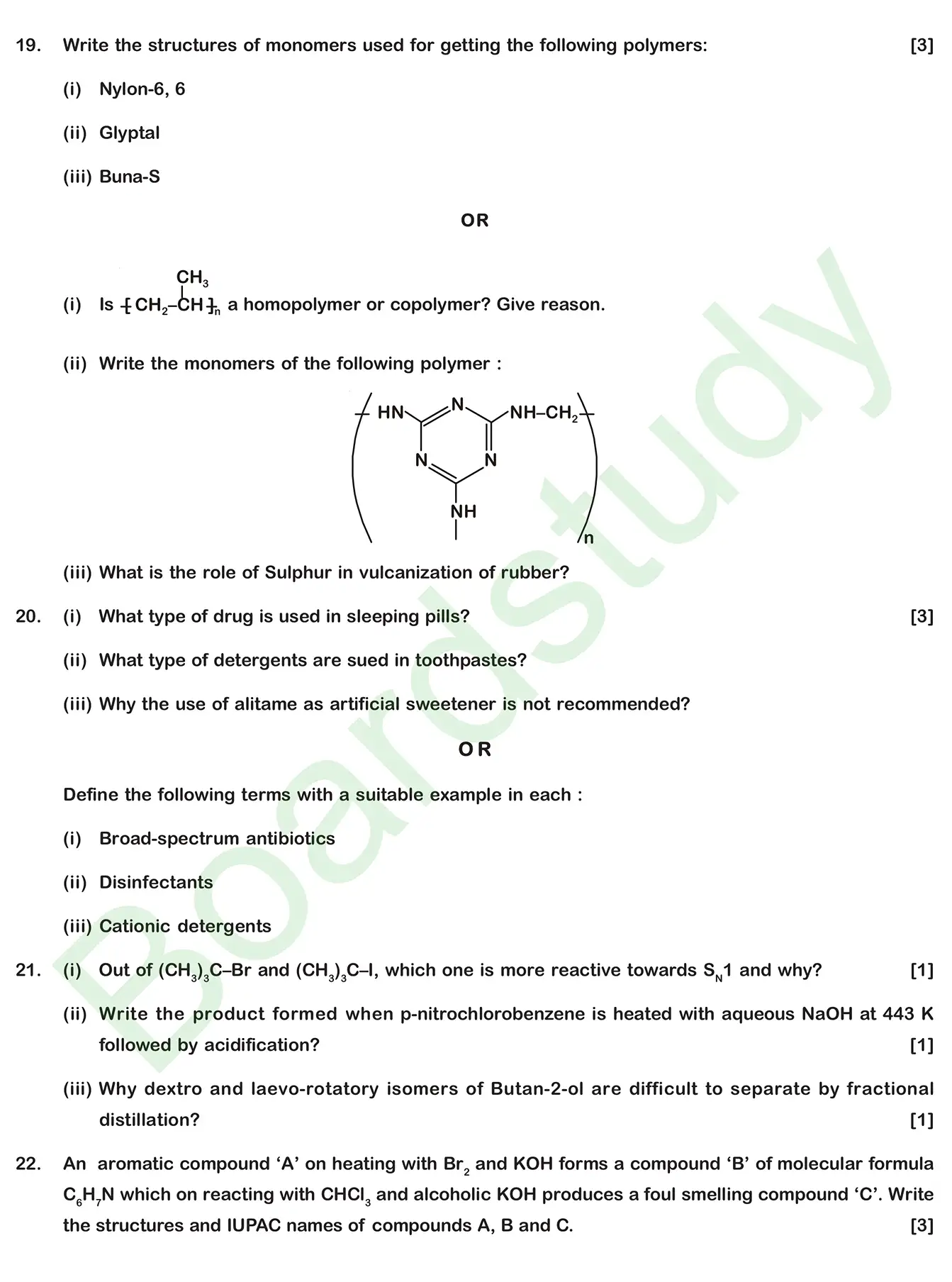
CBSE Class 12 chemistry PYQ 2019 SET 1 Question
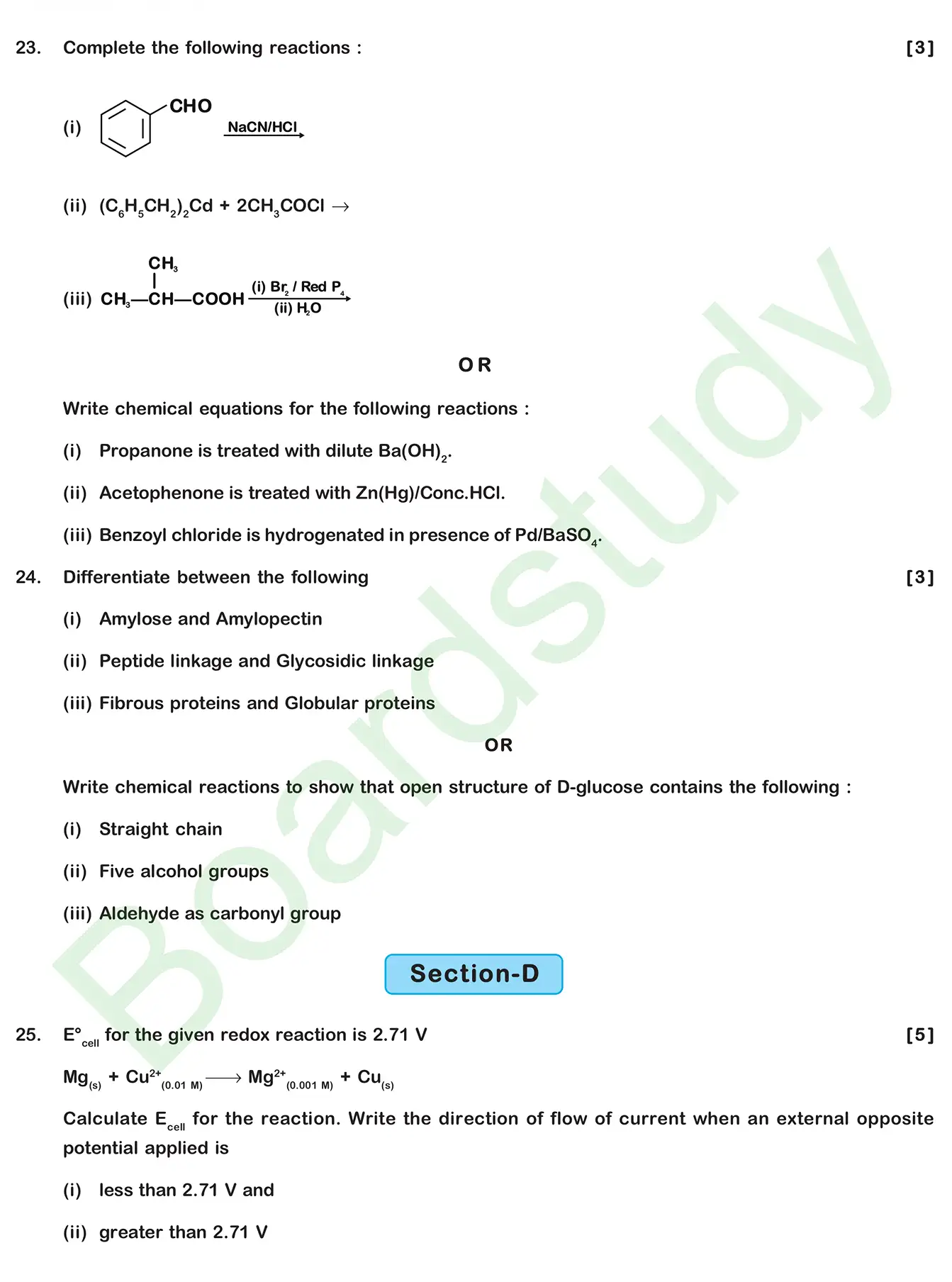
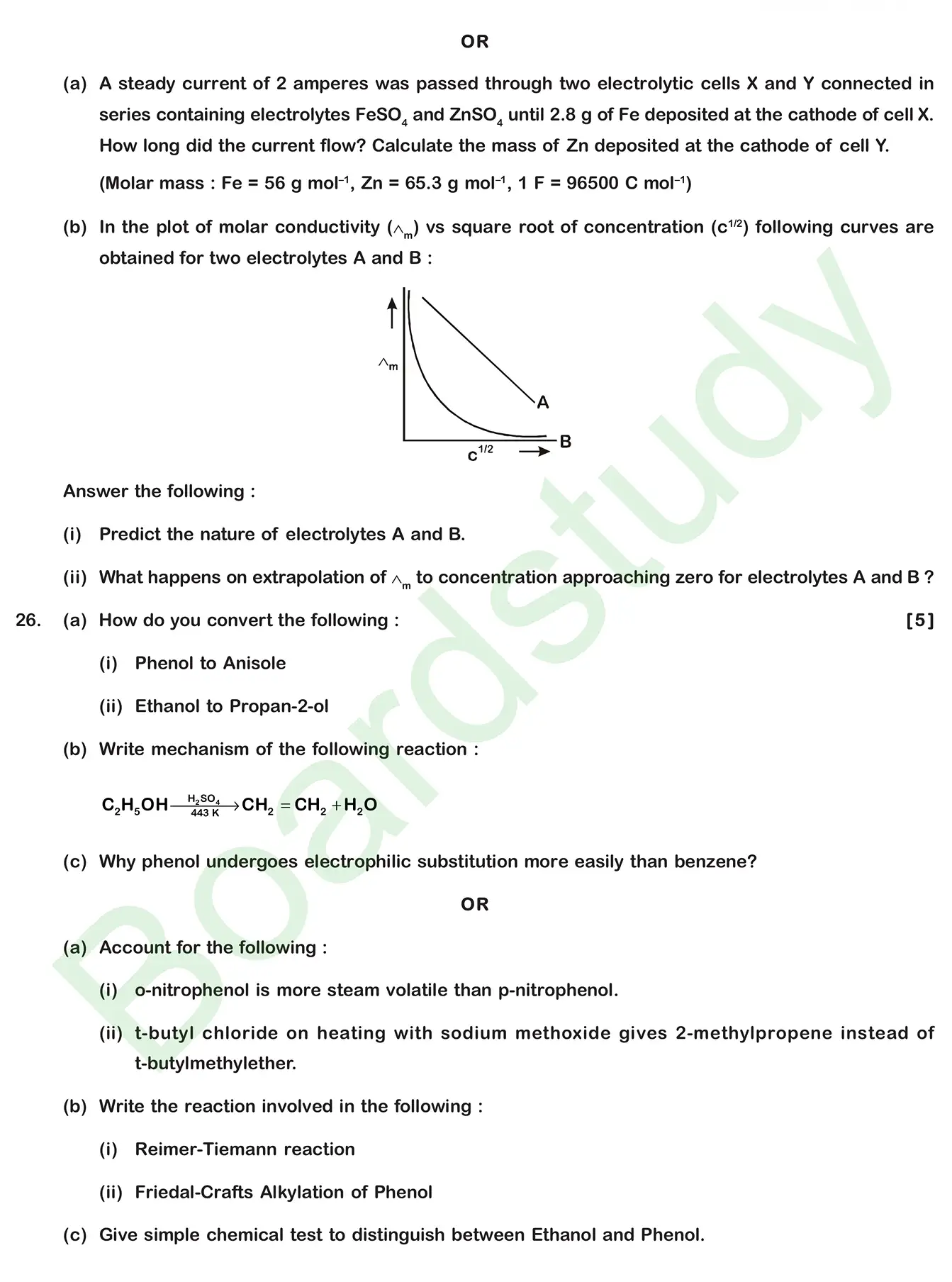
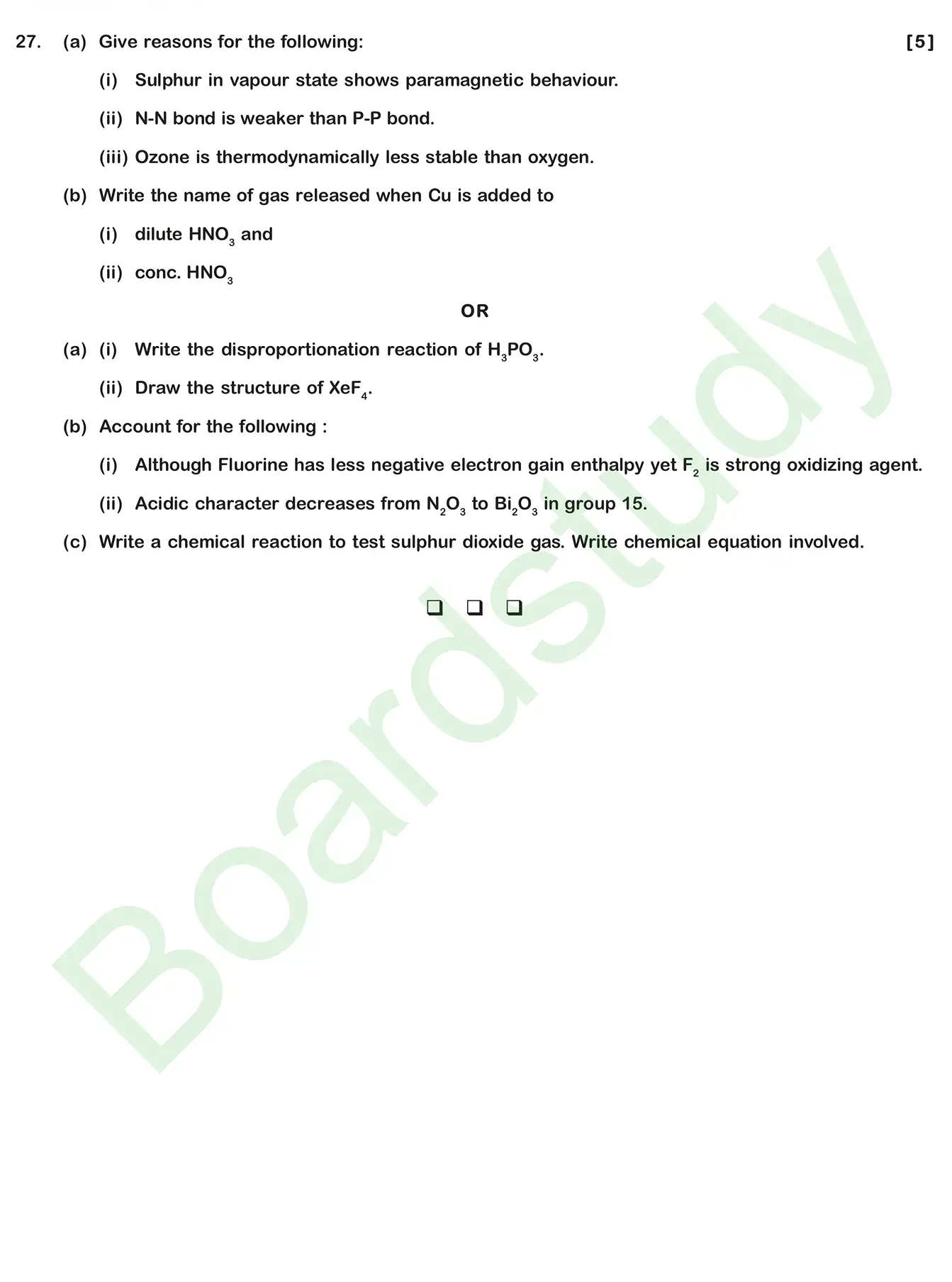
CBSE Class 12 Chemistry PYQ 2019 SET 1 Solution
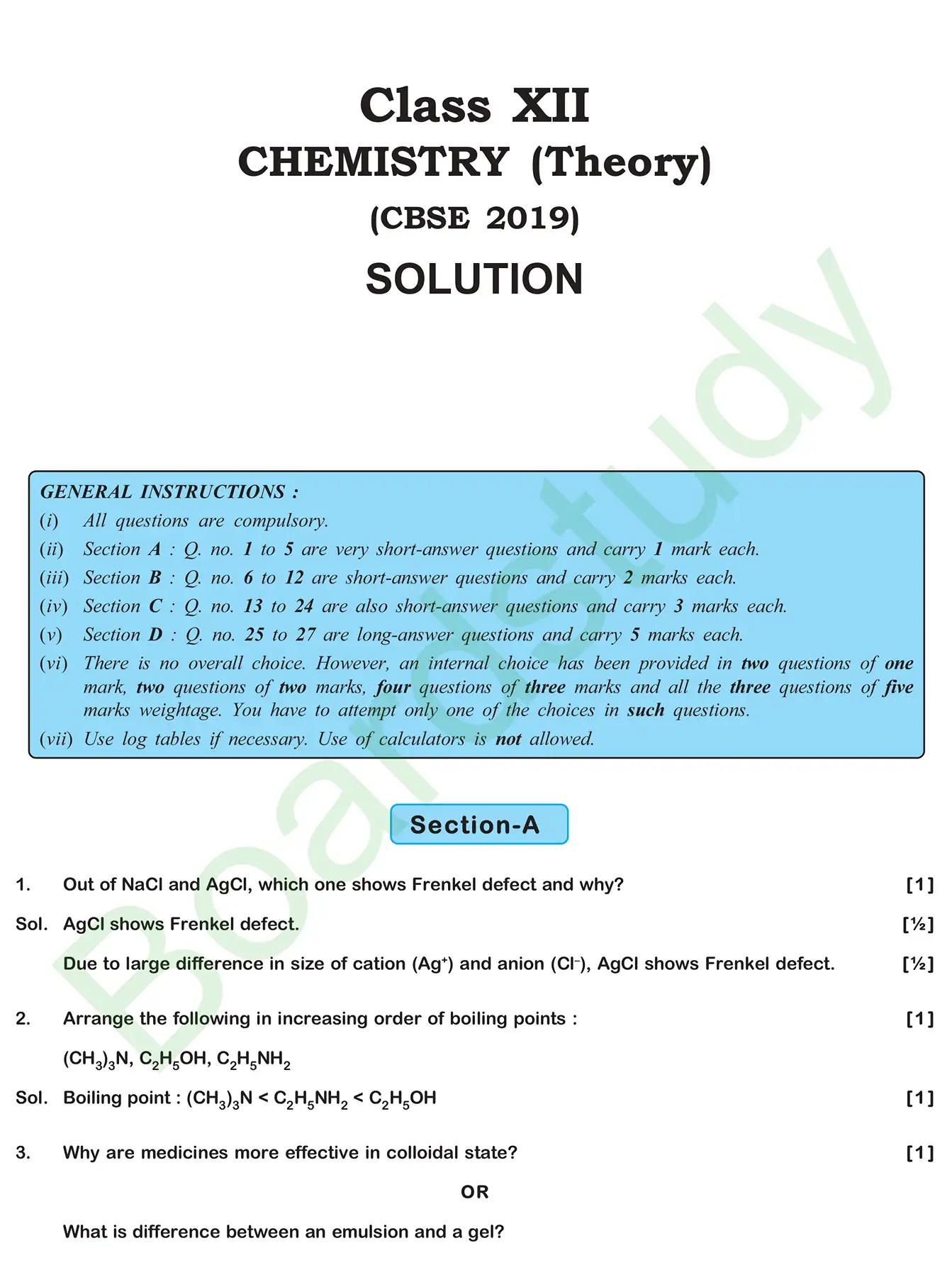
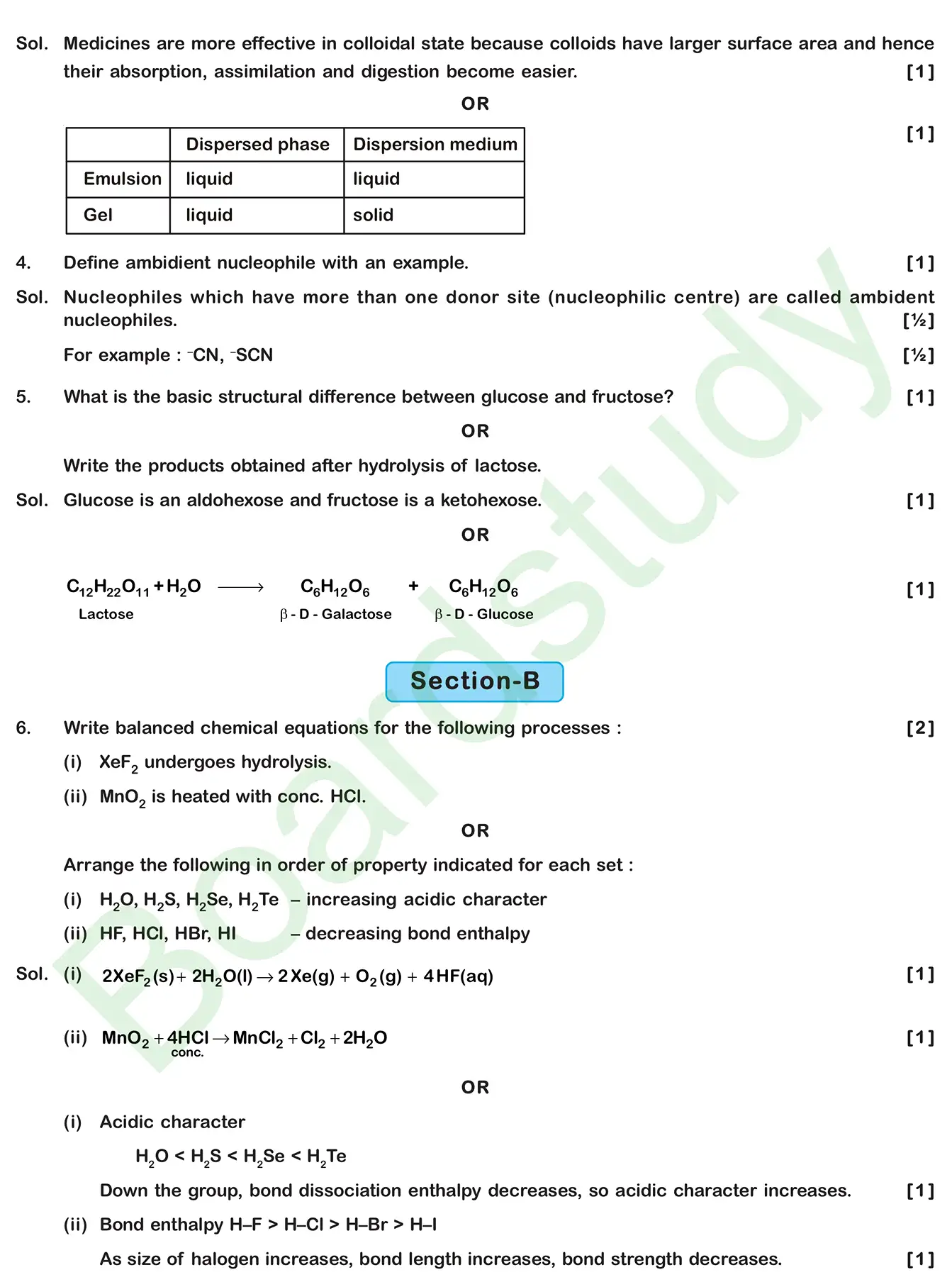
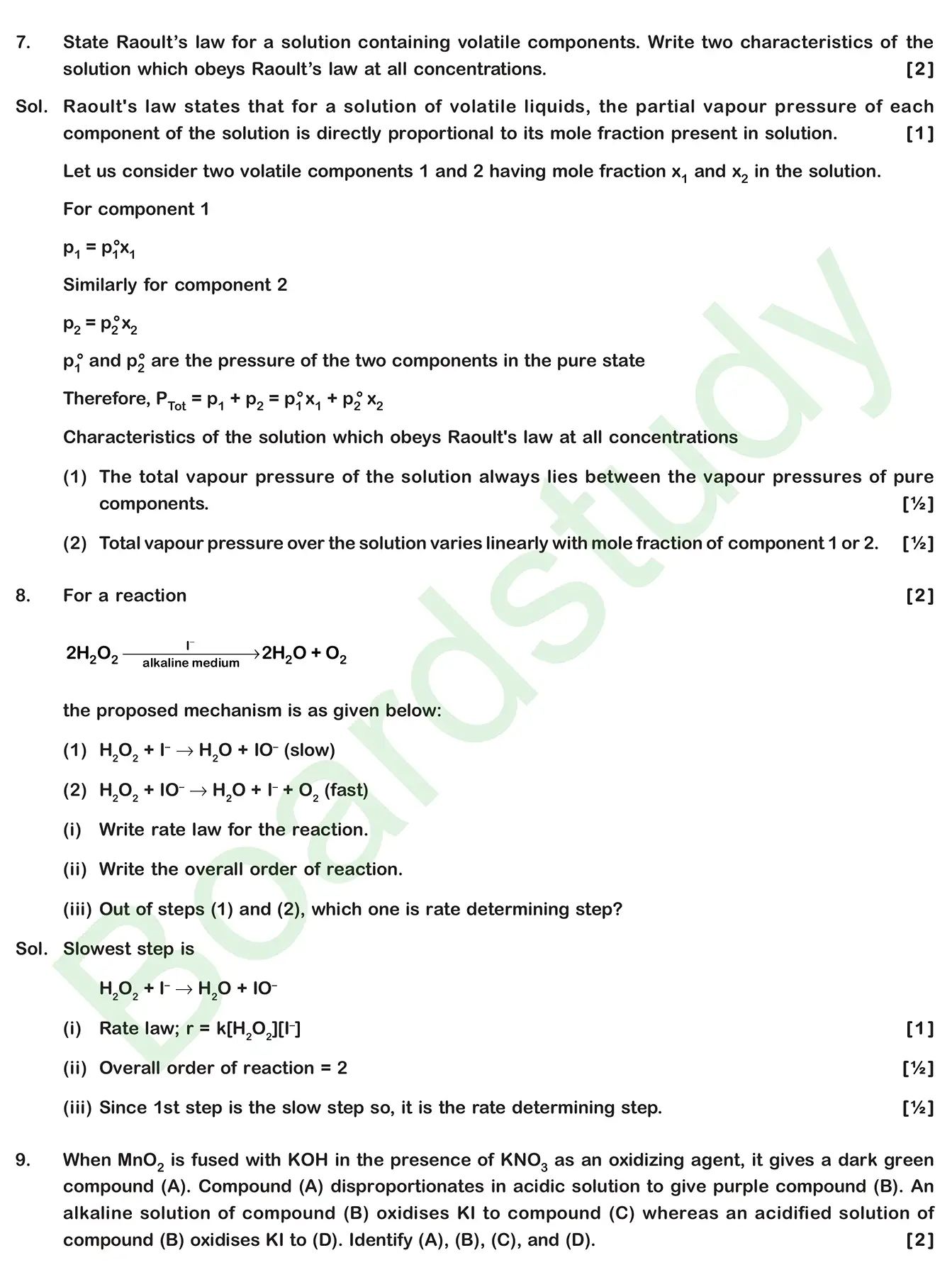
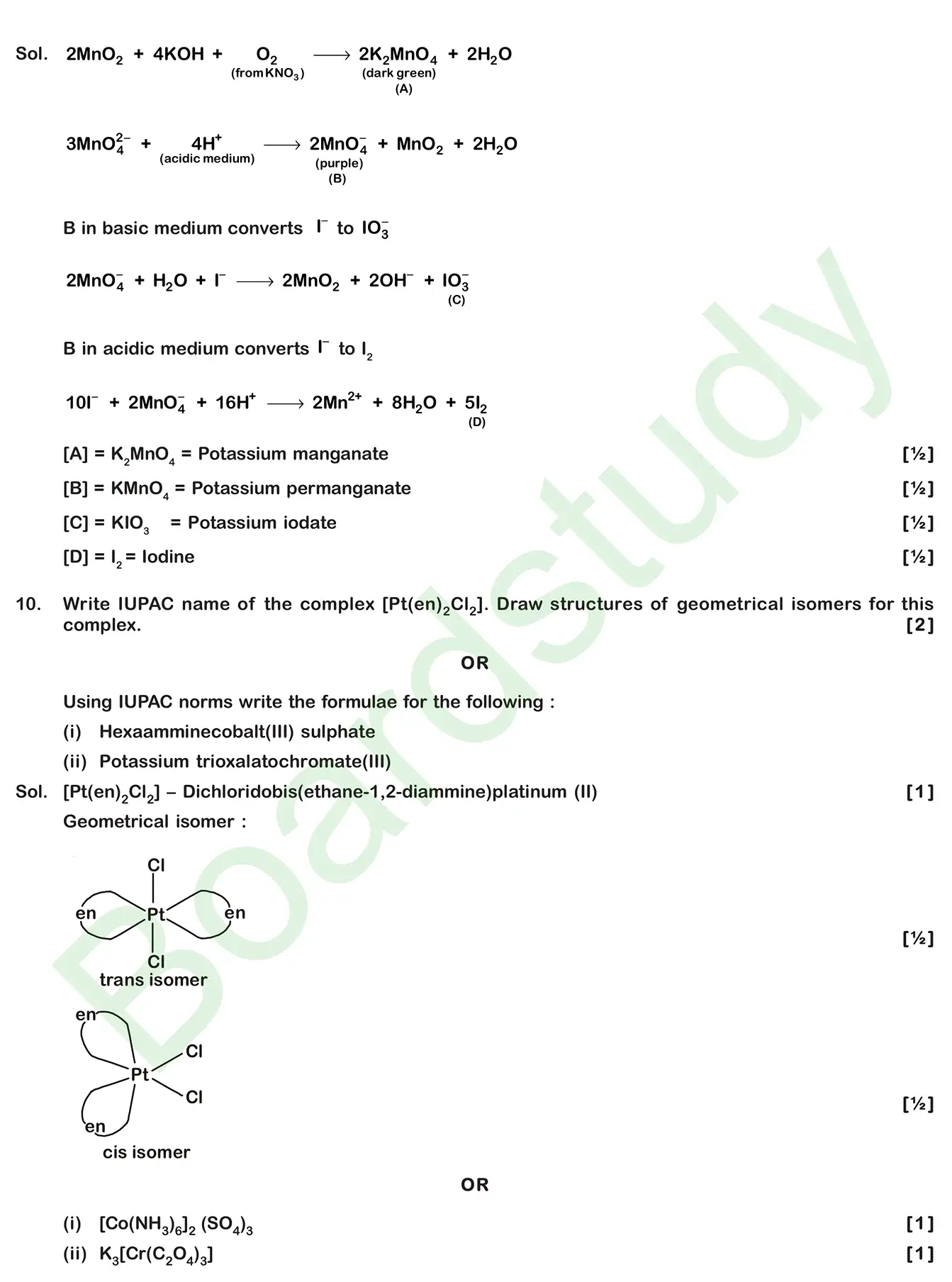
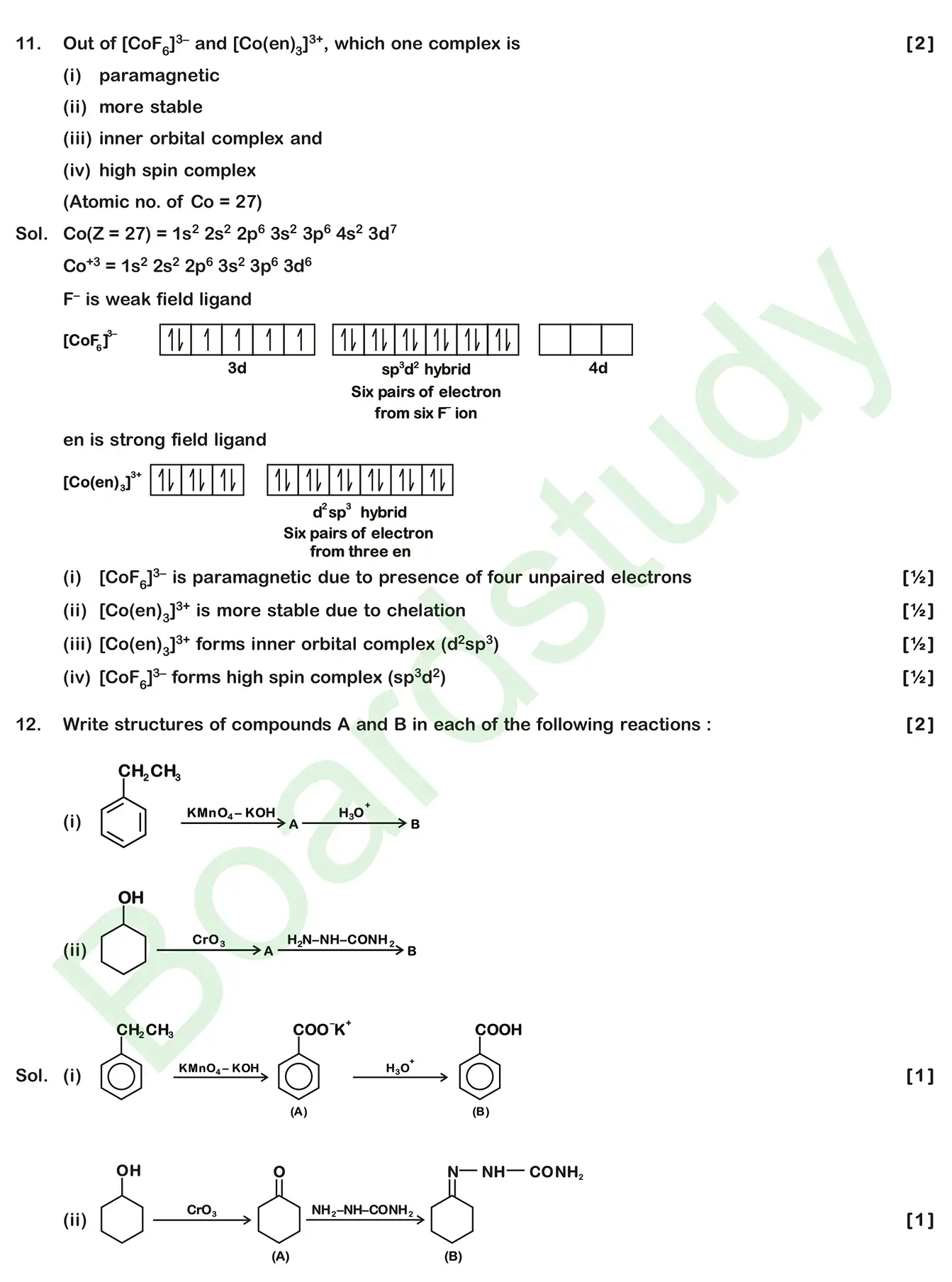
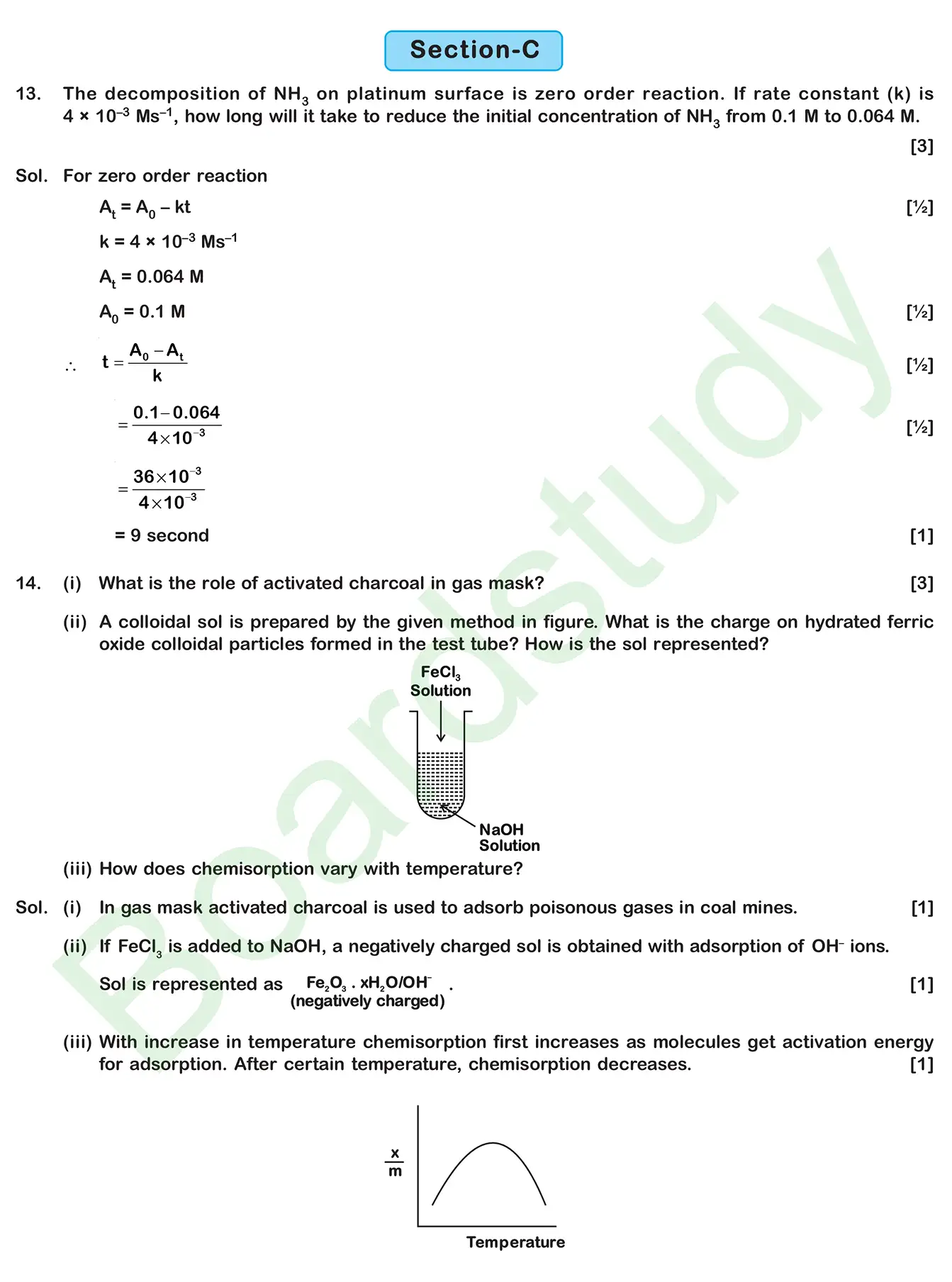
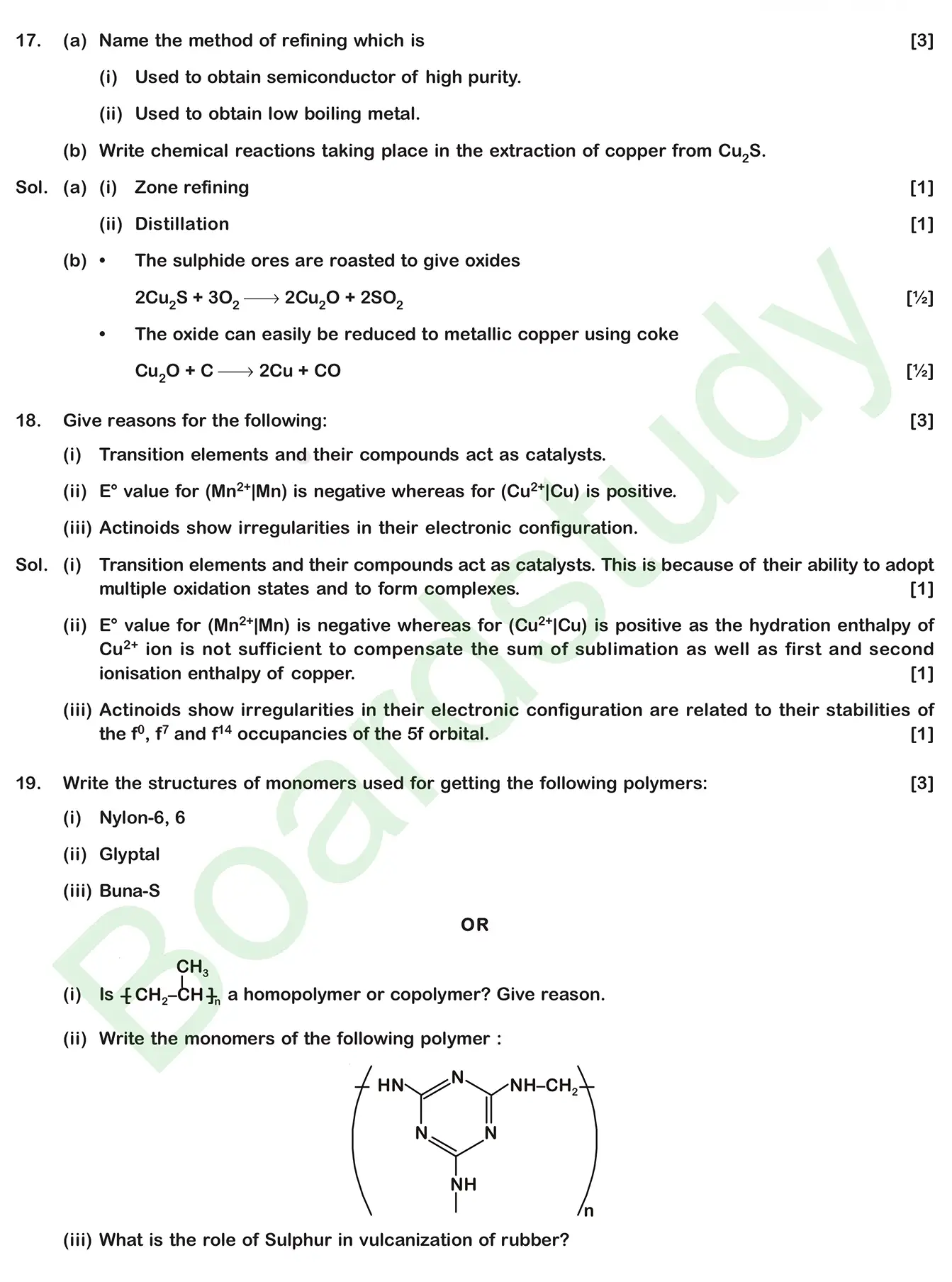
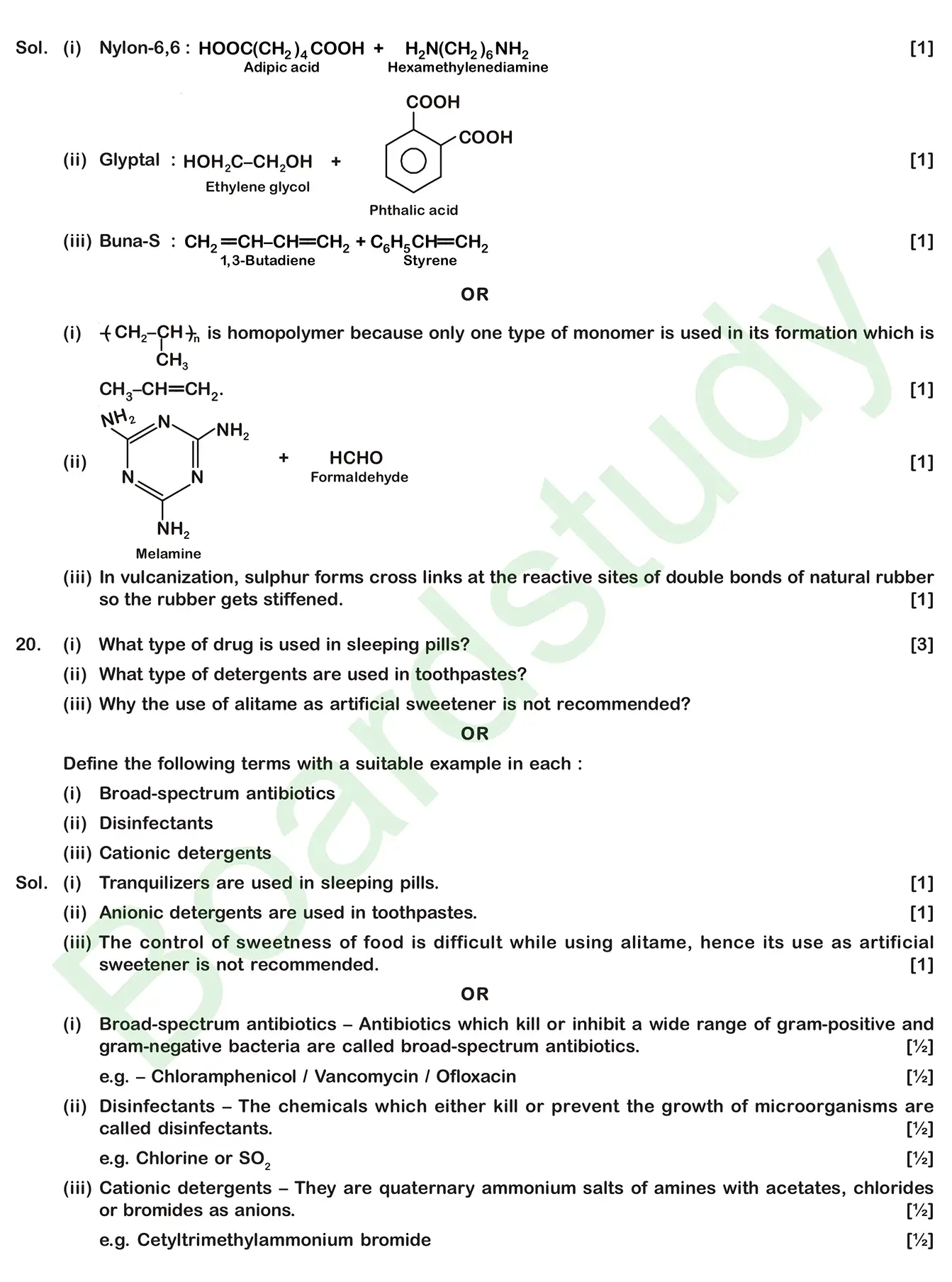
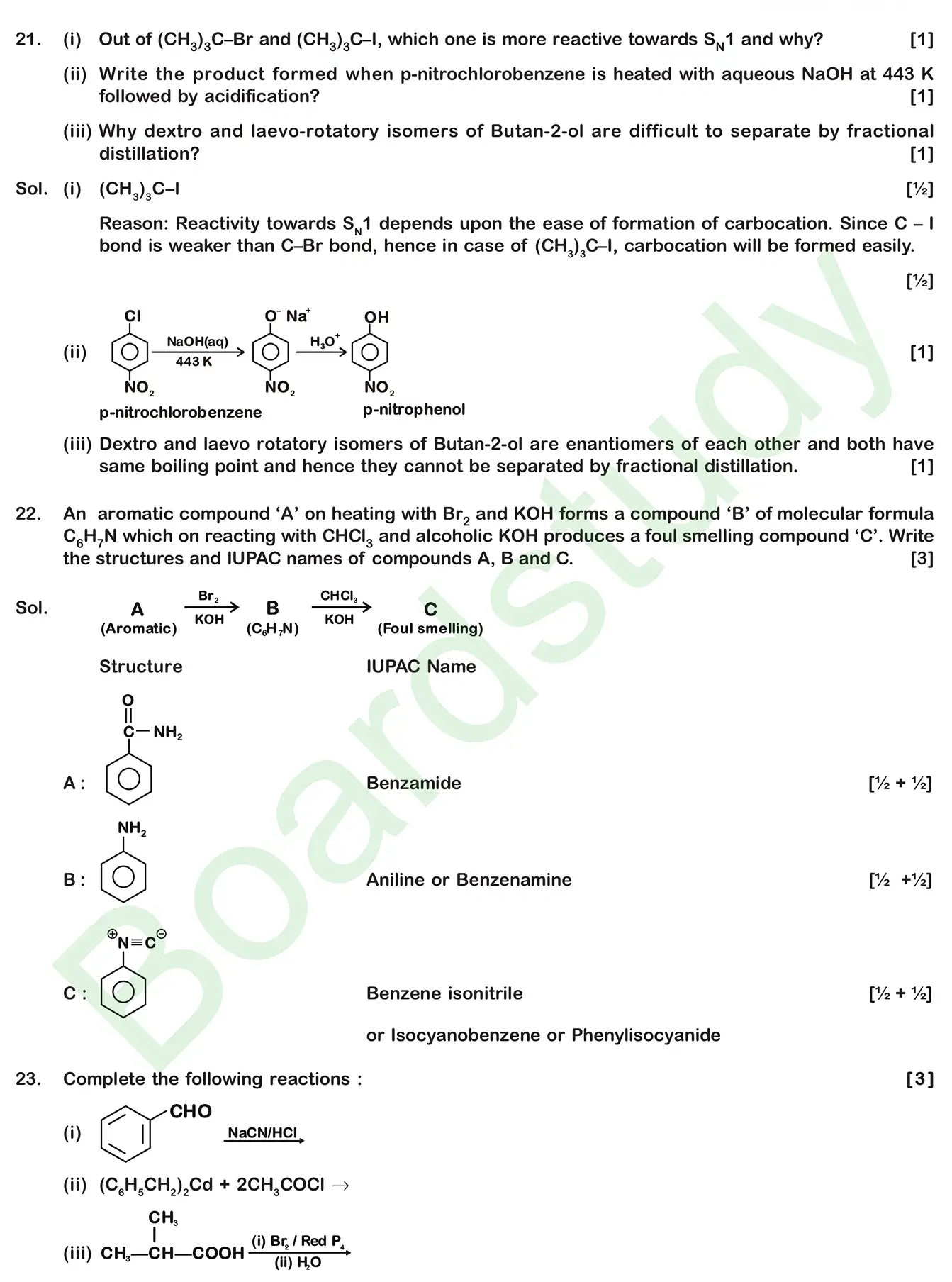
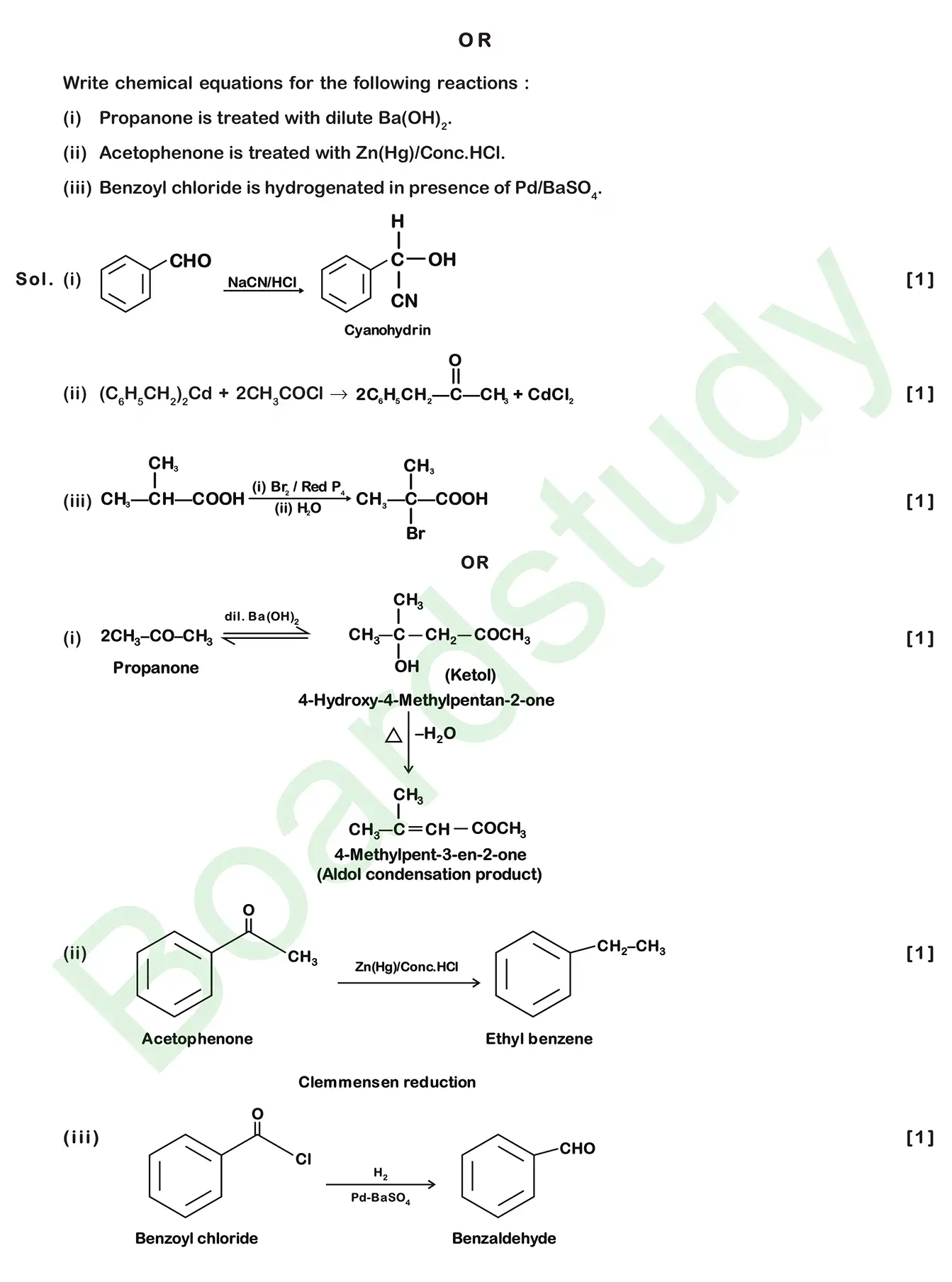
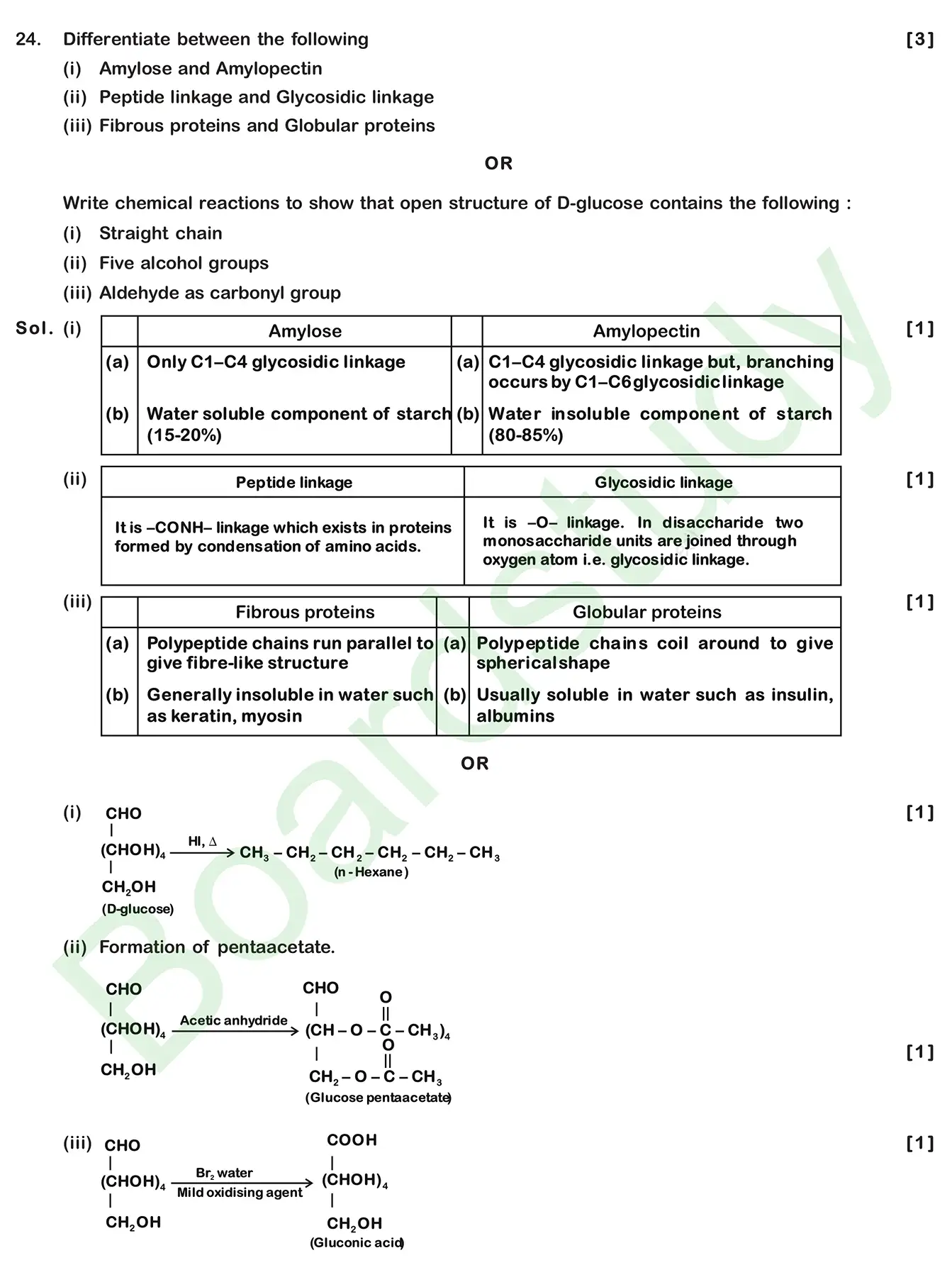
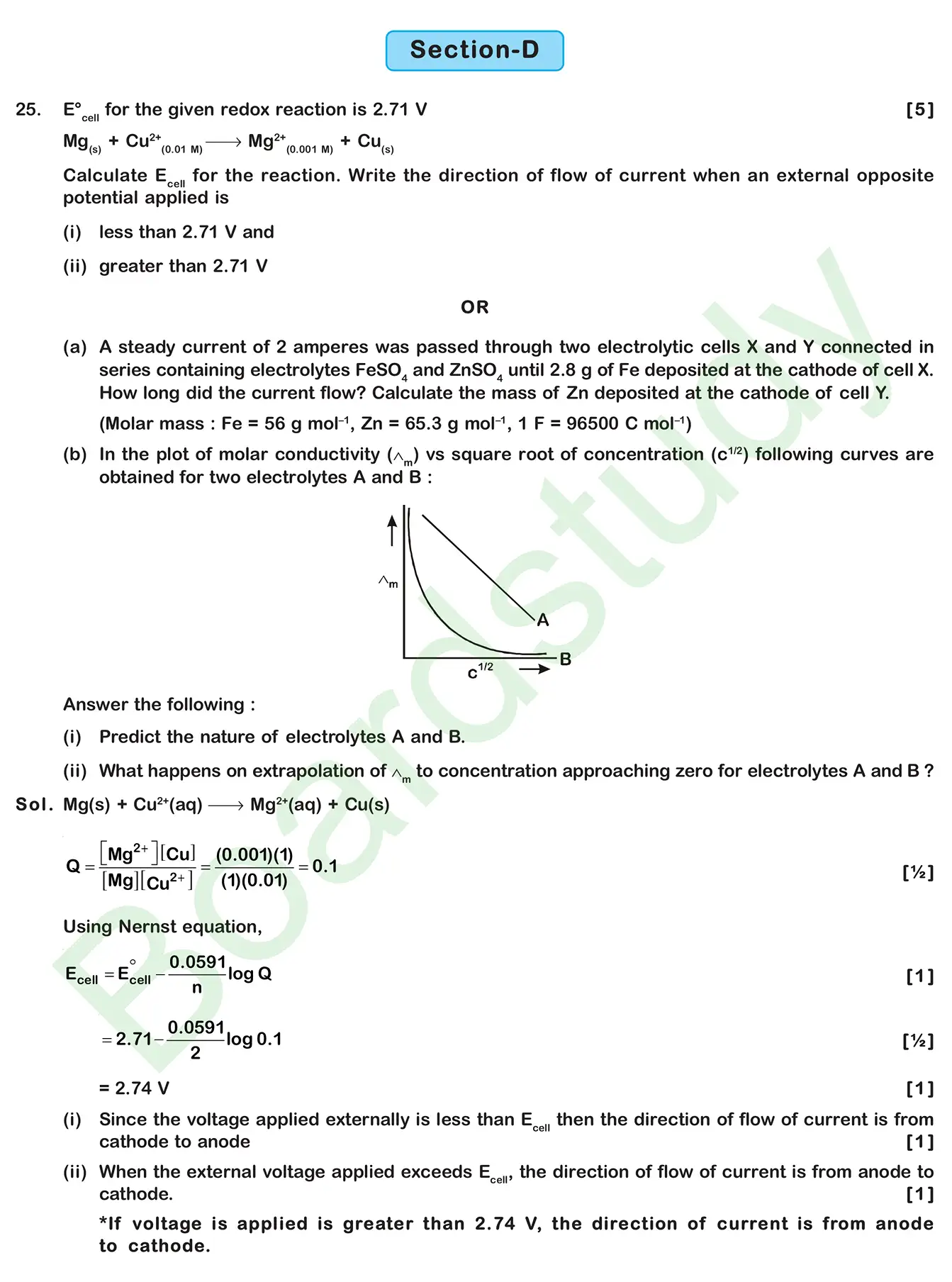
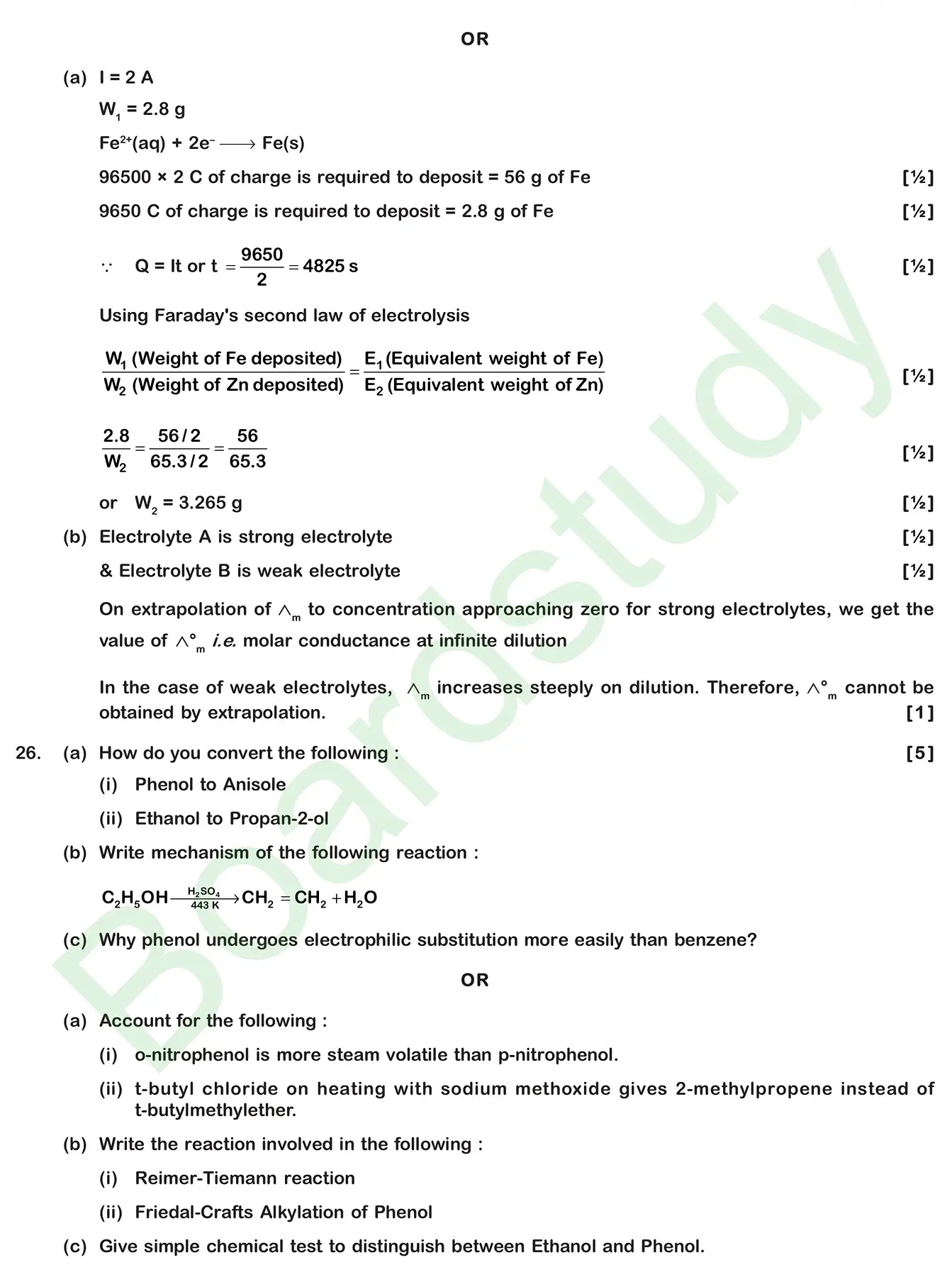
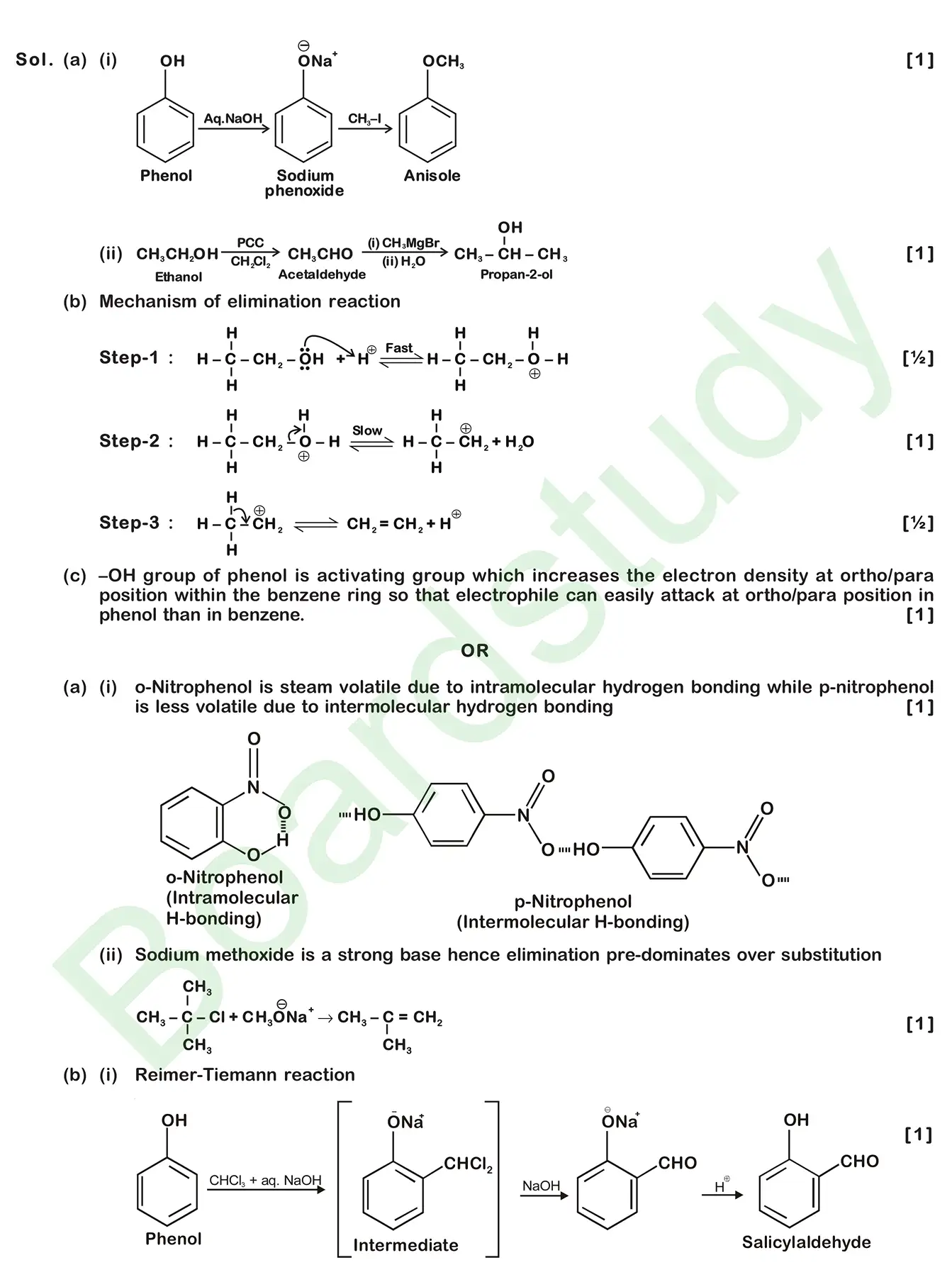
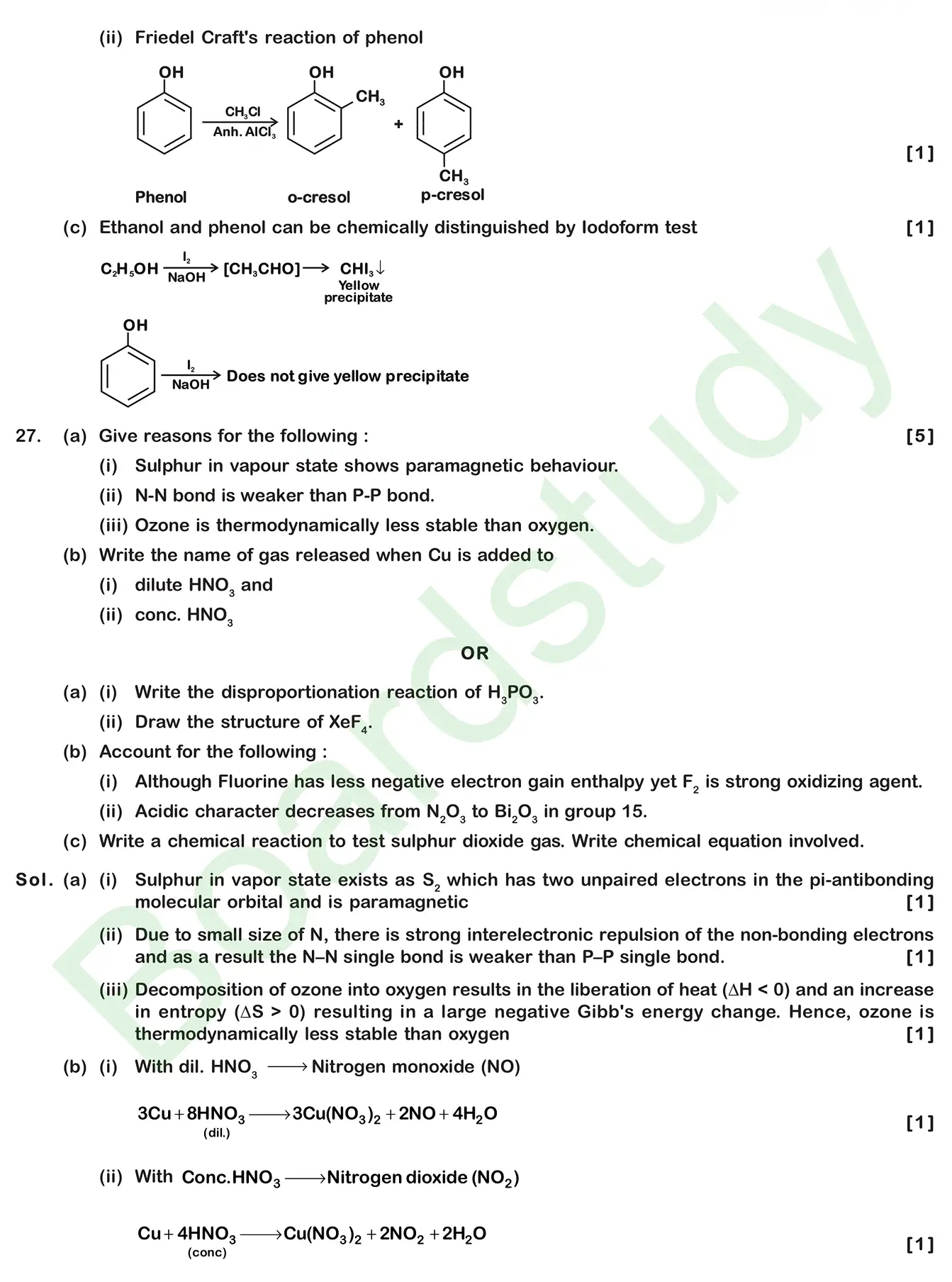
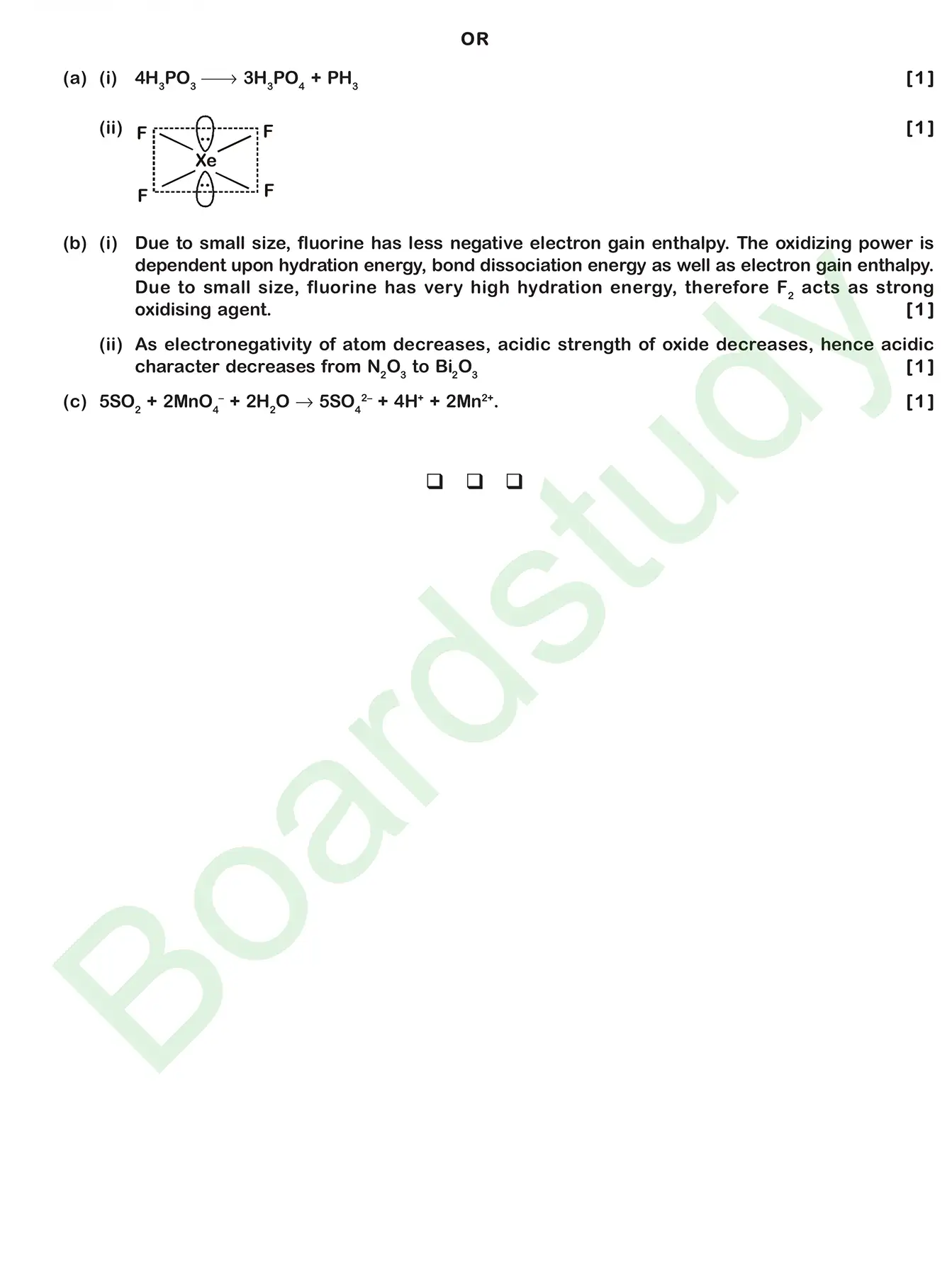
CBSE Class 12 Chemistry PYQ 2019 SET 2 with Solution
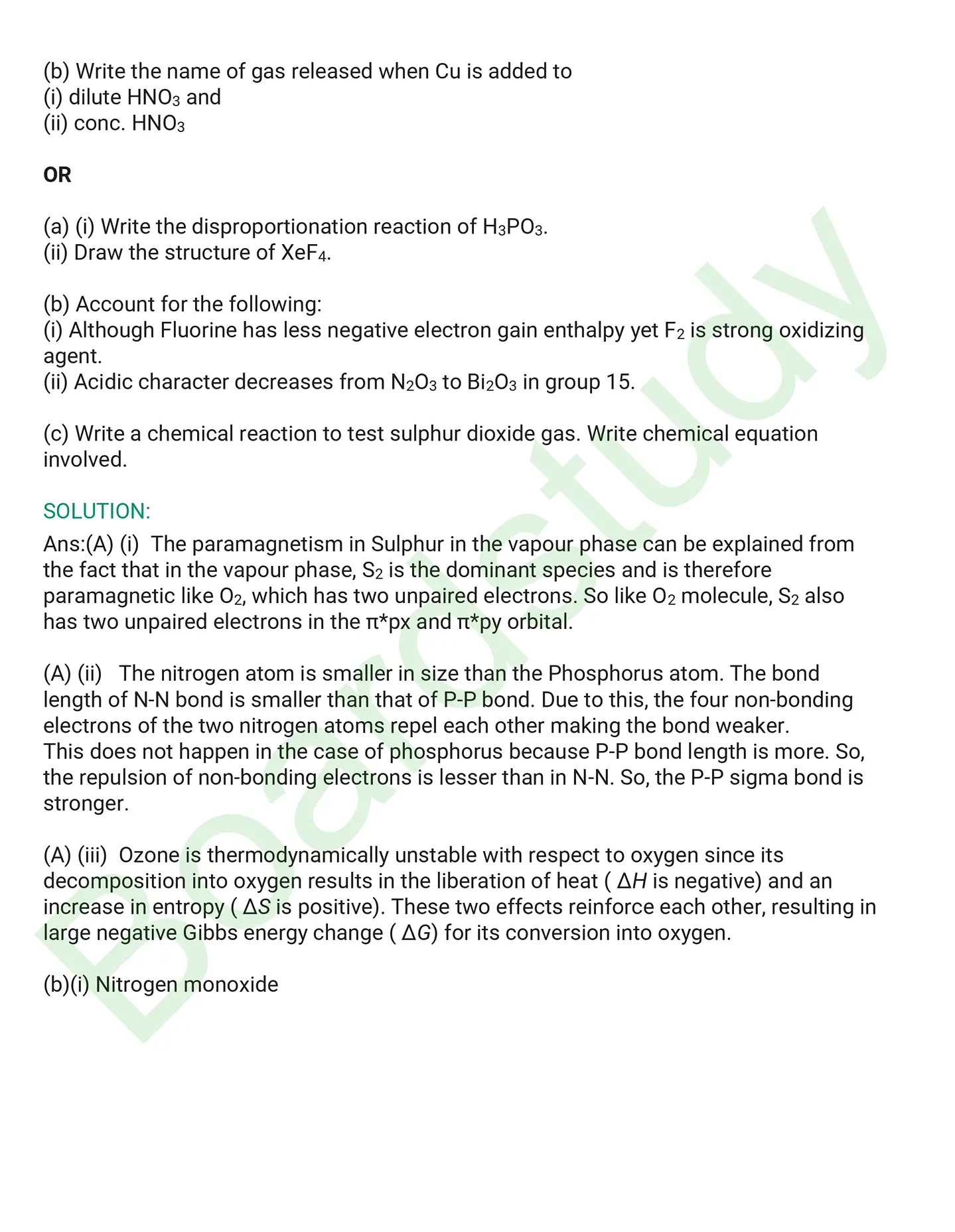
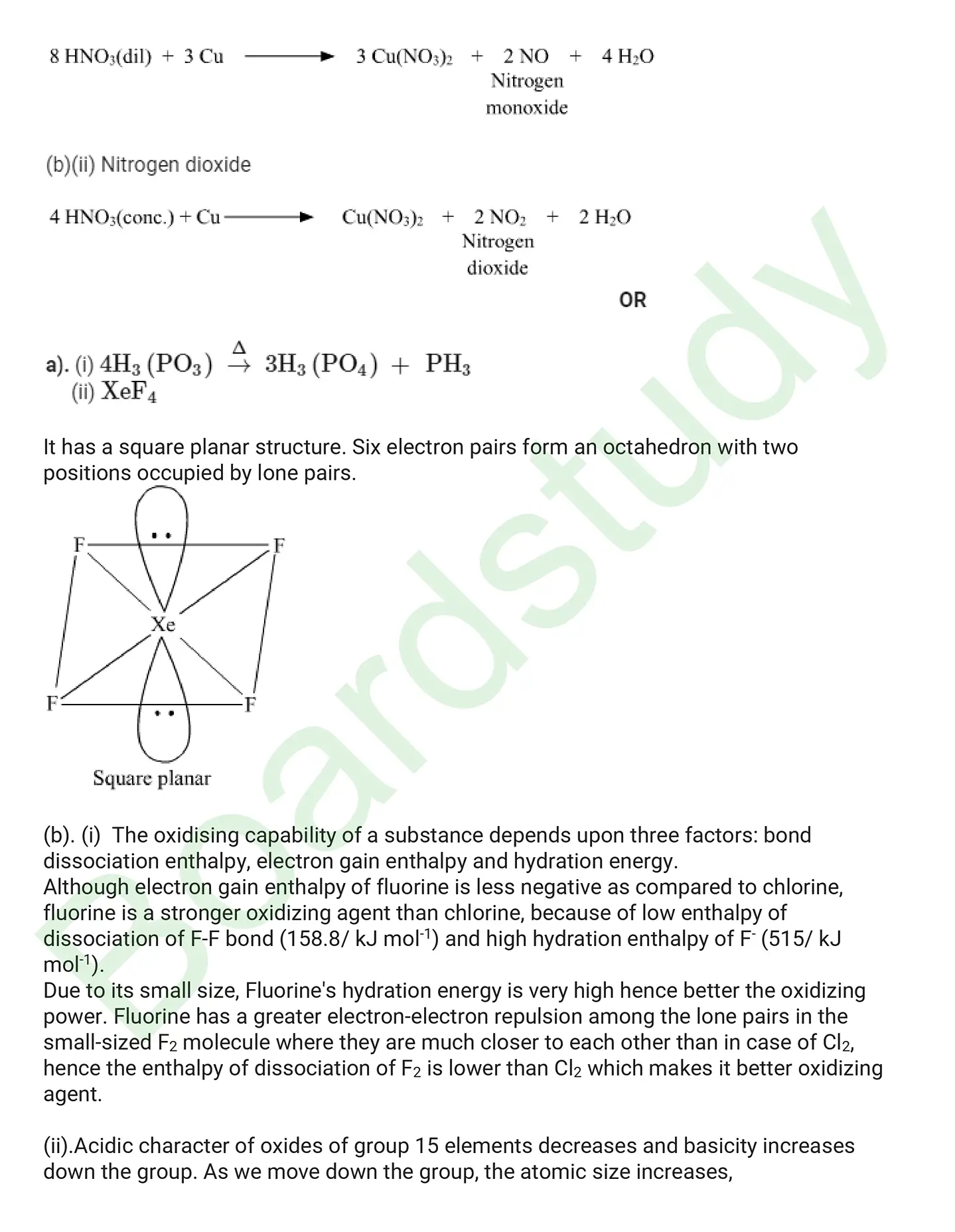
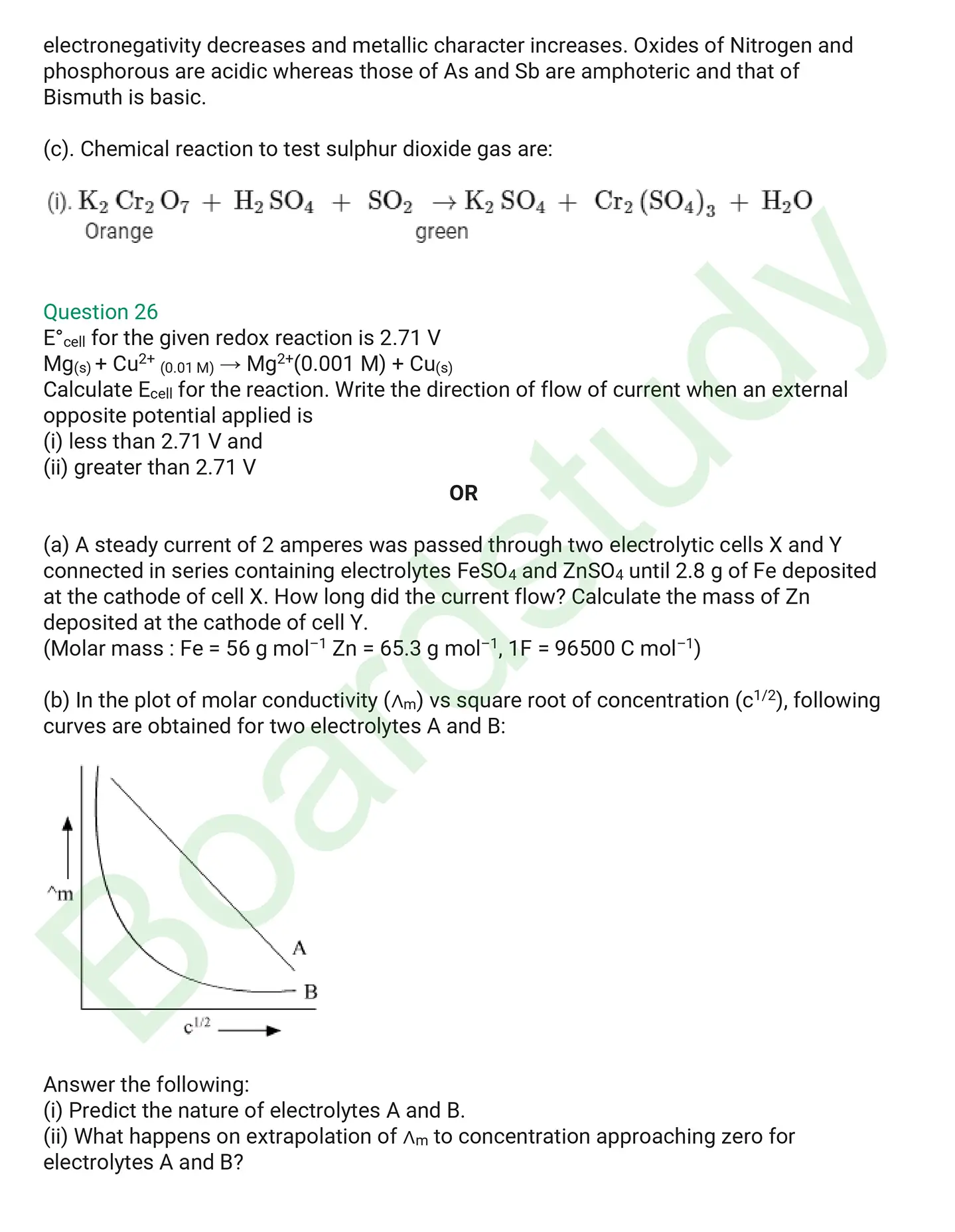
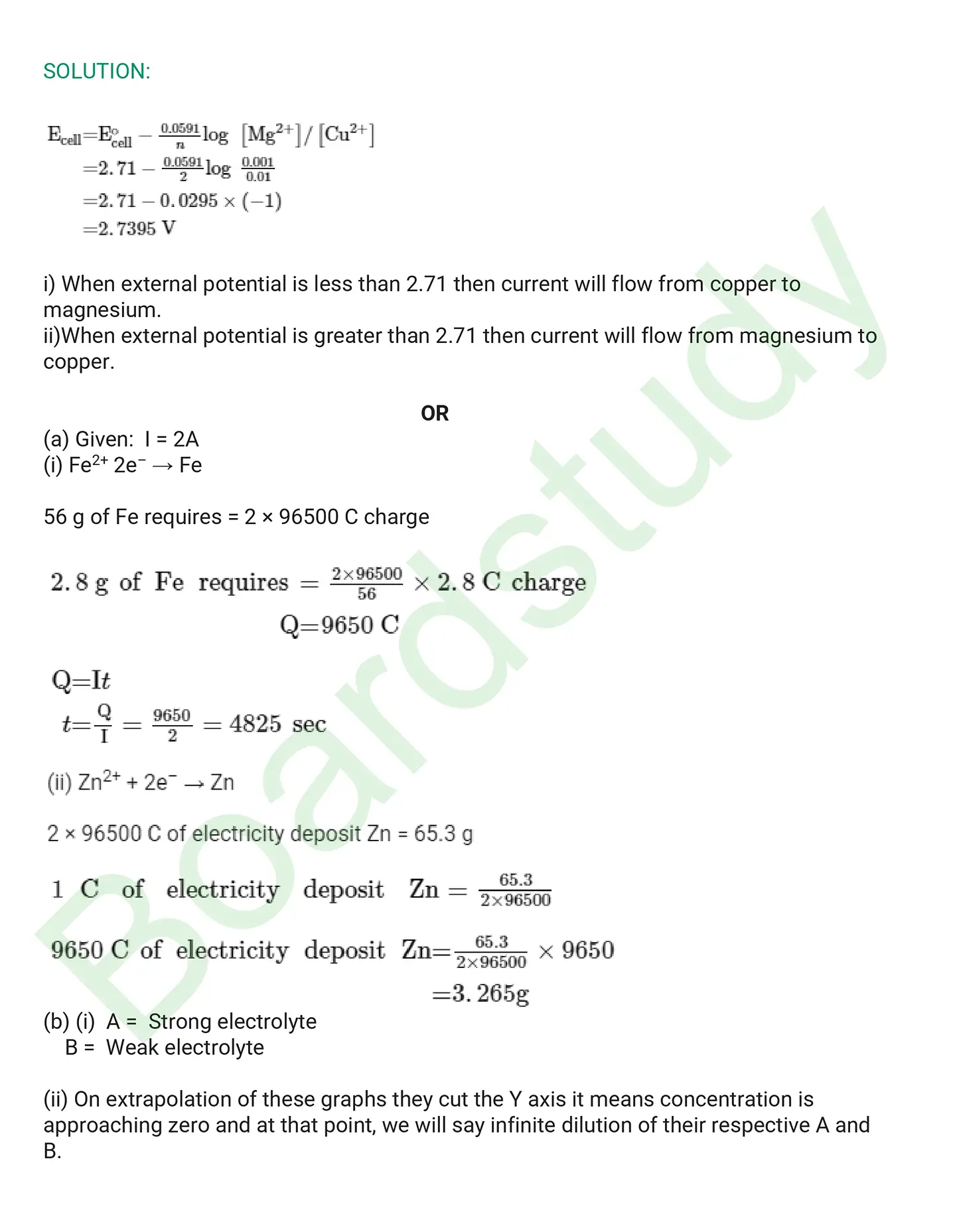
Class 12 Chemistry PYQ 2025
Class 12 Chemistry PYQ 2026
CBSE exam is usually held between feb and April every year. And for many students, this exam decides their career specially who want to pursue a career in Chemistry. Practising only chapter is not enough for scoring good marks in exam. Solving Class 12 Chemistry PYQs is also important.
We hope students found this class 12 chemistry solved PYQ 2019 helpful for them. Keep learning if you have any questions you can ask in comment section. Also you can also help your friend by sharing this post to them
Important Question of Class 12 Chemisty PYQ 2019
Question
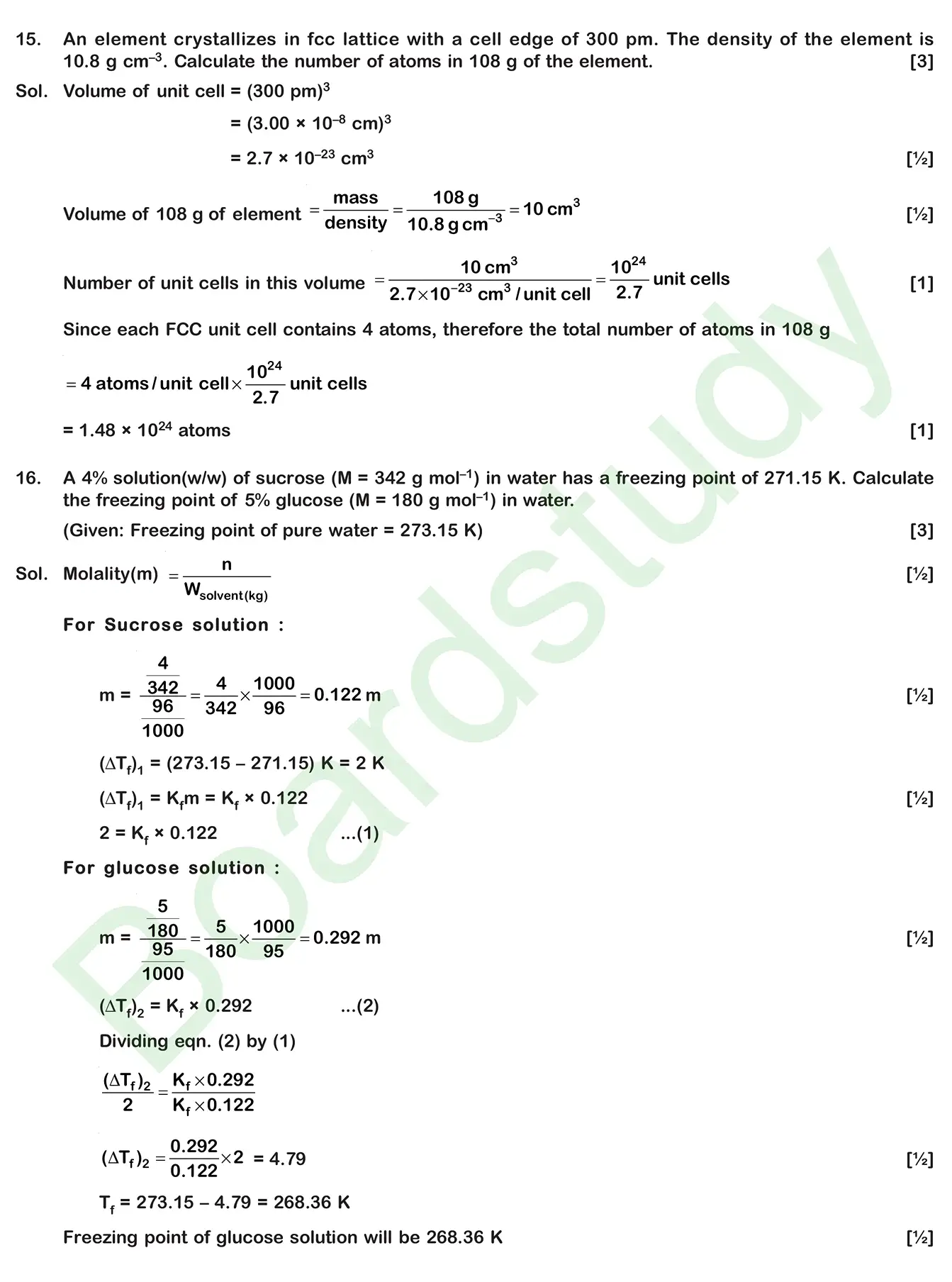
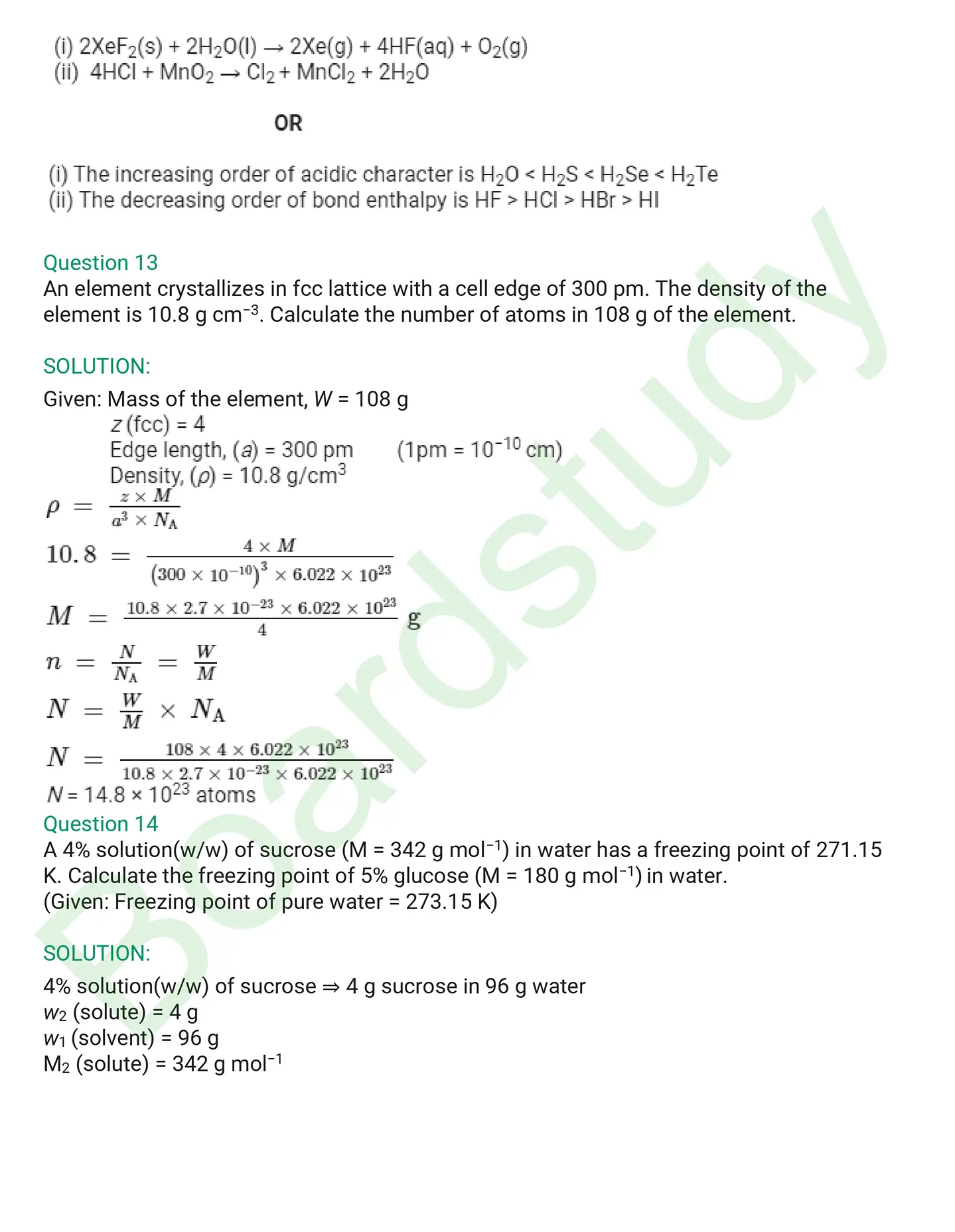
An element crystallizes in fcc lattice with a cell edge of 300 pm. The density of the element is 10.8 g cm⁻³. Calculate the number of atoms in 108 g of the element.
SOLUTION:
Given: Mass of the element, W = 108 g
- z (fcc) = 4
- Edge length, (a) = 300 pm
- Density, (ρ) = 10.8 g/cm³
Question
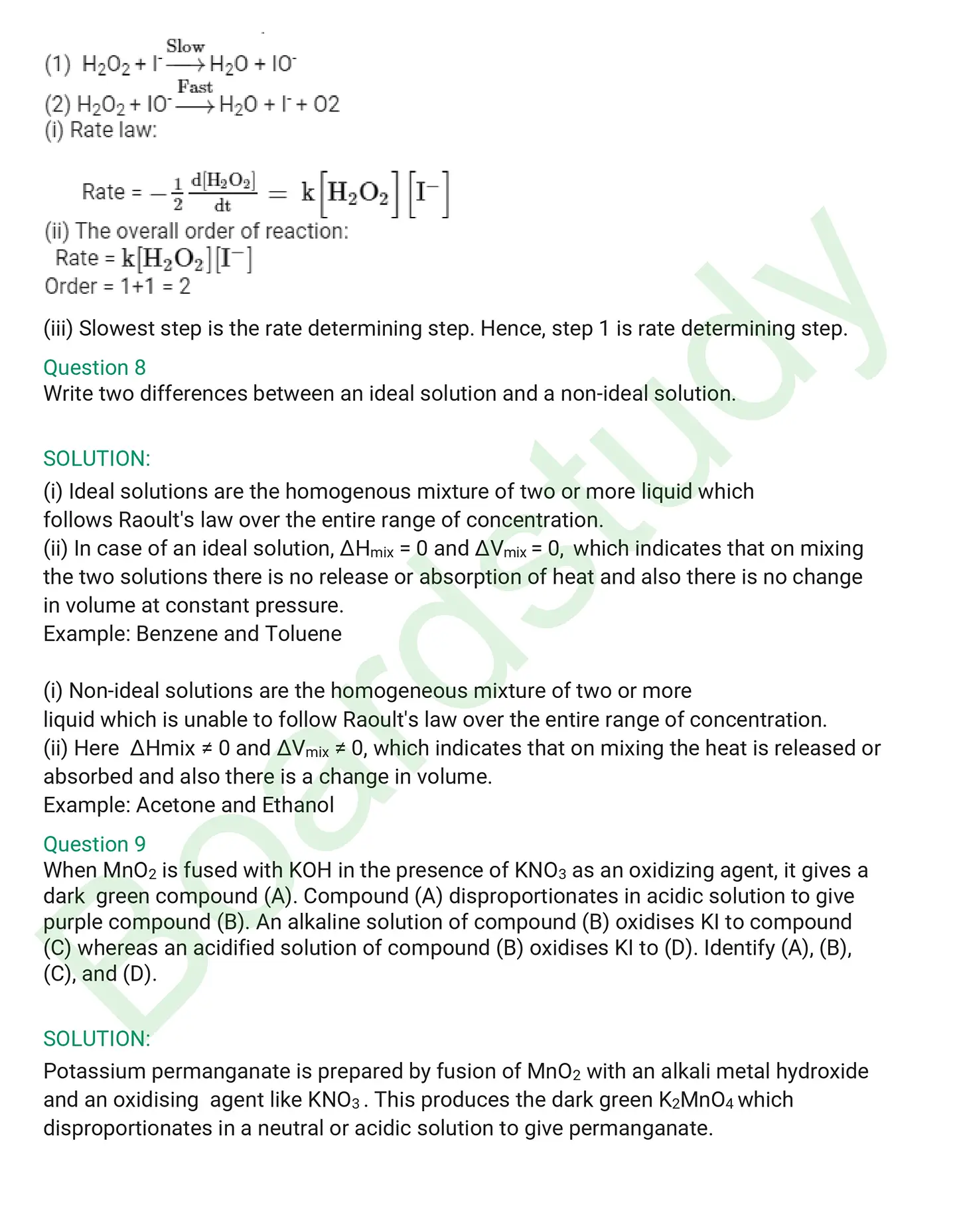
Write two differences between an ideal solution and a non-ideal solution.
SOLUTION:
Ideal Solution:
(i) Ideal solutions are the homogenous mixture of two or more liquid which follows Raoult’s law over the entire range of concentration.
(ii) In case of an ideal solution, ΔHmix=0 and ΔVmix=0, which indicates that on mixing the two solutions there is no release or absorption of heat and also there is no change in volume at constant pressure.
Example: Benzene and Toluene
Non-ideal Solution:
(i) Non-ideal solutions are the homogeneous mixture of two or more liquid which is unable to follow Raoult’s law over the entire range of concentration.
(ii) Here ΔHmix≠ 0 and ΔVmix≠0, which indicates that on mixing the heat is released or absorbed and also there is a change in volume.
Example: Acetone and Ethanol