
Here, Class 10 Math Chapter 13 Surface Areas and Volumes Solutions are provided. Subject matter experts have created these solutions to help students in their board exam. They have created solutions in such a way that students can revise the entire solutions in very little time and can score good marks in the board exam. Every solution is provided in detail and in very simple language.
Class 10 Math Chapter 13 Surface Areas and Volumes Solutions are very important for board exam. Solving these Probability solutions will boost the confidence and students can score better in exam. Solutions are provided according to latest NCERT syllabus. Experts created these step-by-step solutions, which will definitely be helpful for students.
Surface Areas and Volumes Solutions
Exercise 13.1
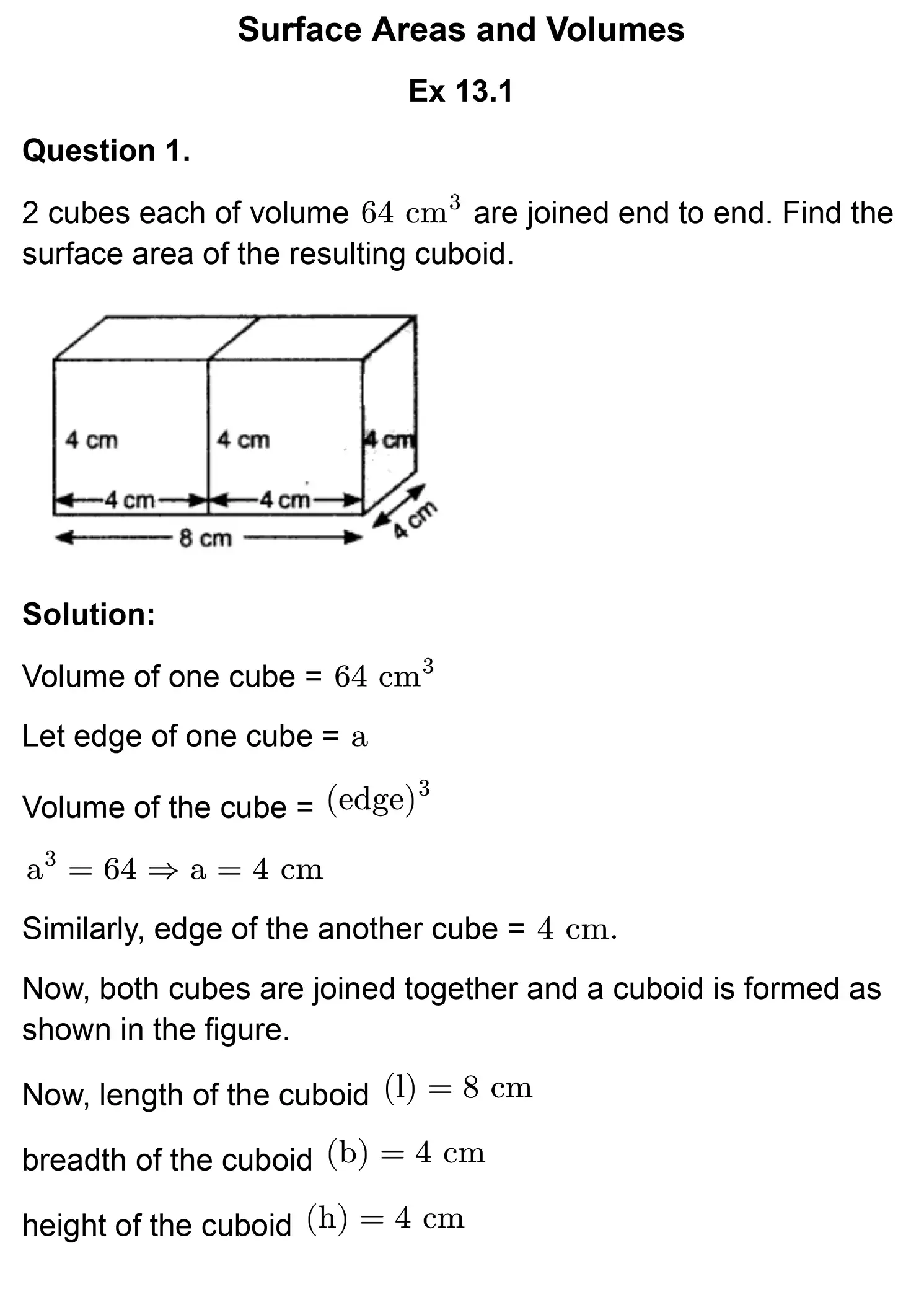
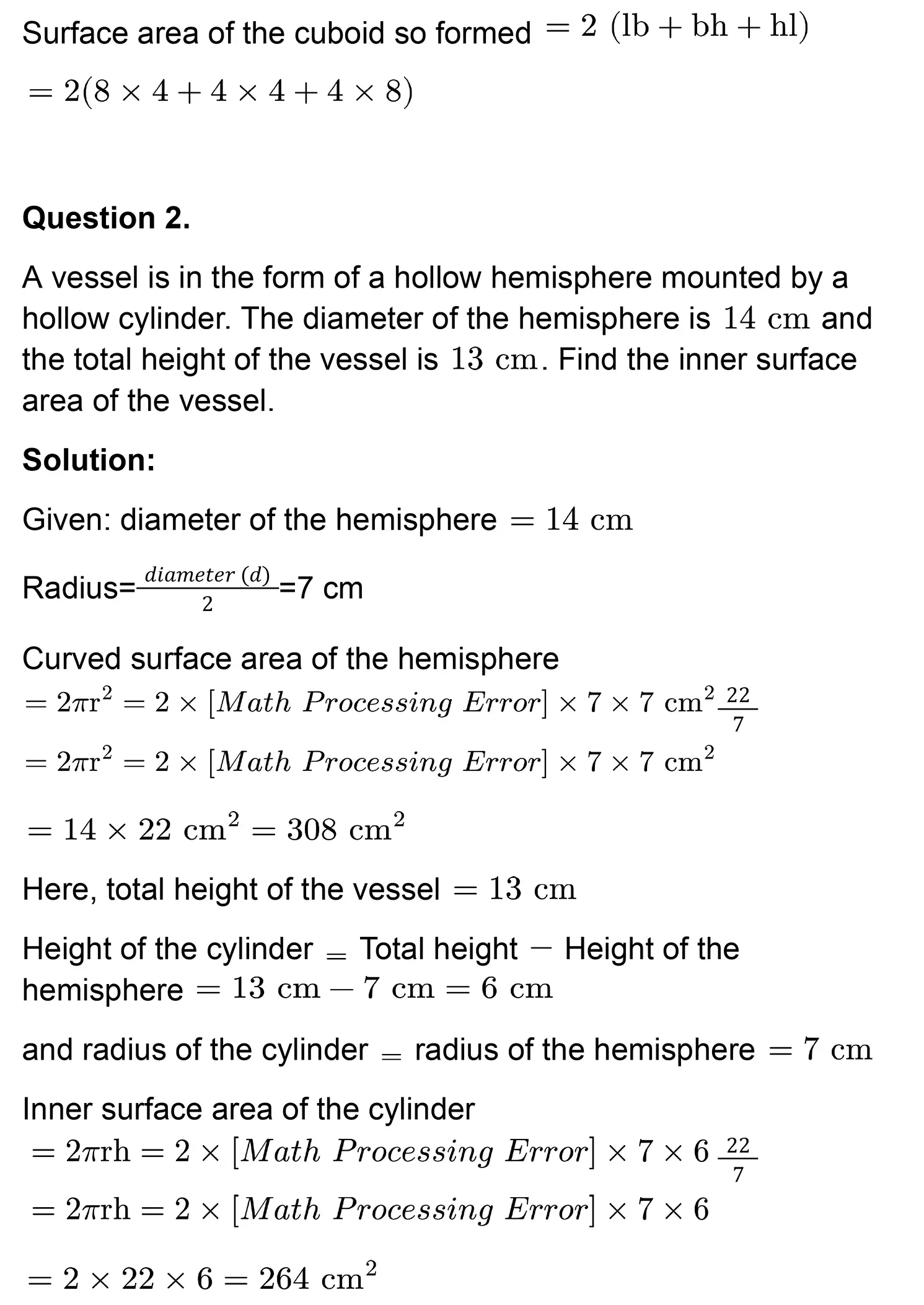
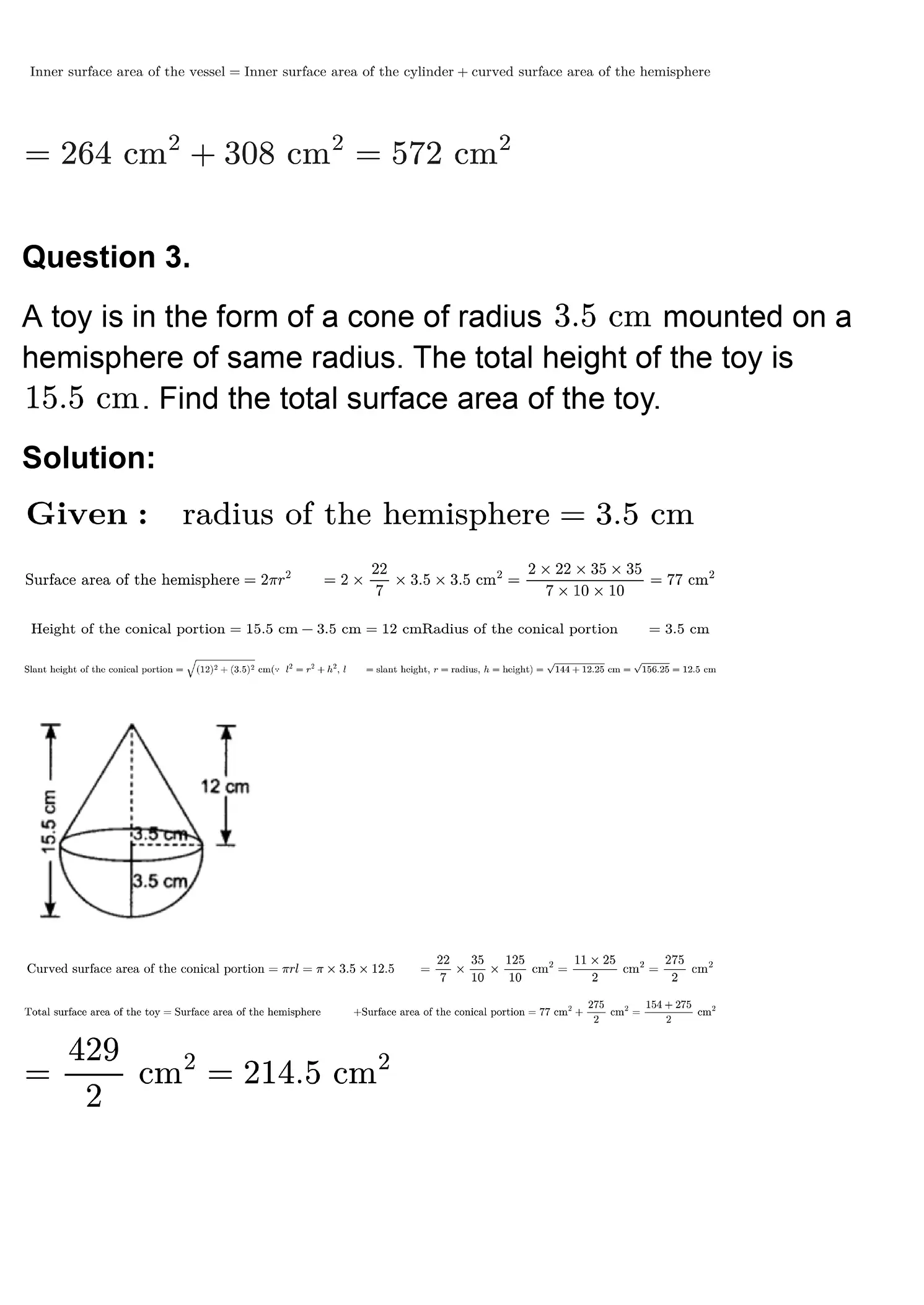
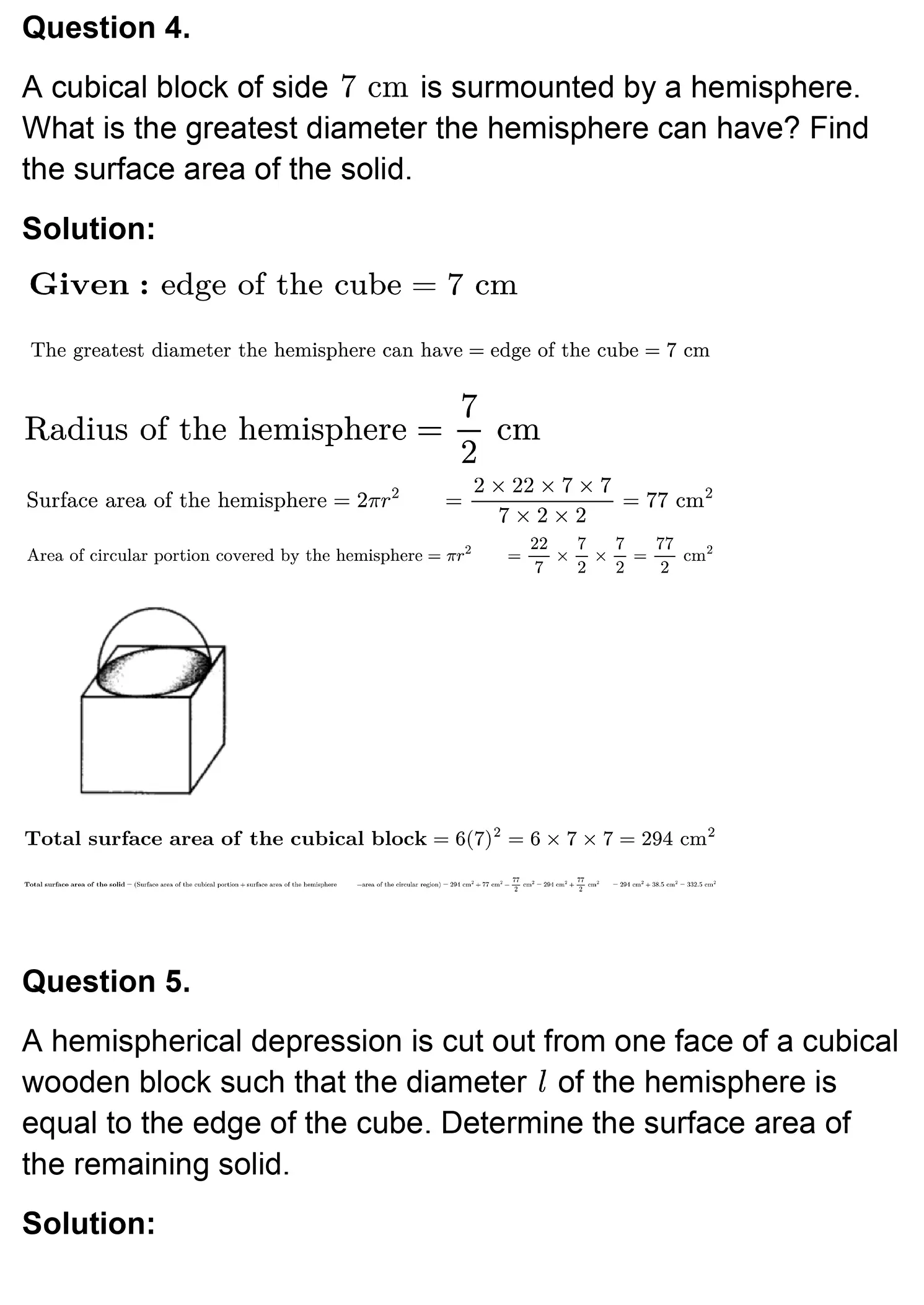
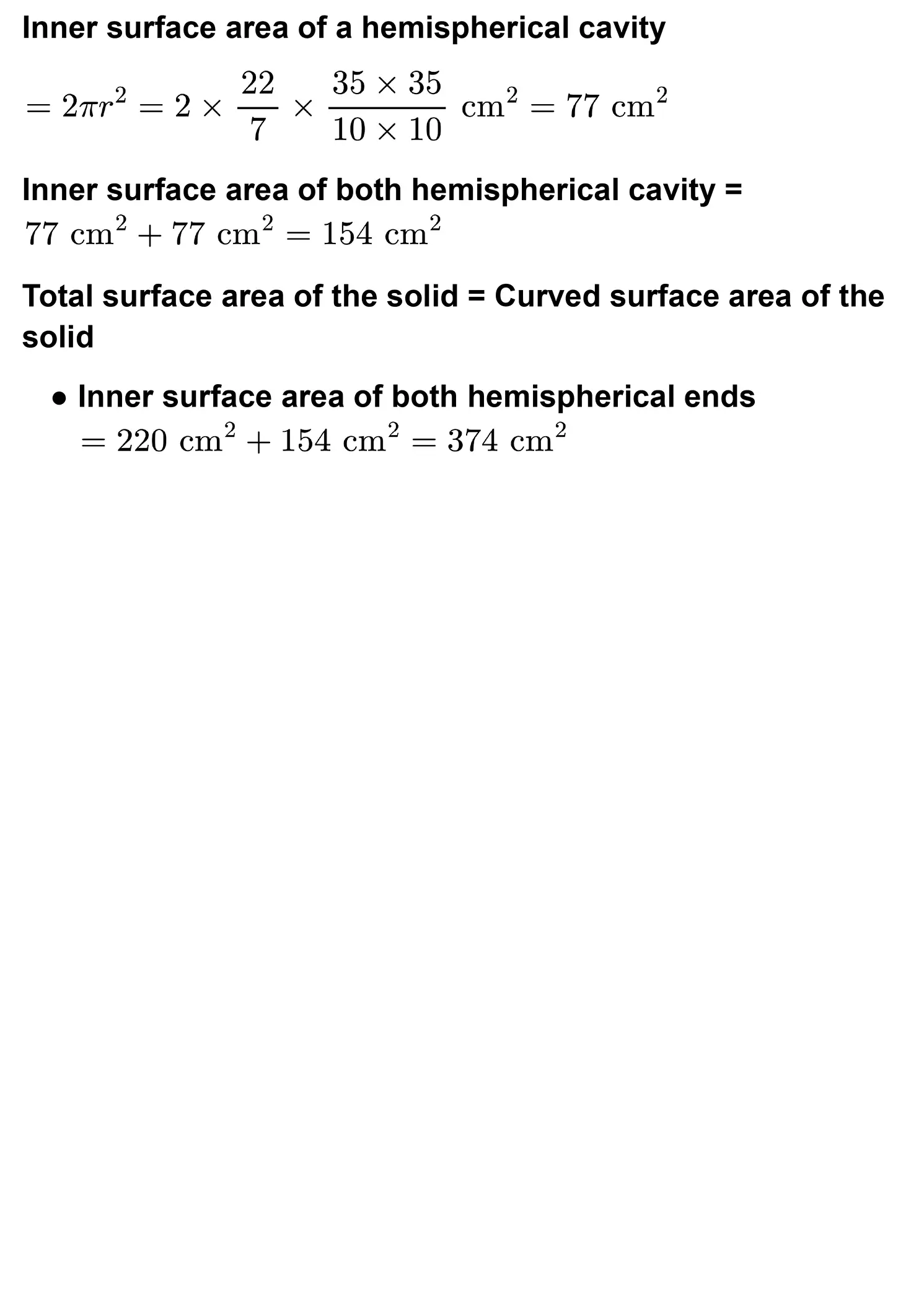
Exercise 13.2
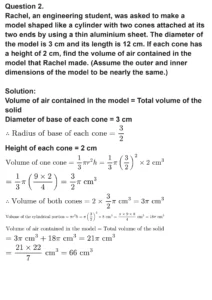
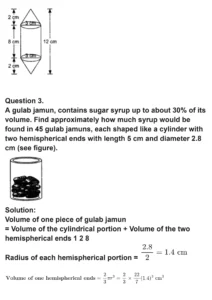
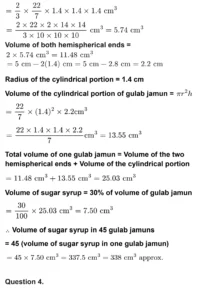
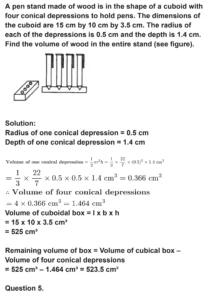
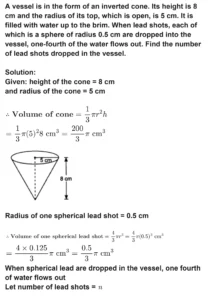
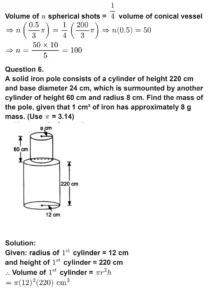
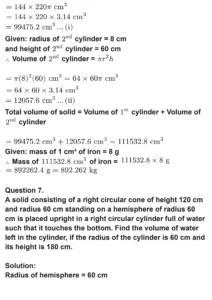
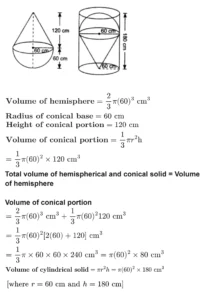
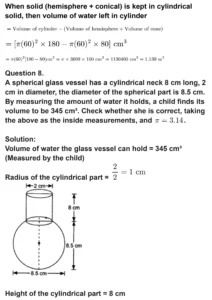
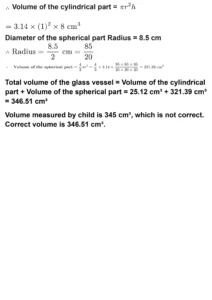
Exercise 13.3
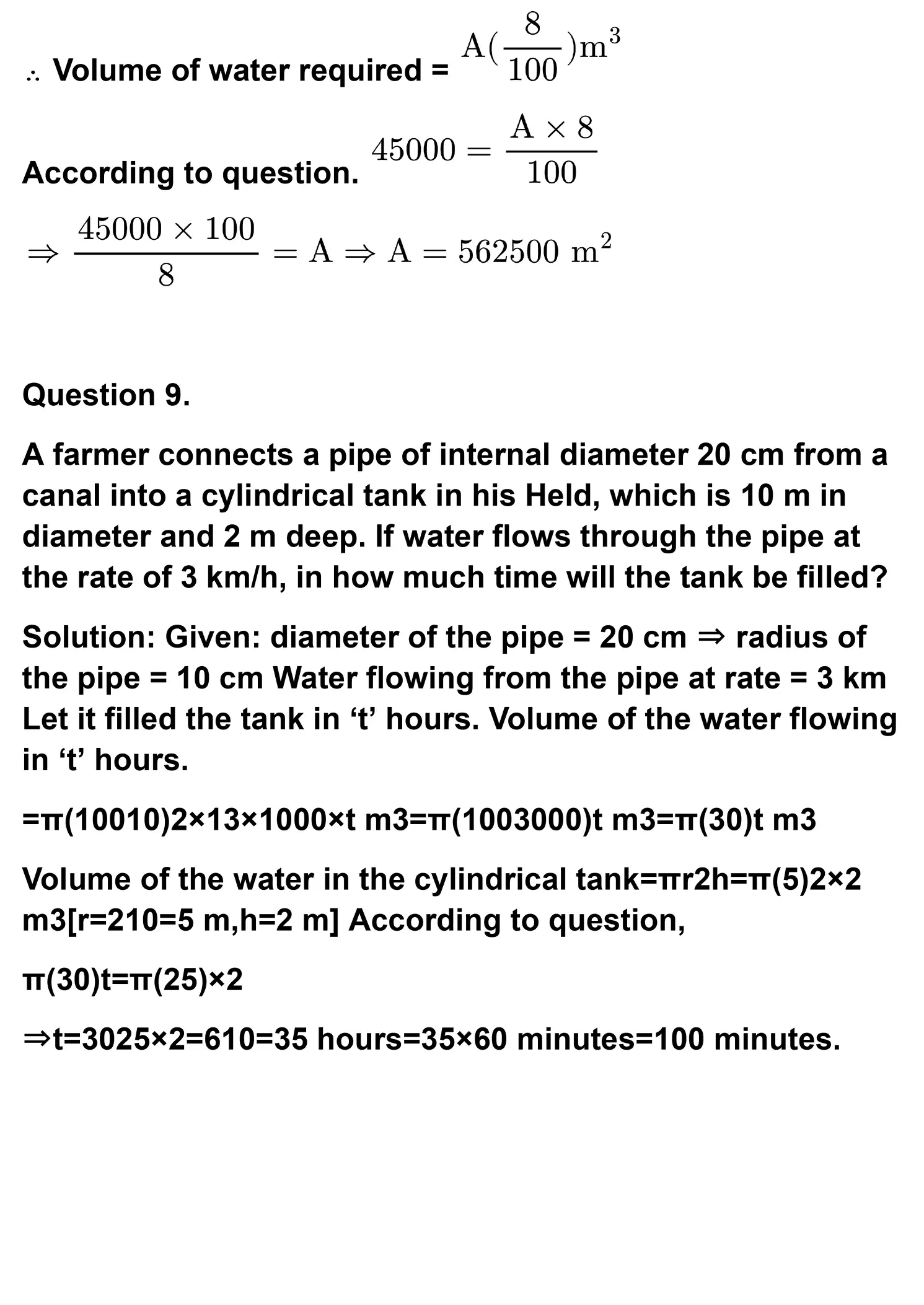
Exercise 13.4
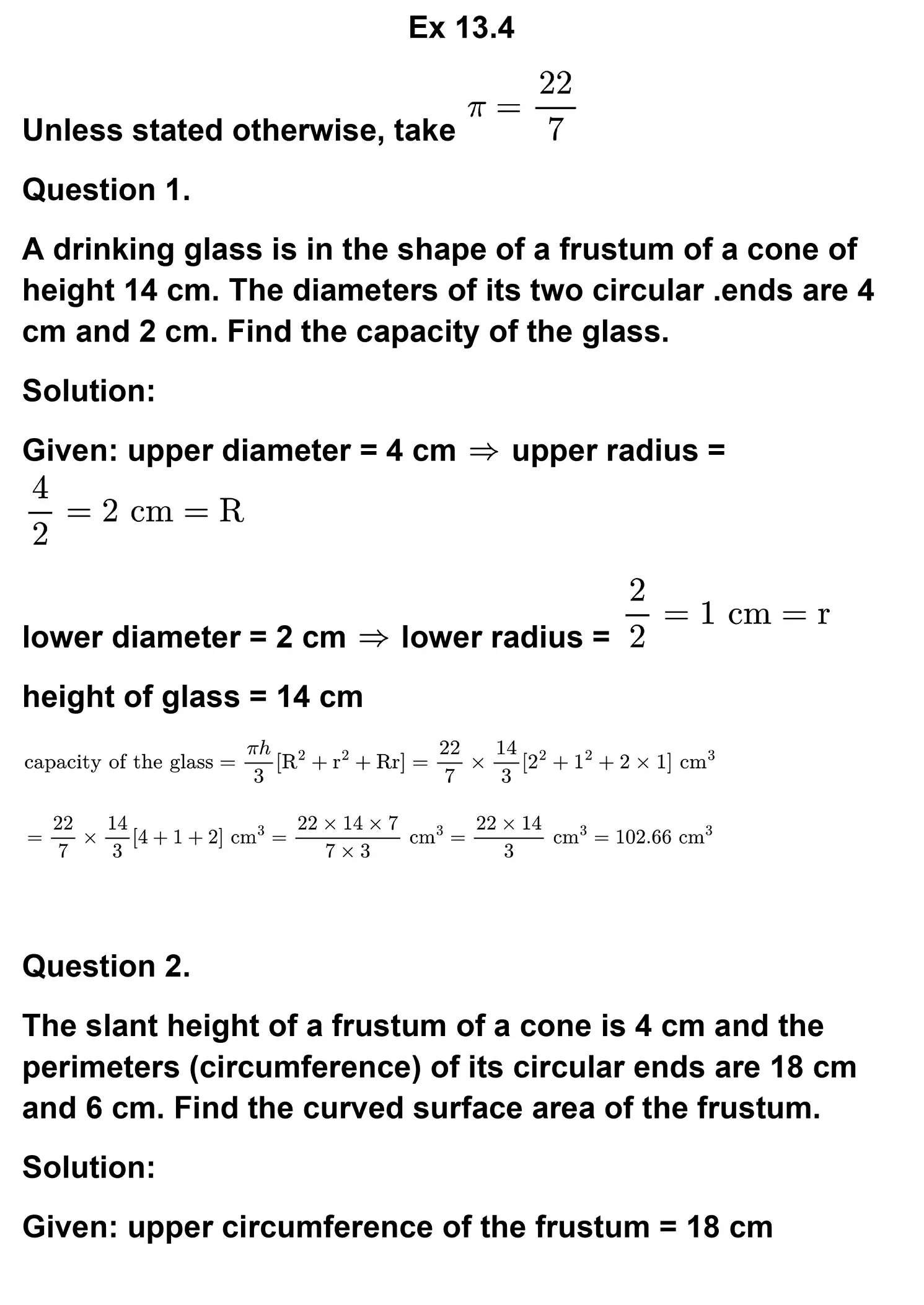
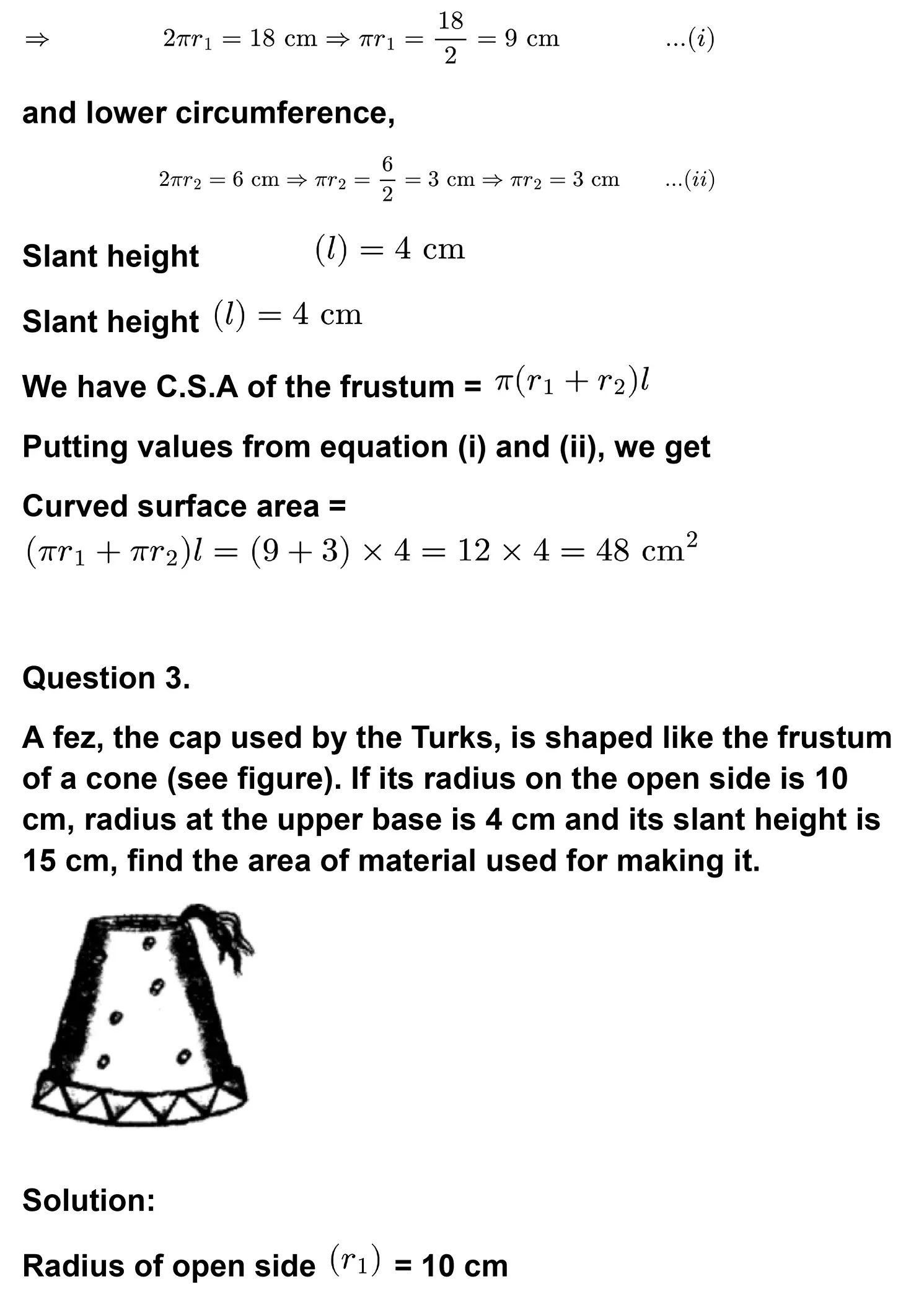
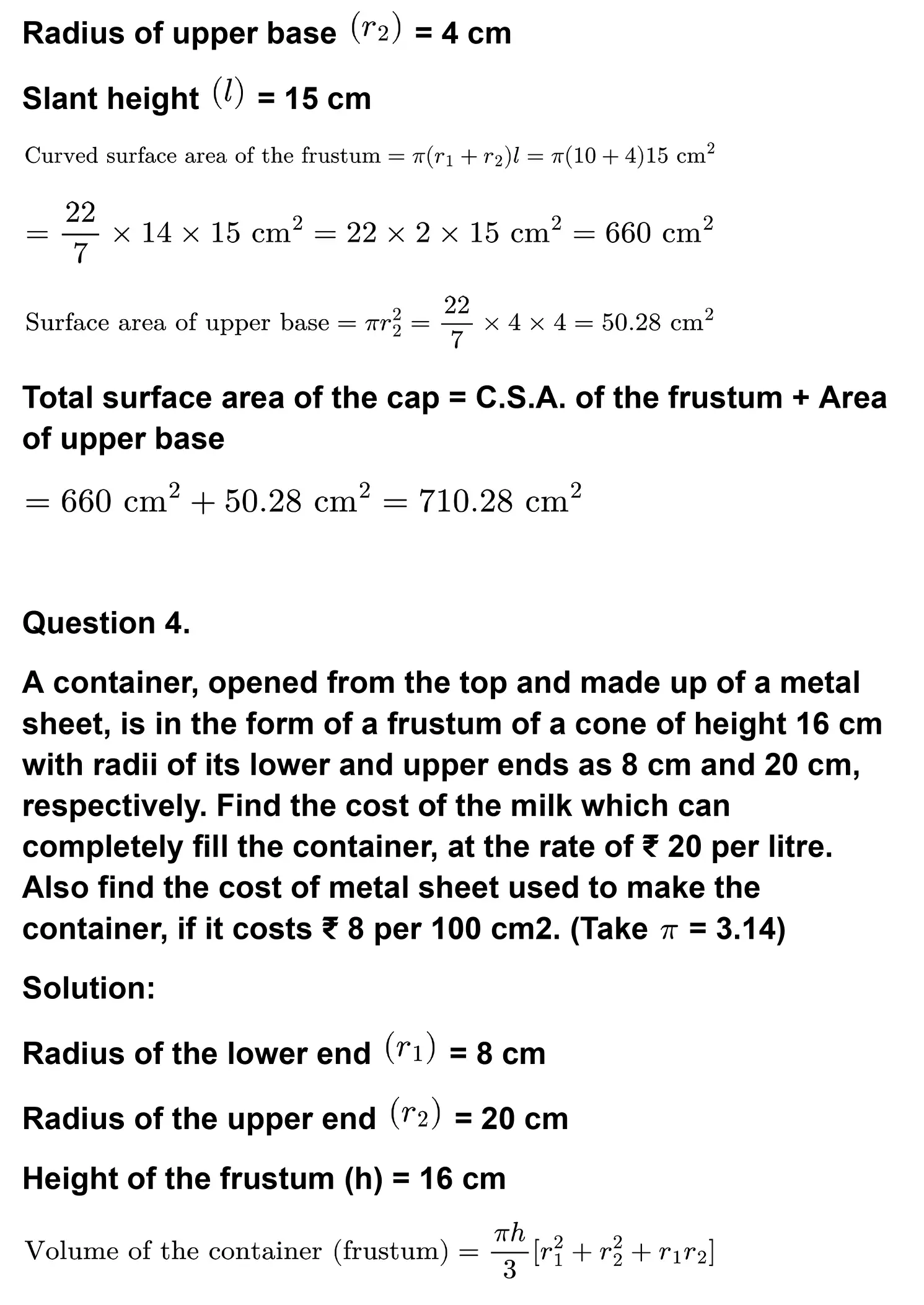
Chapter 12: Surface Areas and Volumes Solutions
Chapter 14: Probability Solutions
We have given solutions of all exercise of class 10 math chapter 13. These solutions will be helpful for students understanding core concept of Proability.
To understand the chapter thoroughly, it is essential to practice all the questions provided within it, as well as any additional questions. Solving previous years’ question papers also proves to be very helpful in exam preparation. You can also find other study material resources on our website.
Important Questions for NCERT Chapter 13: Surface Areas and Volumes
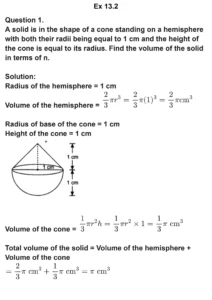
Question. A solid is in the shape of a cone standing on a hemisphere with both their radii being equal to 1 cm and the height of the cone is equal to its radius. Find the volume of the solid in terms of n.
Solution:
Radius of the hemisphere = 1 cm
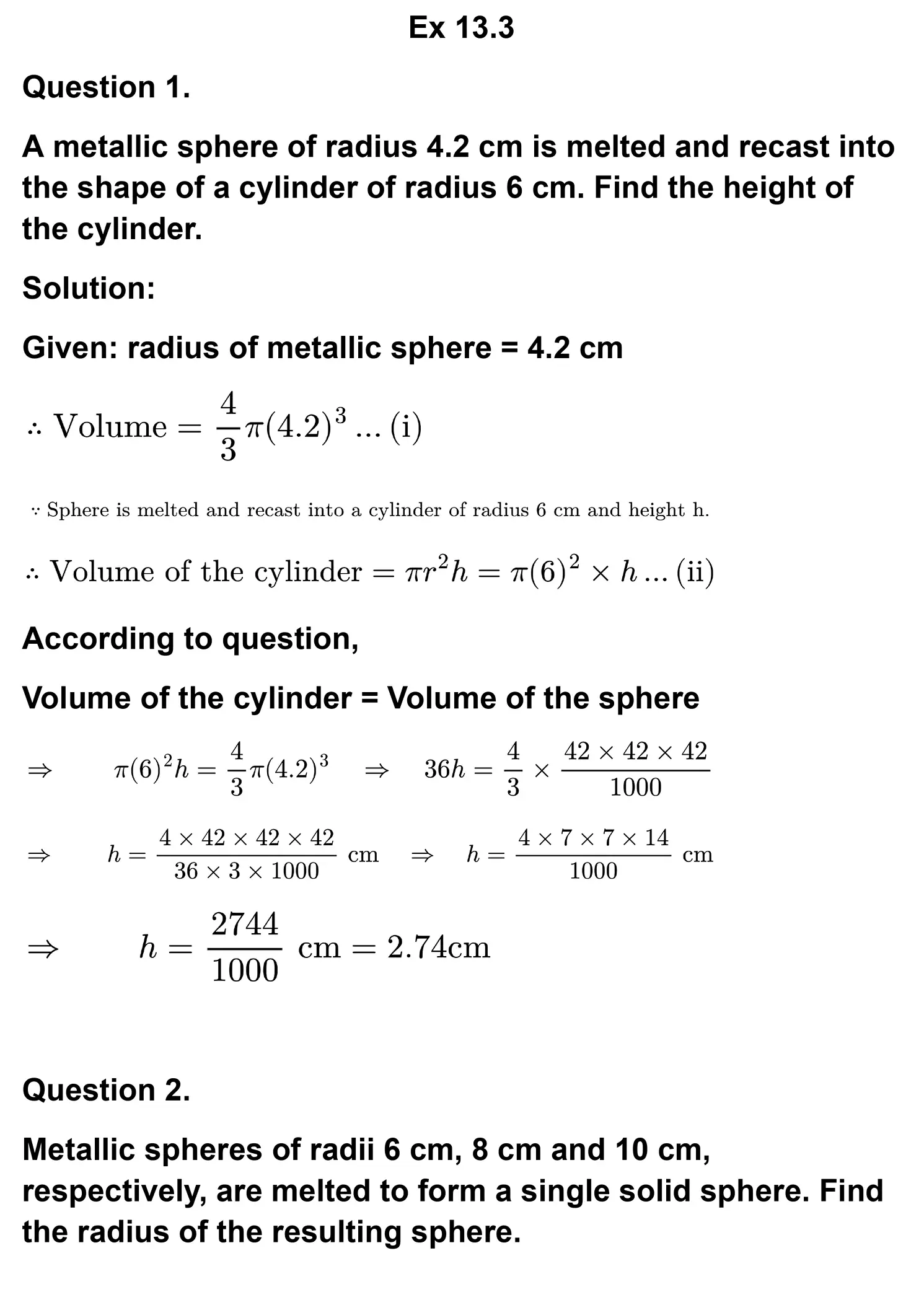
Question .A metallic sphere of radius 4.2 cm is melted and recast into the shape of a cylinder of radius 6 cm. Find the height of the cylinder.
Solution:
Given: radius of metallic sphere = 4.2 cm
According to question,
Volume of the cylinder = Volume of the sphere