
This article contains the CBSE class 10 social science PYQ 2026 (Set 1 & 2) with solutions. Practicing this PYQ will increase confidence in students before exam and eventually students can score higher marks in exam. These papers will give insight about exam pattern, difficulty level of question asked in board exam and students can manage their time in a very efficient way during exam time.
After completing Class 10 Social Science syllabus students should start practicing of class 10 social science PYQ 2026. This will help students to evaluate themself before exam, finding important topics for exam. Below we have given class 10 social science PYQ 2026 SET 1 and 2 with solutions.
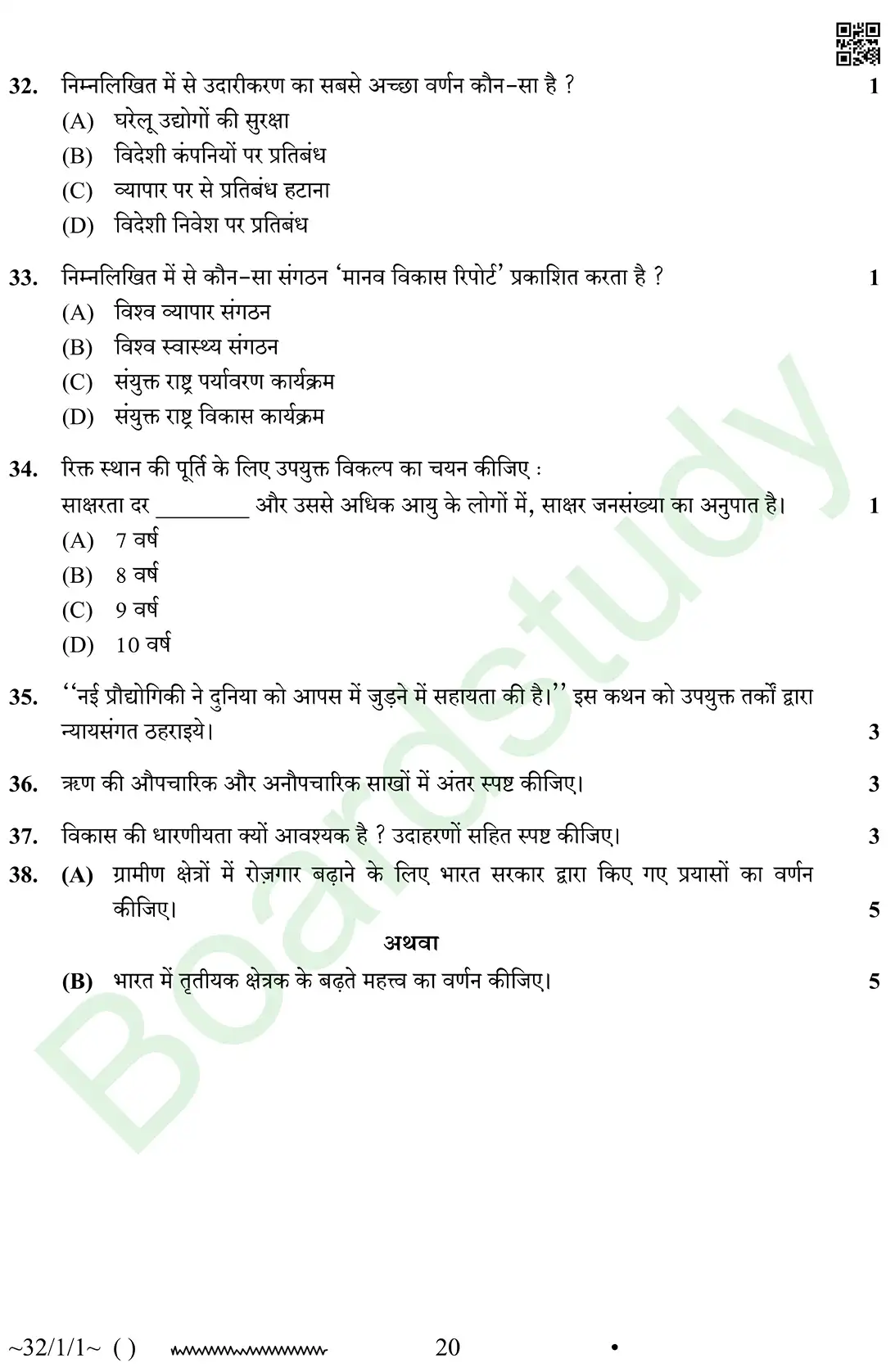
CBSE Class 10 Social Science PYQ 2026 SET 1 Question
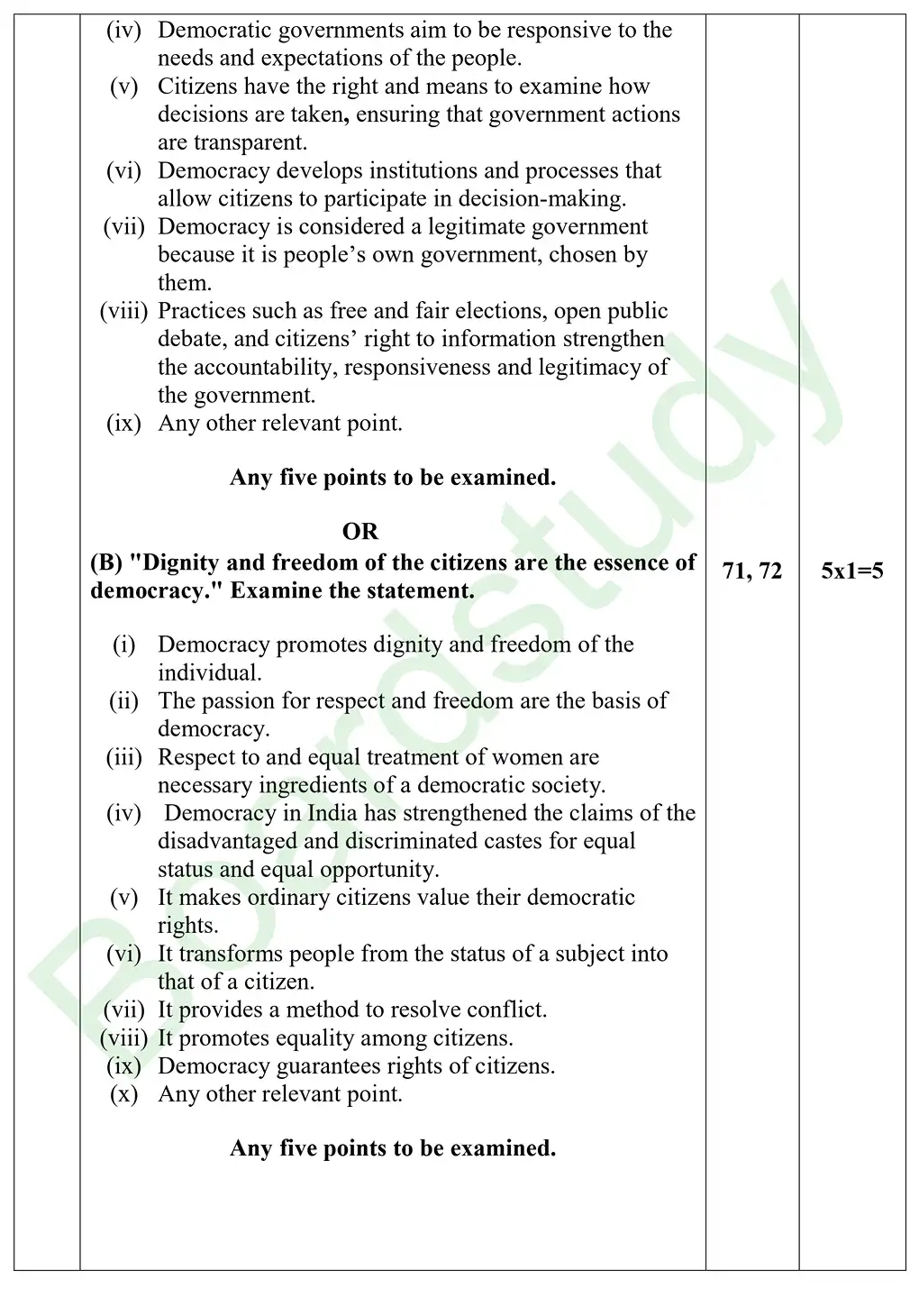
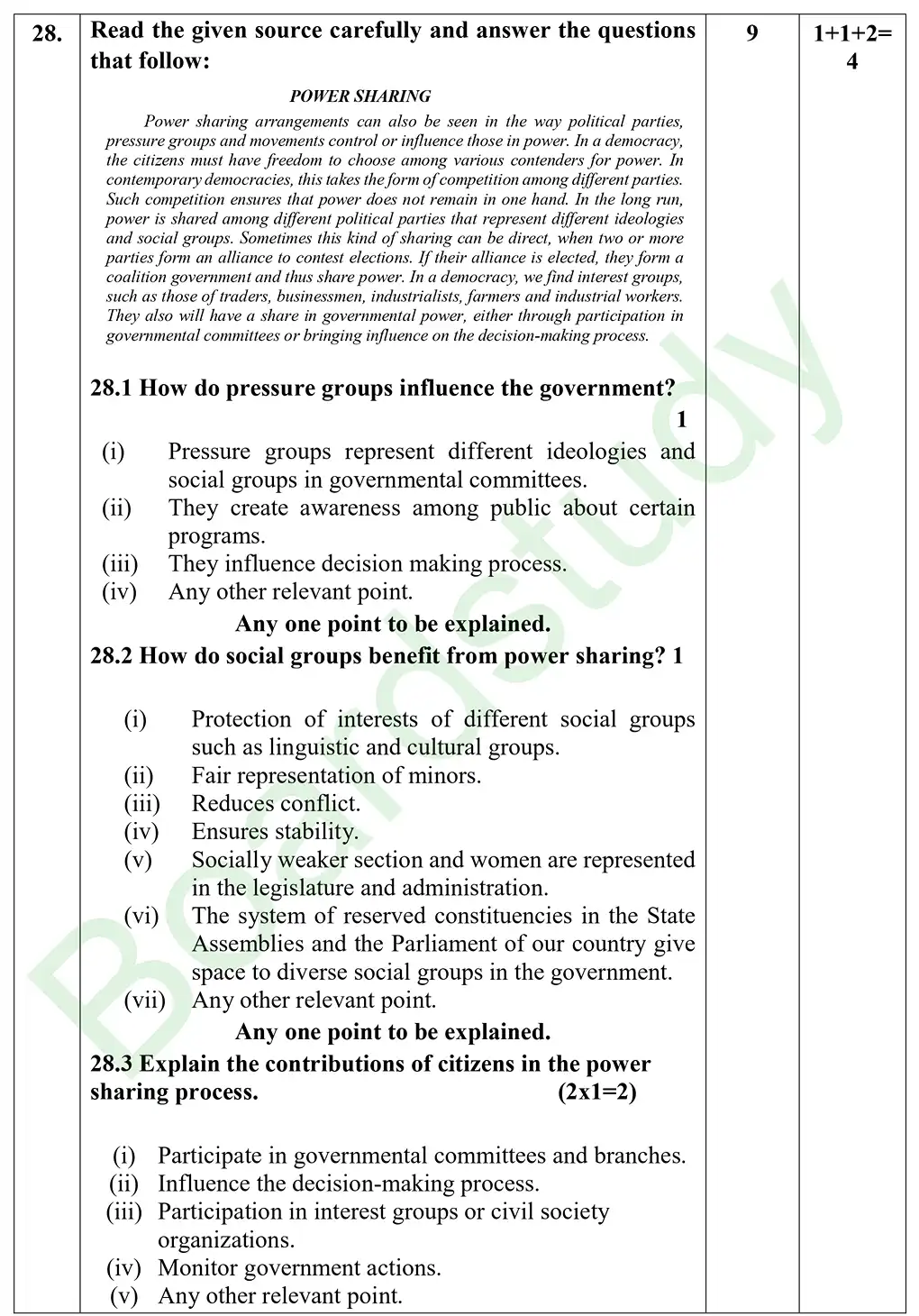
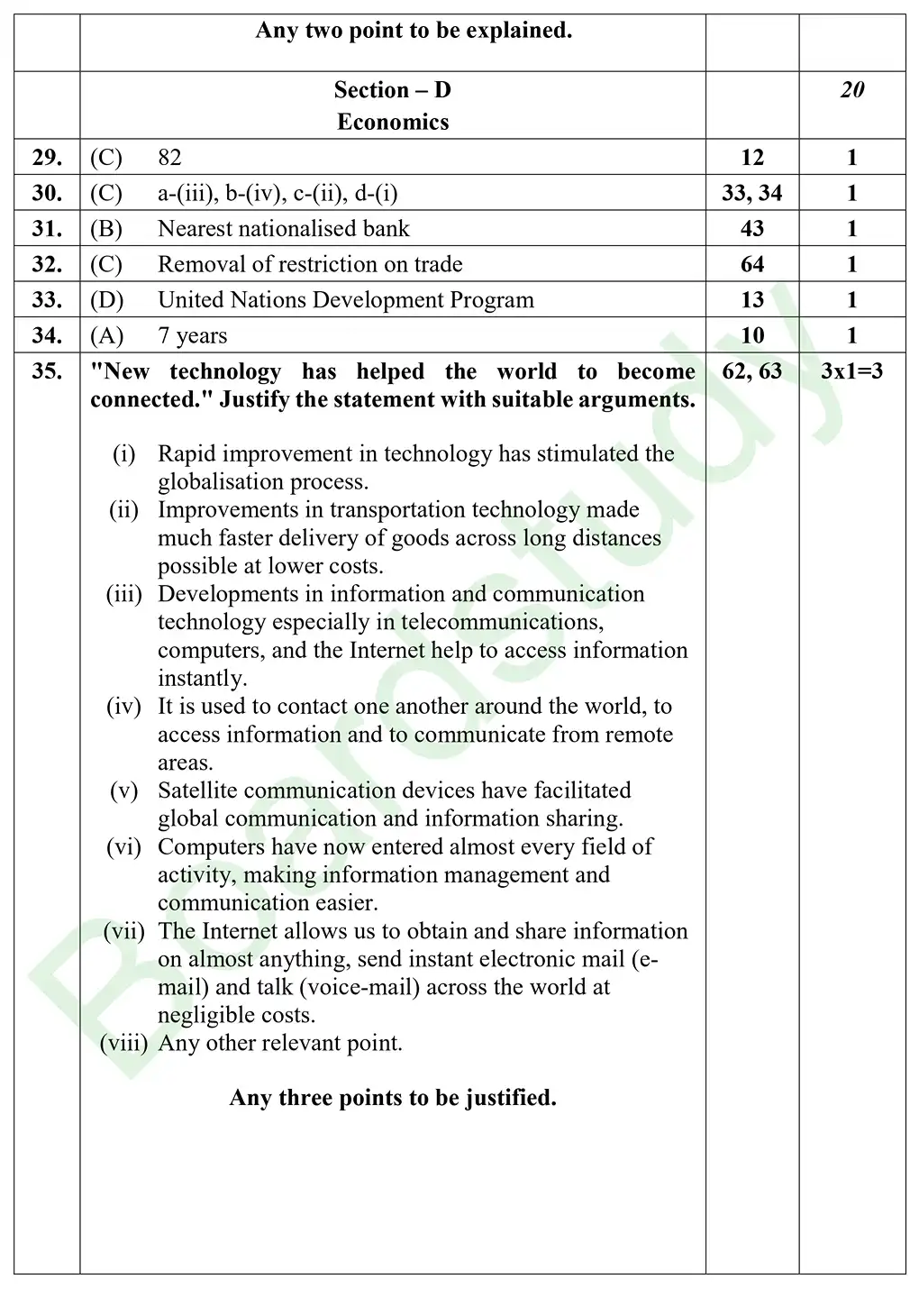
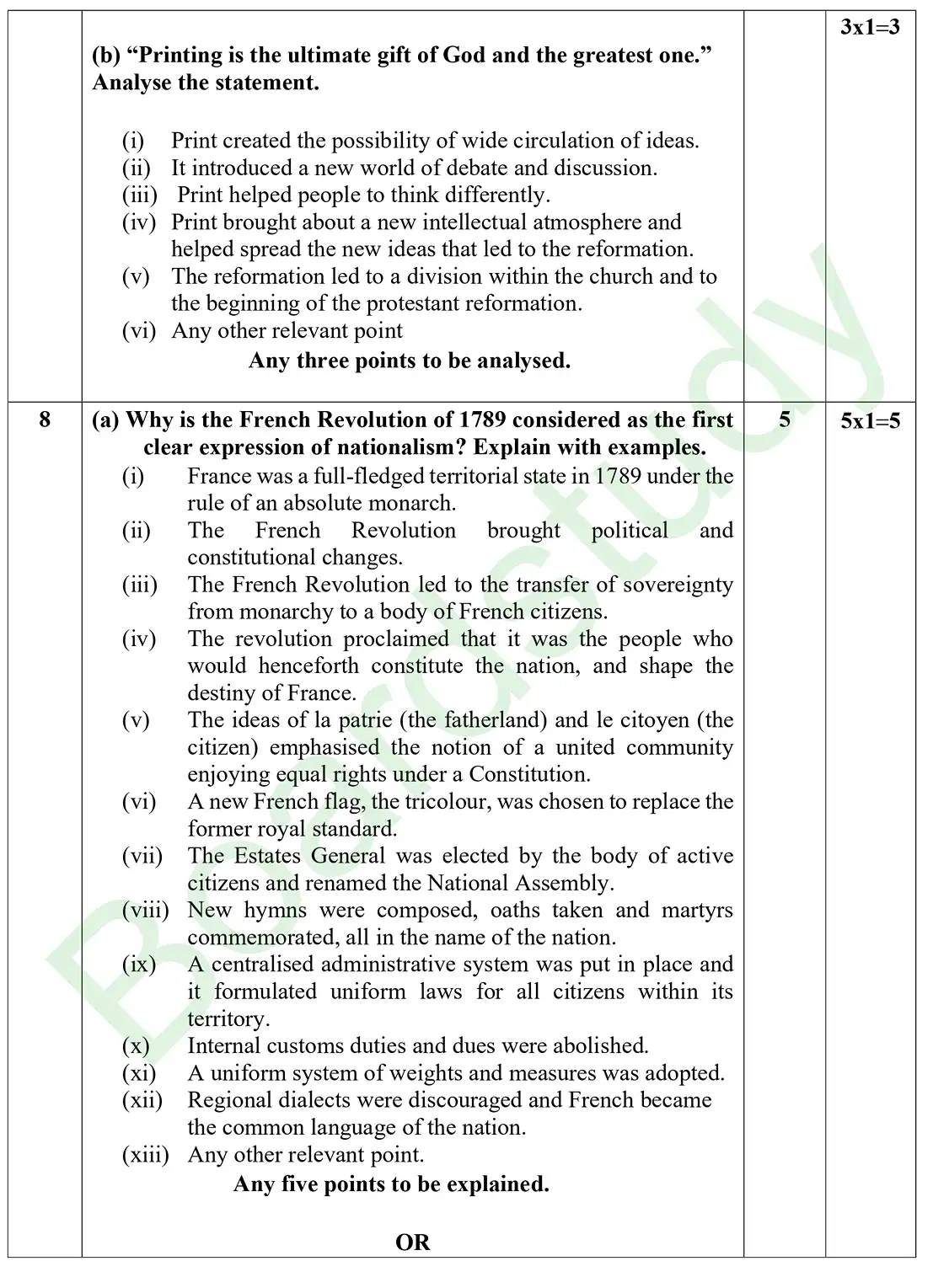
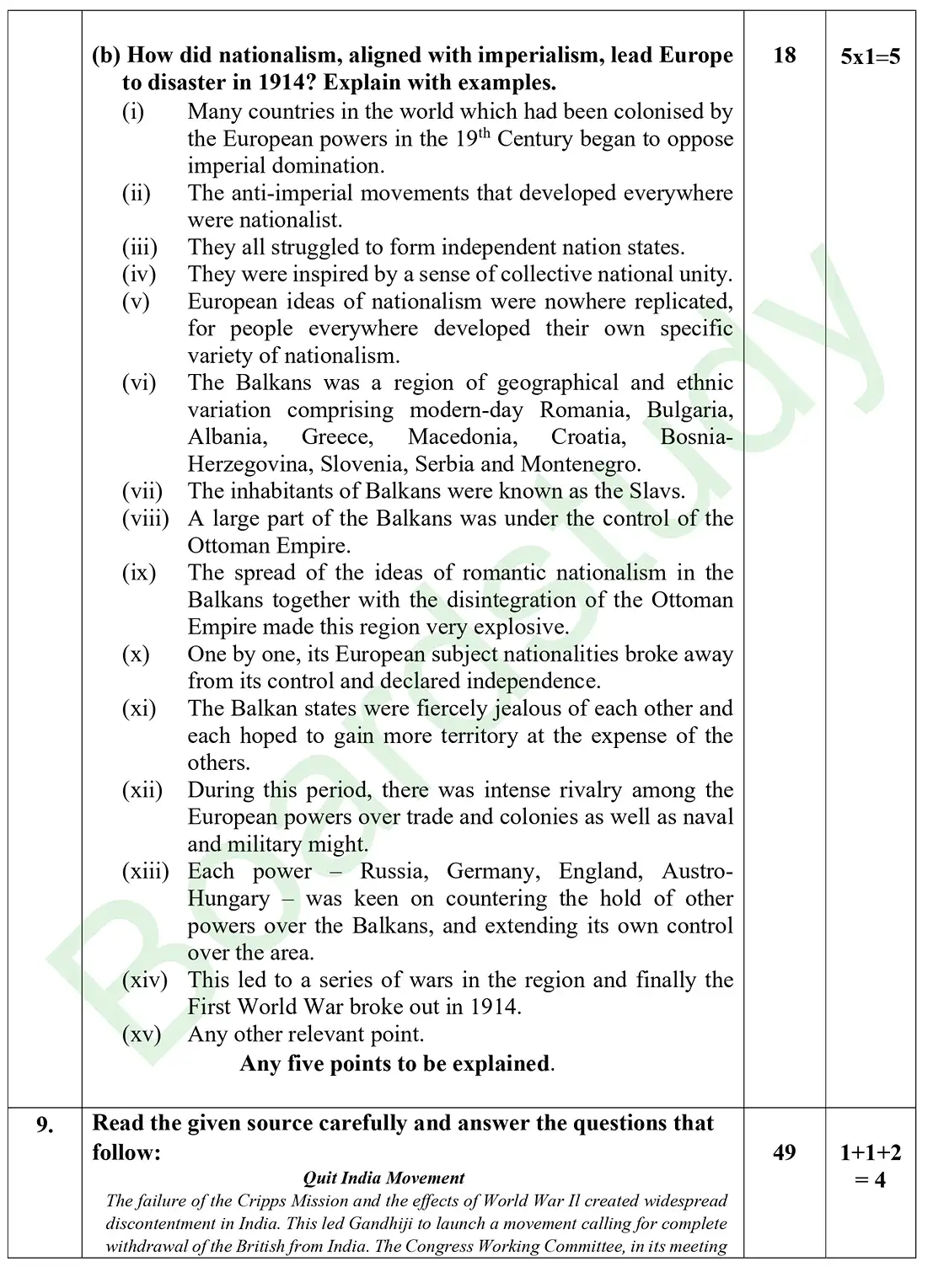
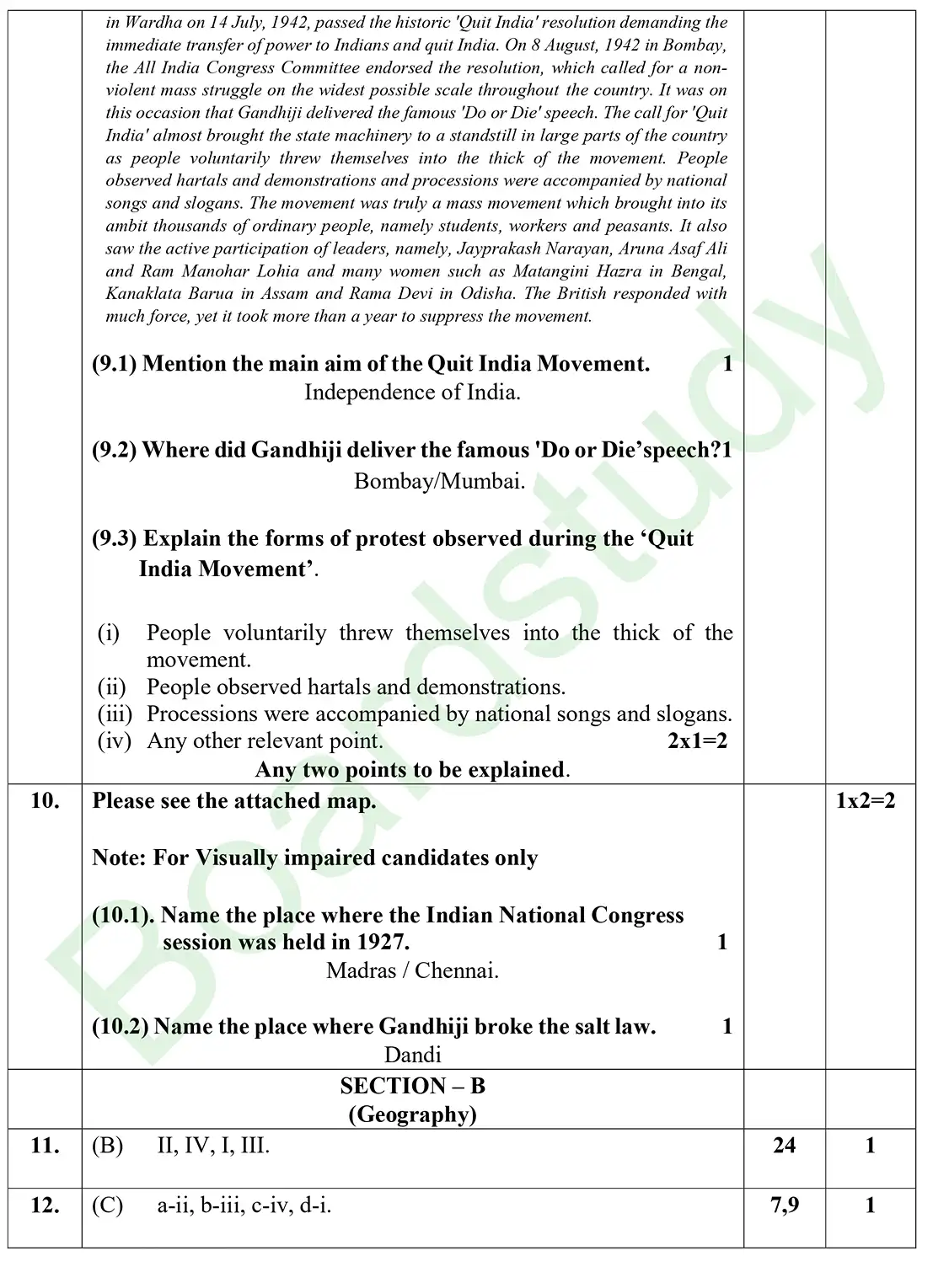
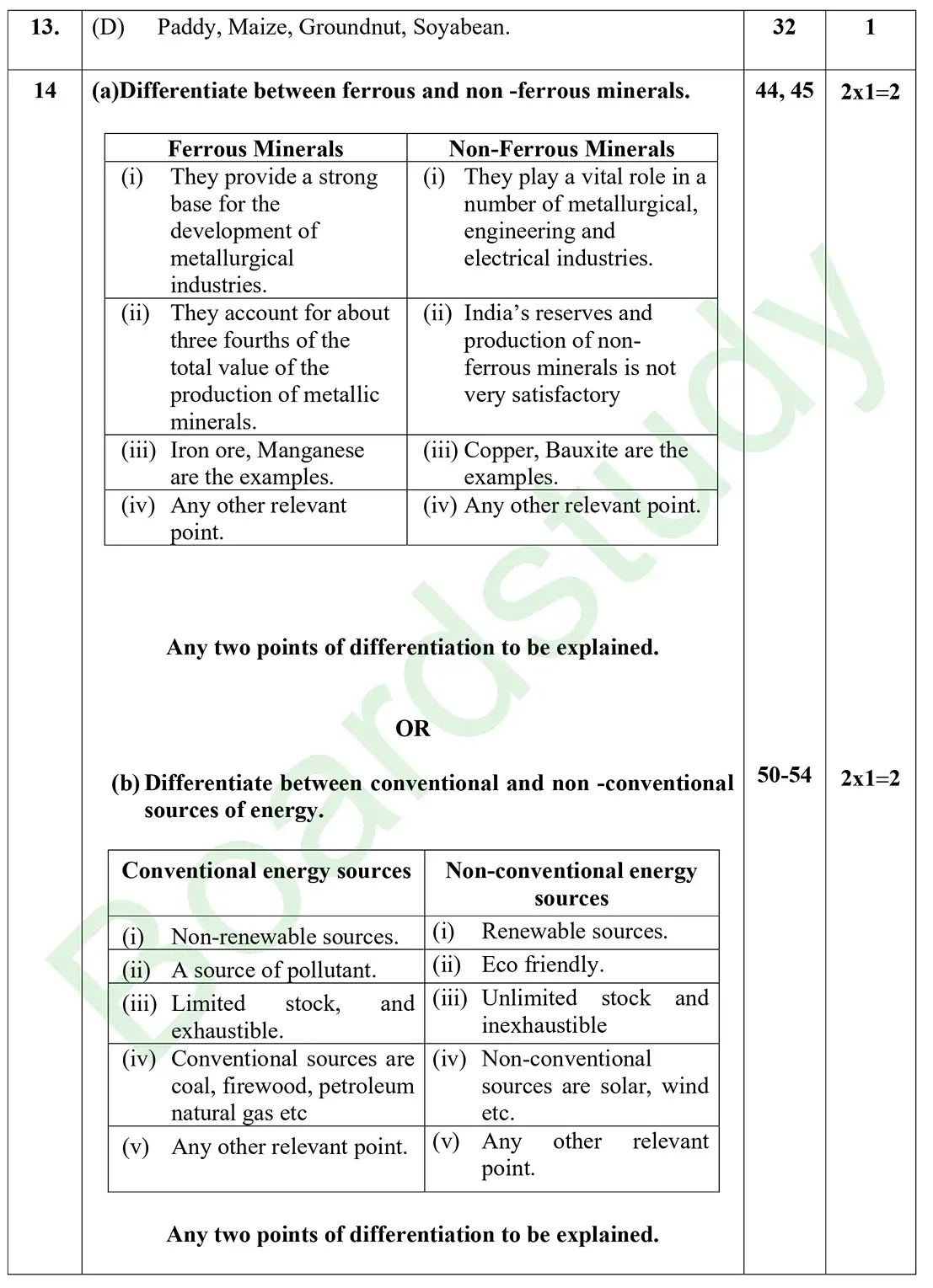
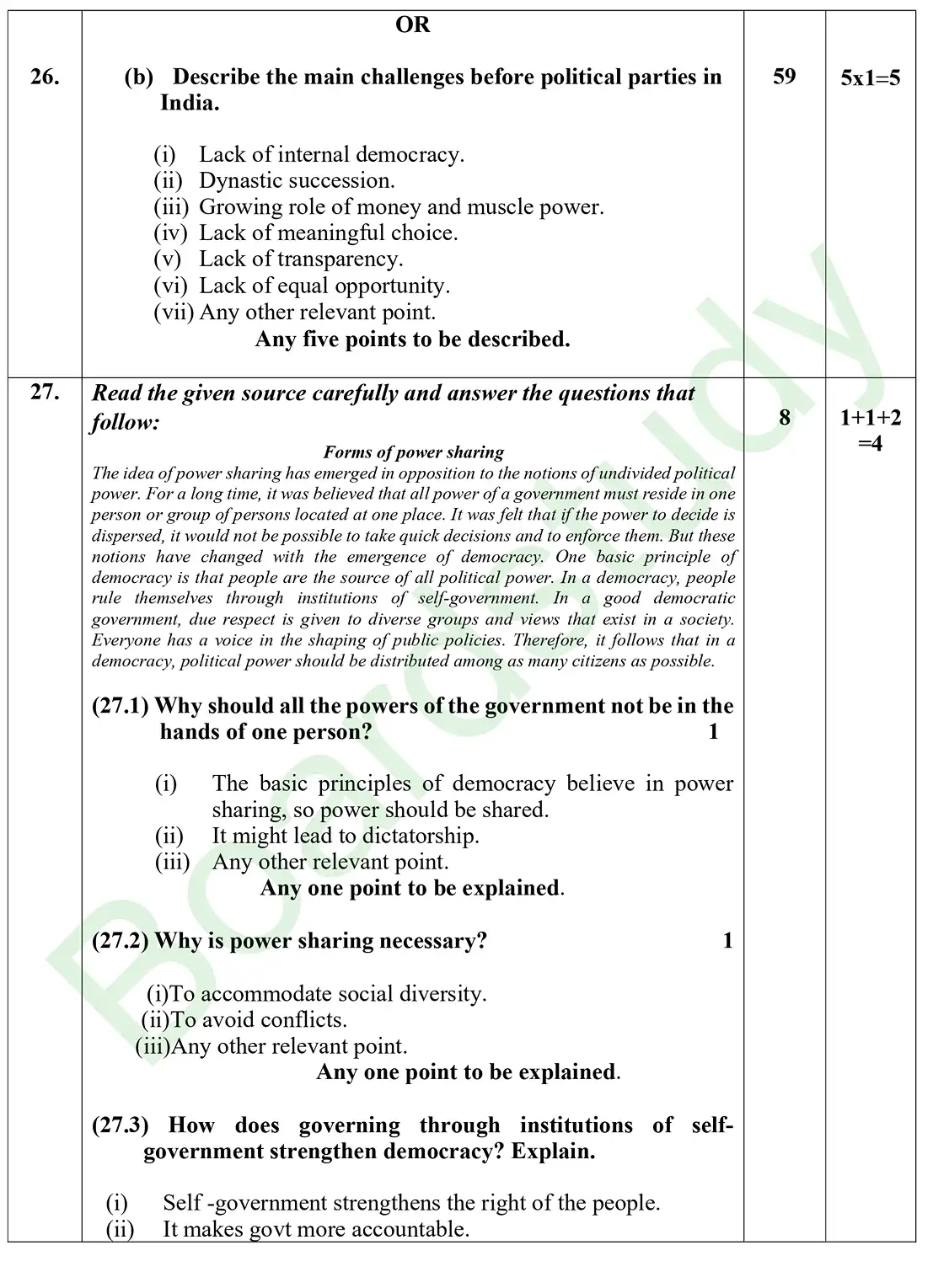
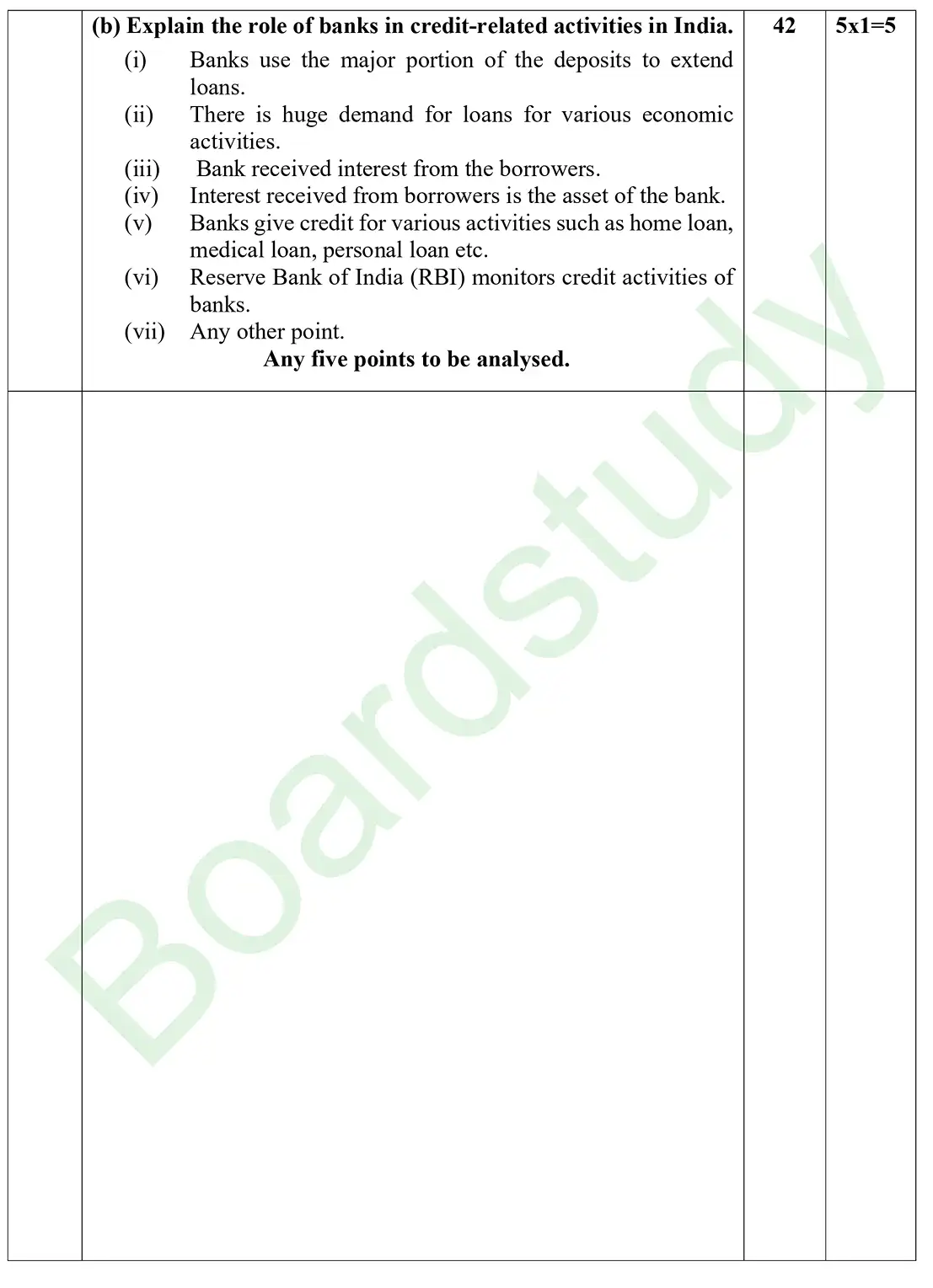
CBSE Class 10 Social Science PYQ 2026 SET 1 Solution
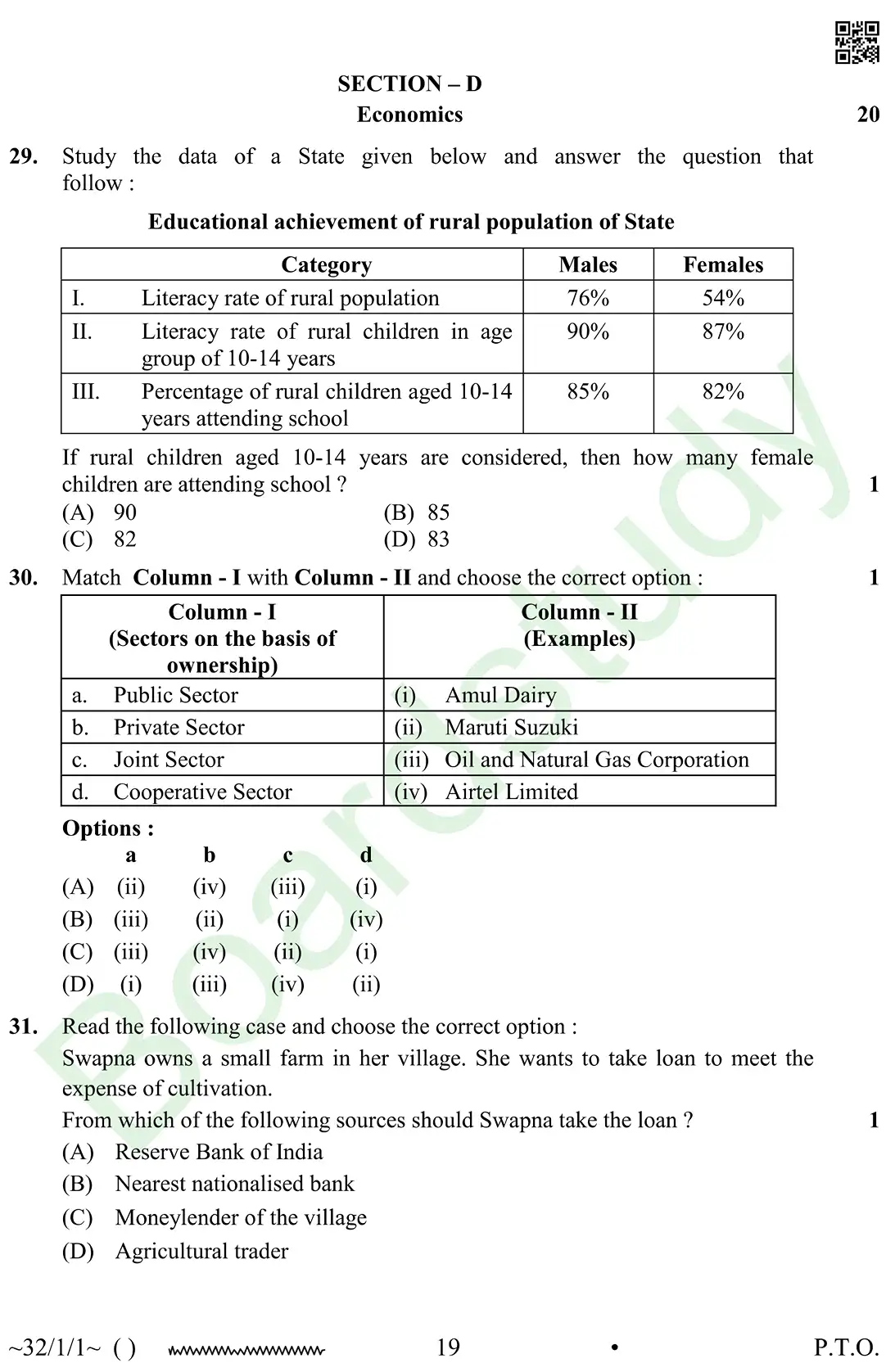
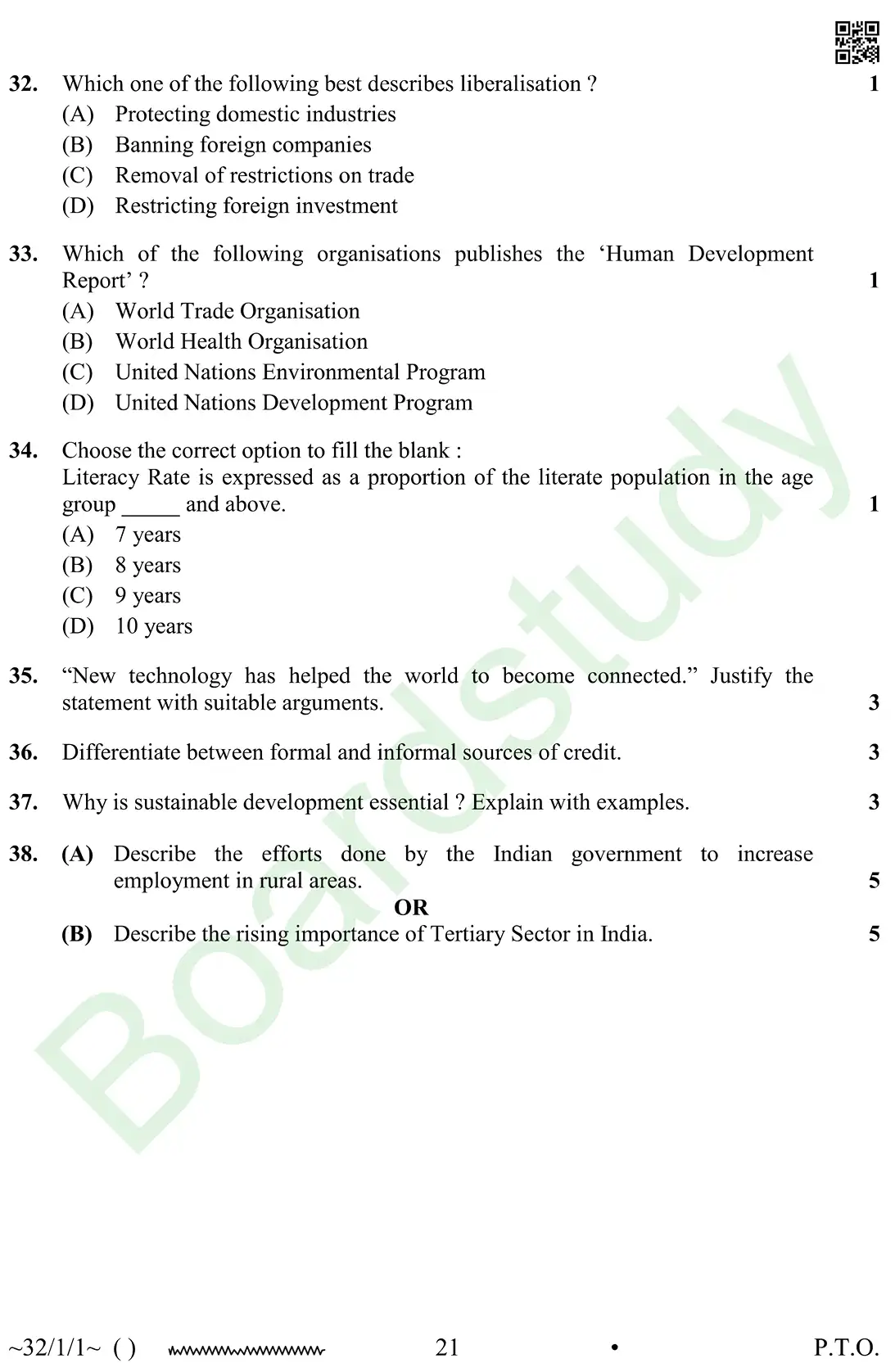
CBSE Class 10 Social Science PYQ 2026 SET 2 Question
CBSE Class 10 Social Science PYQ 2026 SET 2 Solution
CBSE Class 10 Social Science PYQ 2026 SET 1 Question
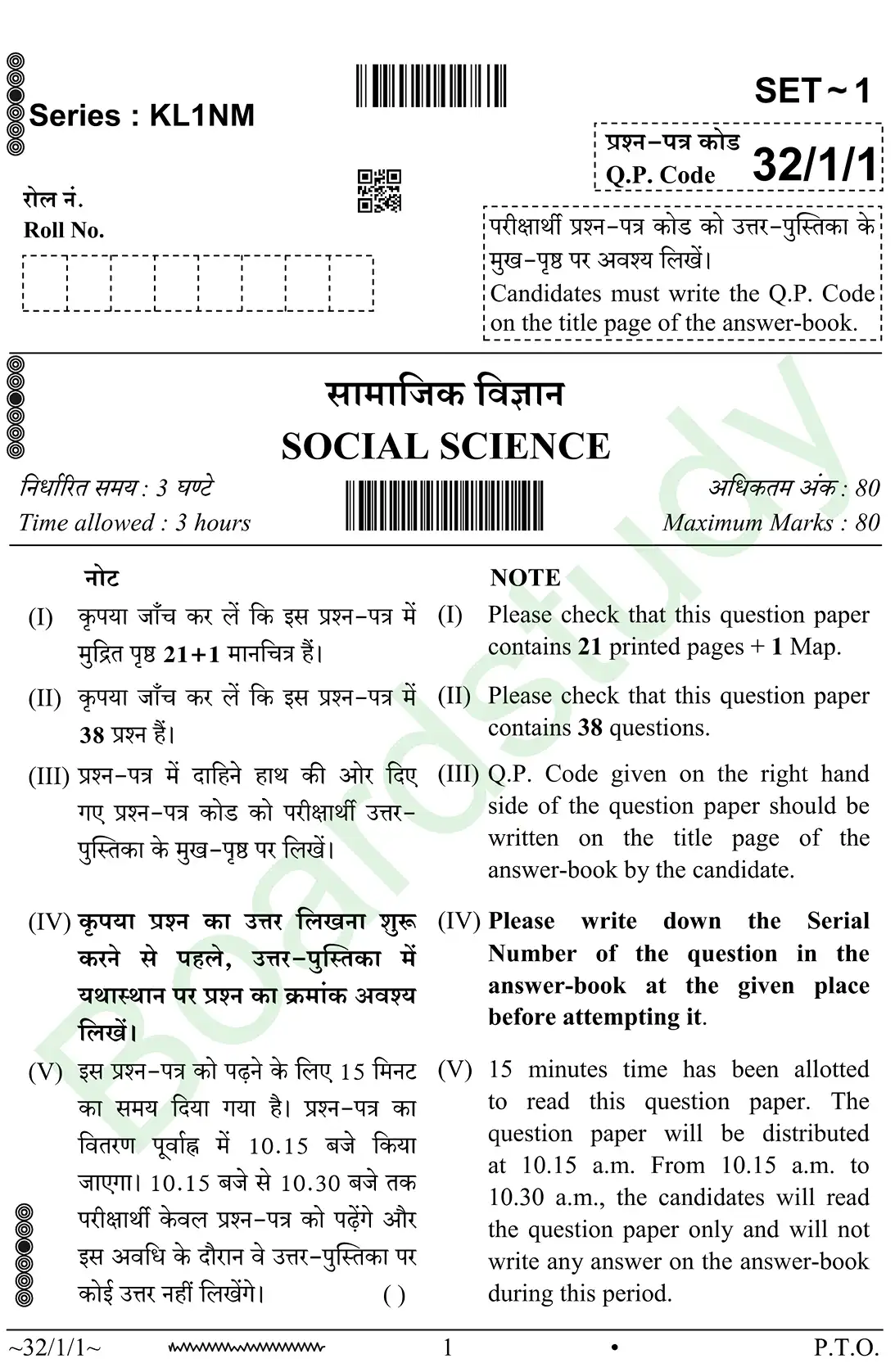
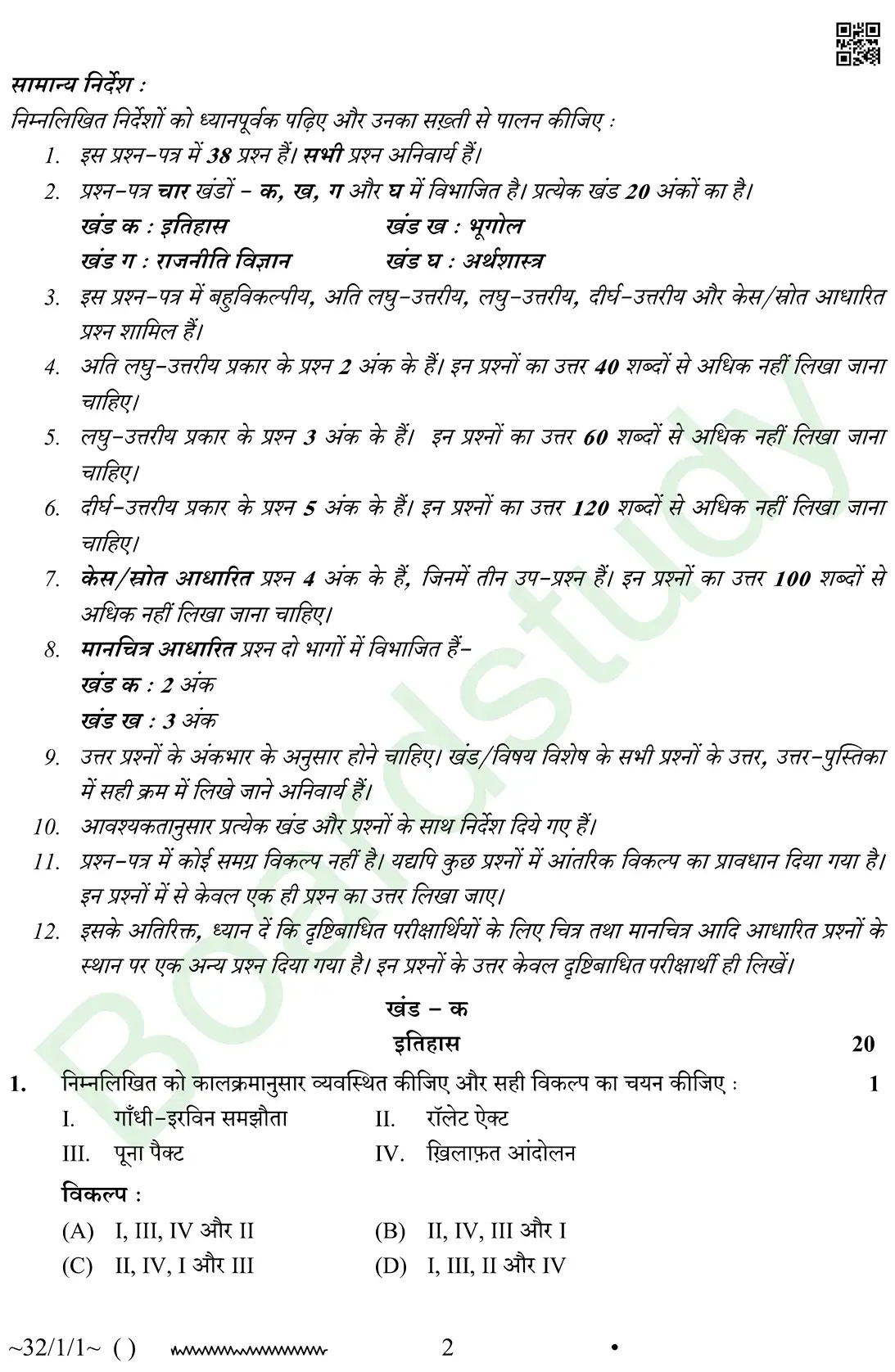
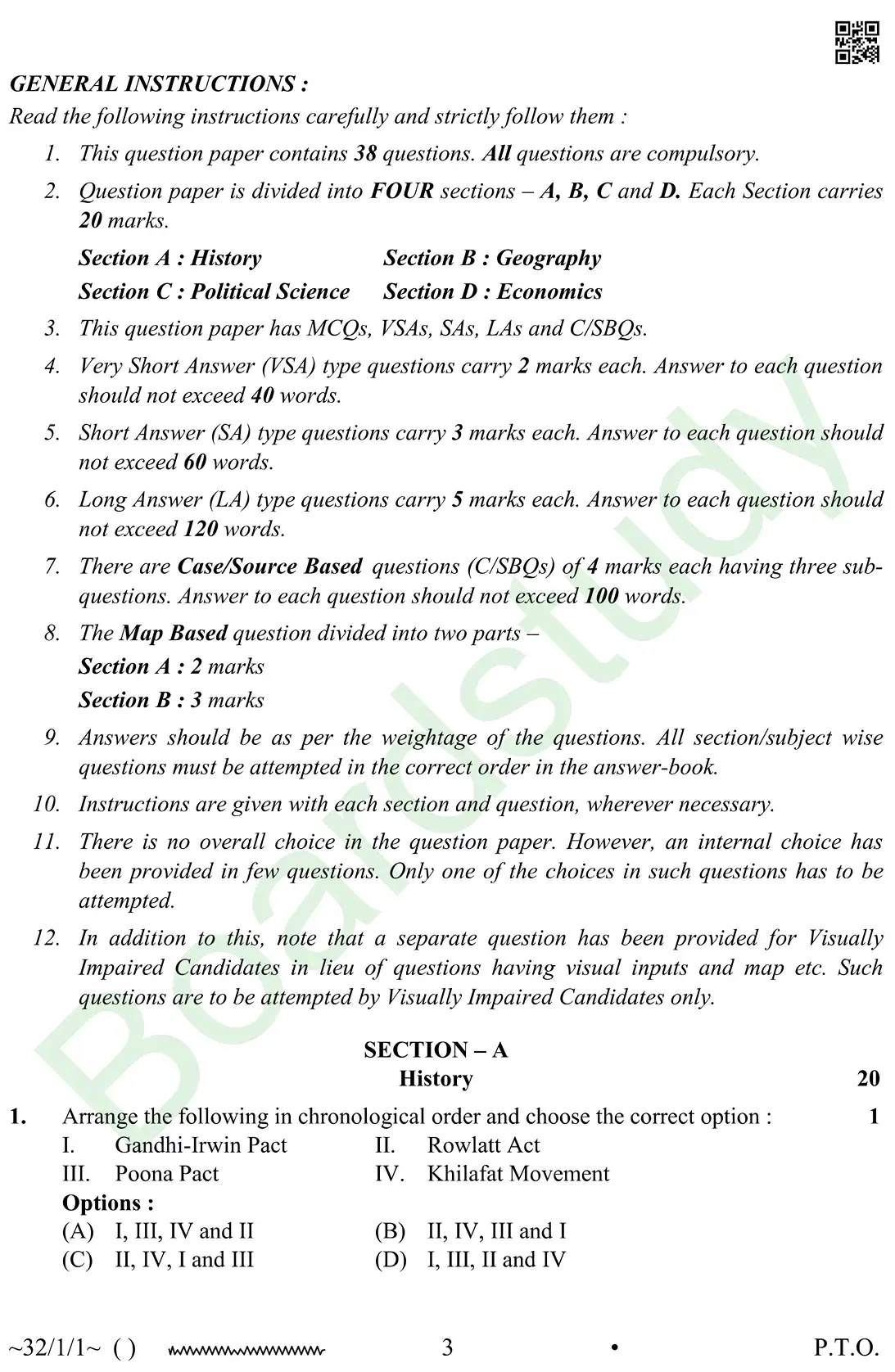

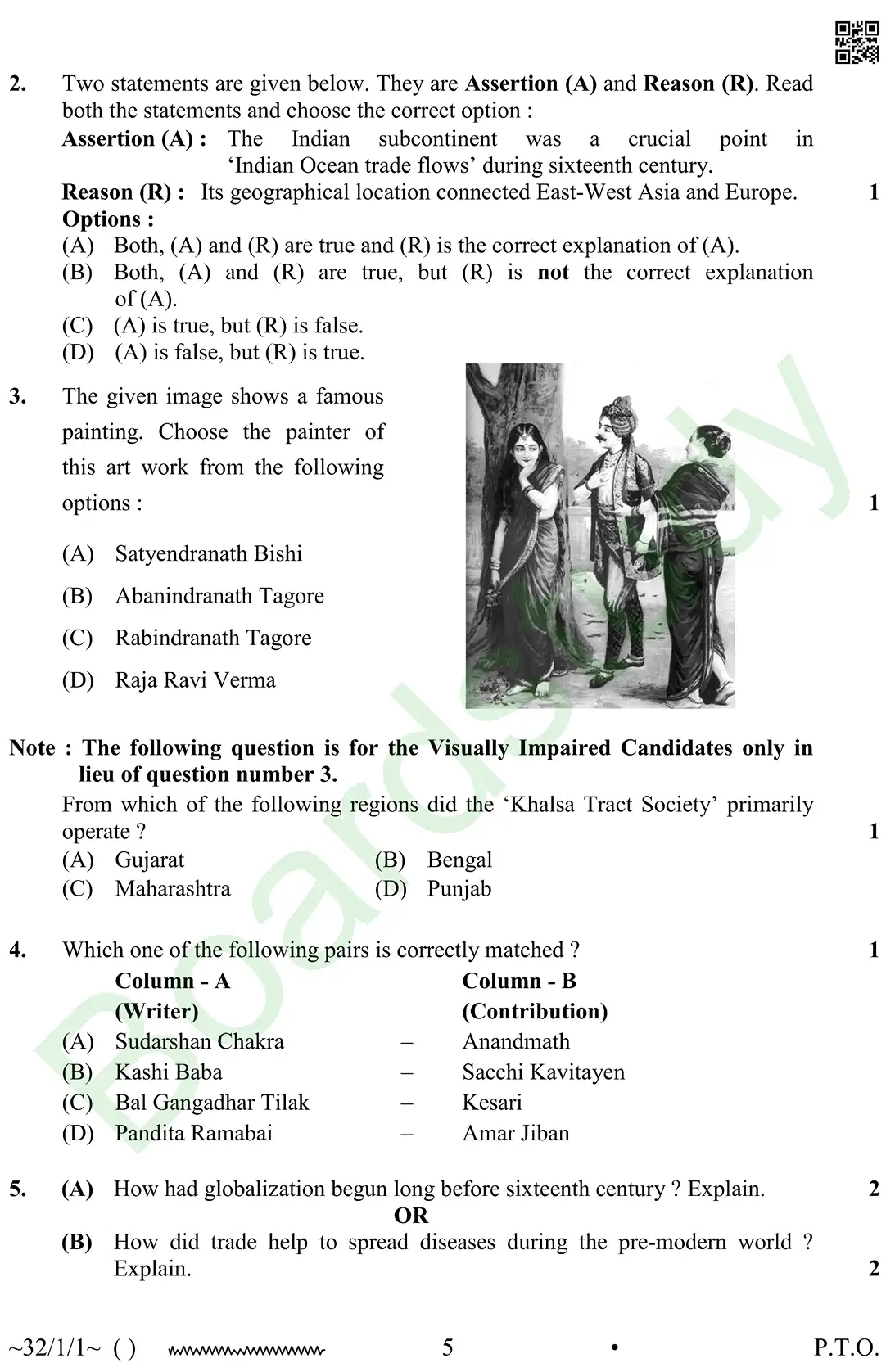
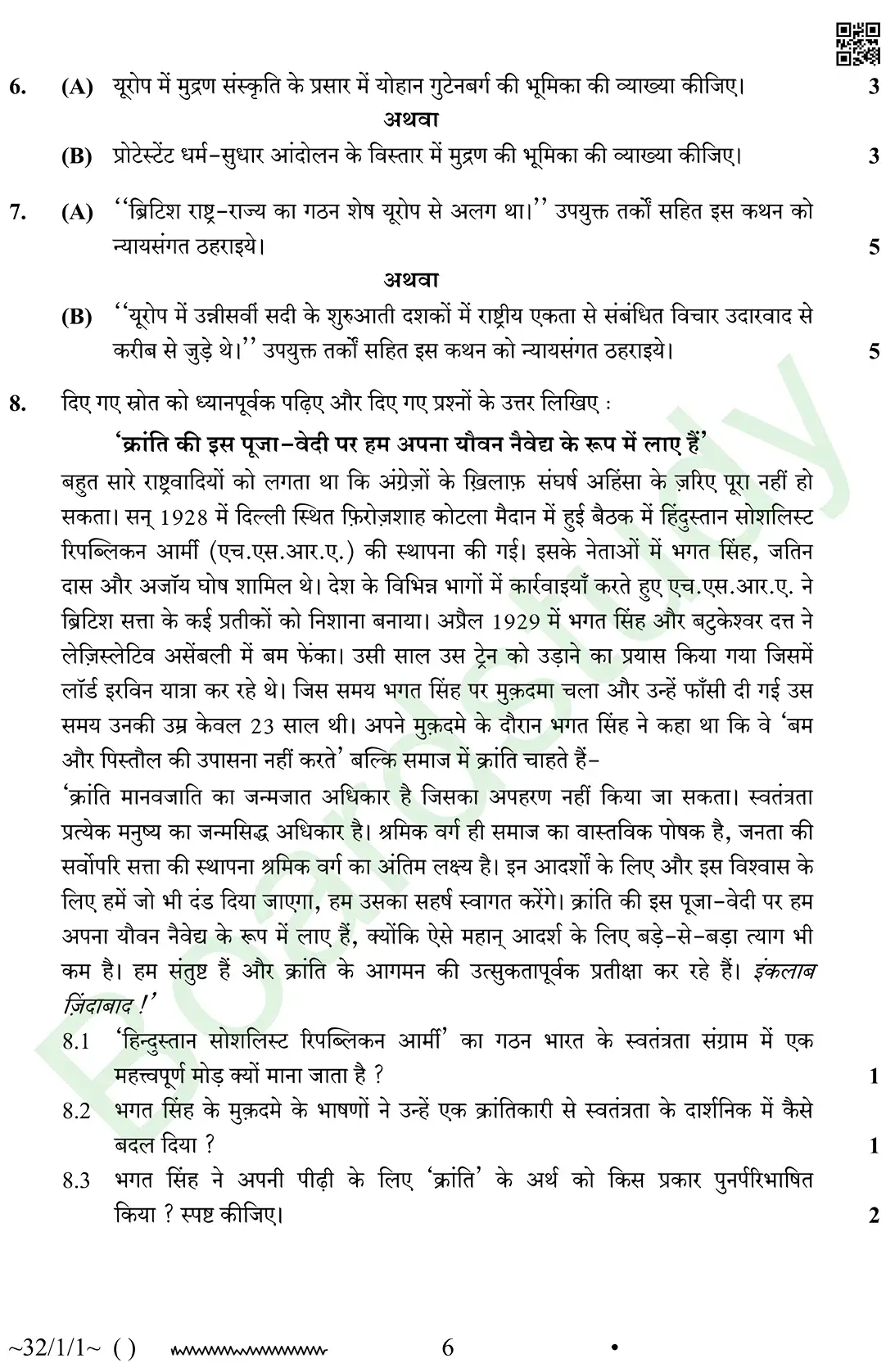
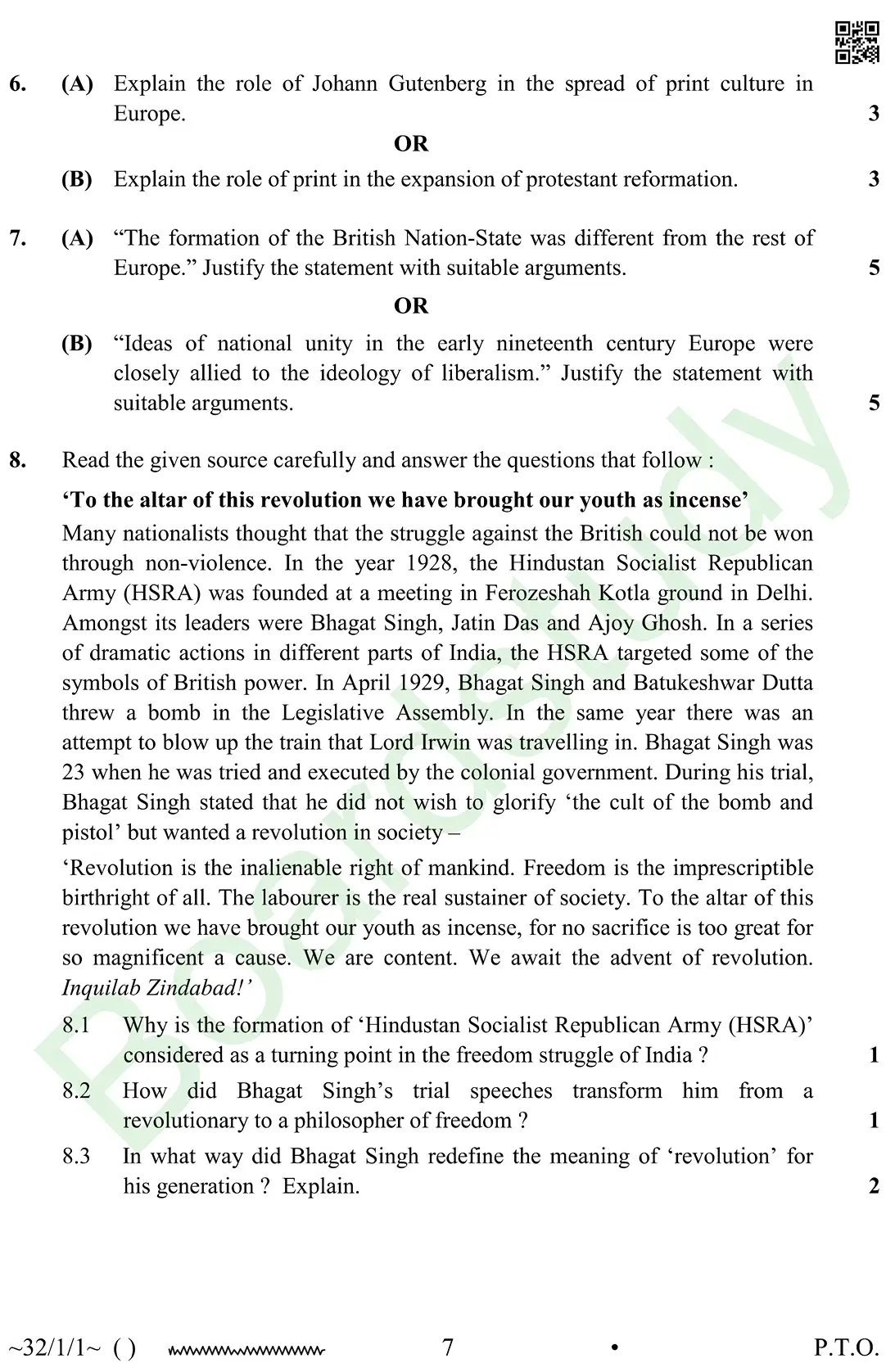
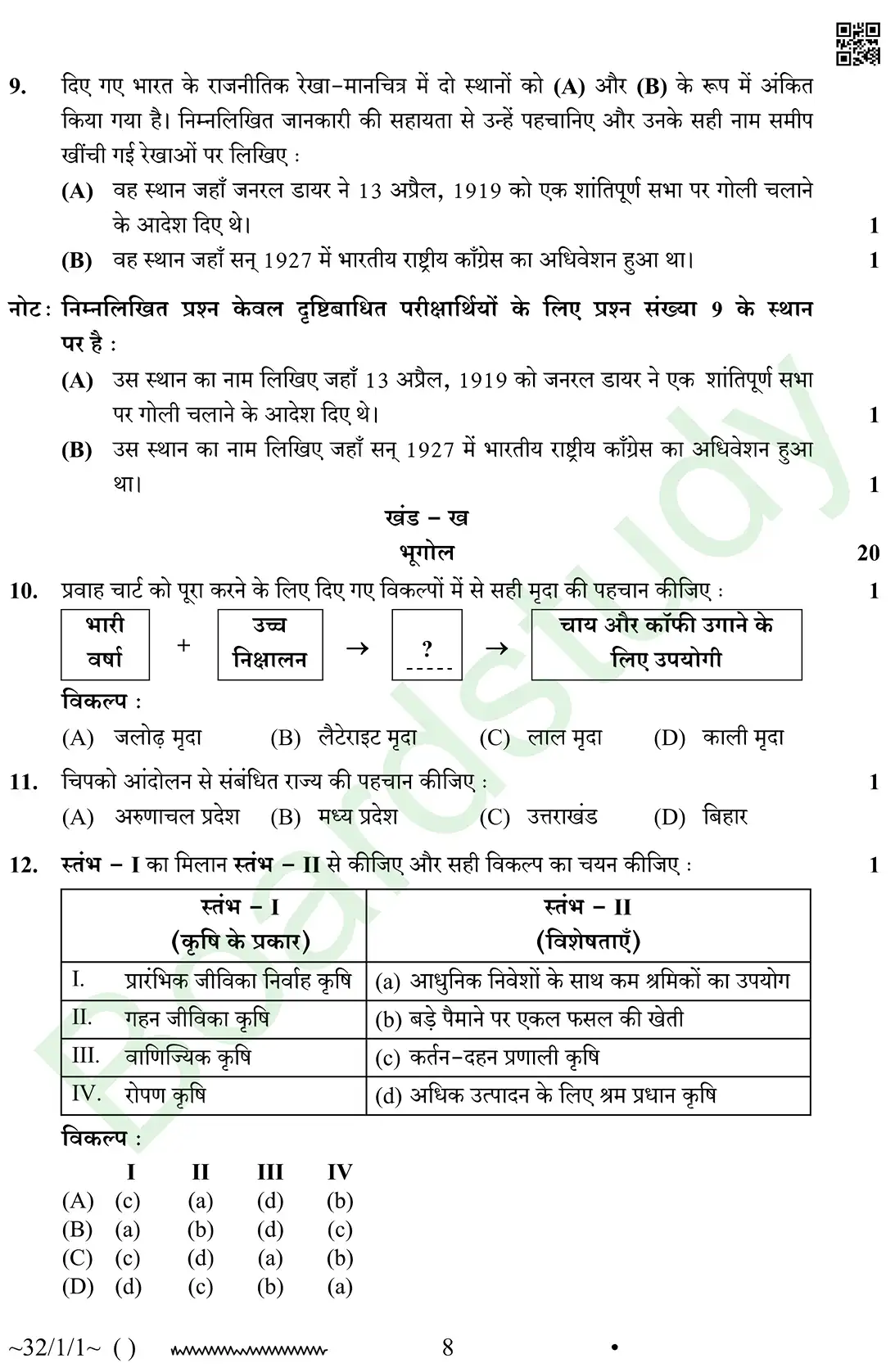
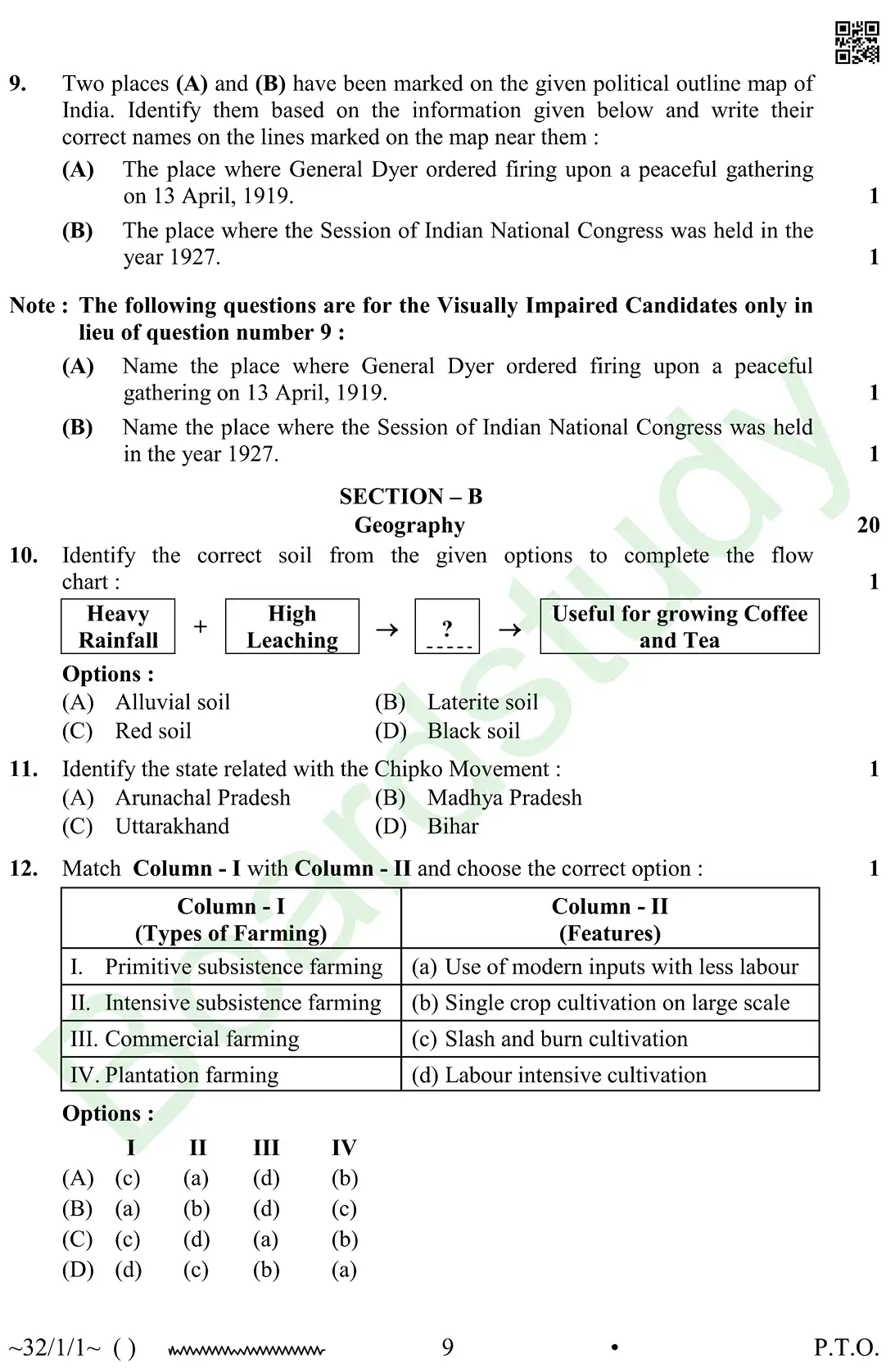
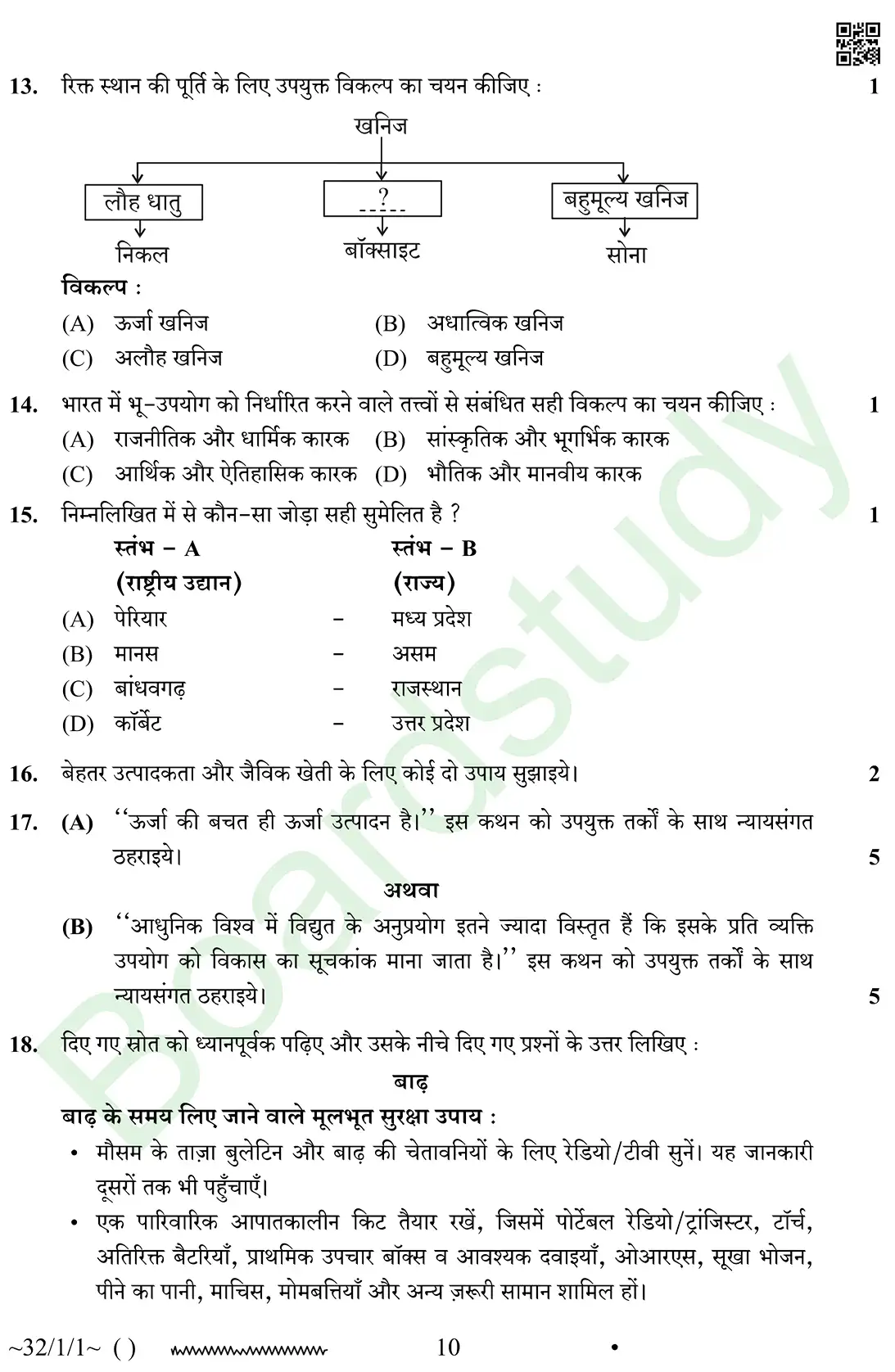
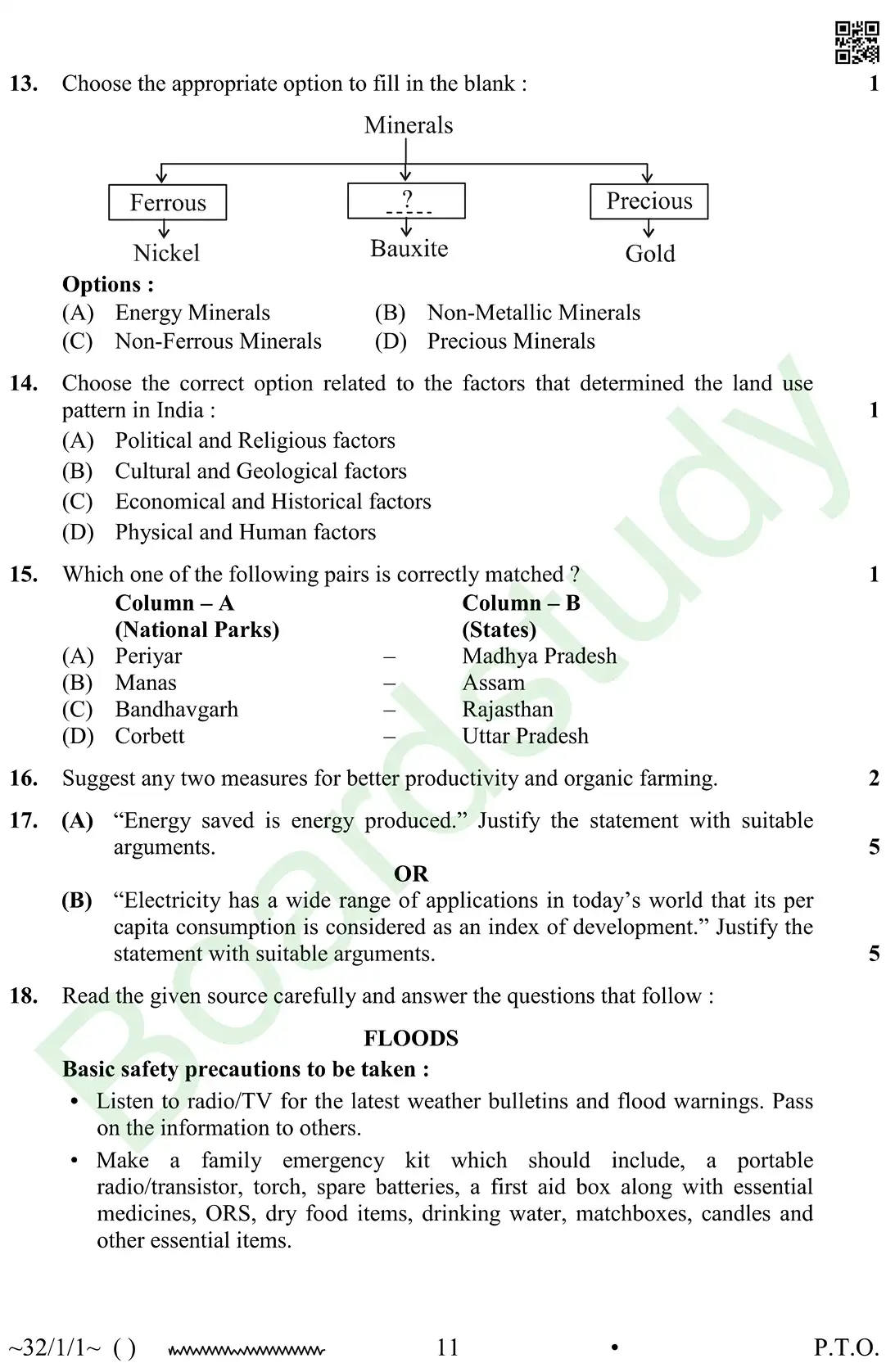
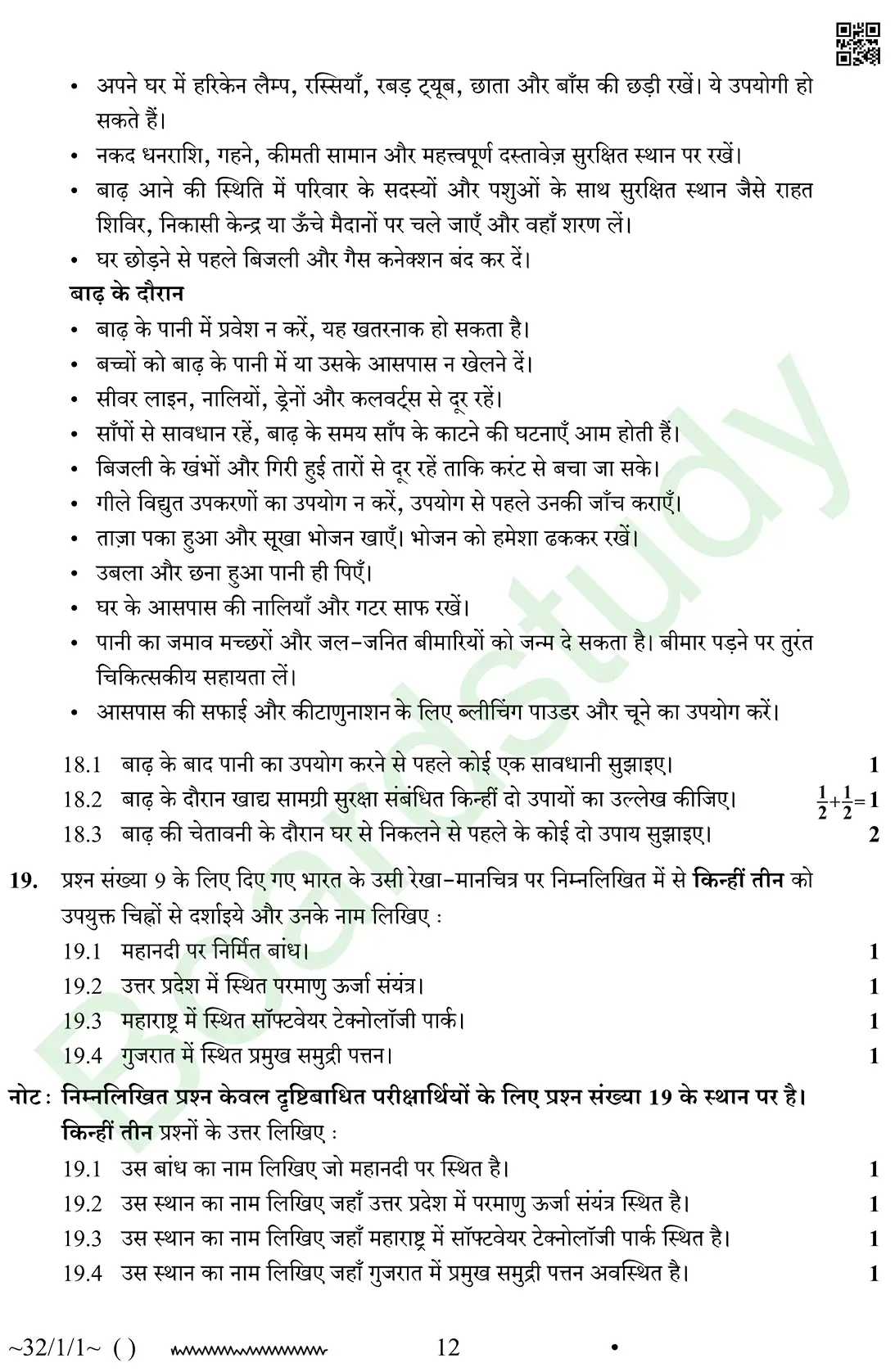
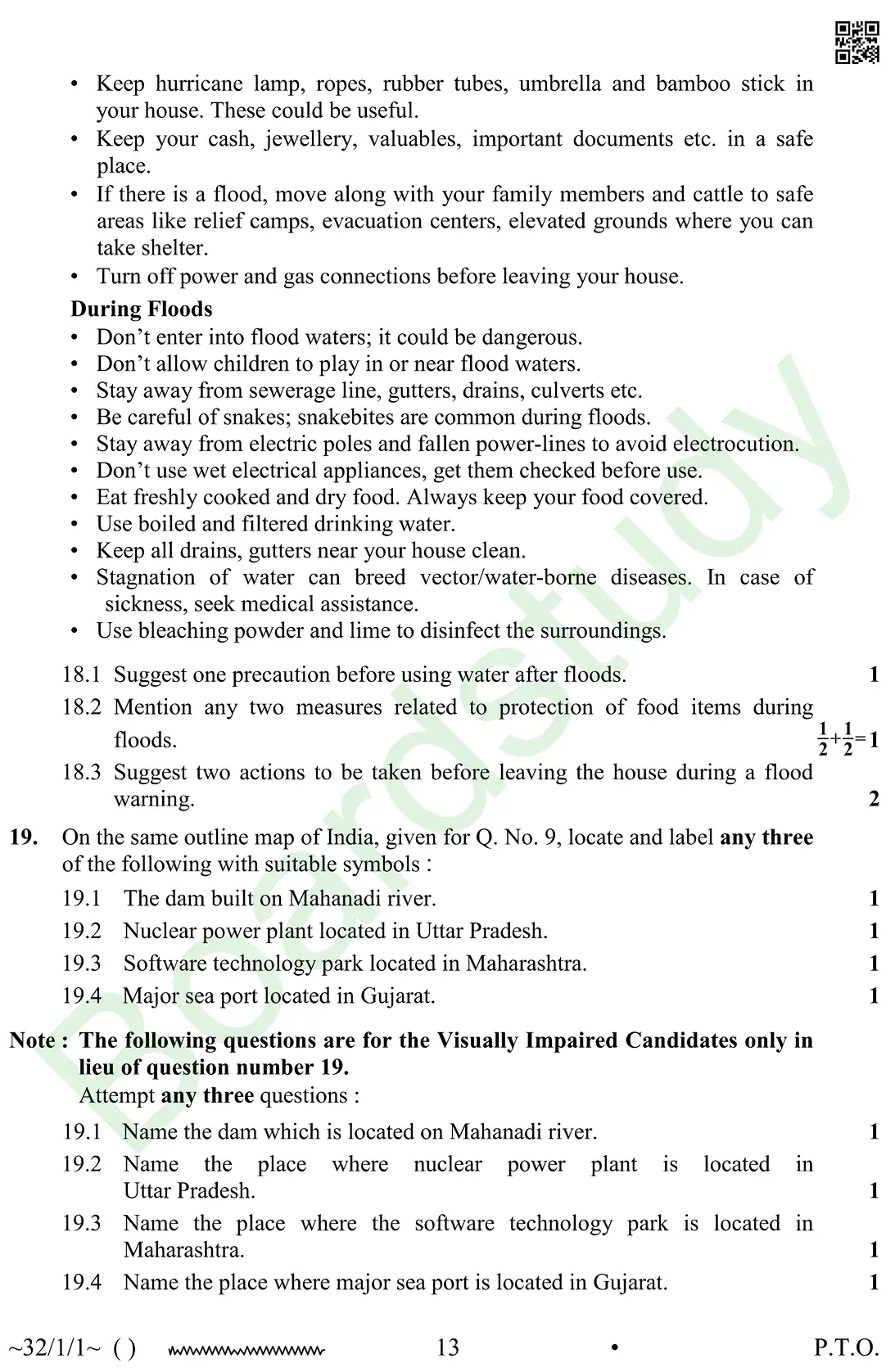
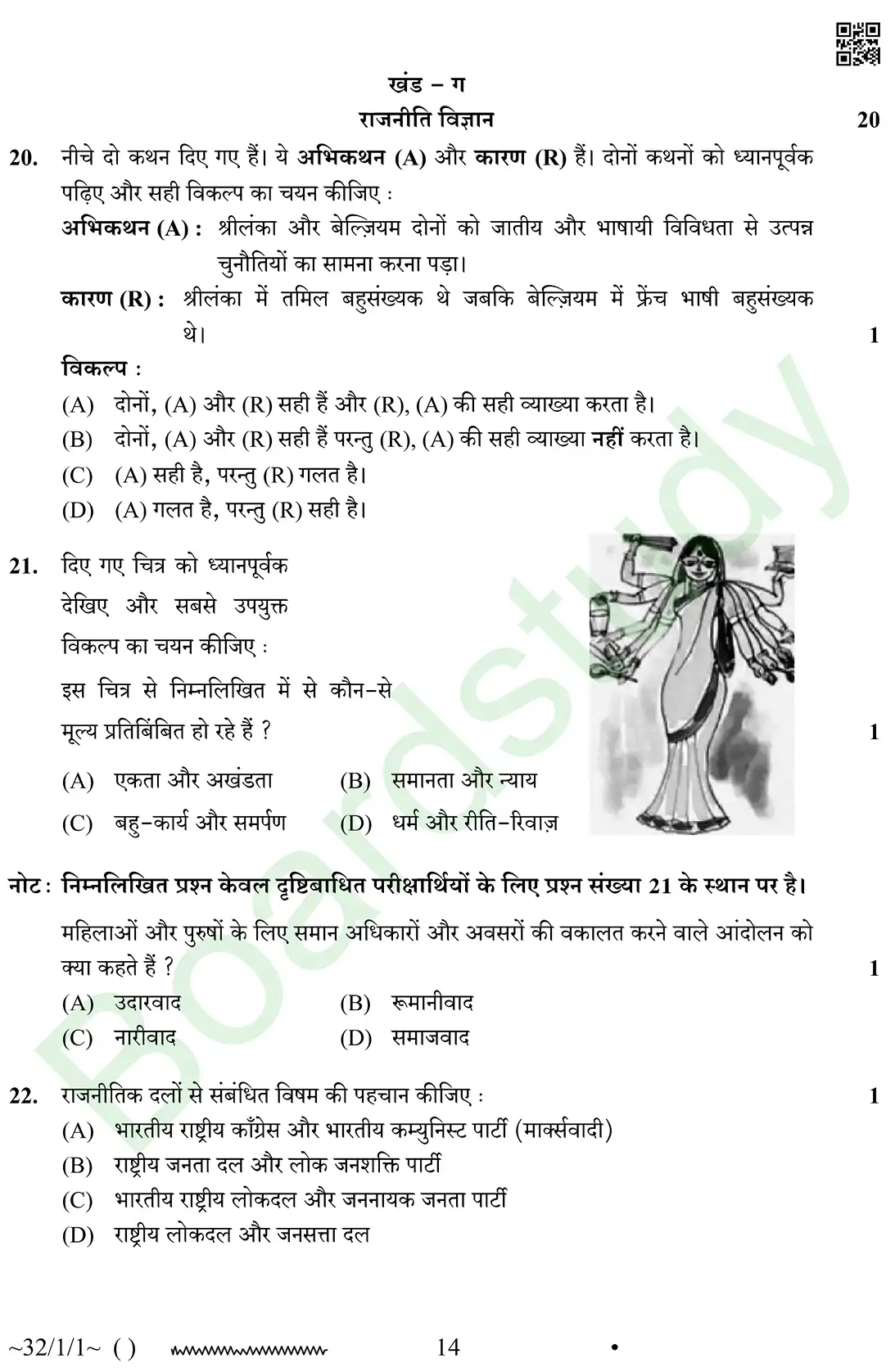
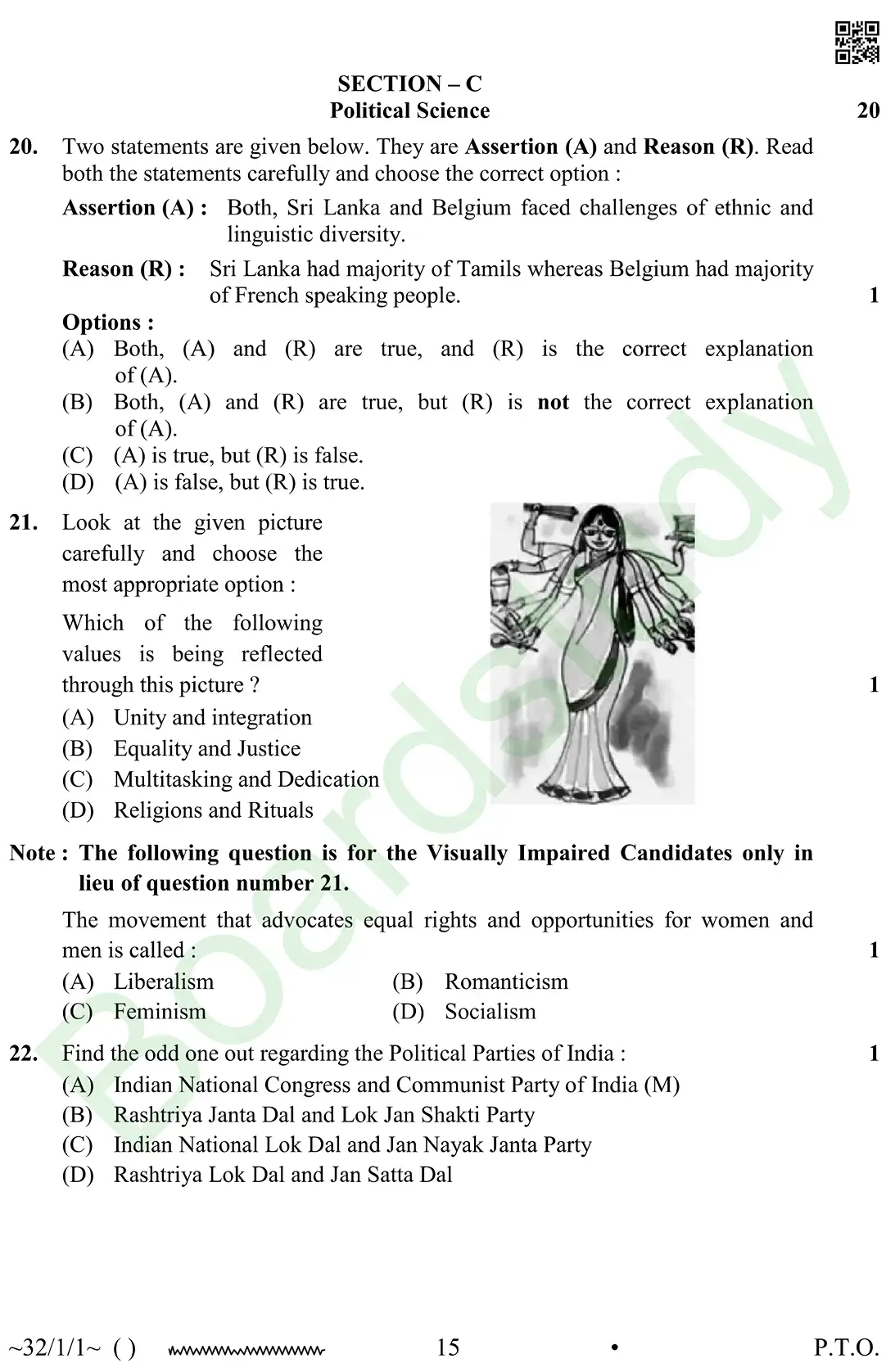
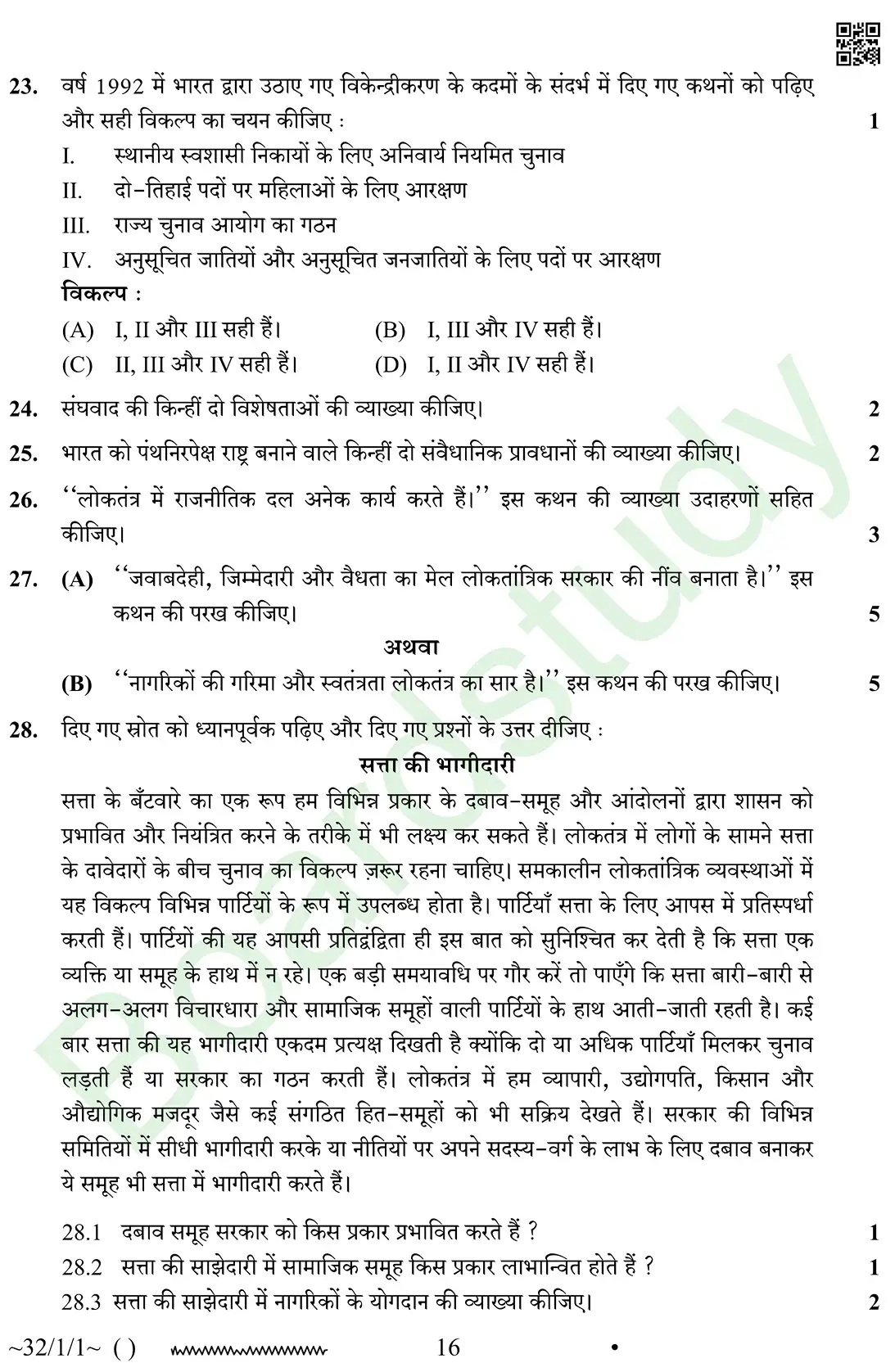
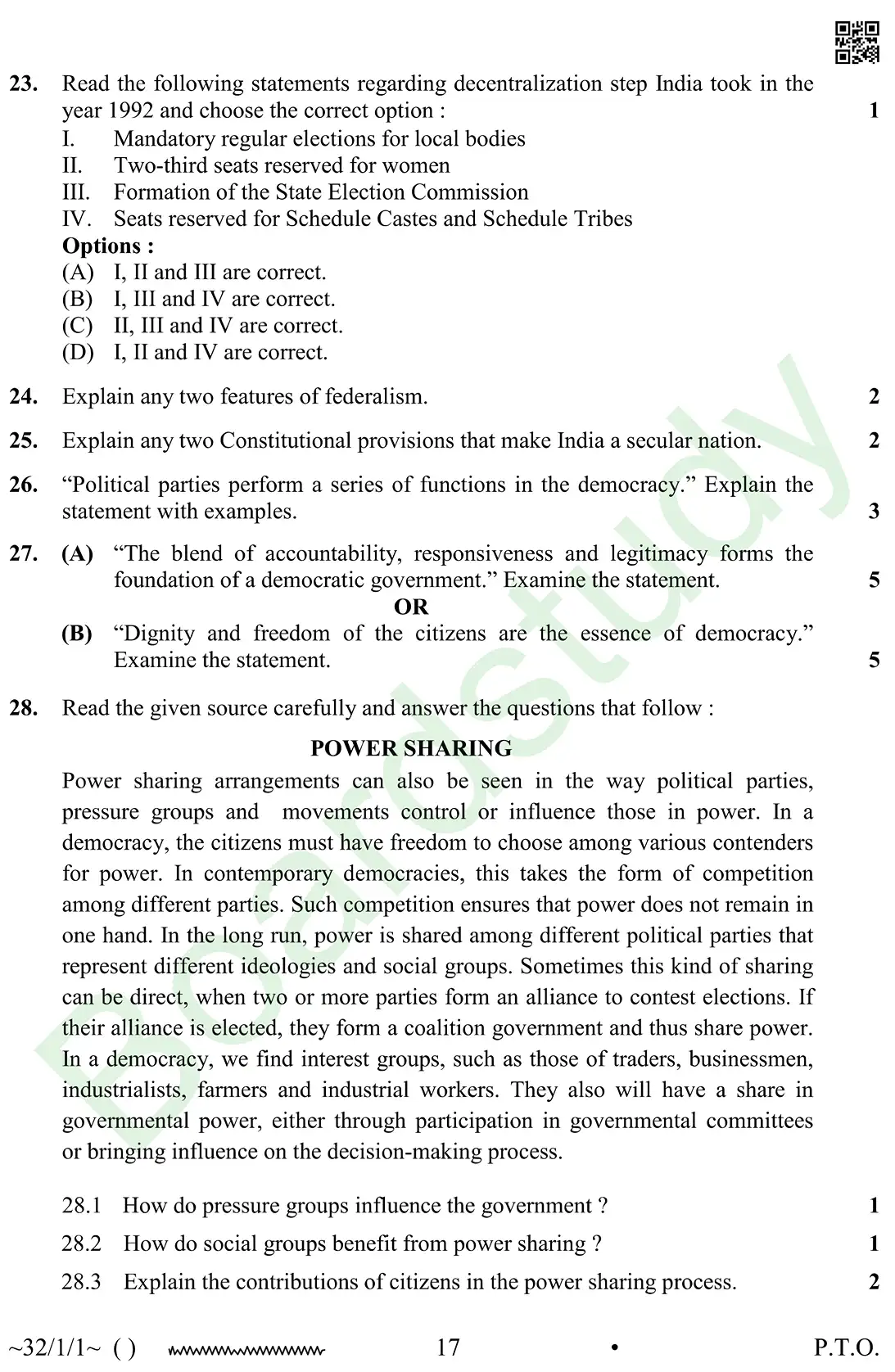
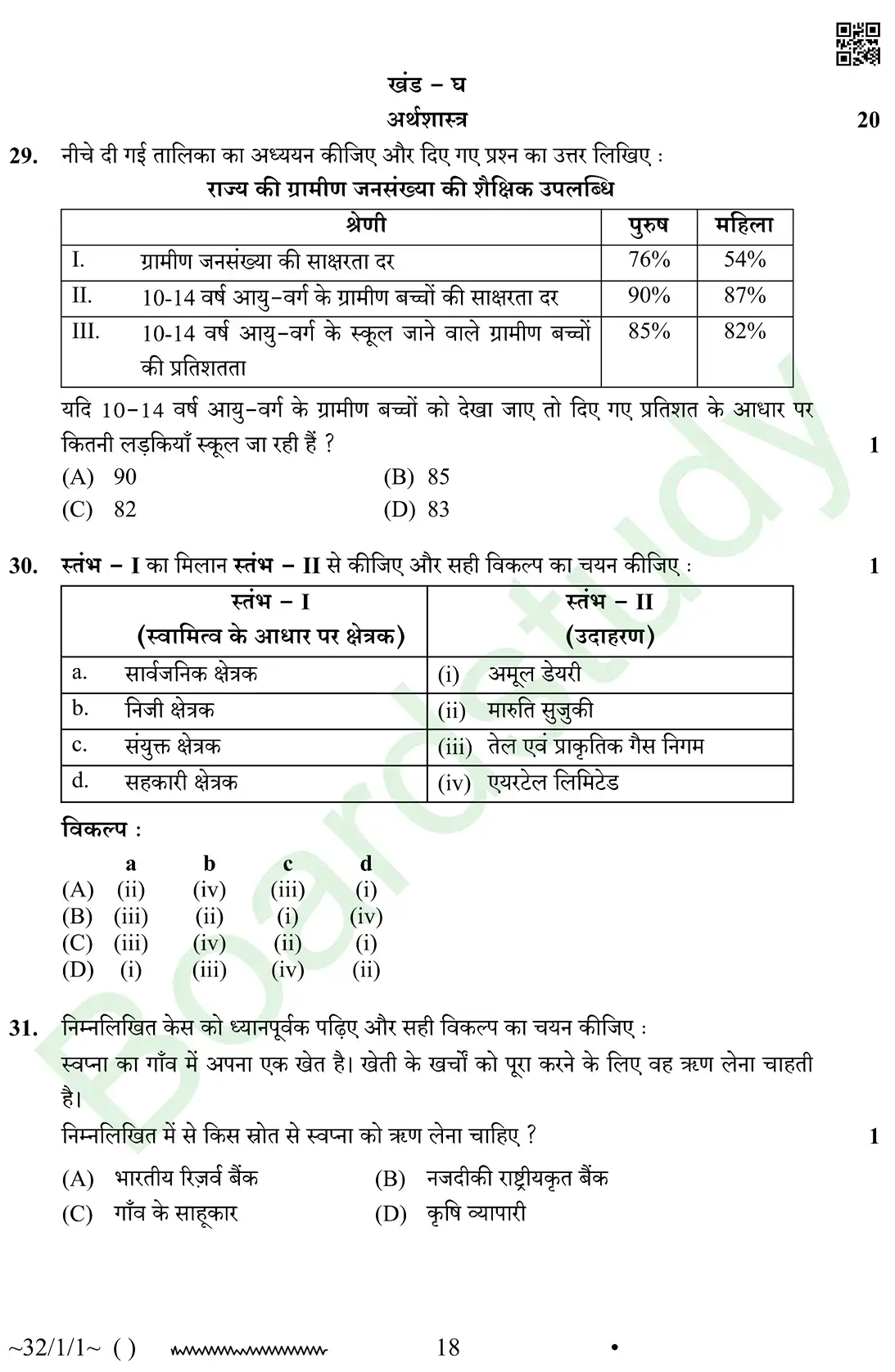
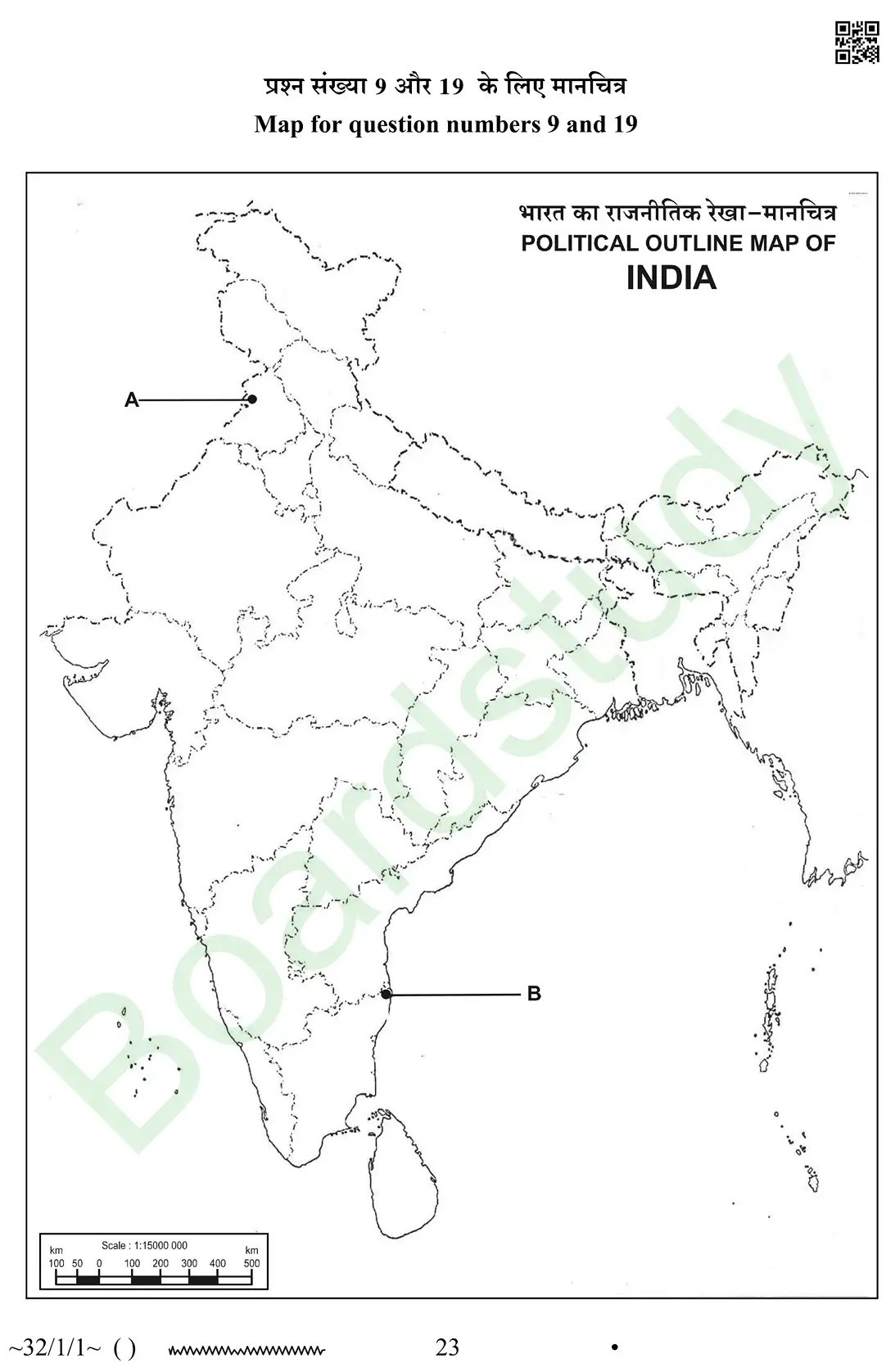
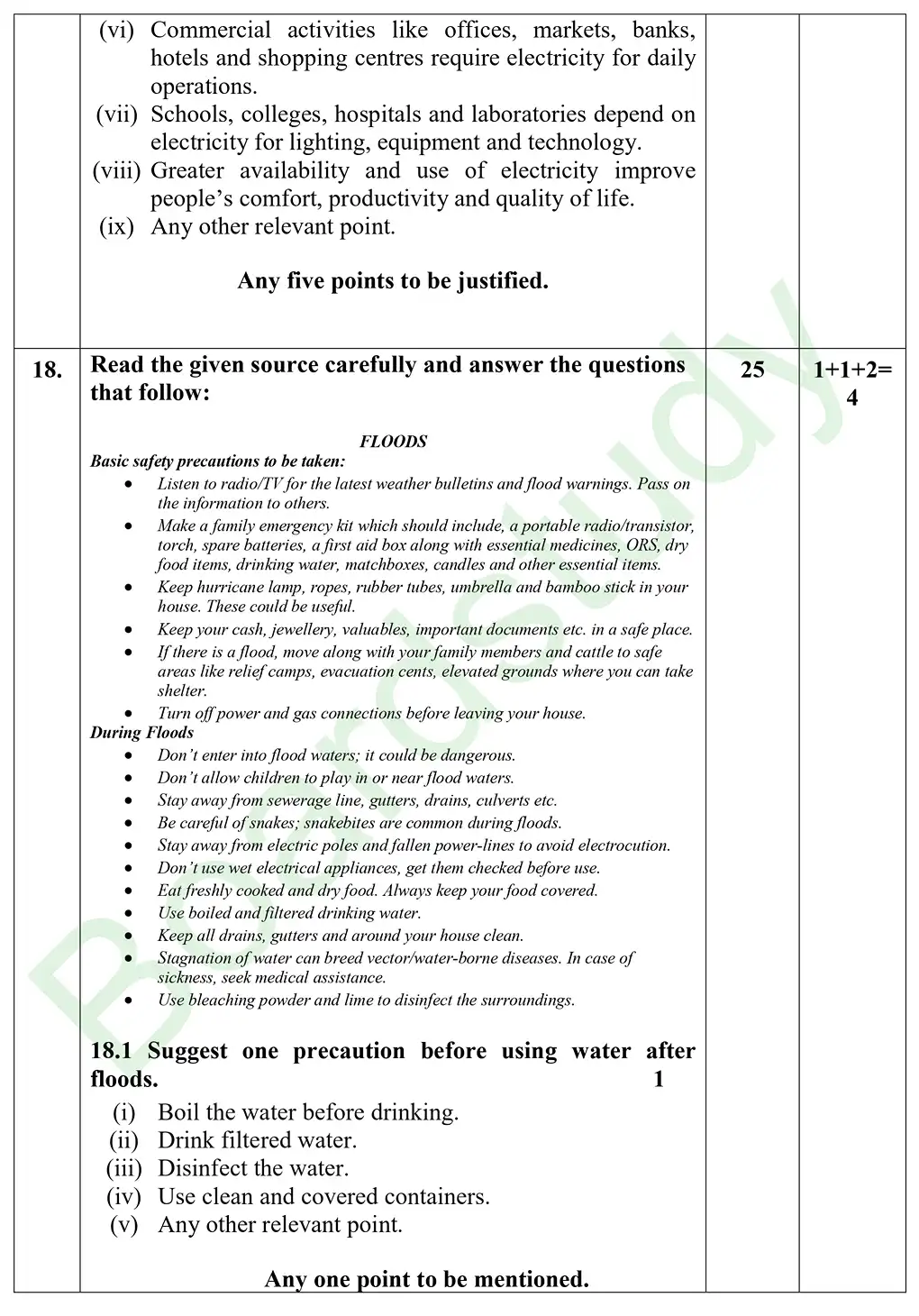
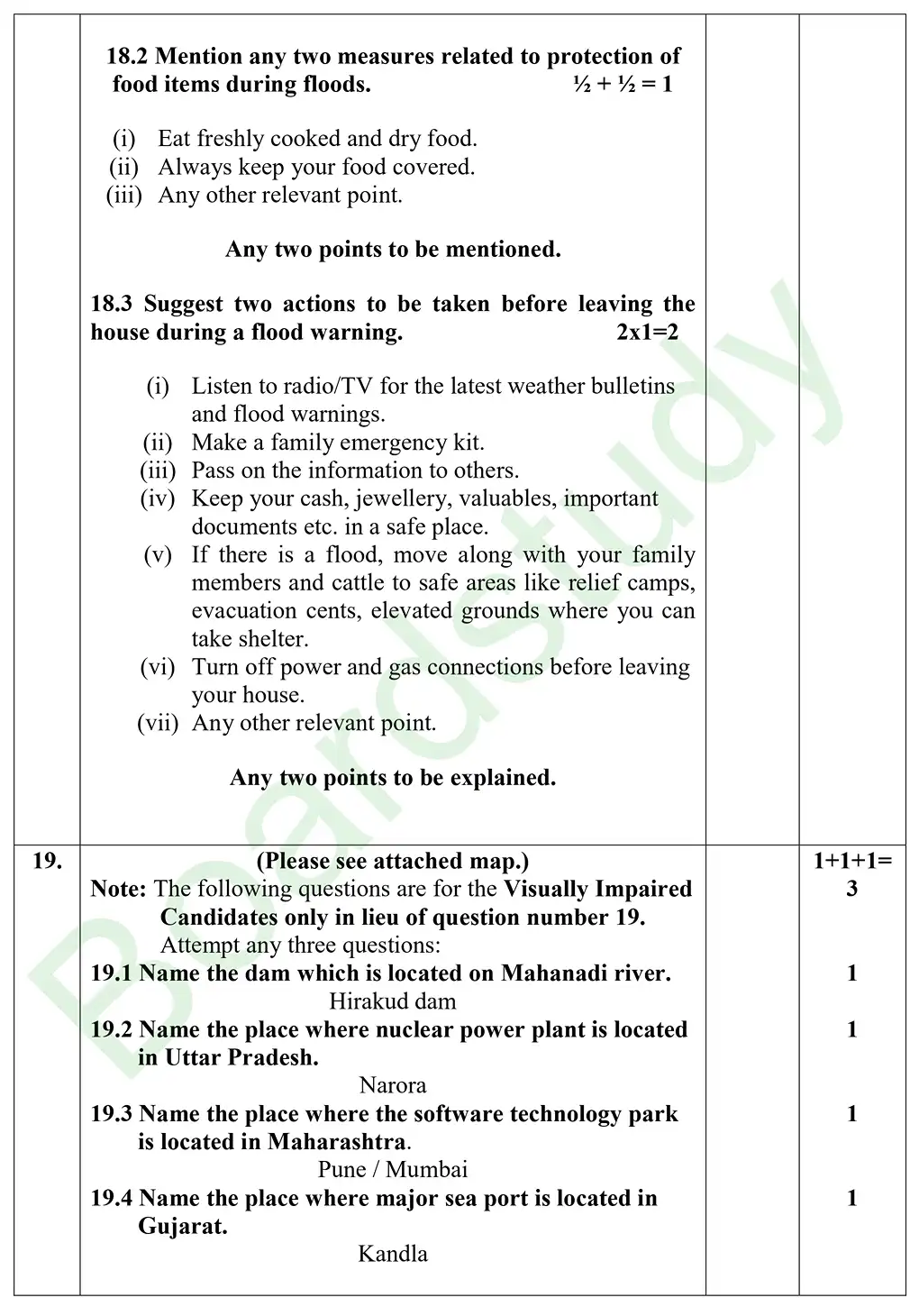
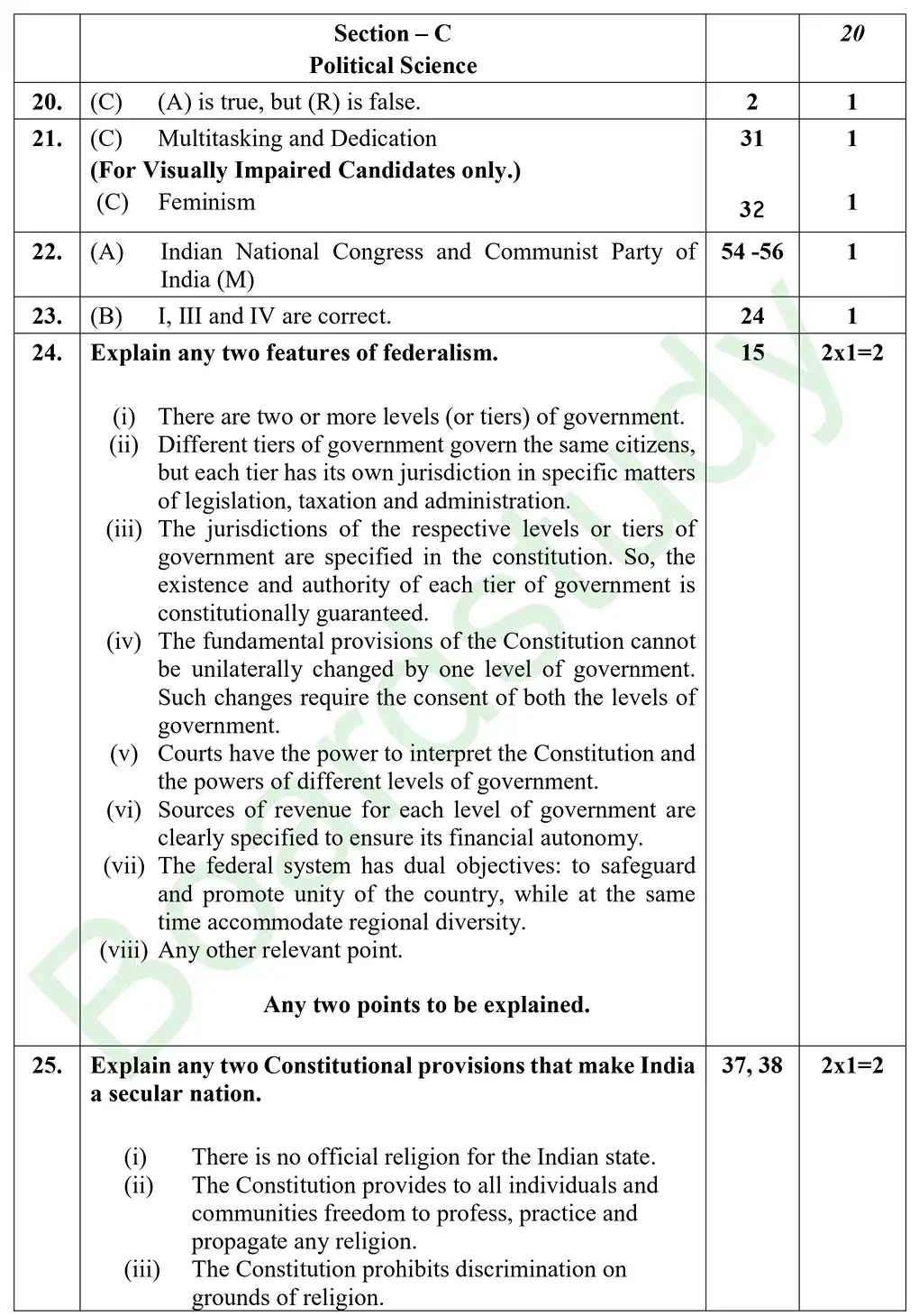
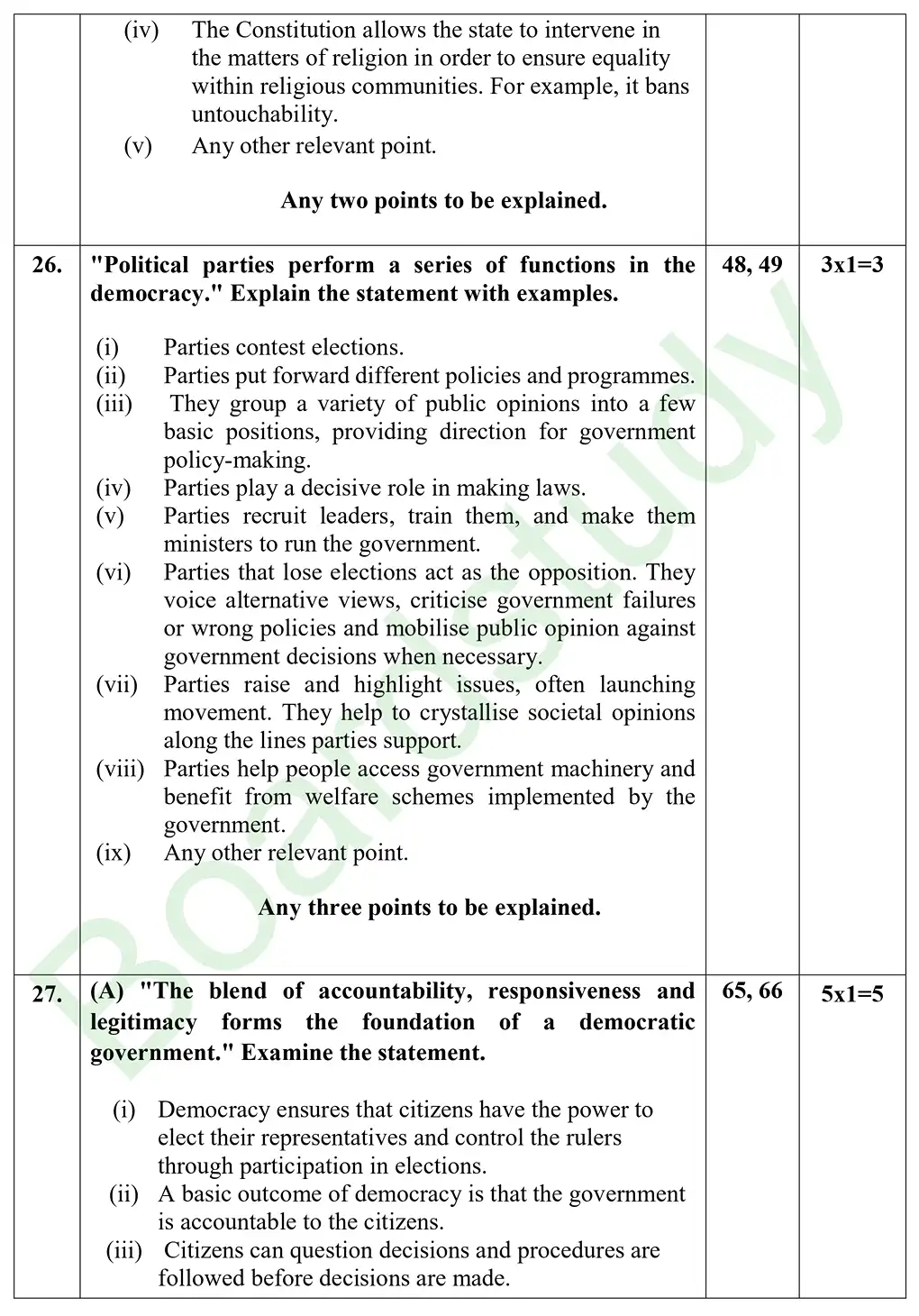
CBSE Class 10 Social Science PYQ 2026 SET 1 Solution
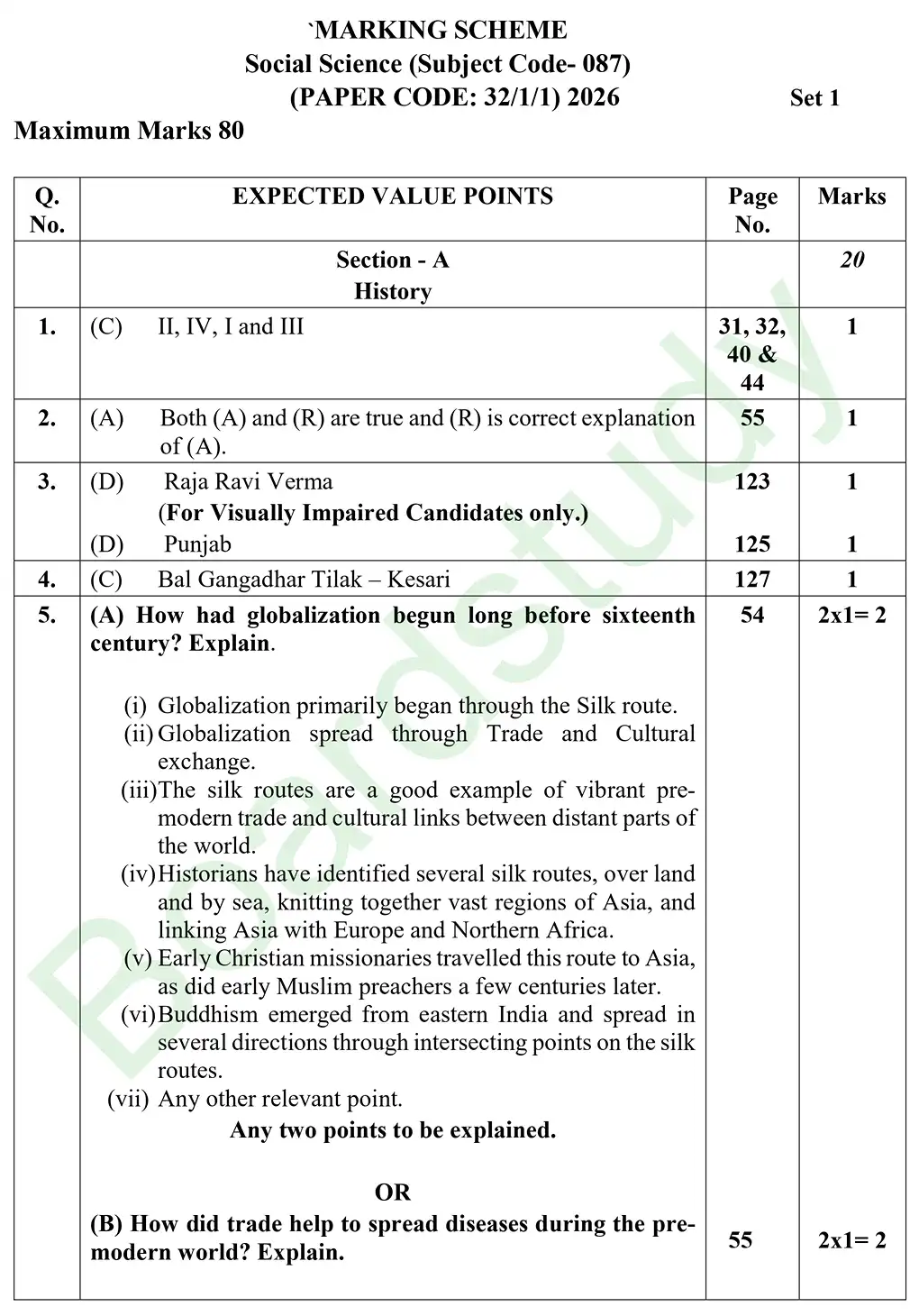
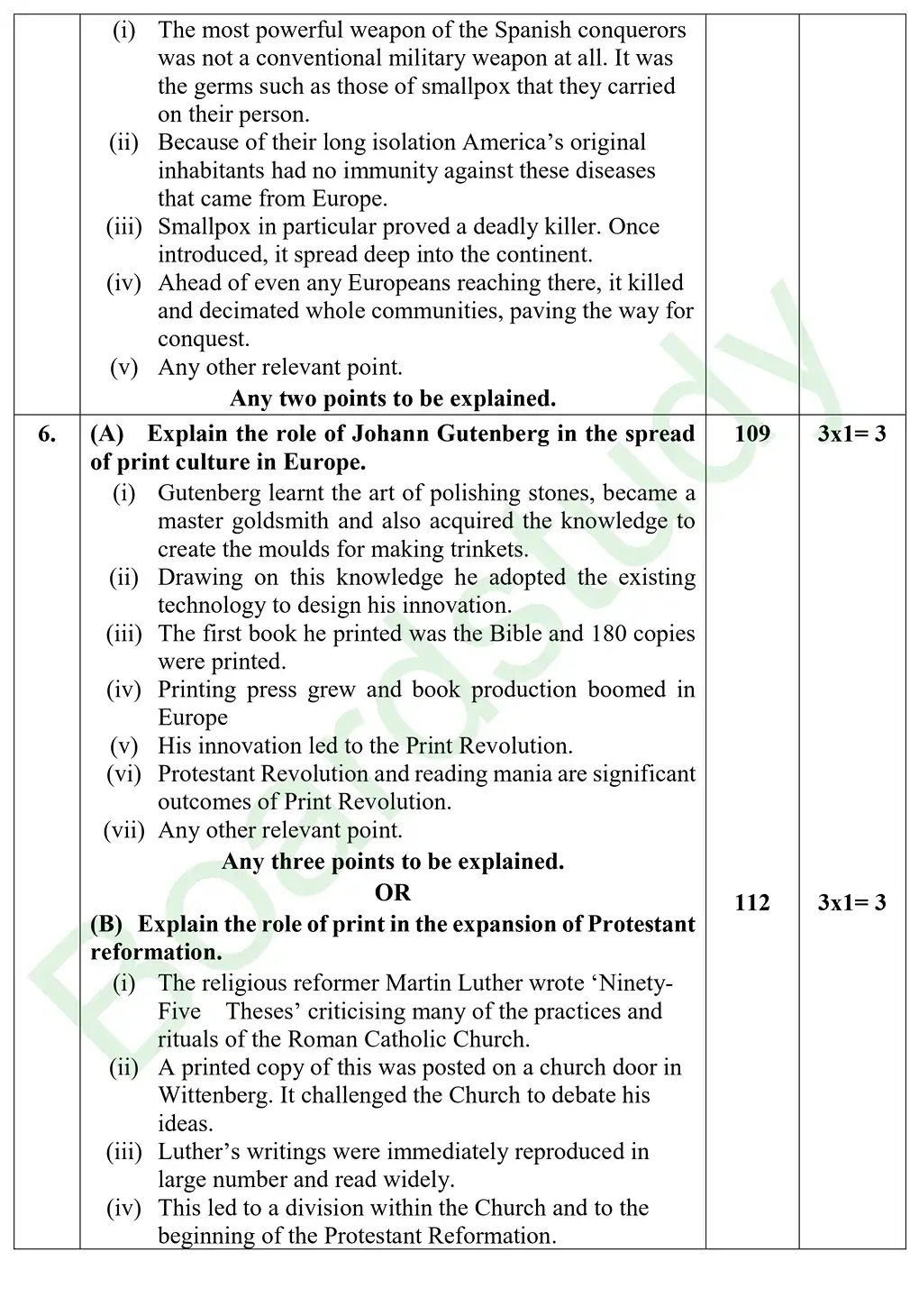
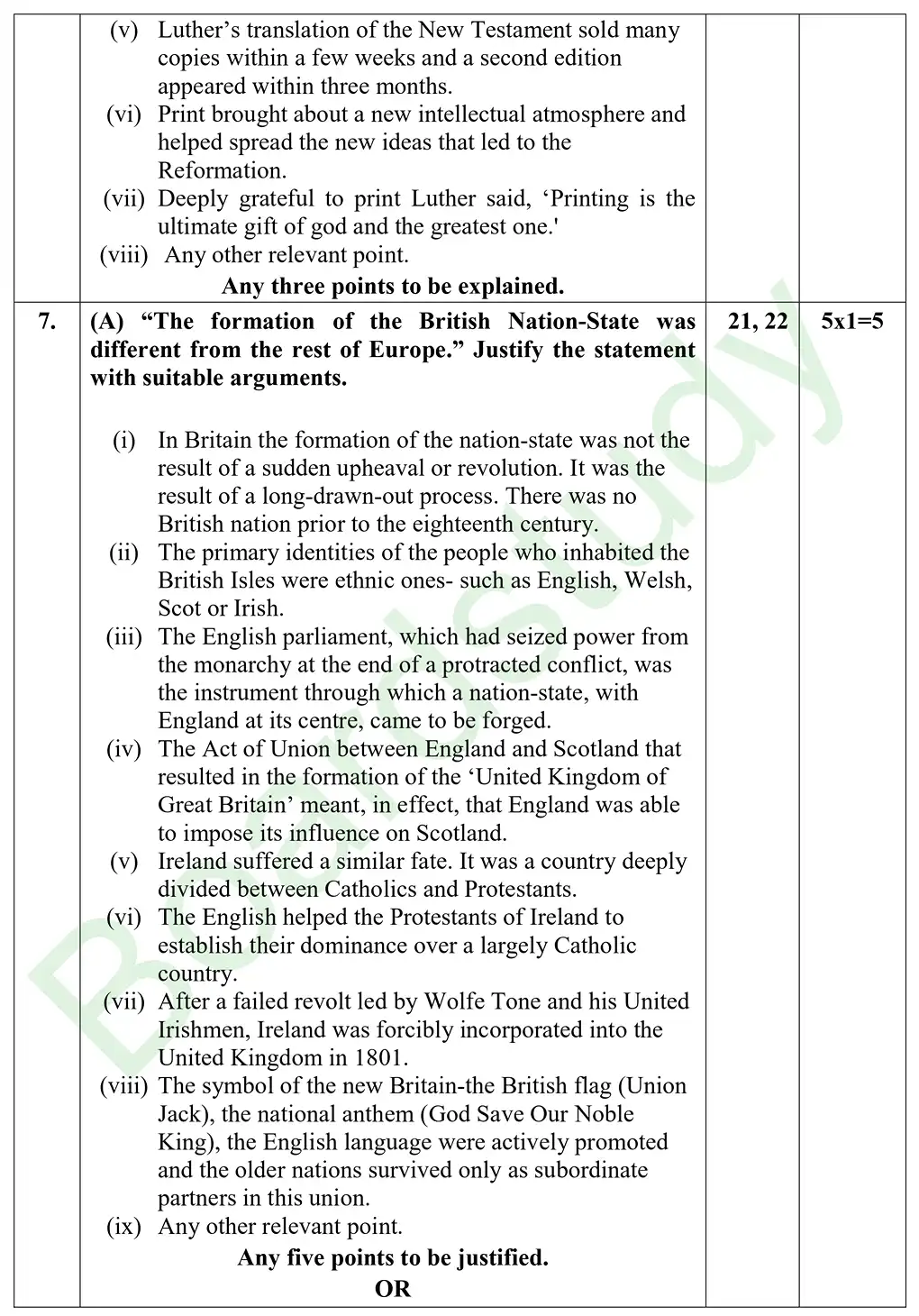
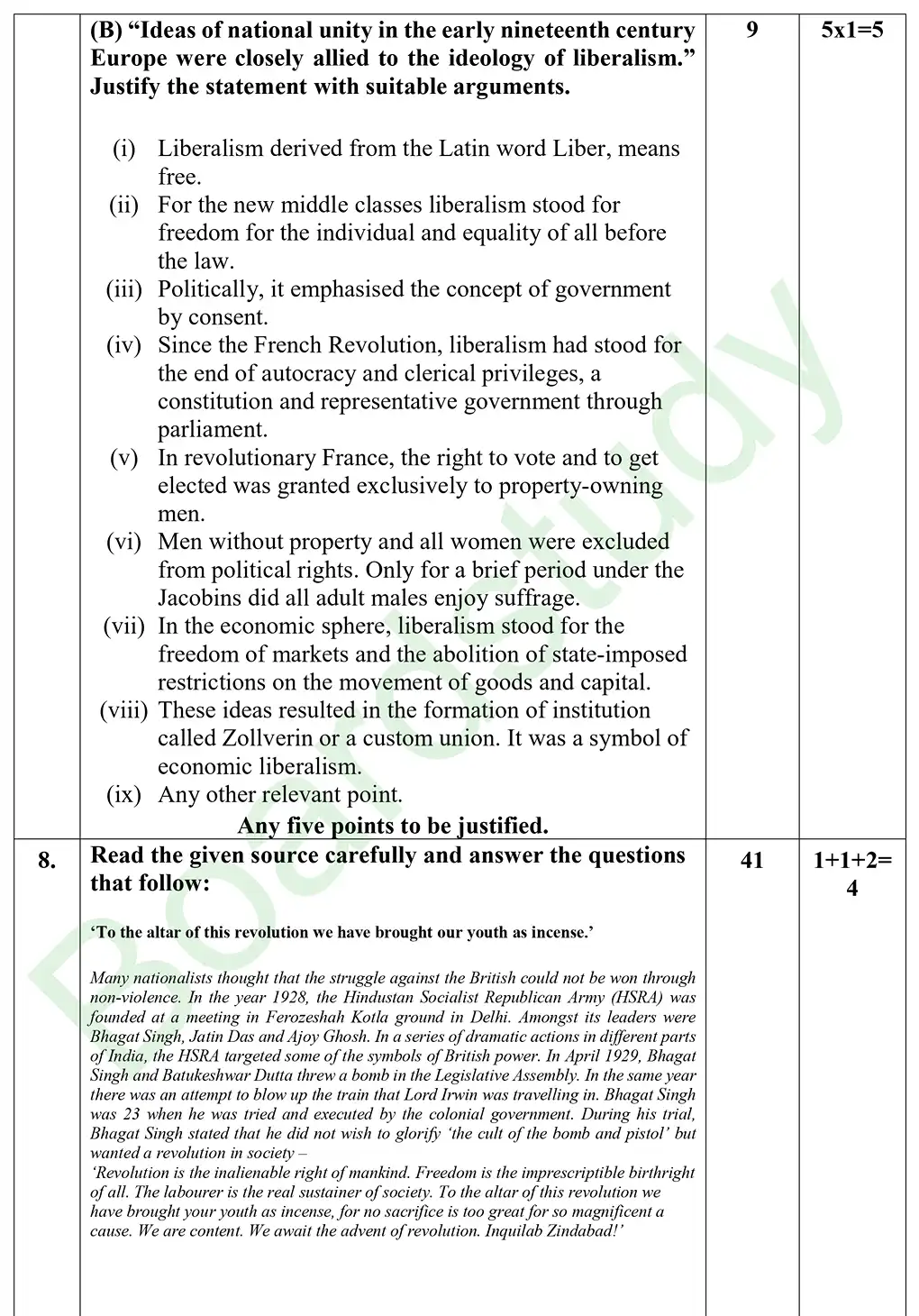
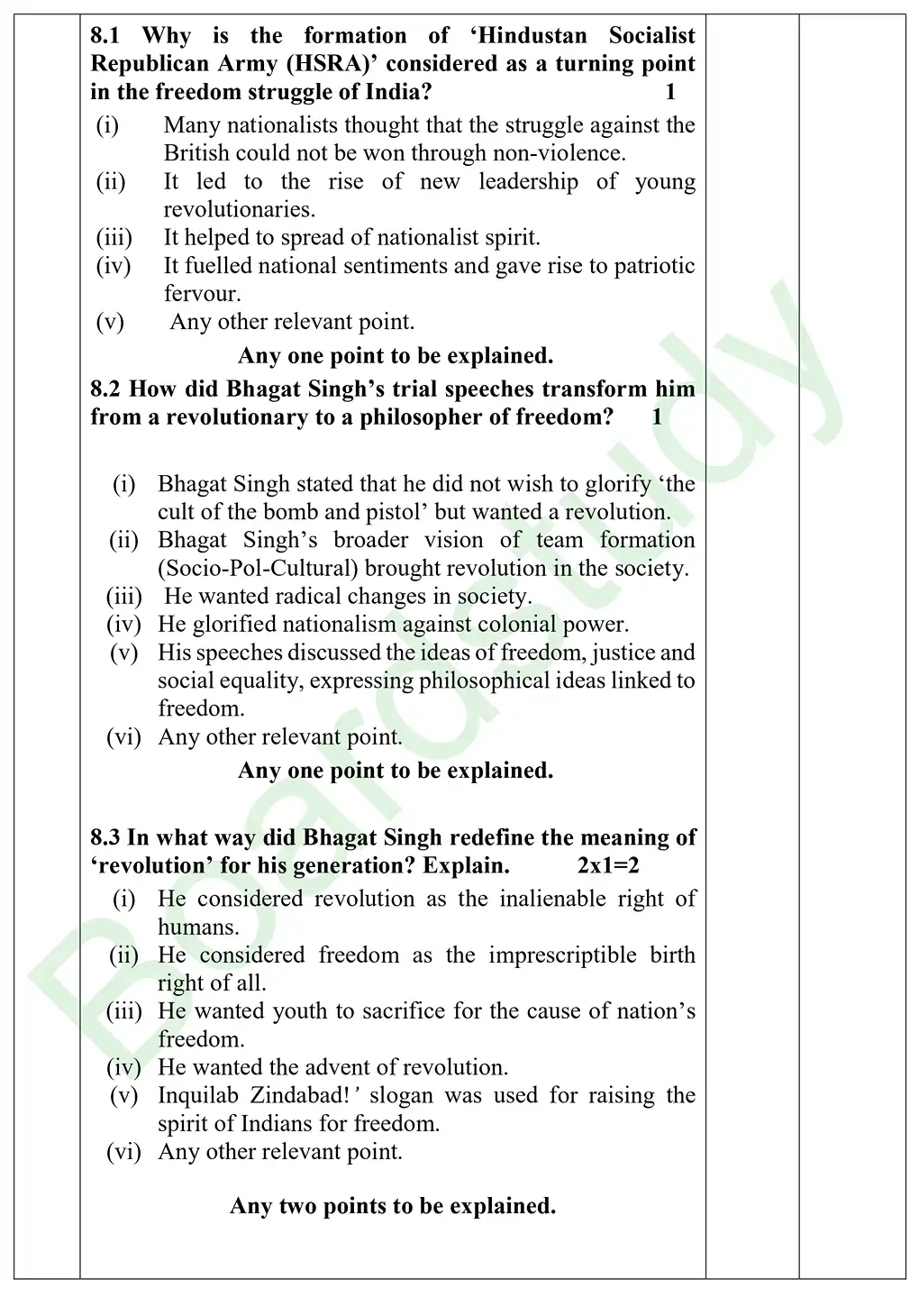
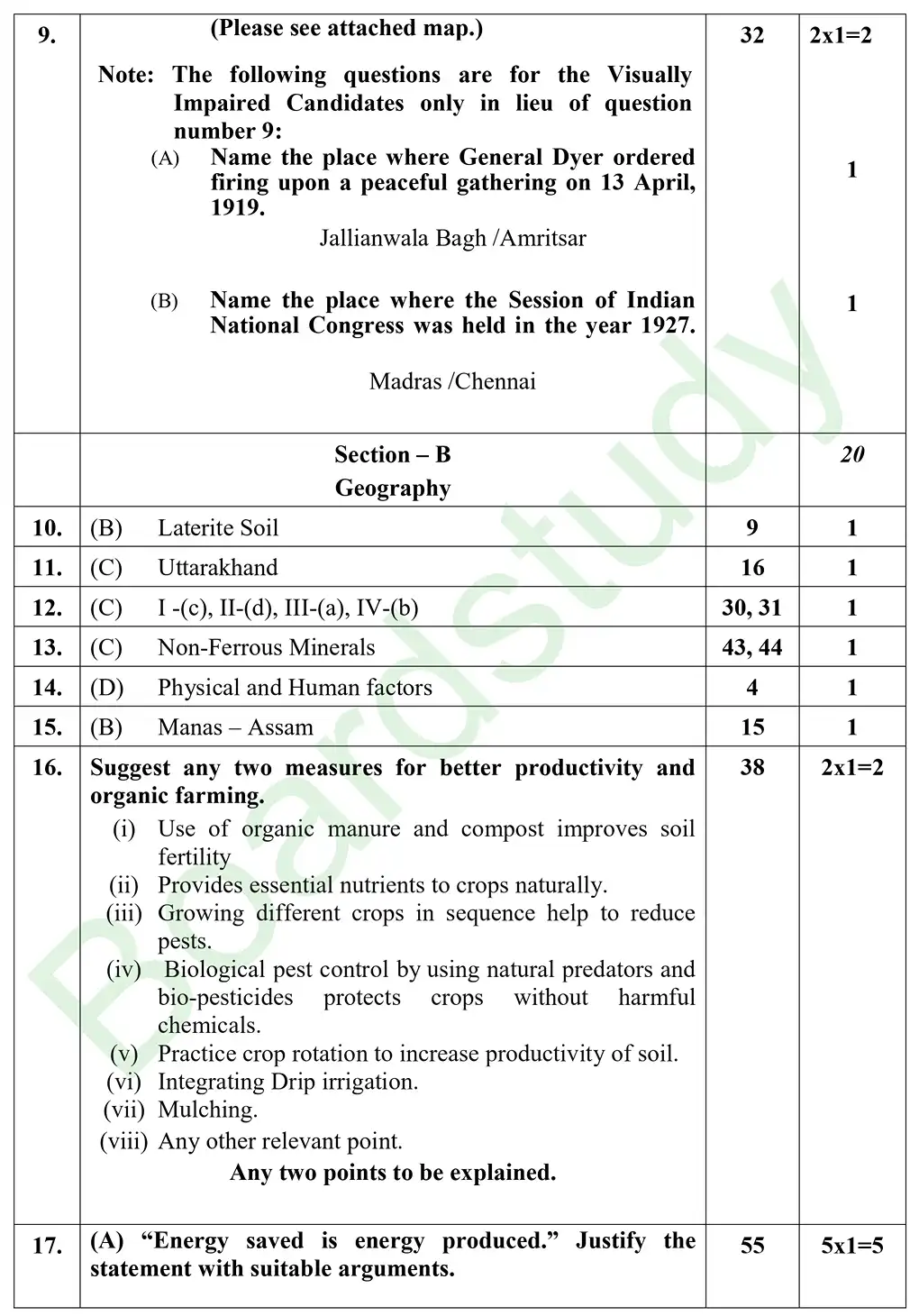
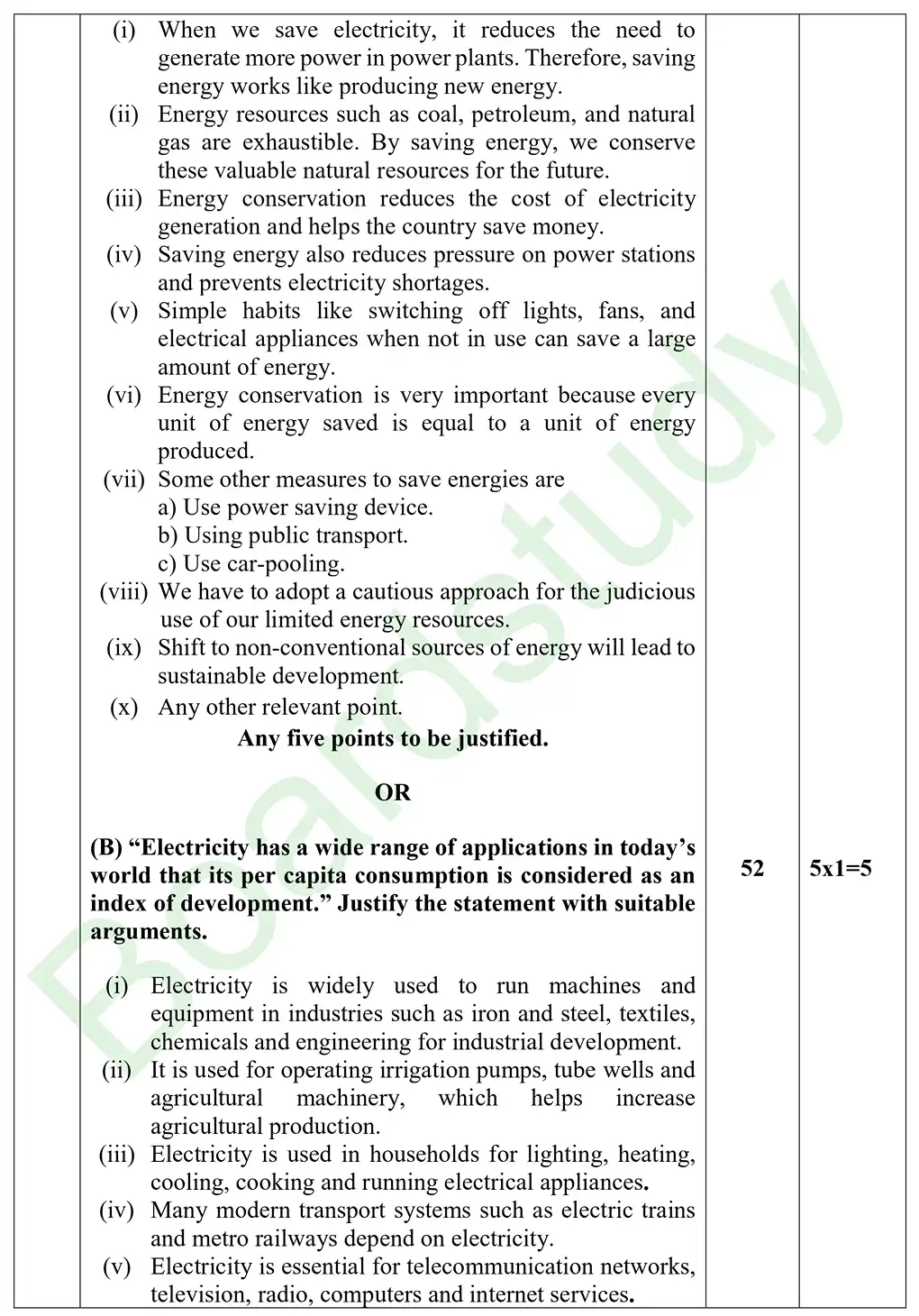
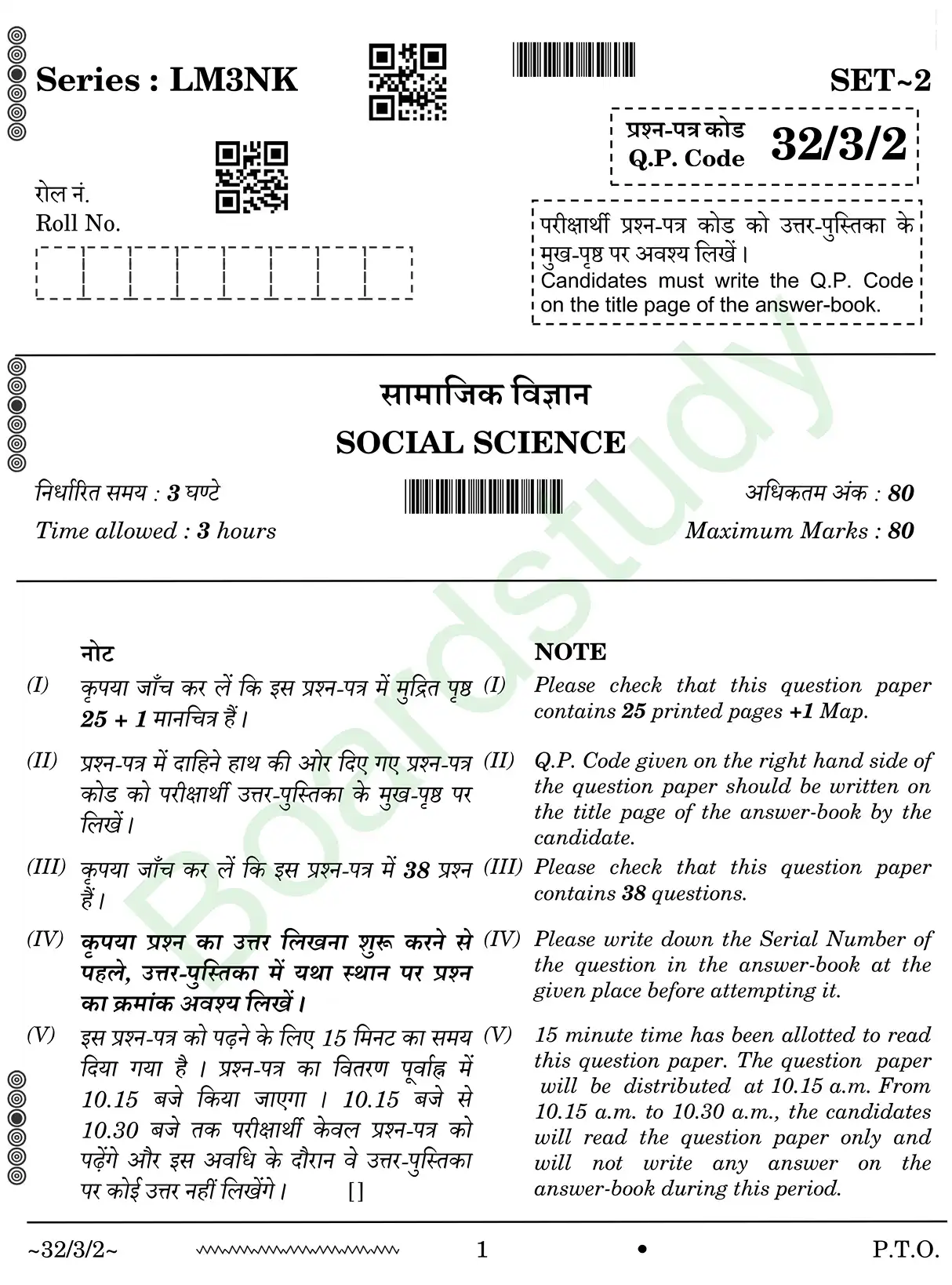
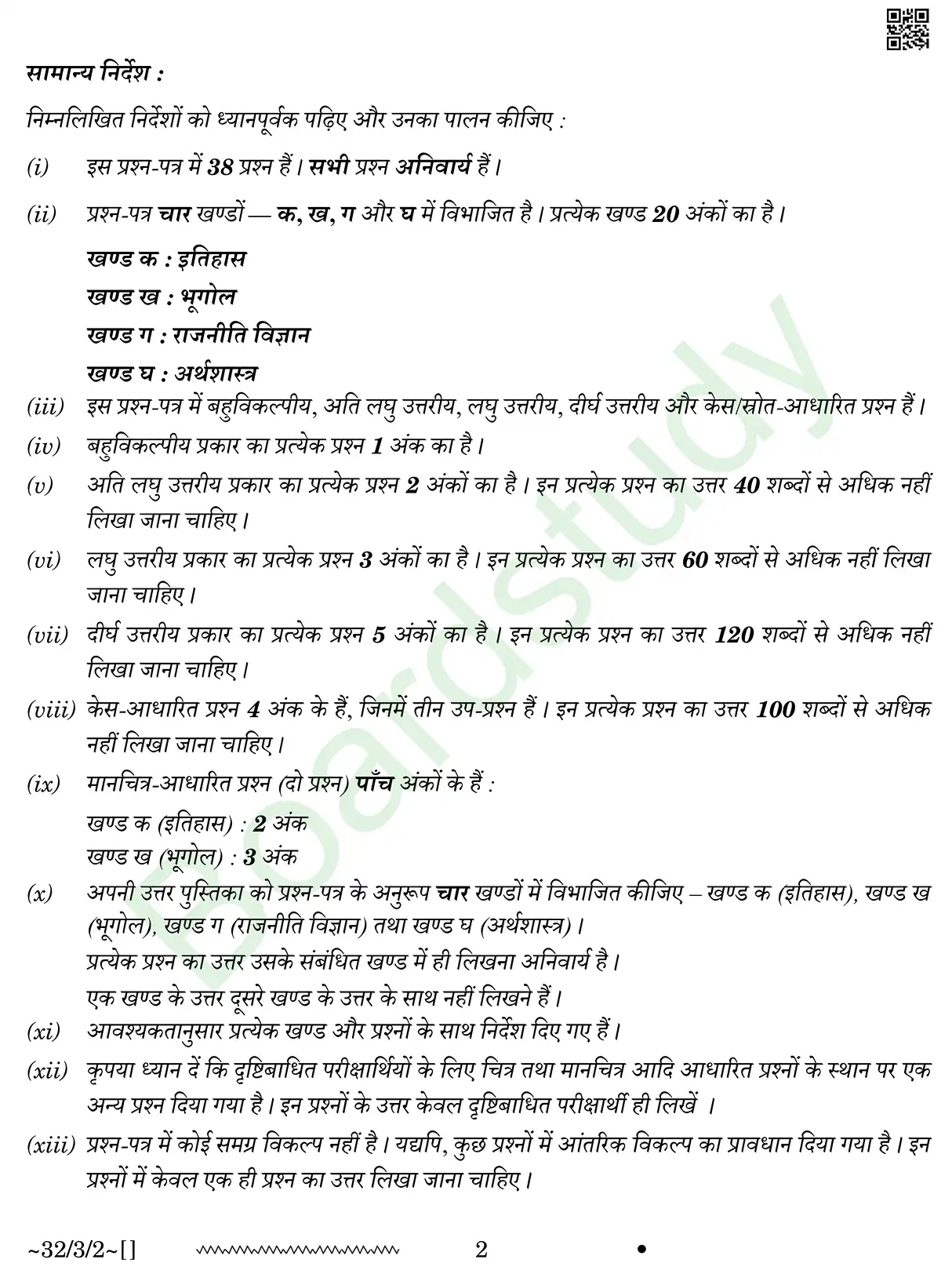
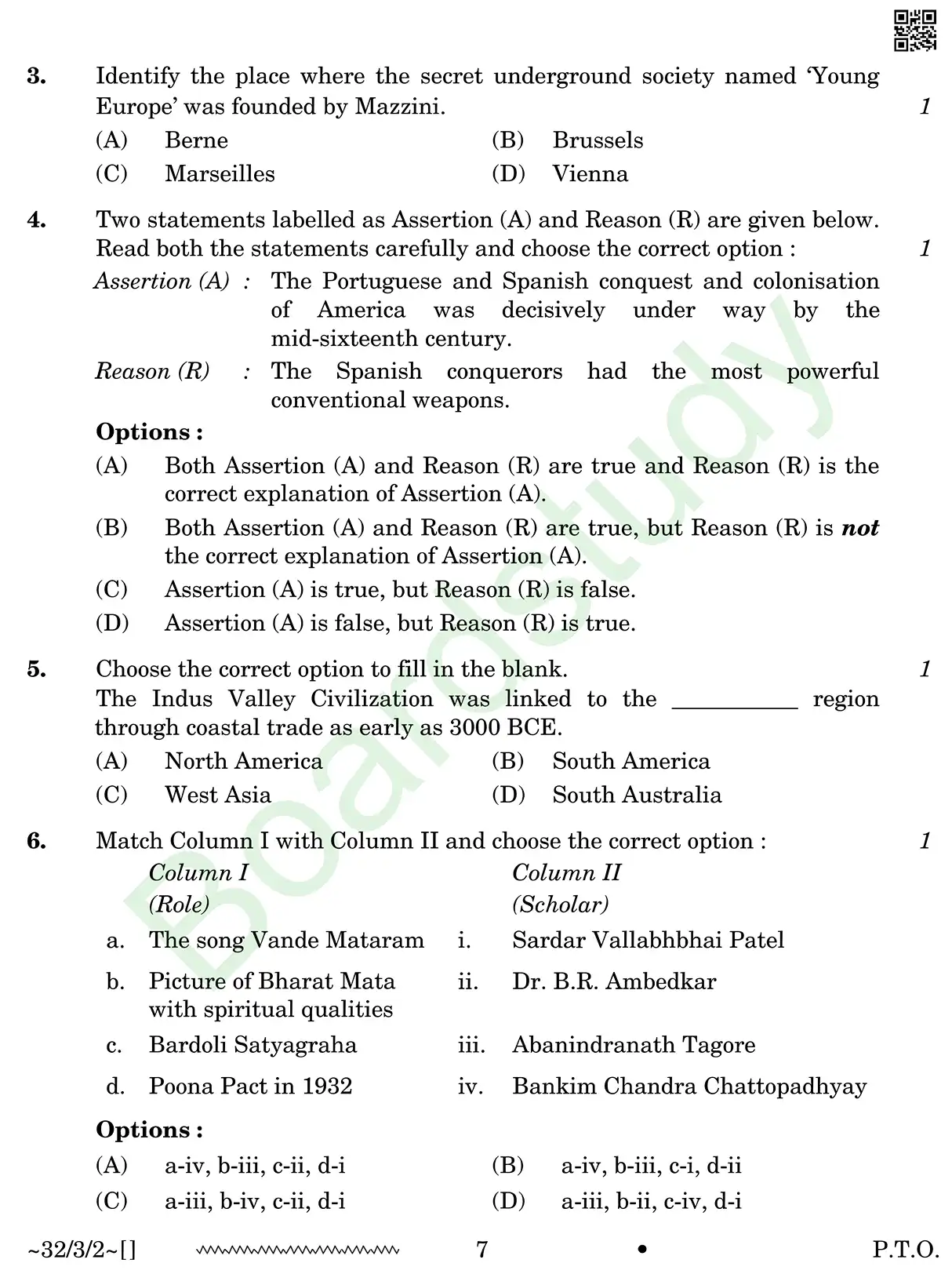
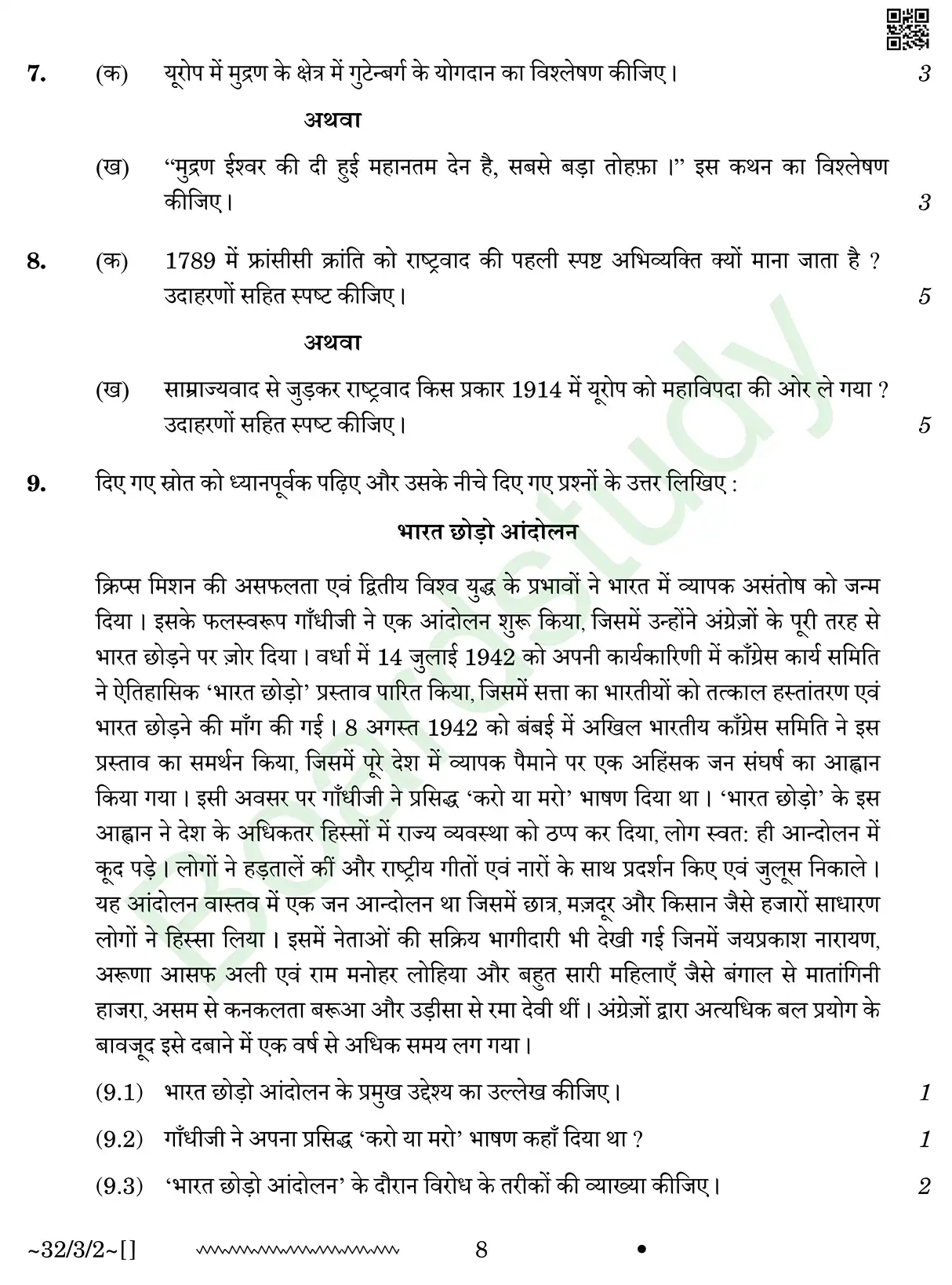
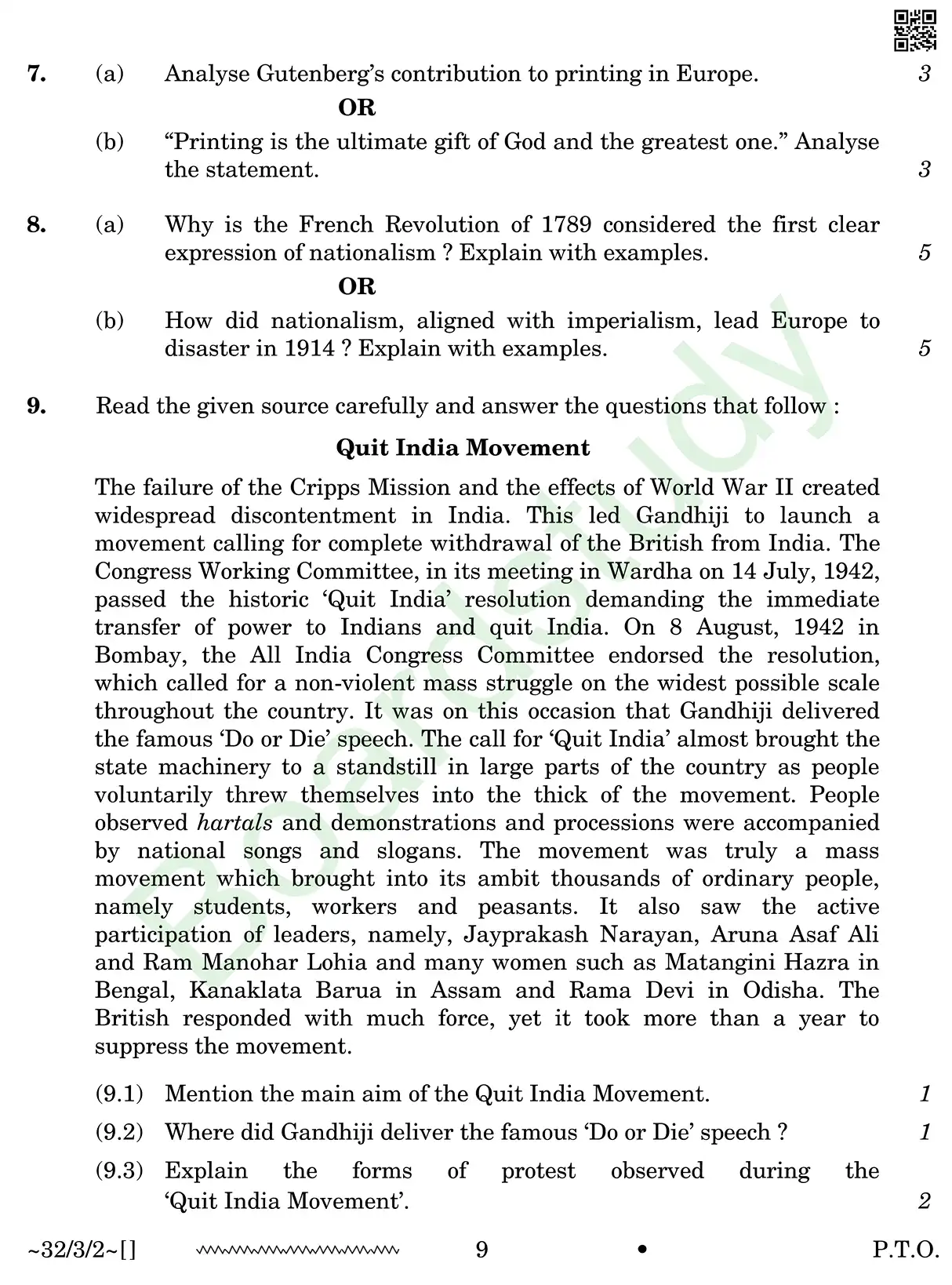
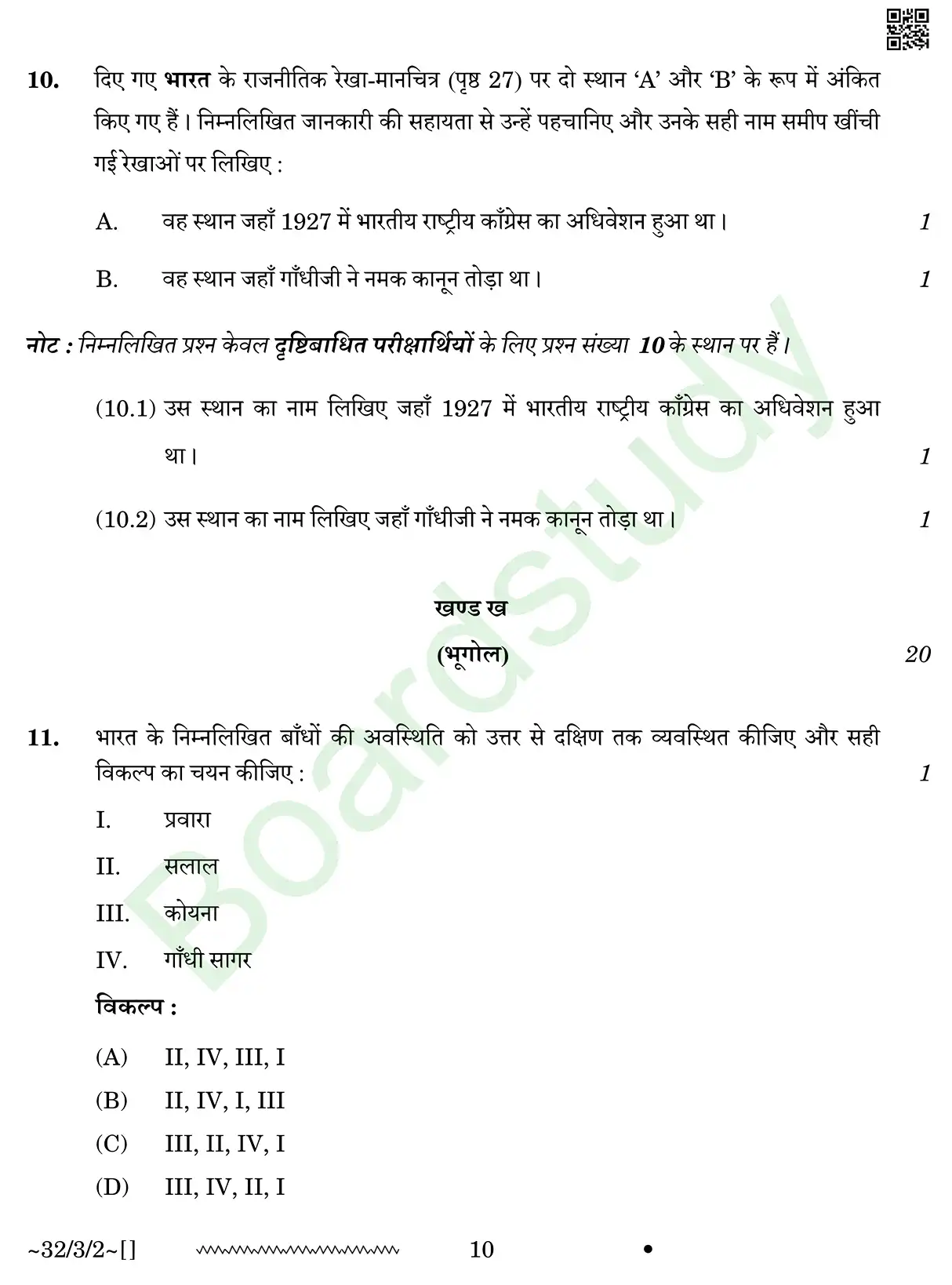
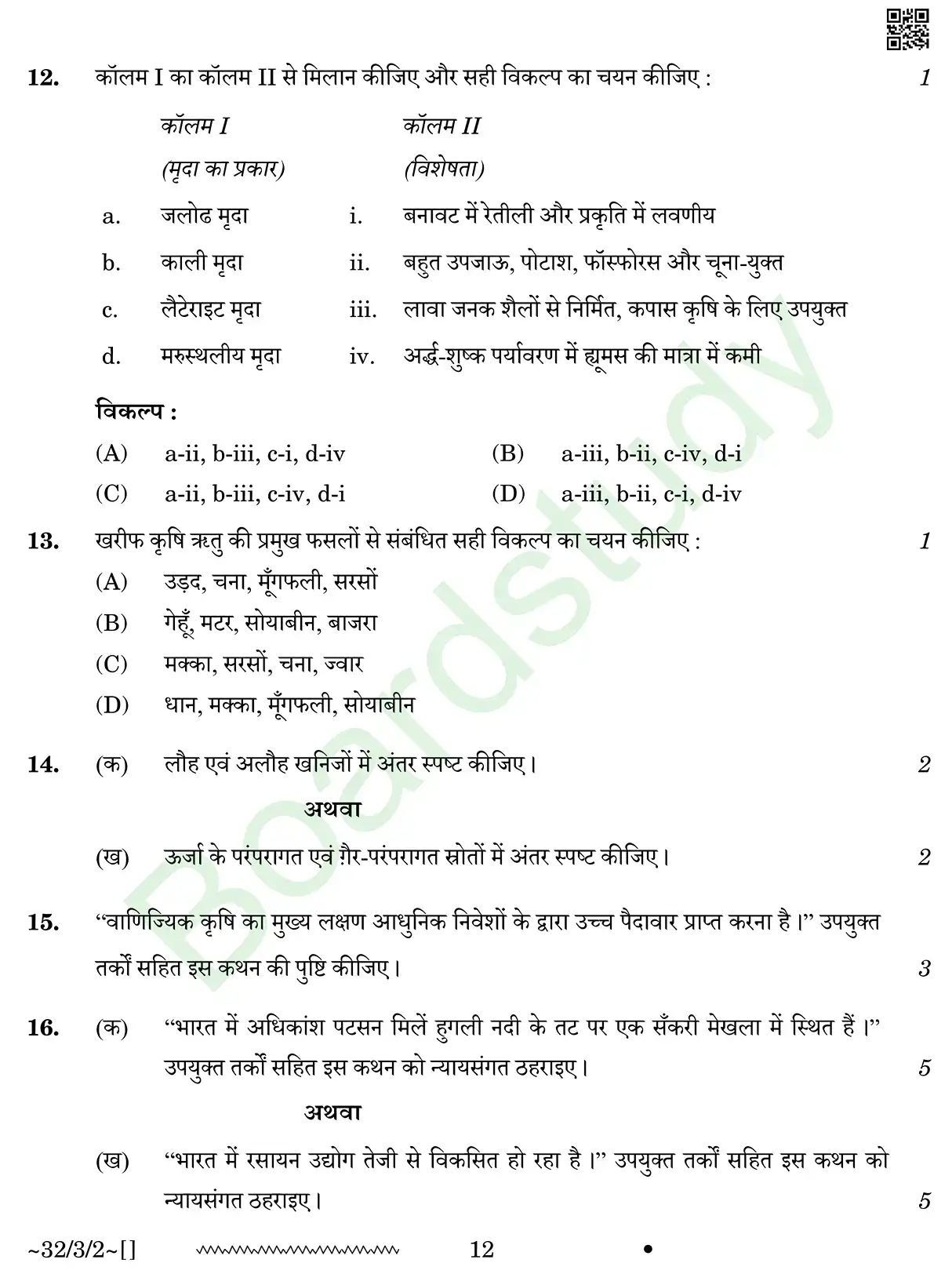
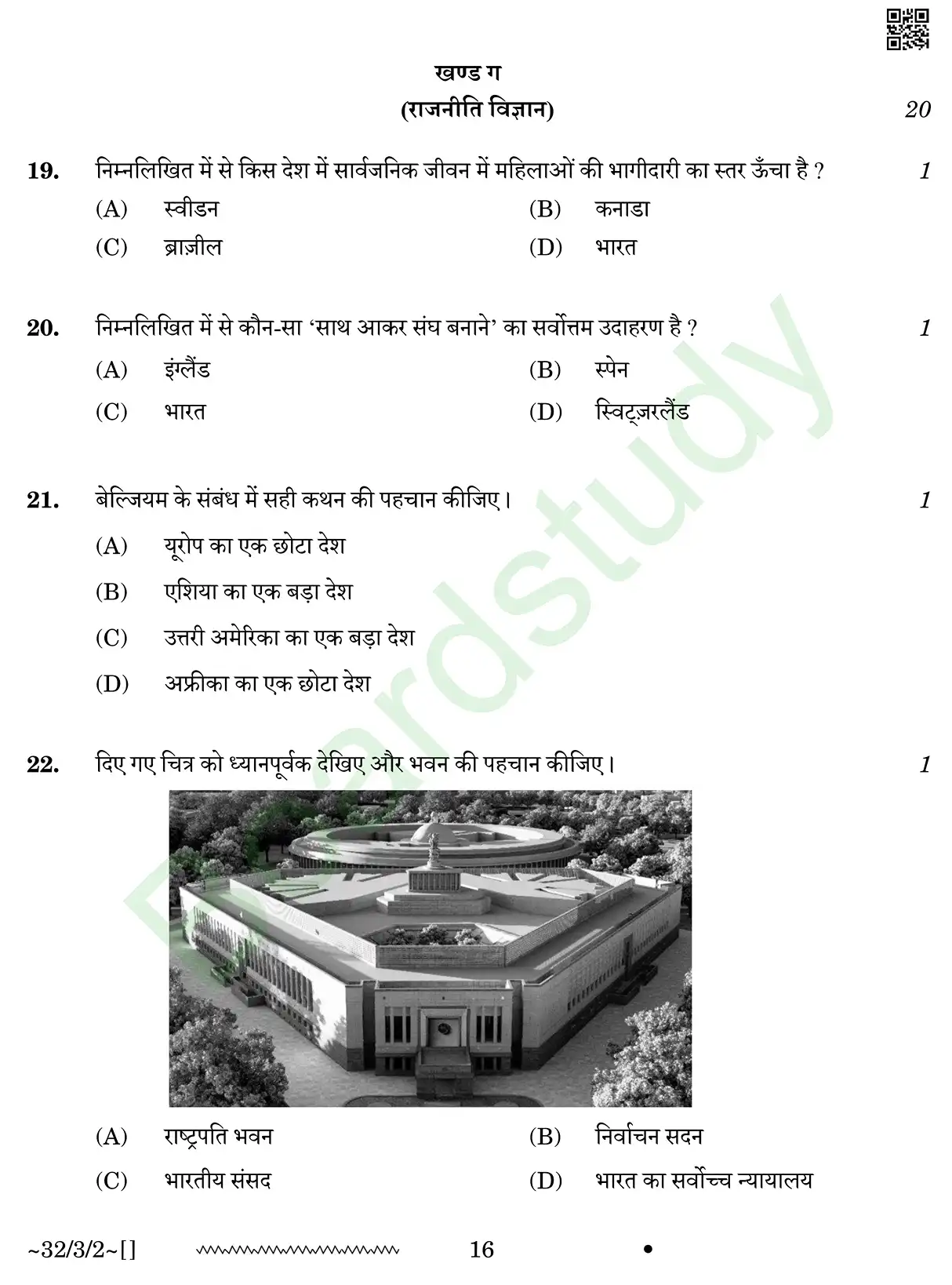
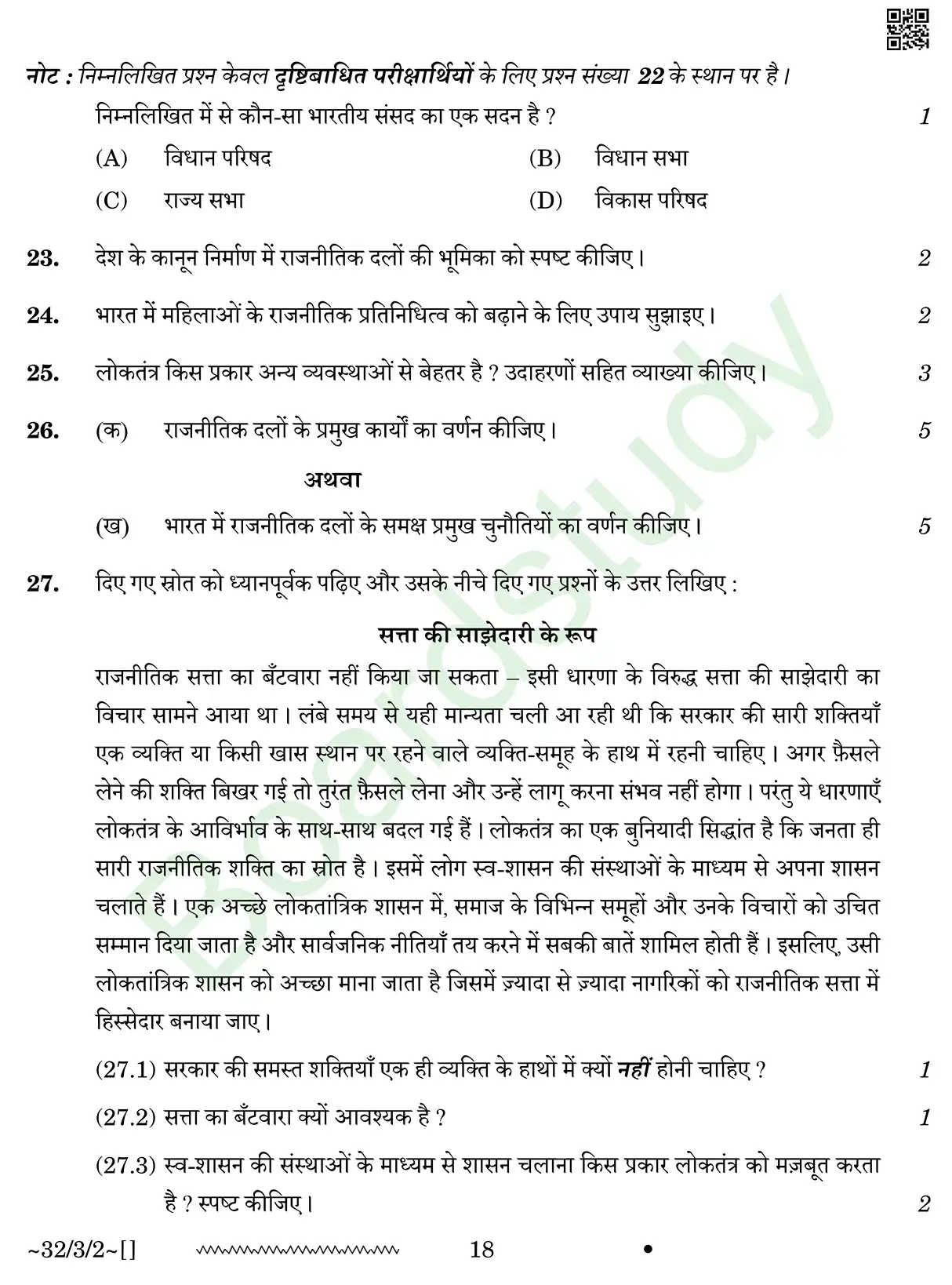
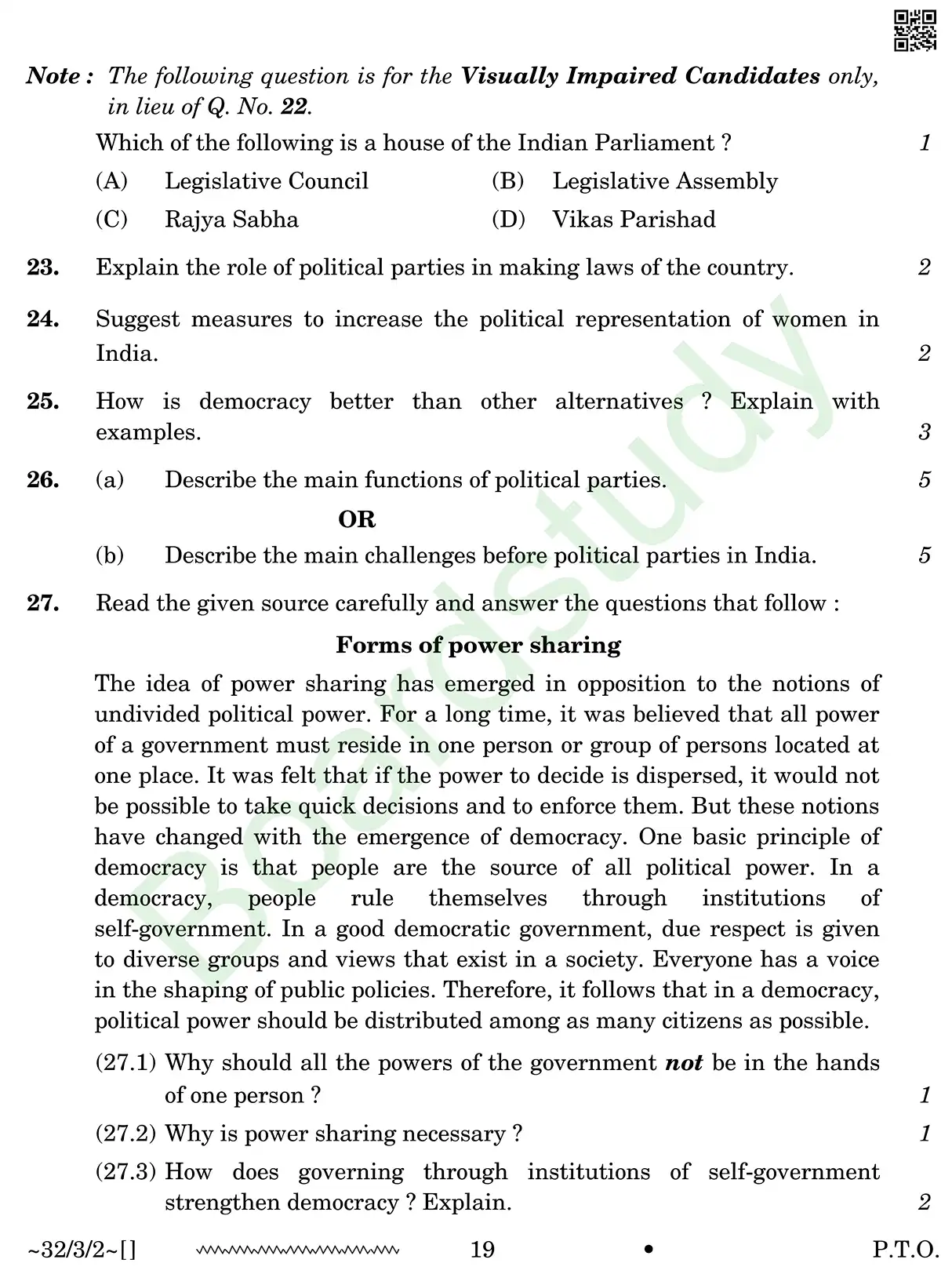
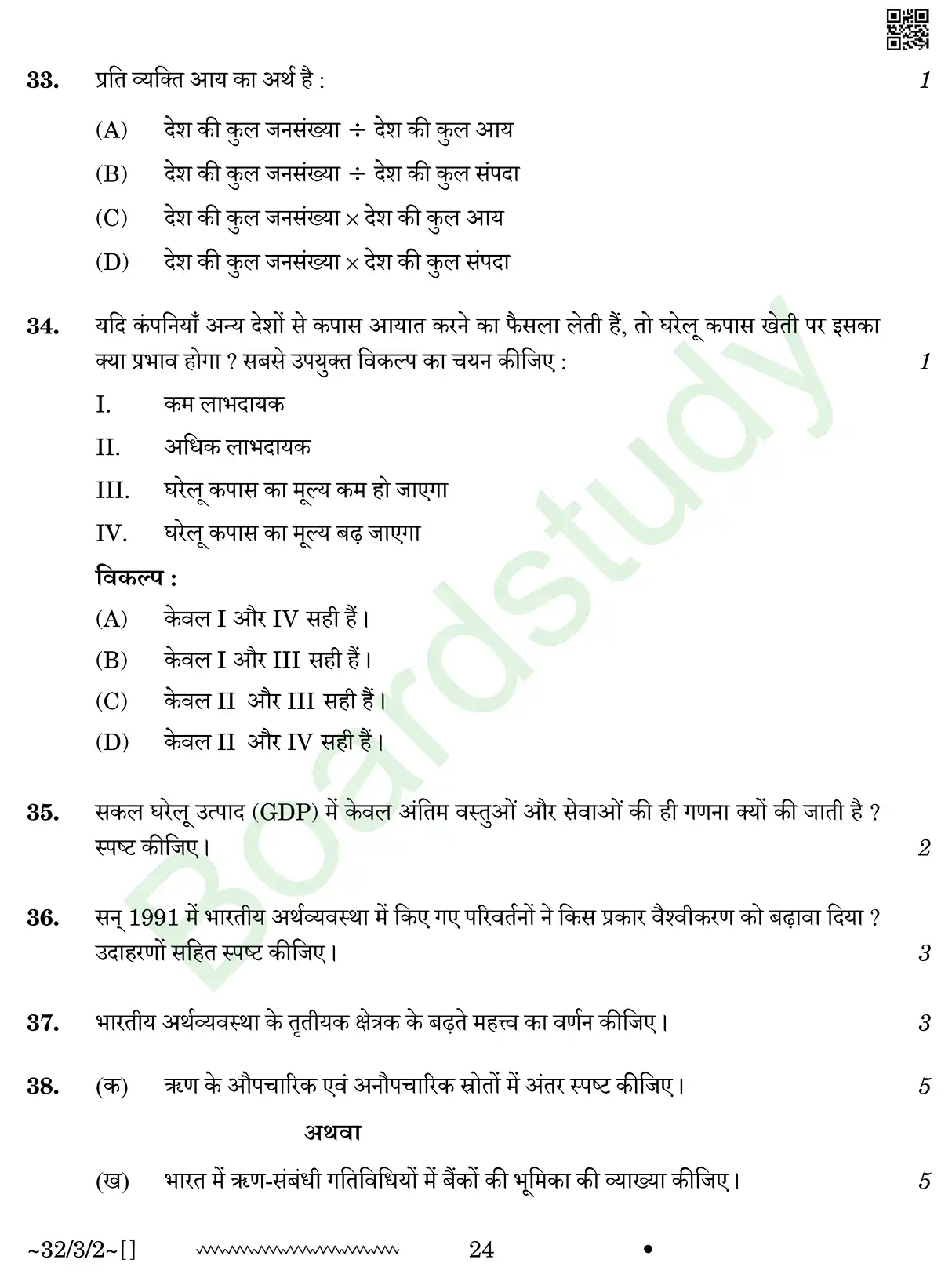
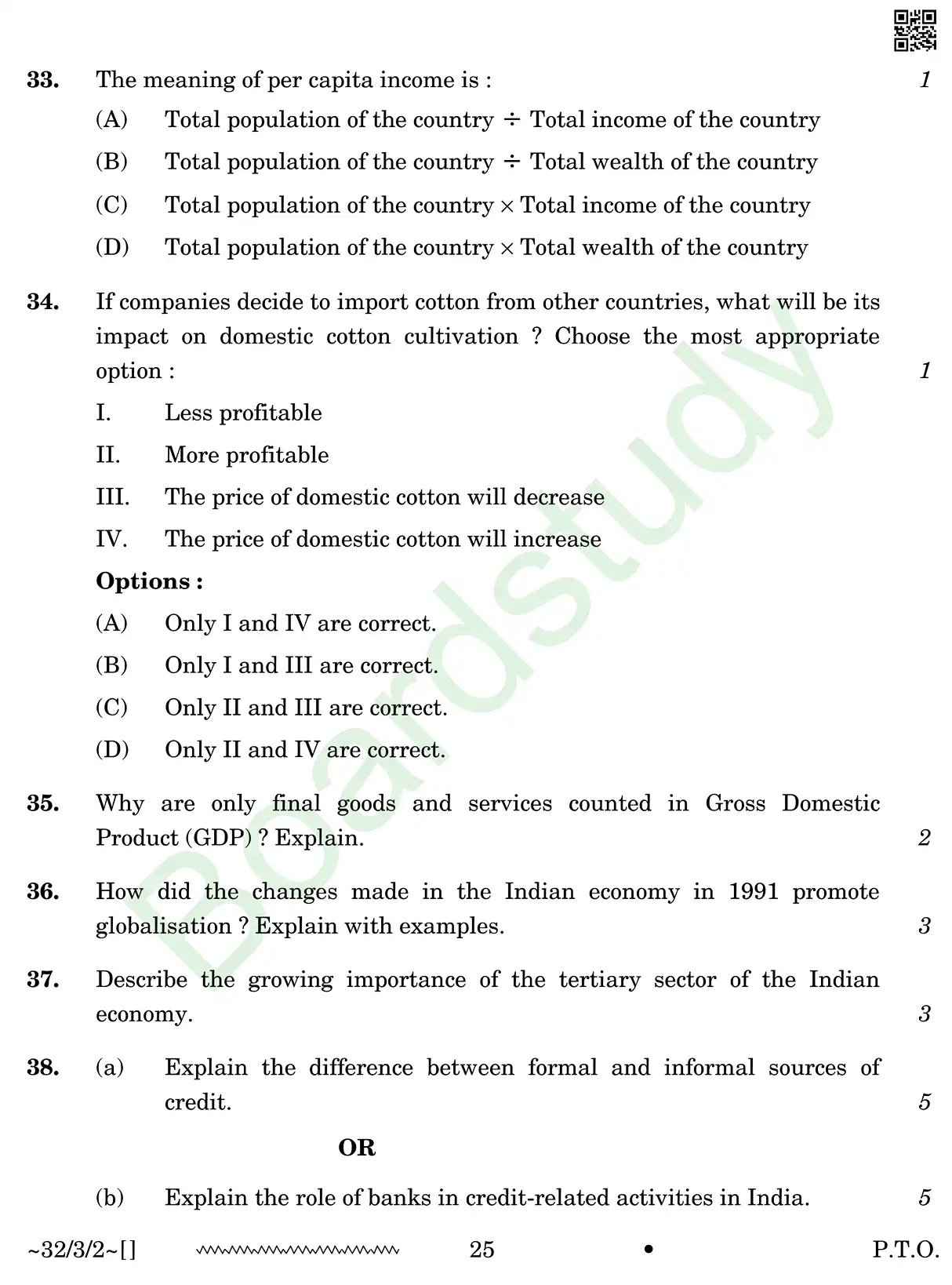
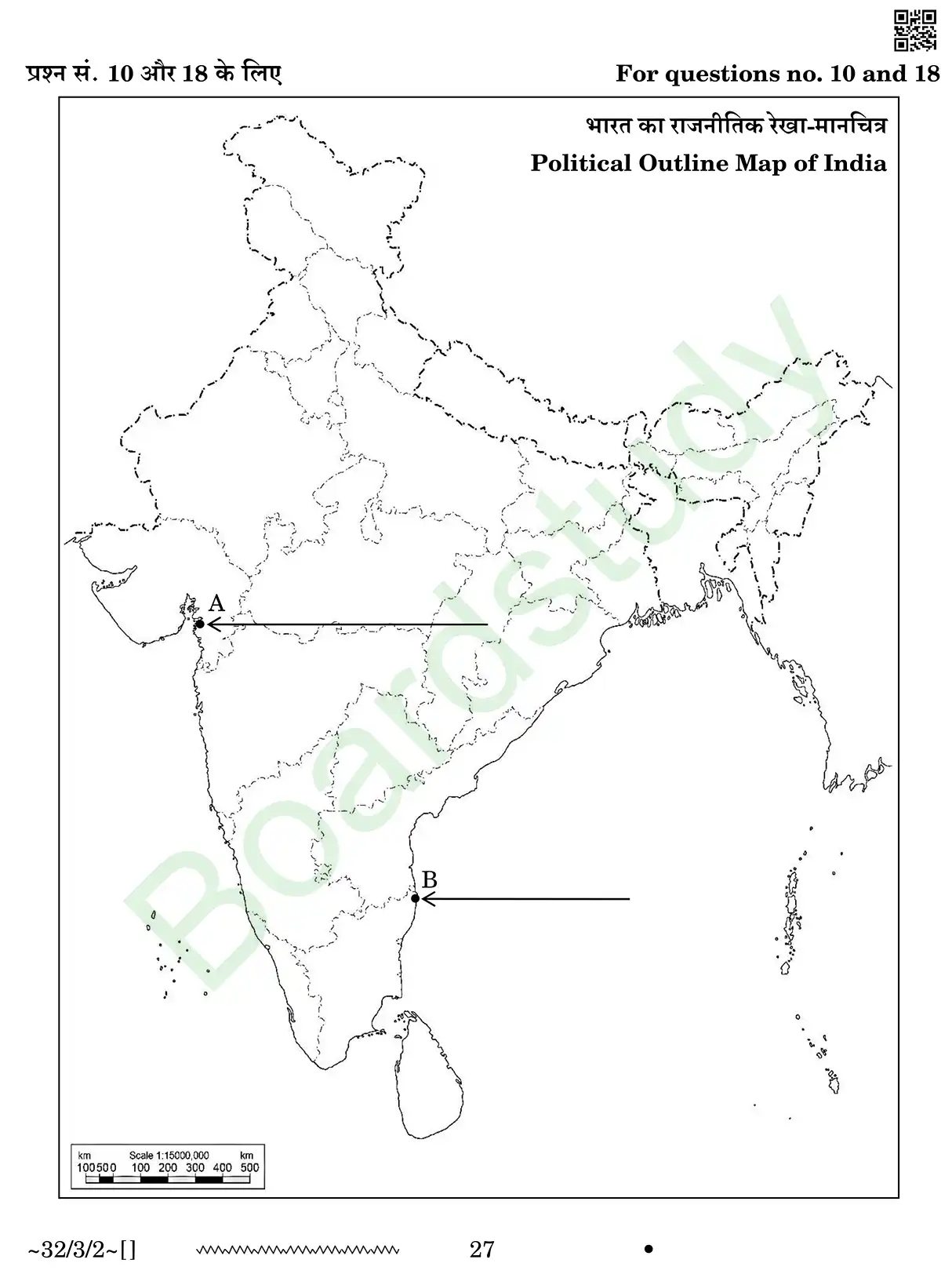
CBSE Class 10 Social Science PYQ 2026 SET 2 Question
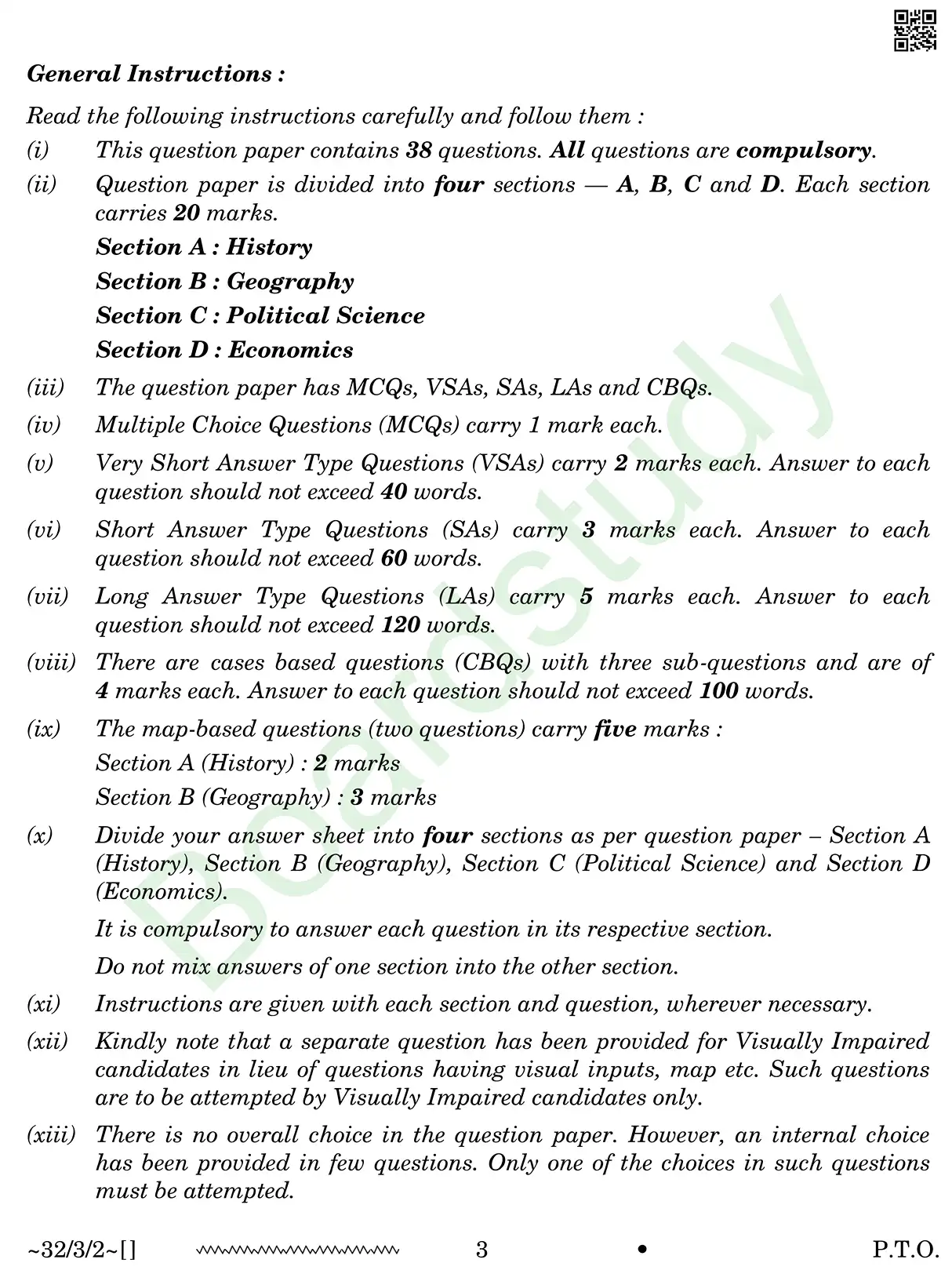
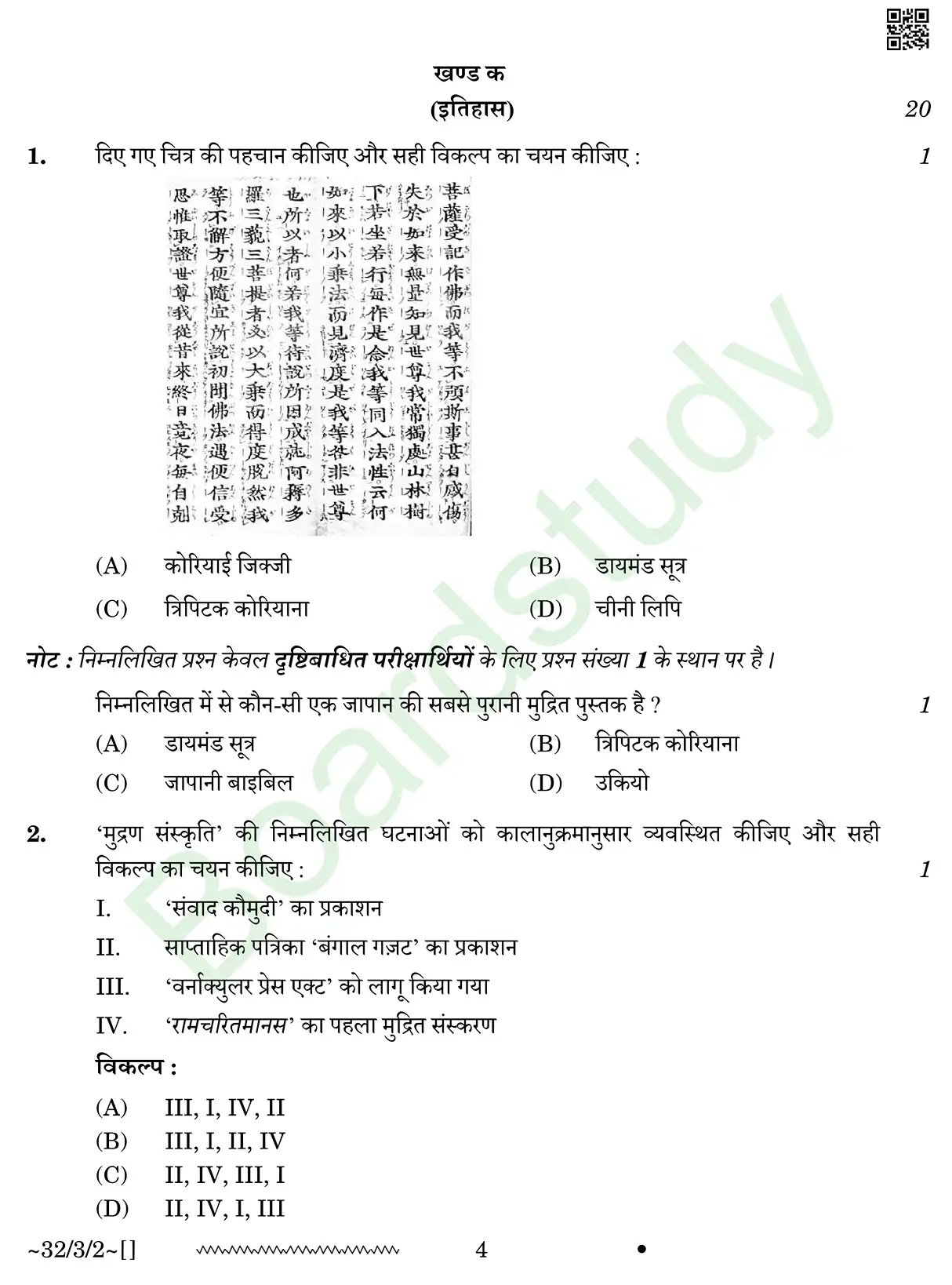
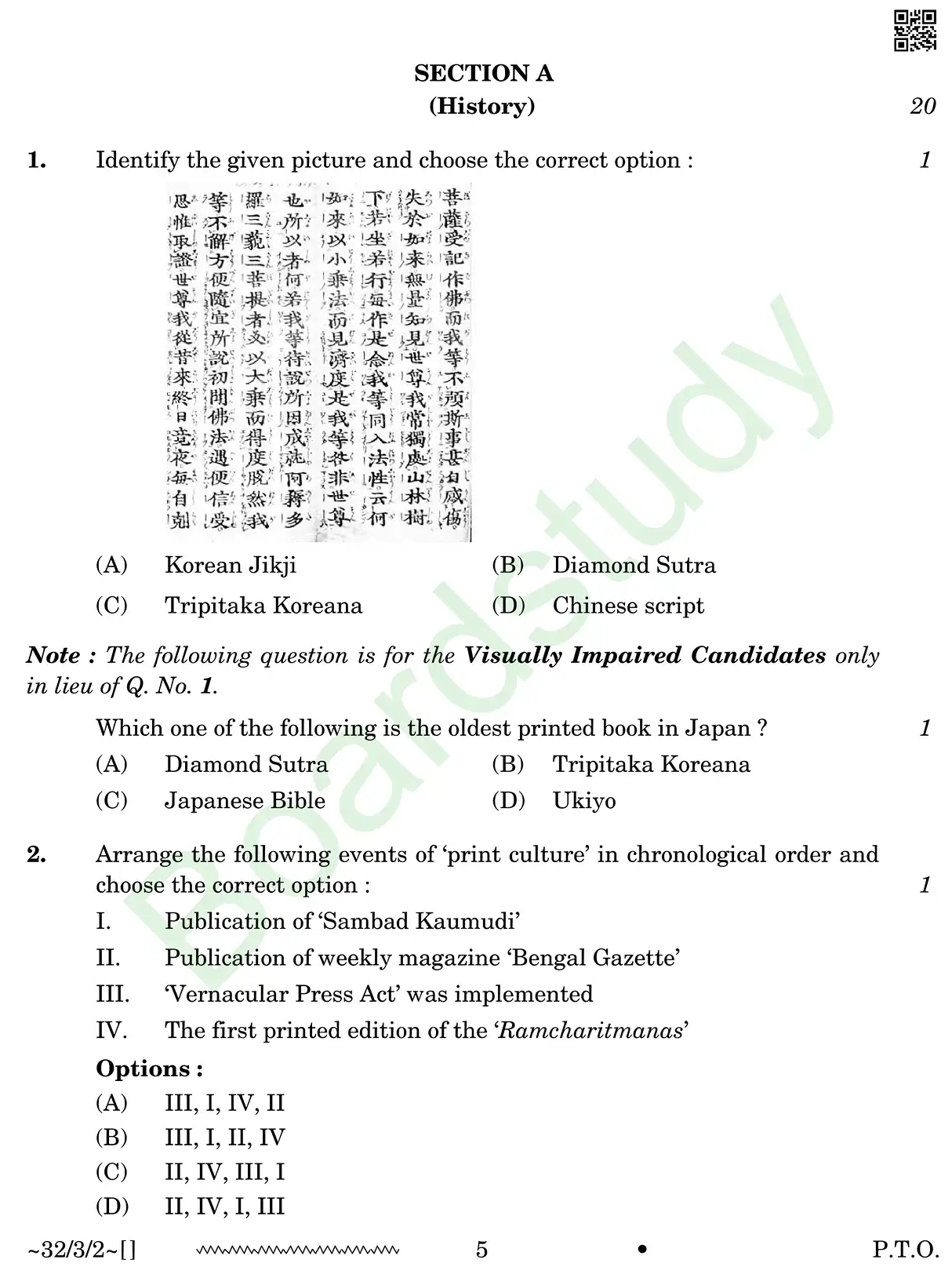
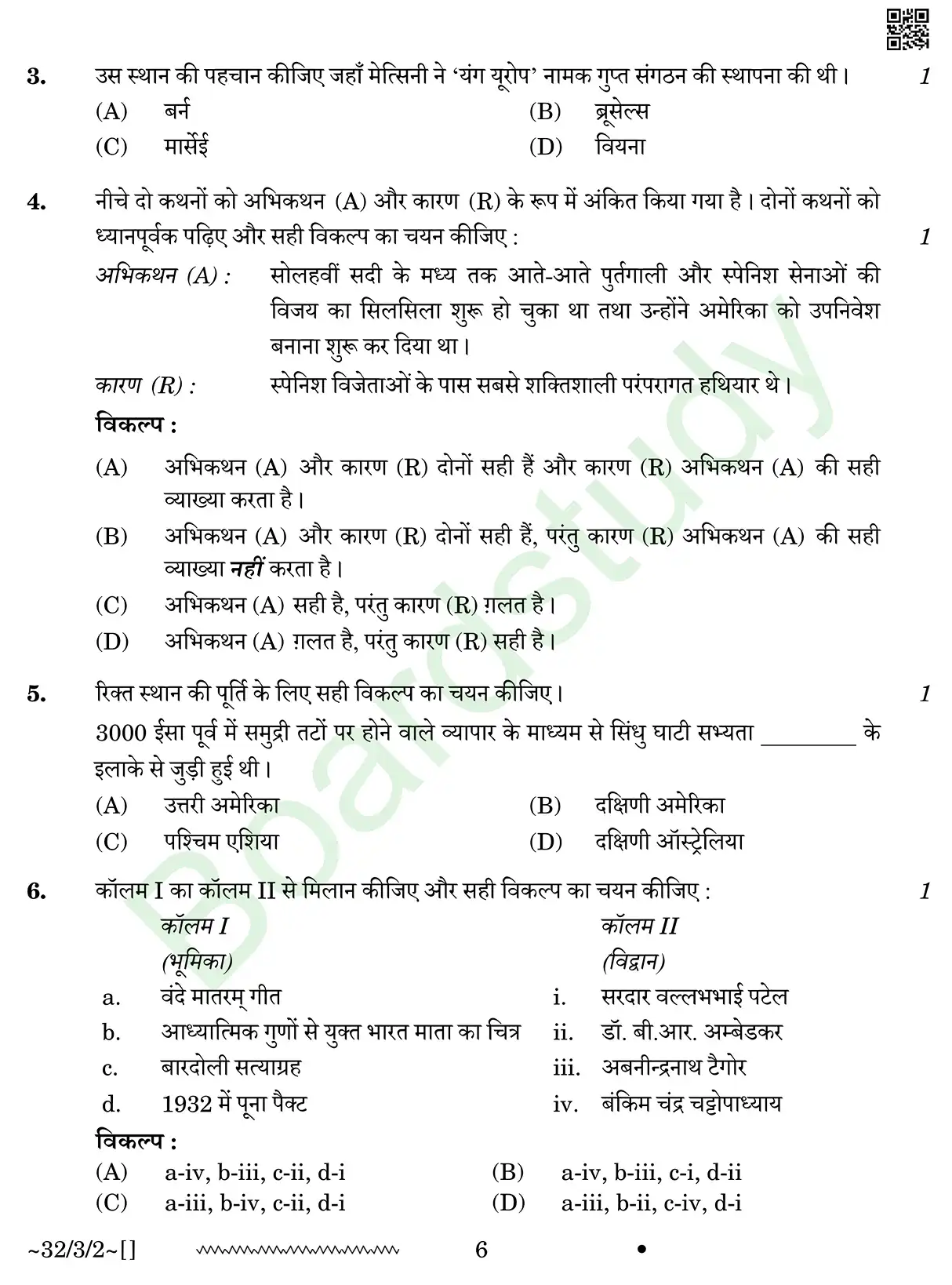




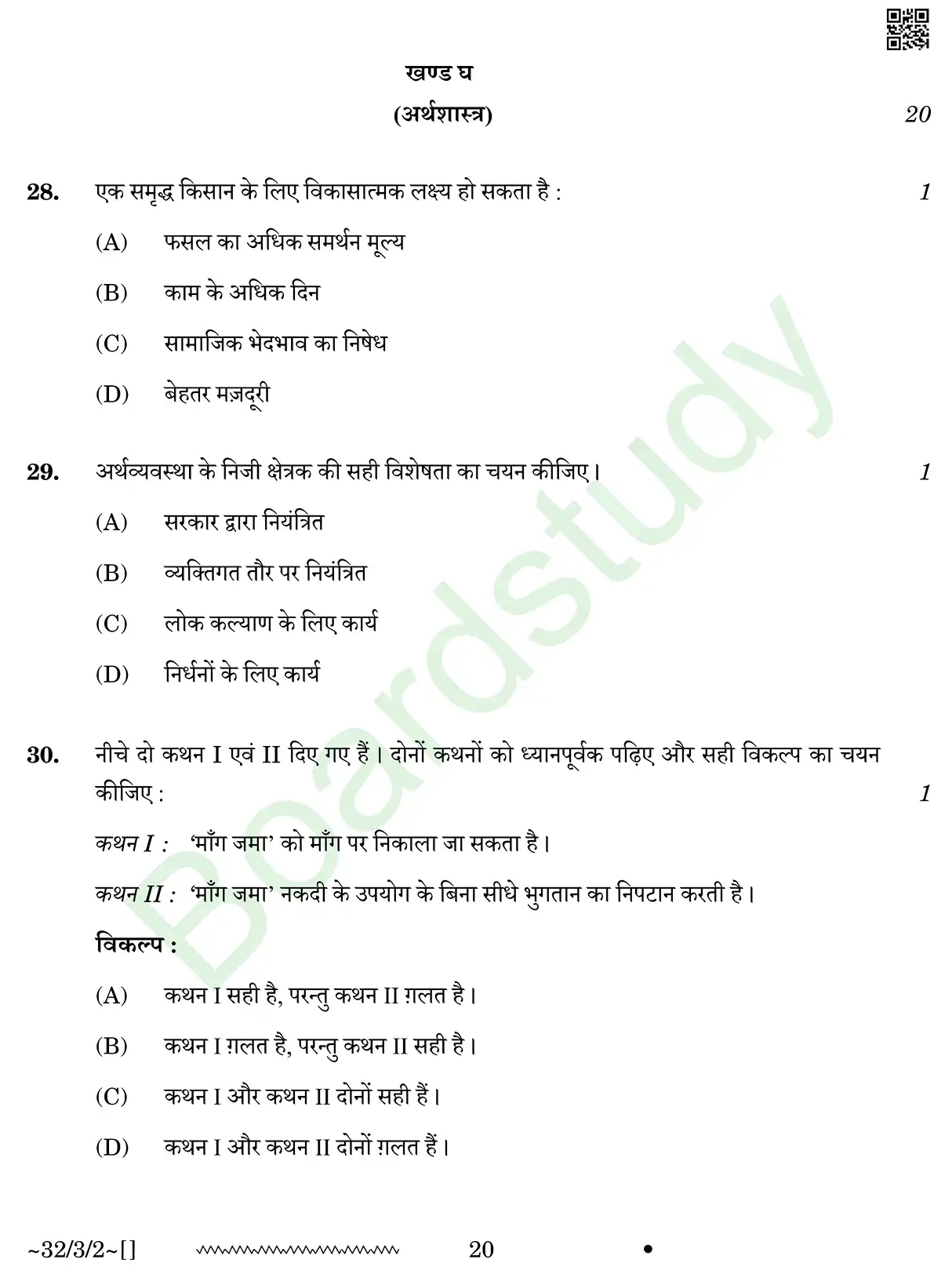
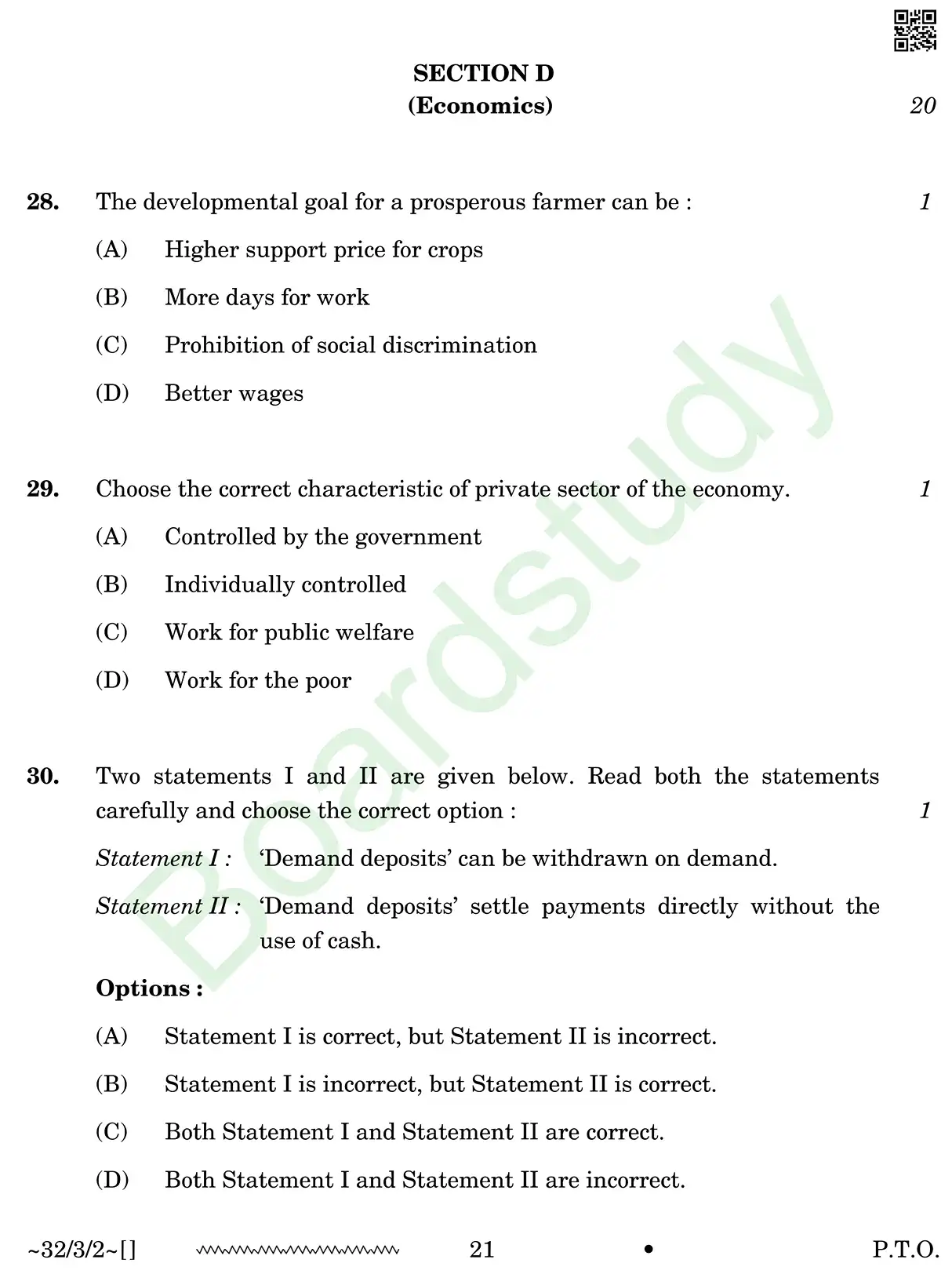
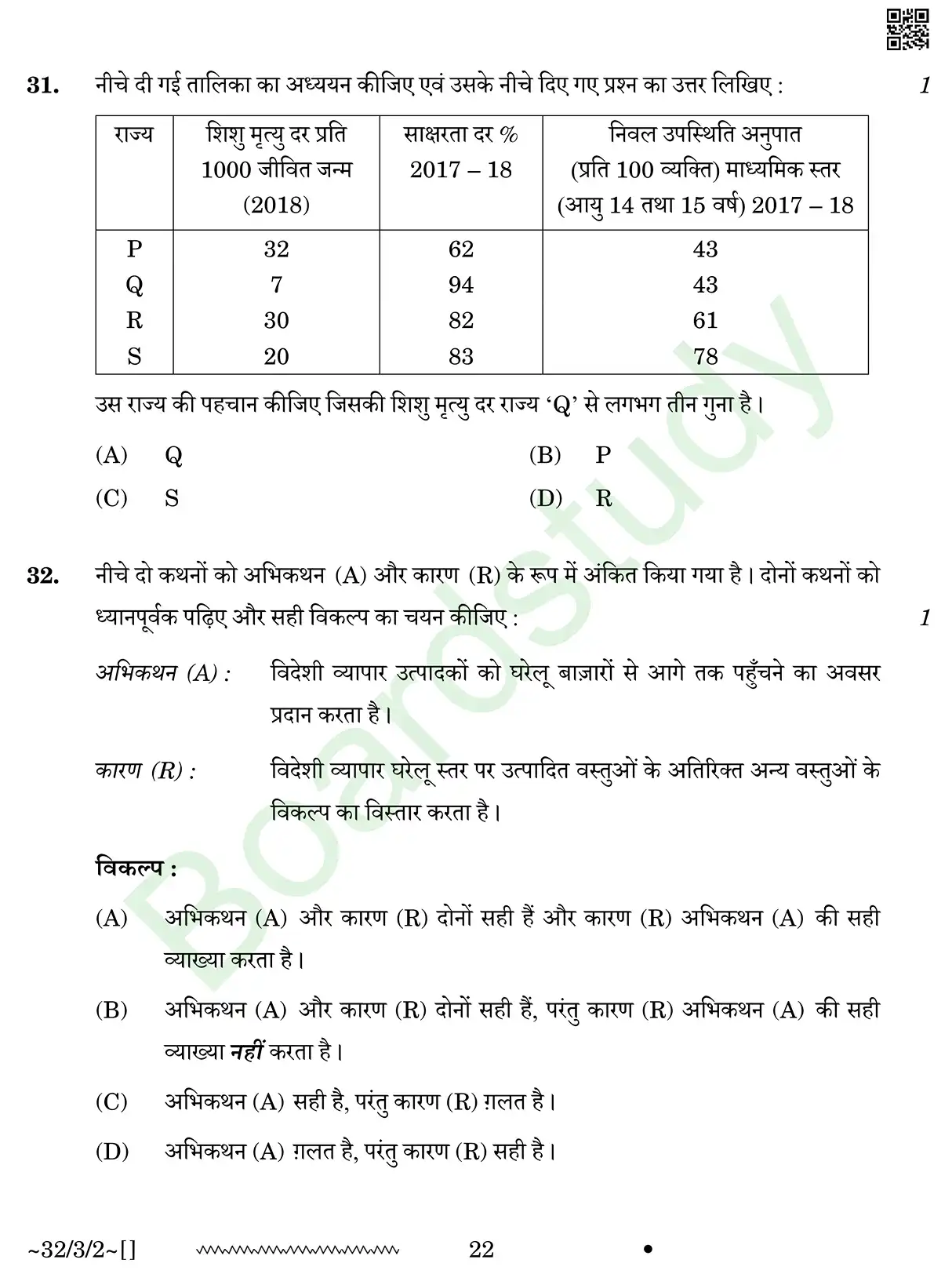
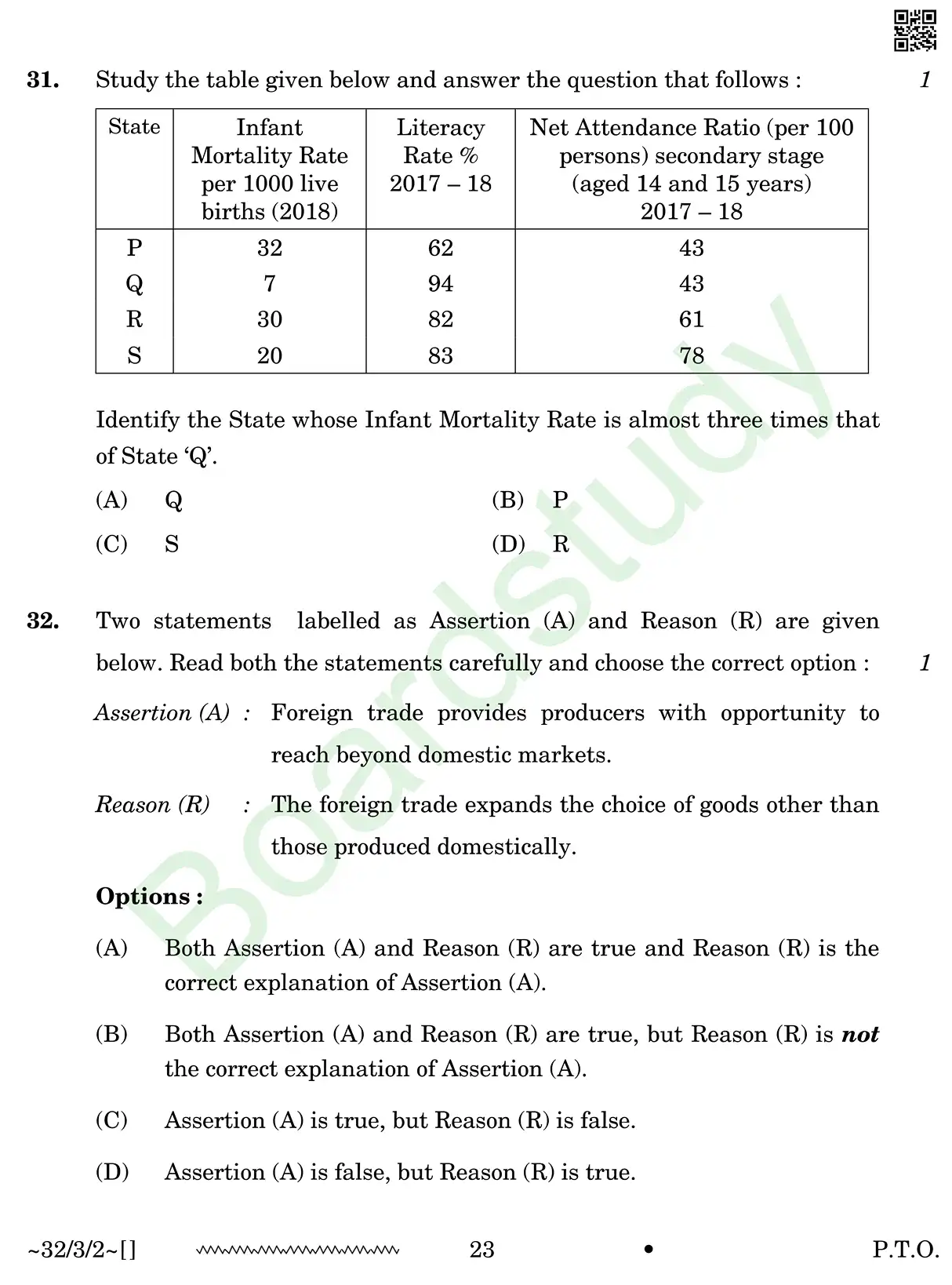
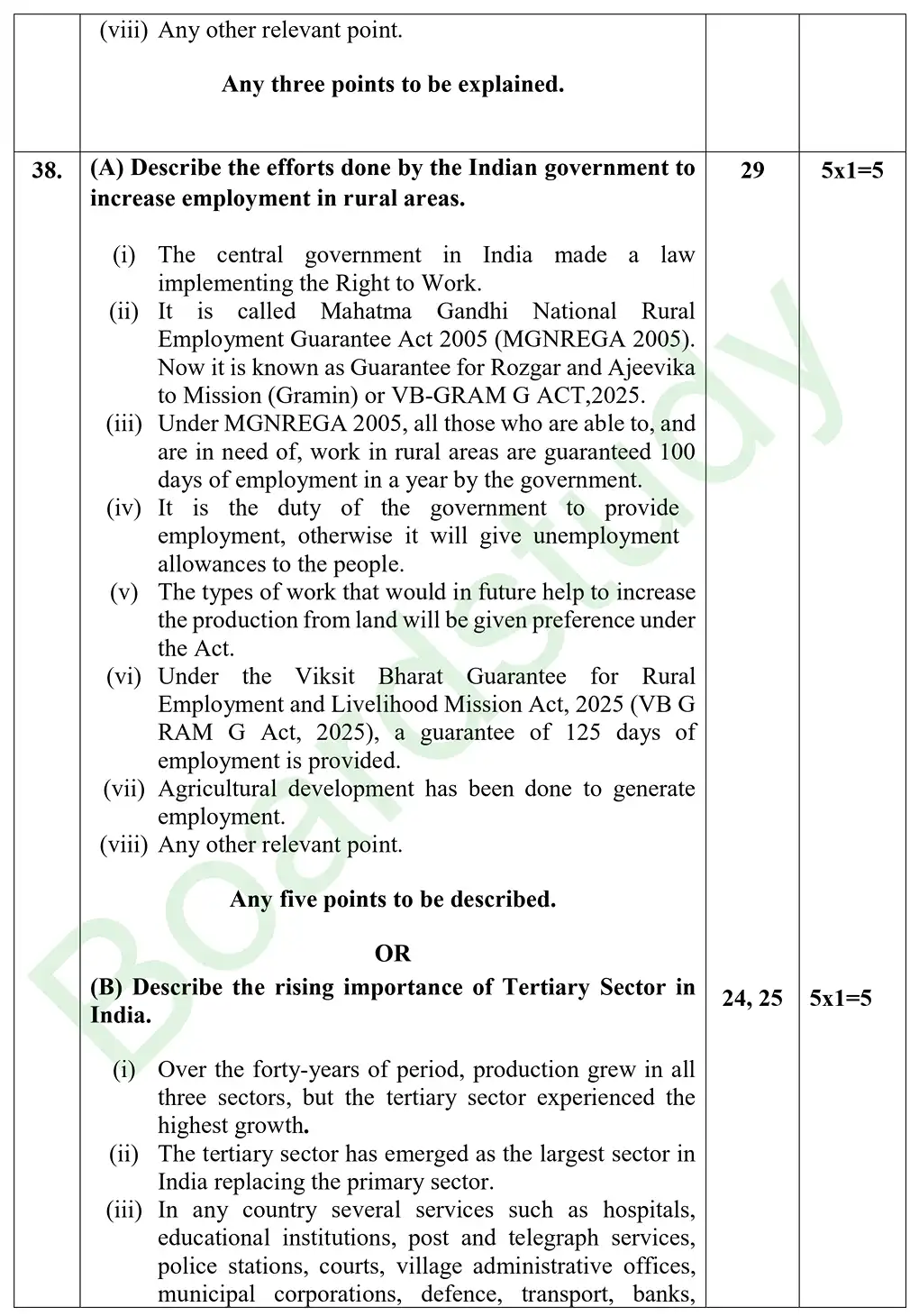
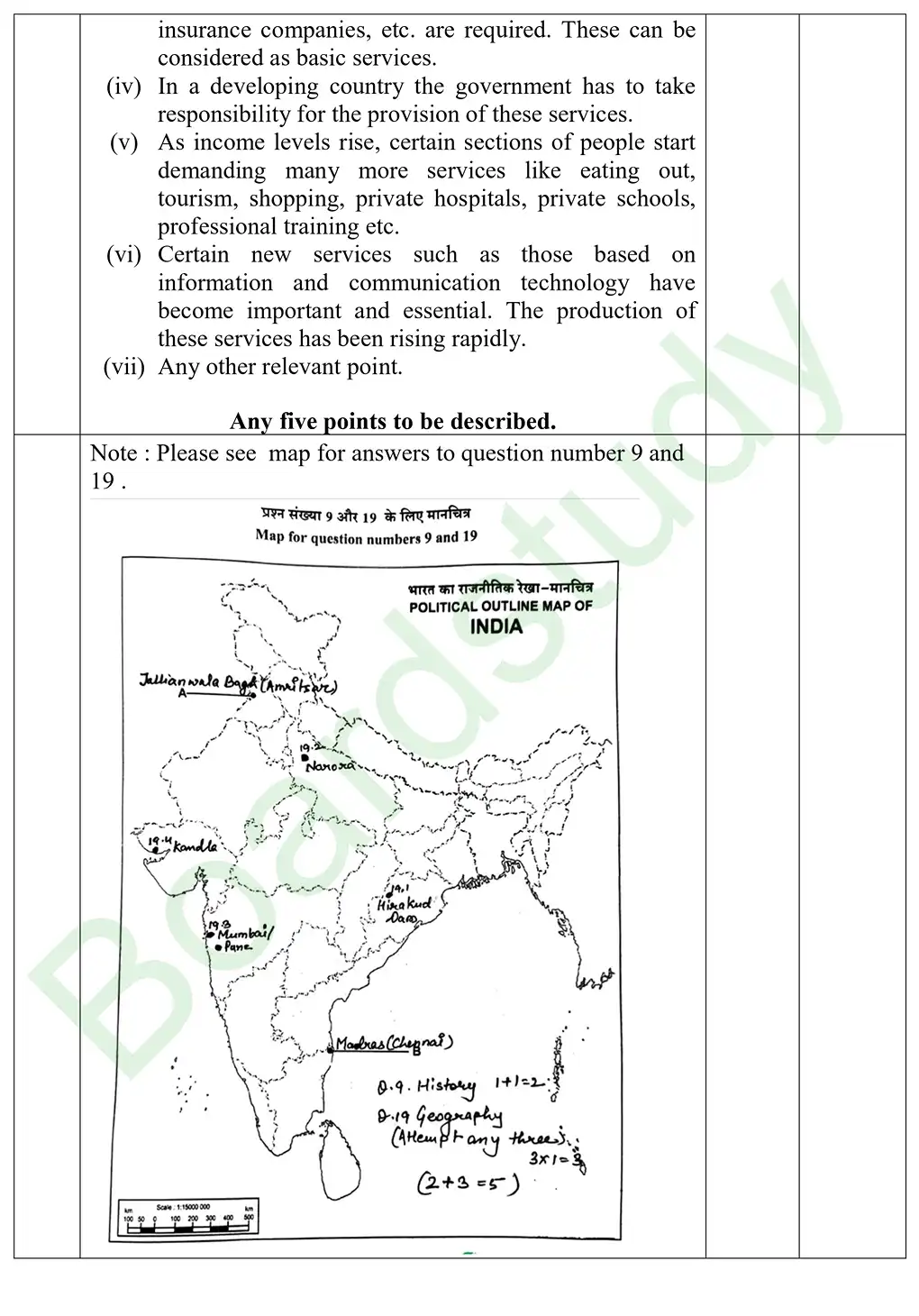
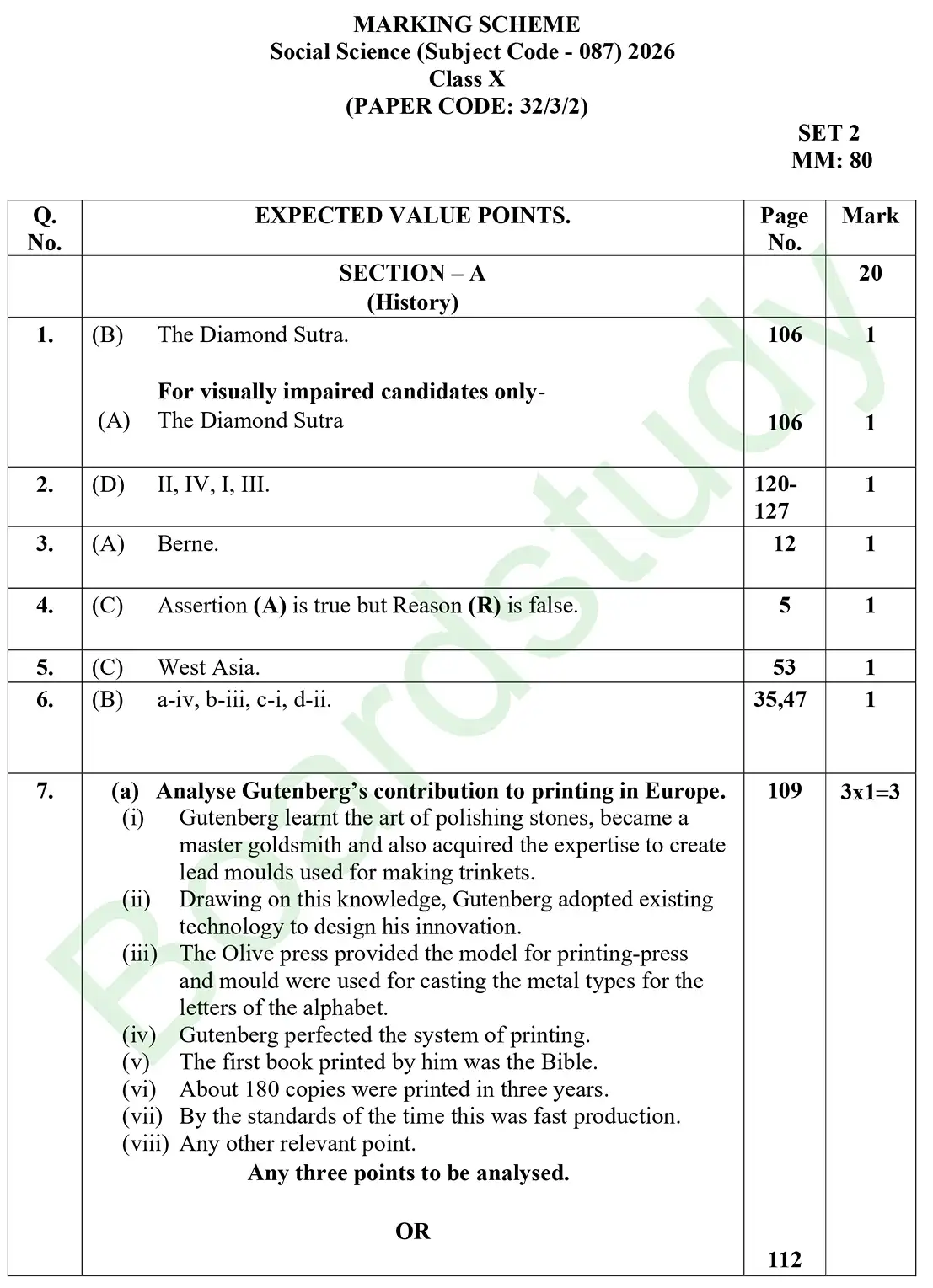
CBSE Class 10 Social Science PYQ 2026 SET 2 Solution
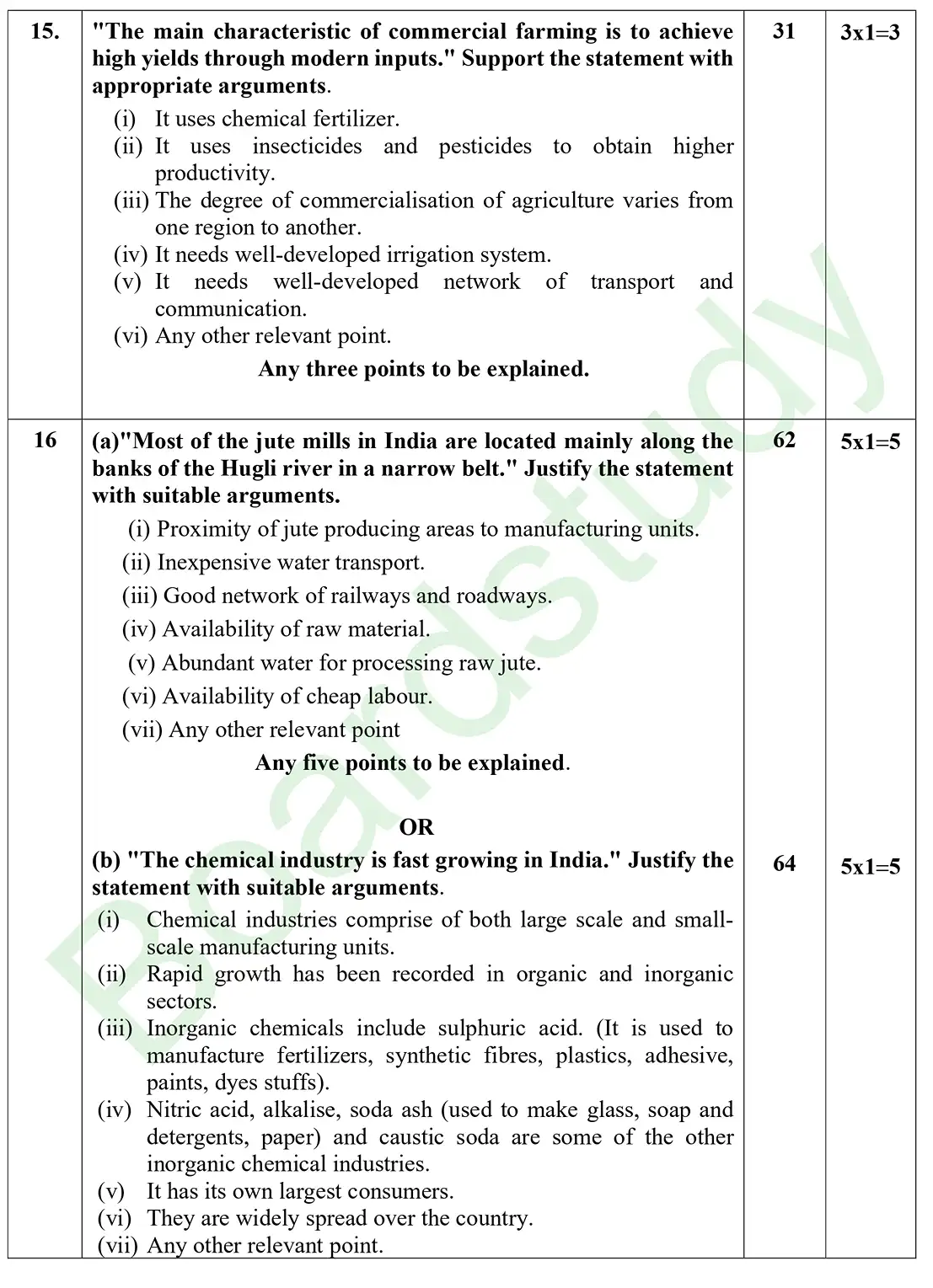
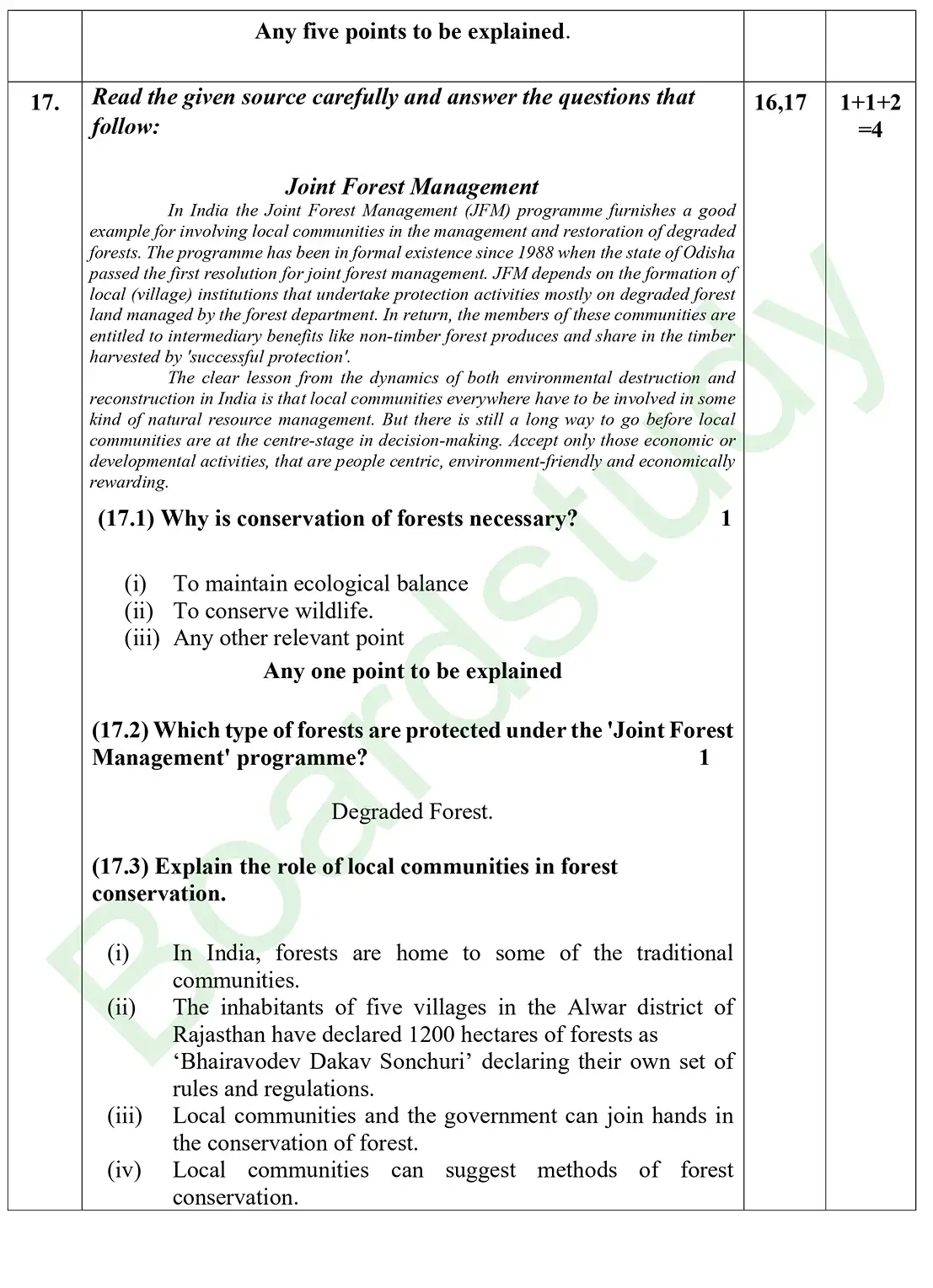
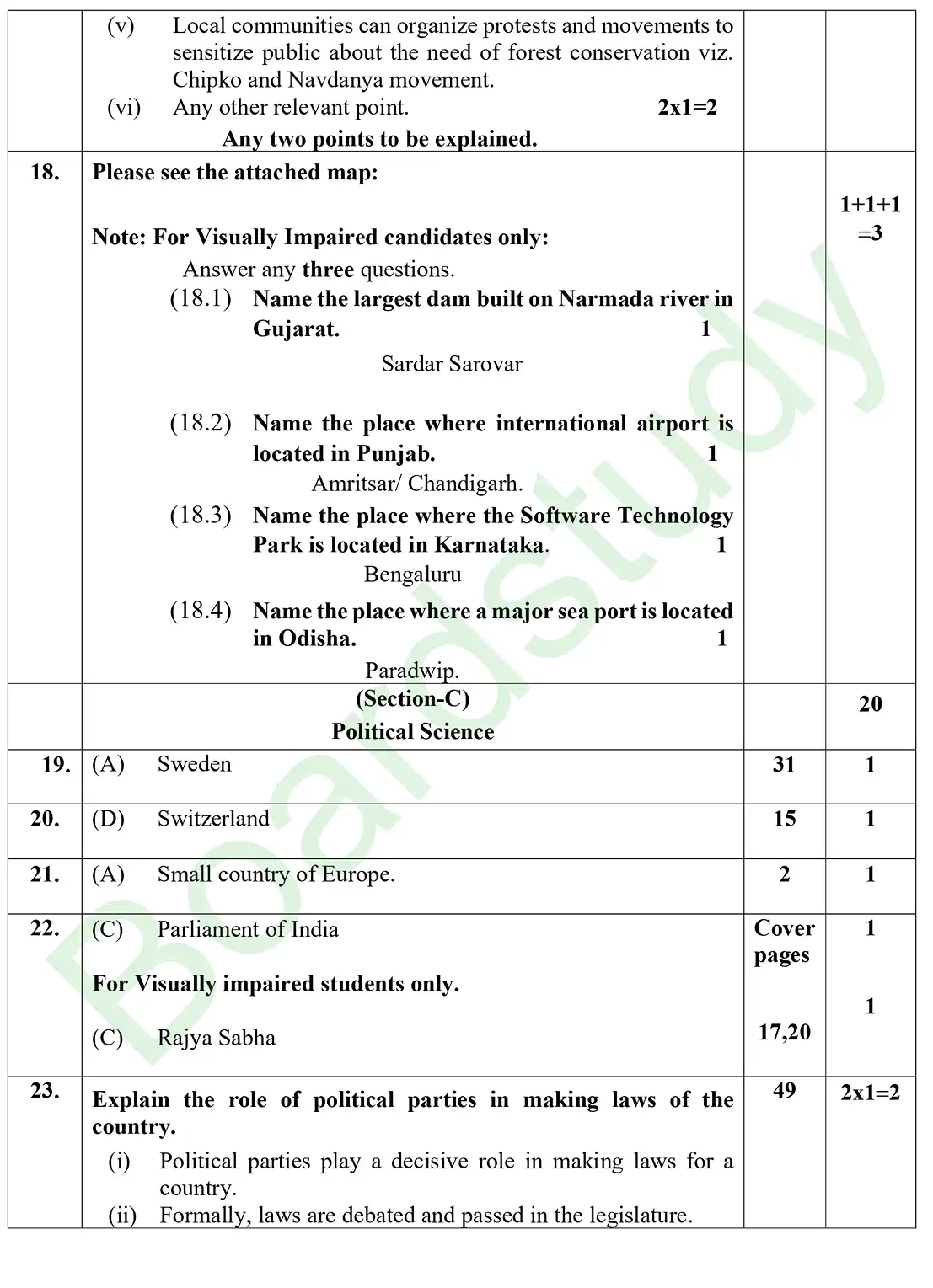
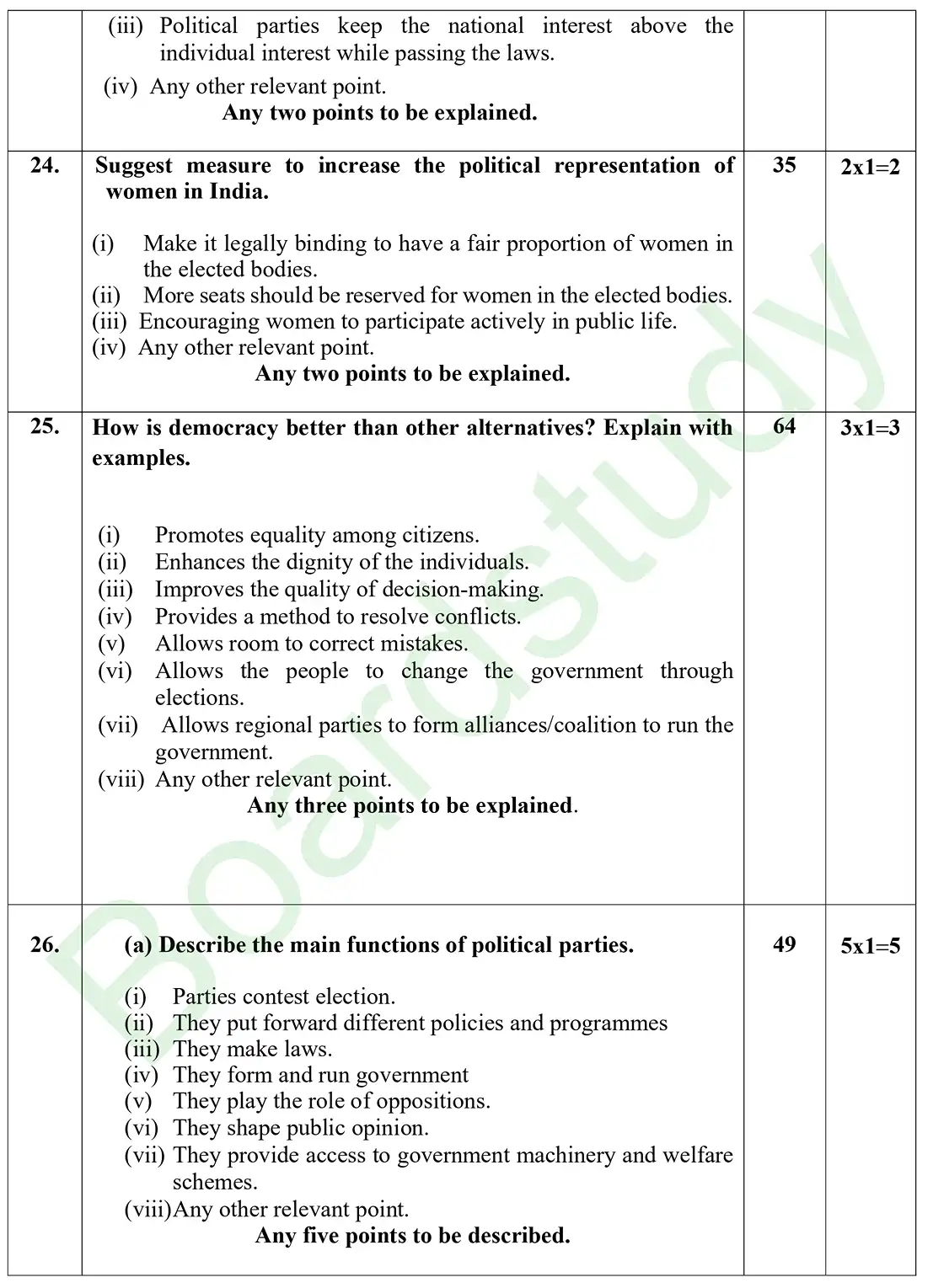
CBSE Class 10 Social Science PYQ 2019
CBSE Class 10 Social Science PYQ 2025
Students can also find class 10 social science handwritten notes on our website. These handwritten notes are prepared by experts teacher and topper’s students. At the time of solving these PYQ students should teat it as a real board paper and should solve accordingly.
Important Question of CBSE Class 10 Social Science PYQ 2026
Question :
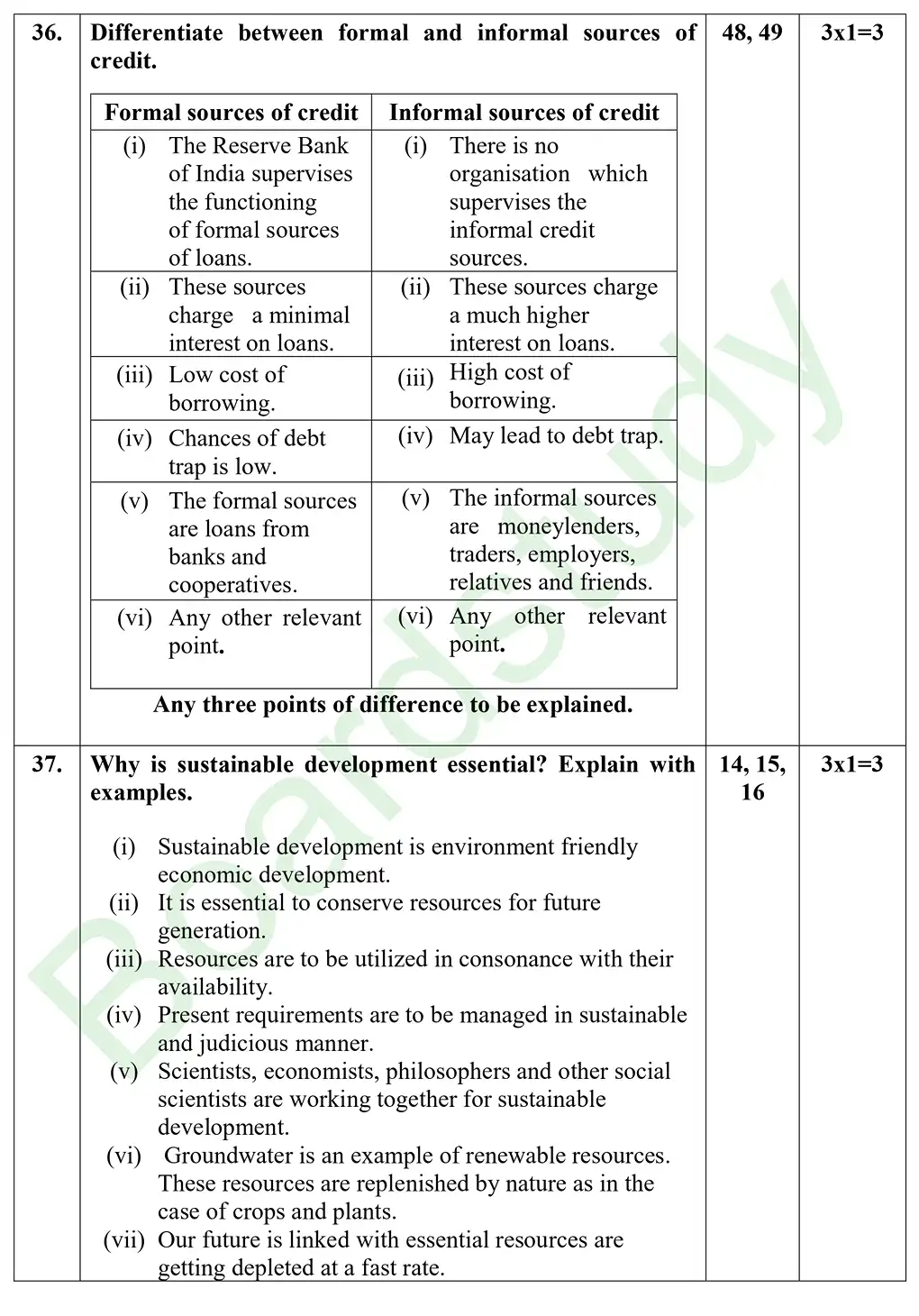
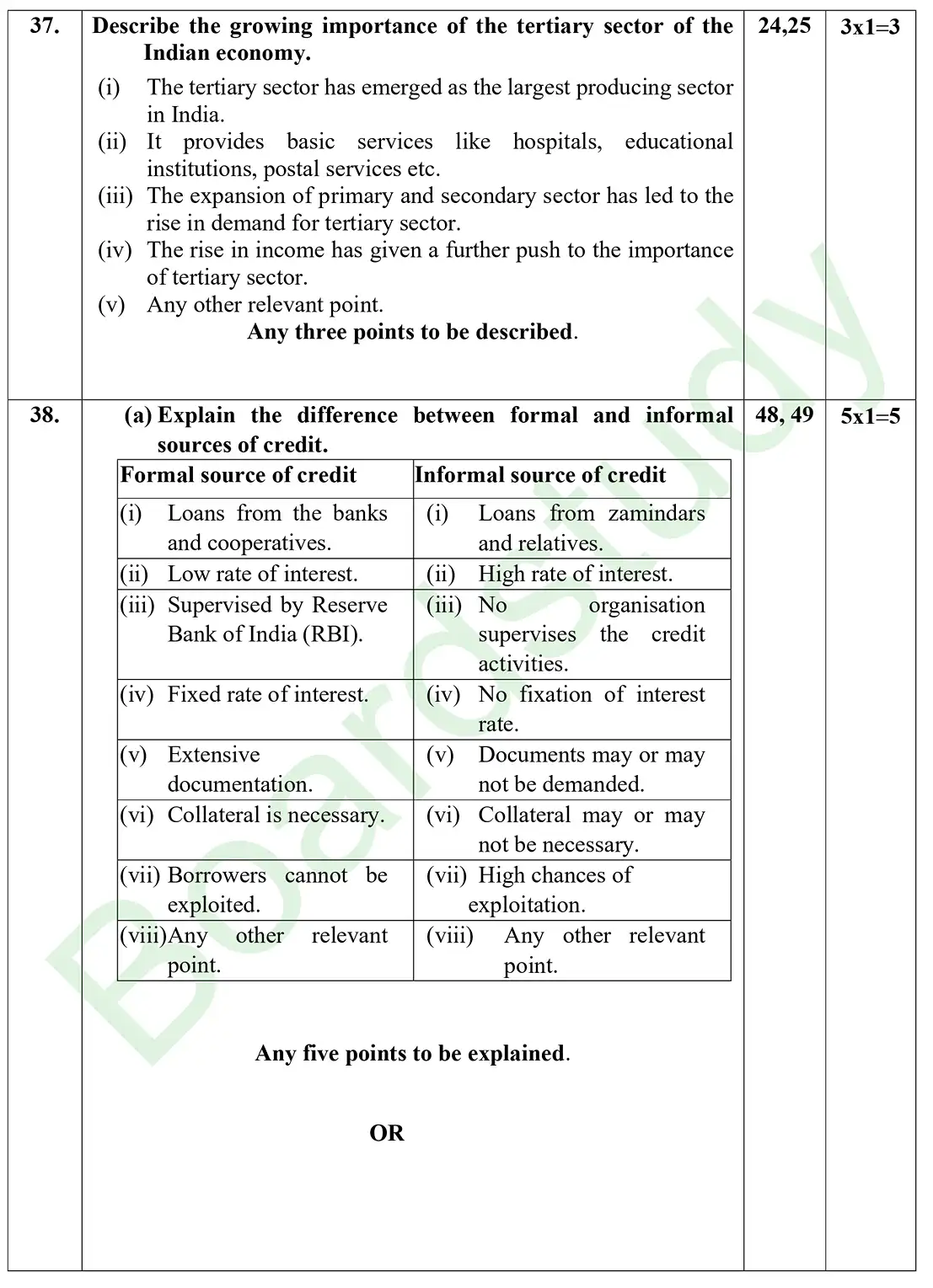
Differentiate between formal and informal sources of credit.
Solution
| Formal sources of credit | Informal sources of credit |
| (i) The Reserve Bank of India supervises the functioning of formal sources of loans. | (i) There is no organisation which supervises the informal credit sources. |
| (ii) These sources charge a minimal interest on loans. | (ii) These sources charge a much higher interest on loans. |
| (iii) Low cost of borrowing. | (iii) High cost of borrowing. |
| (iv) Chances of debt trap is low. | (iv) May lead to debt trap. |
| (v) The formal sources are loans from banks and cooperatives. | (v) The informal sources are moneylenders, traders, employers, relatives and friends. |
| (vi) Any other relevant point. | (vi) Any other relevant point. |
Question :
How did the changes made in the Indian economy in 1991 promote globalisation? Explain with examples.
Solution
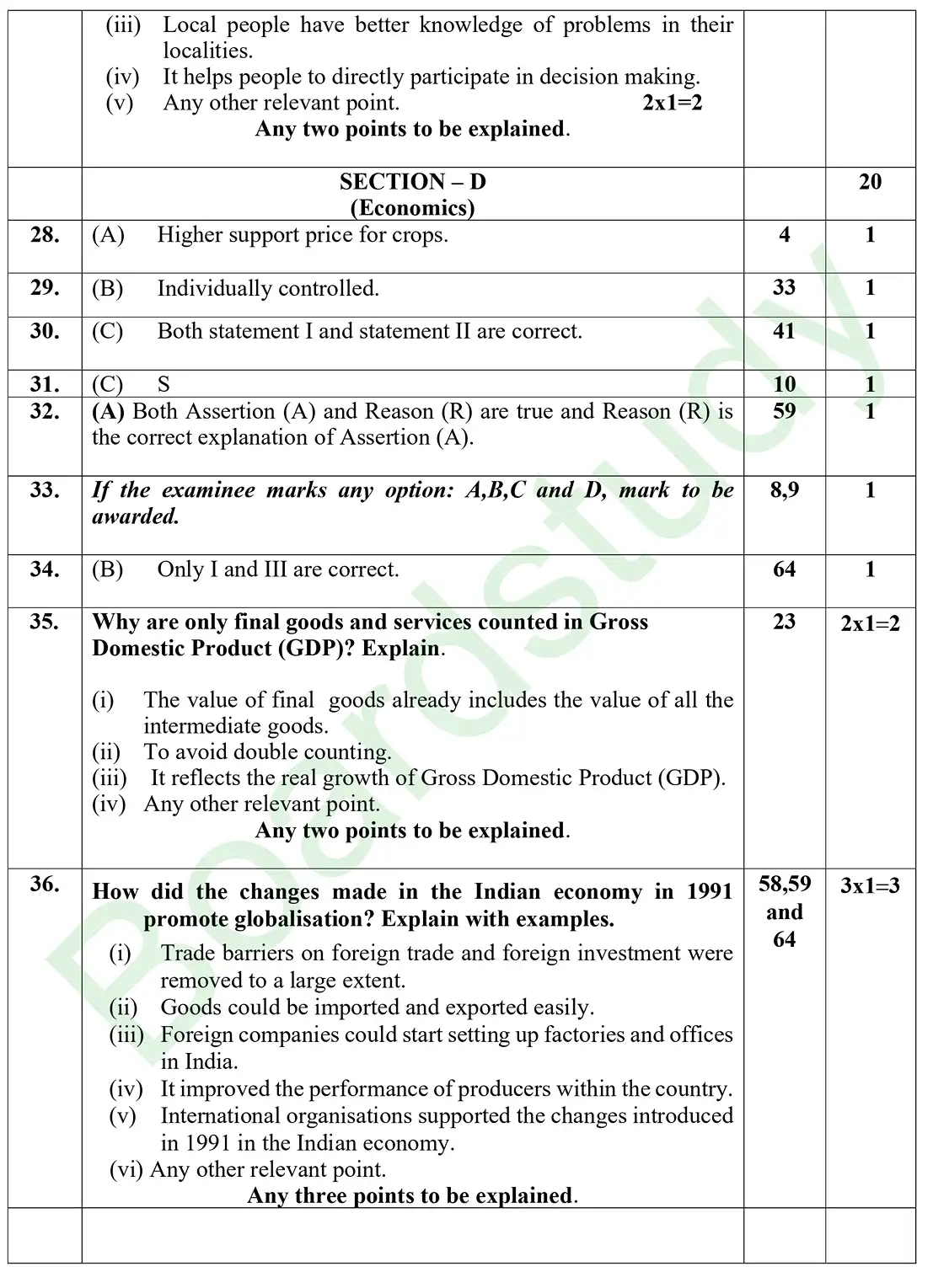
(i) Trade barriers on foreign trade and foreign investment were removed to a large extent.
(ii) Goods could be imported and exported easily.
(iii) Foreign companies could start setting up factories and offices in India.
(iv) It improved the performance of producers within the country.
(v) International organisations supported the changes introduced in 1991 in the Indian economy.
(vi) Any other relevant point.