
Physics is a very important subject for students. It may be hard for some students. For helping students here we have shared NCERT Class 12 Physics Chapter 14 Semiconductor Electronic Handwritten Notes.
The Semiconductor Electronic notes is a best resource for students who are preparing for their board exam because it compile the entire lesson in short and include every important topic.
NCERT Class 12 Physics Chapter 14 Semiconductor Electronic Notes
Previous Chapter: Nuclei
Other Subjects:
Class 12 Biology Notes
Class 12 Chemistry Notes
Students who are studying physics in class 12 should definitely use this note and you can access this notes anytime on our website for free of cost. If you found notes helpful, you can also help your friends by sharing with them
Semiconductor Electronic Notes PDF
We have also shared the PDF of Semiconductor Electronic Notes so students don’t feel any difficulty in reading the notes. You can ask your doubts in the comment section. We will be happy to help you.
Key Points: Semiconductor Electronic Notes PDF
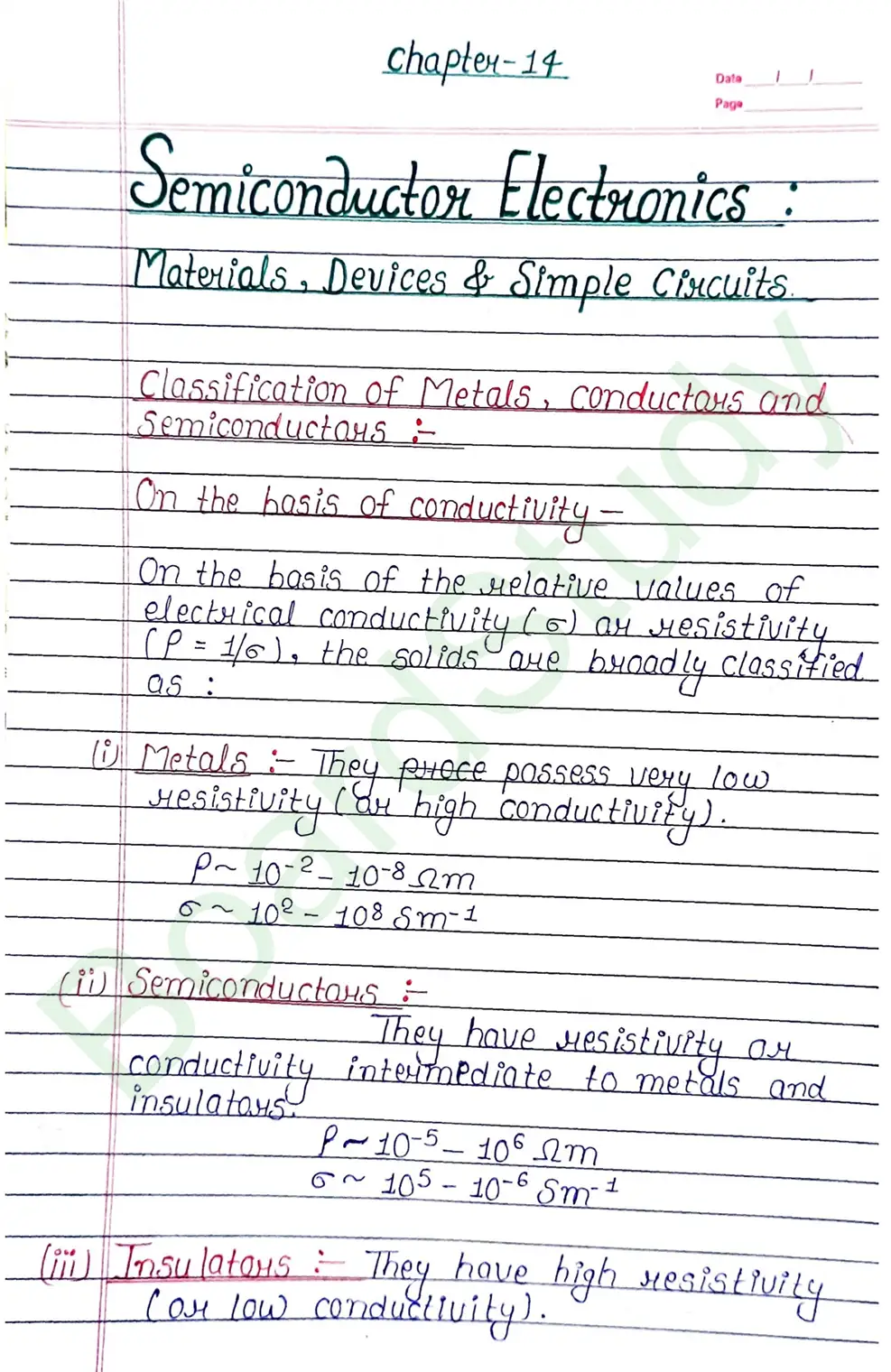
- Metals :- They possess very low resistivity (or high conductivity).
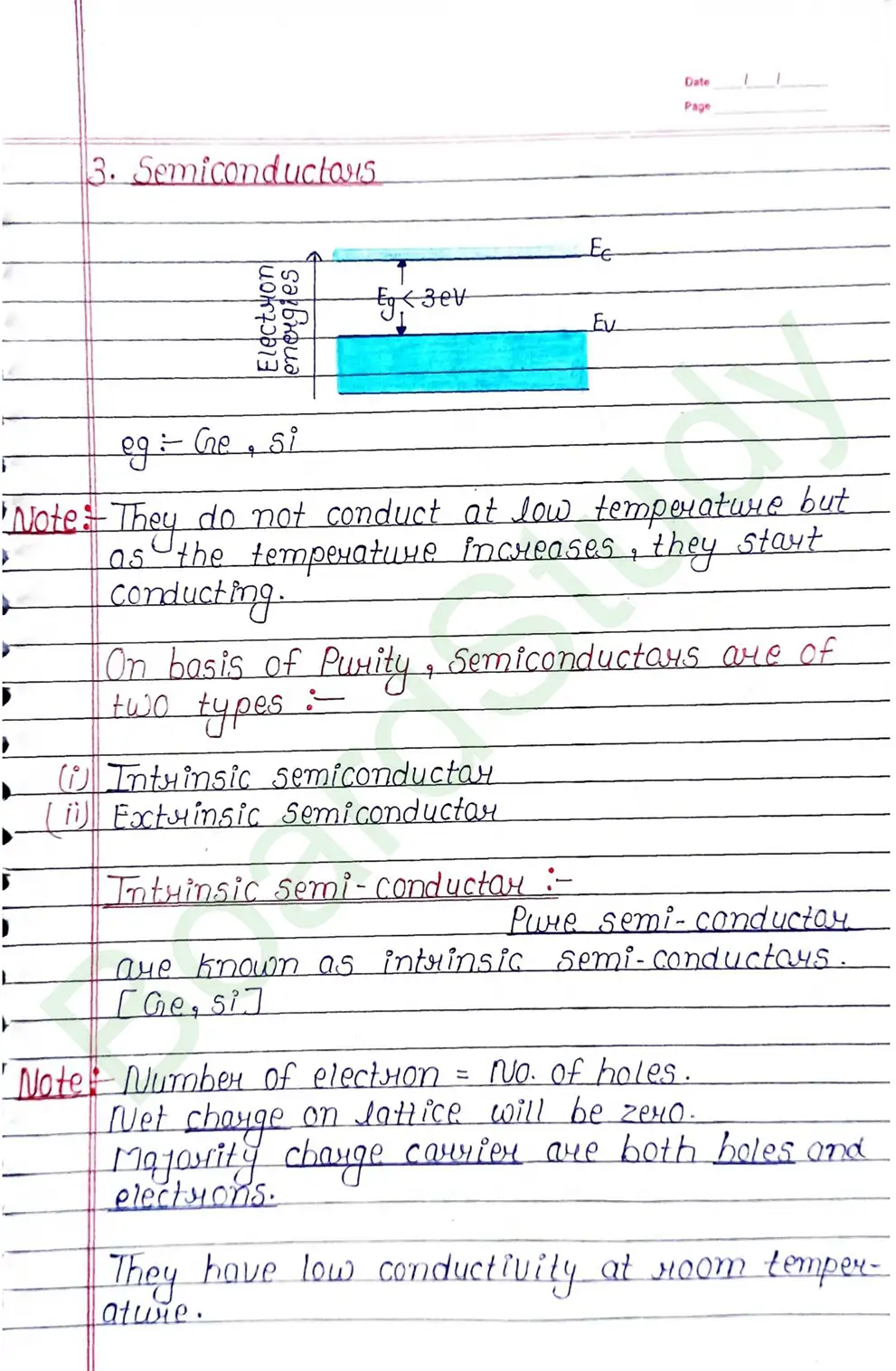
- Semiconductors : They have resistivity or conductivity intermediate to metals and insulators.
- Insulators : They have high resistivity (or low conductivity) .
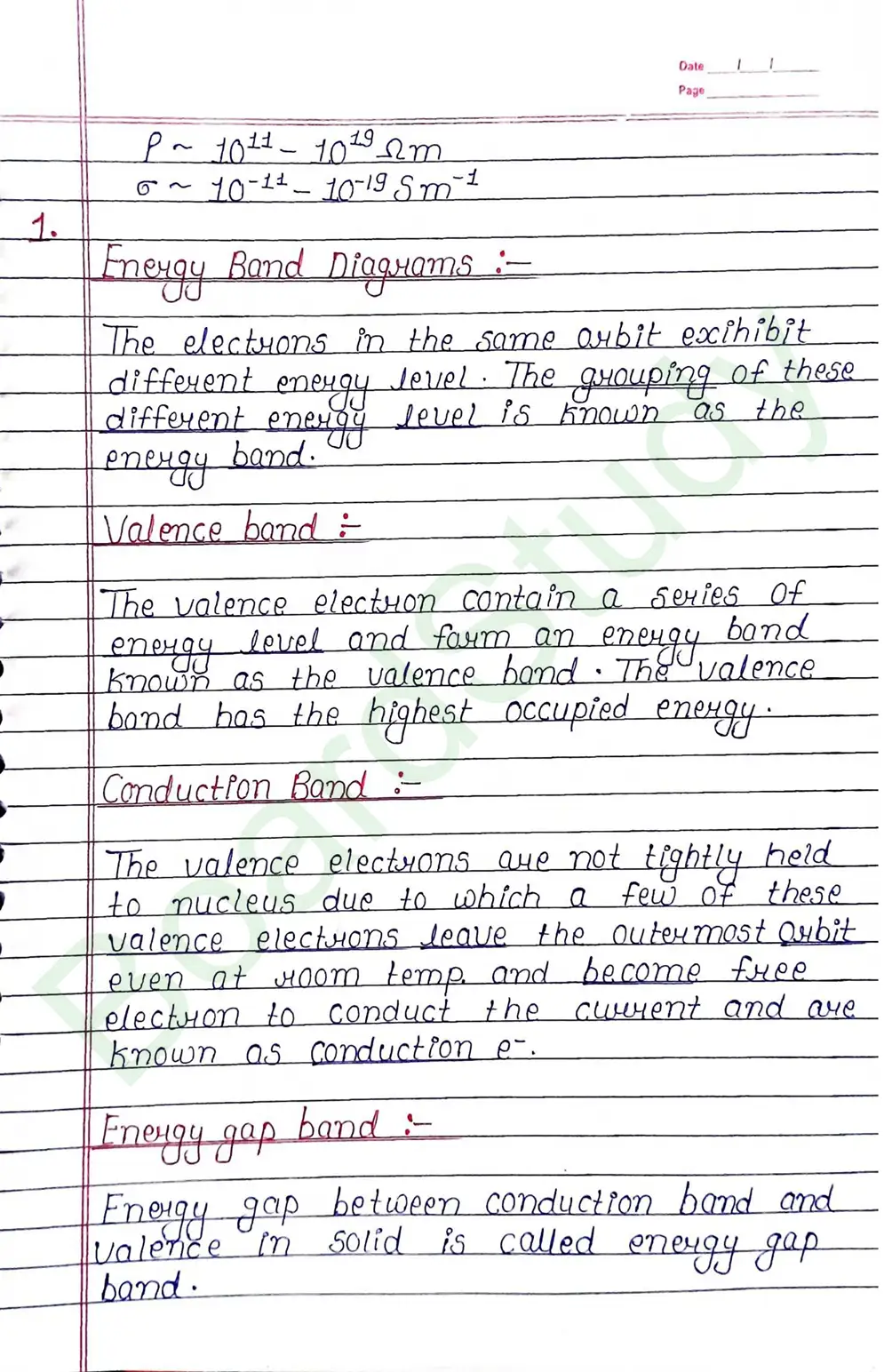
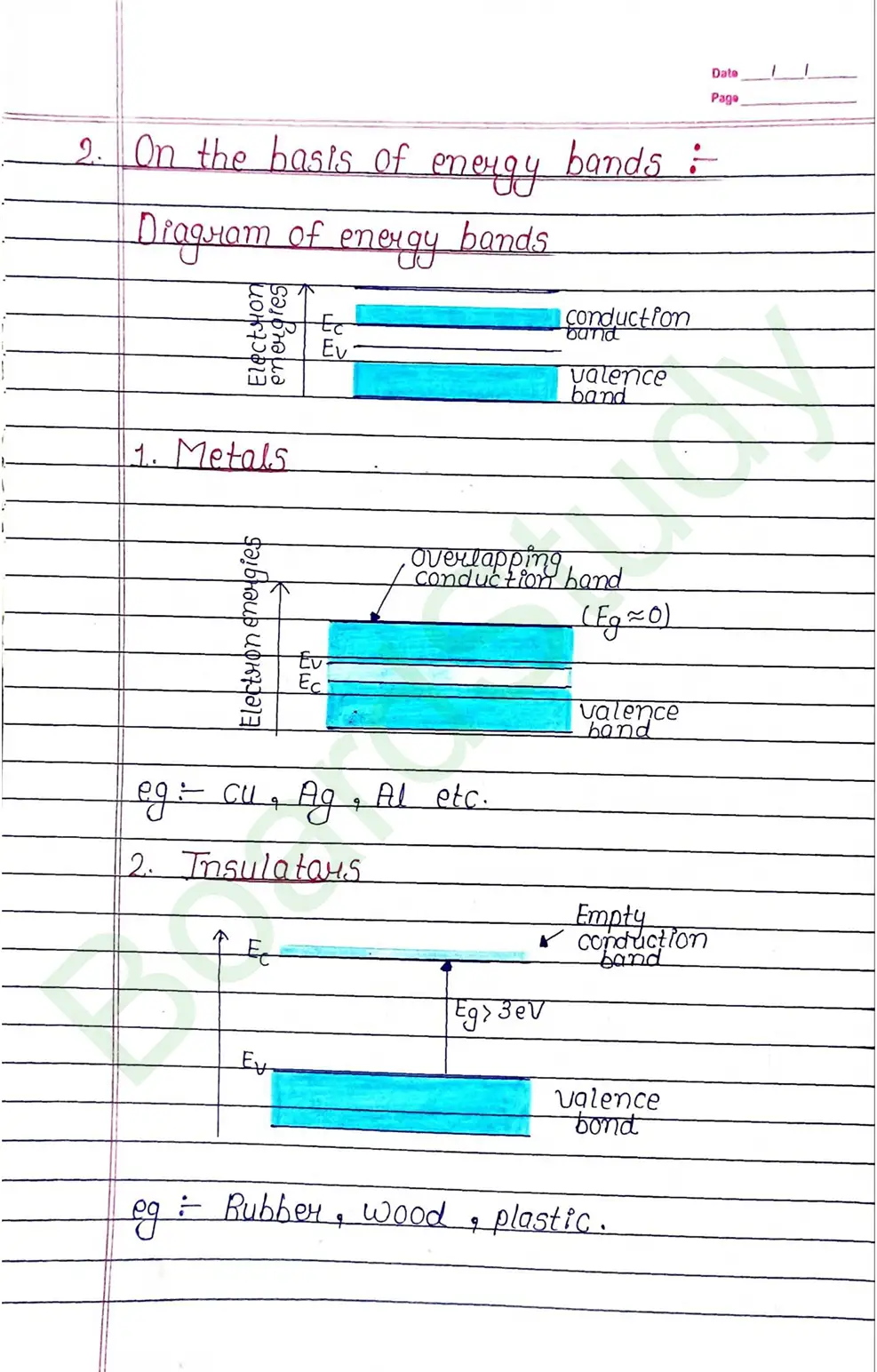
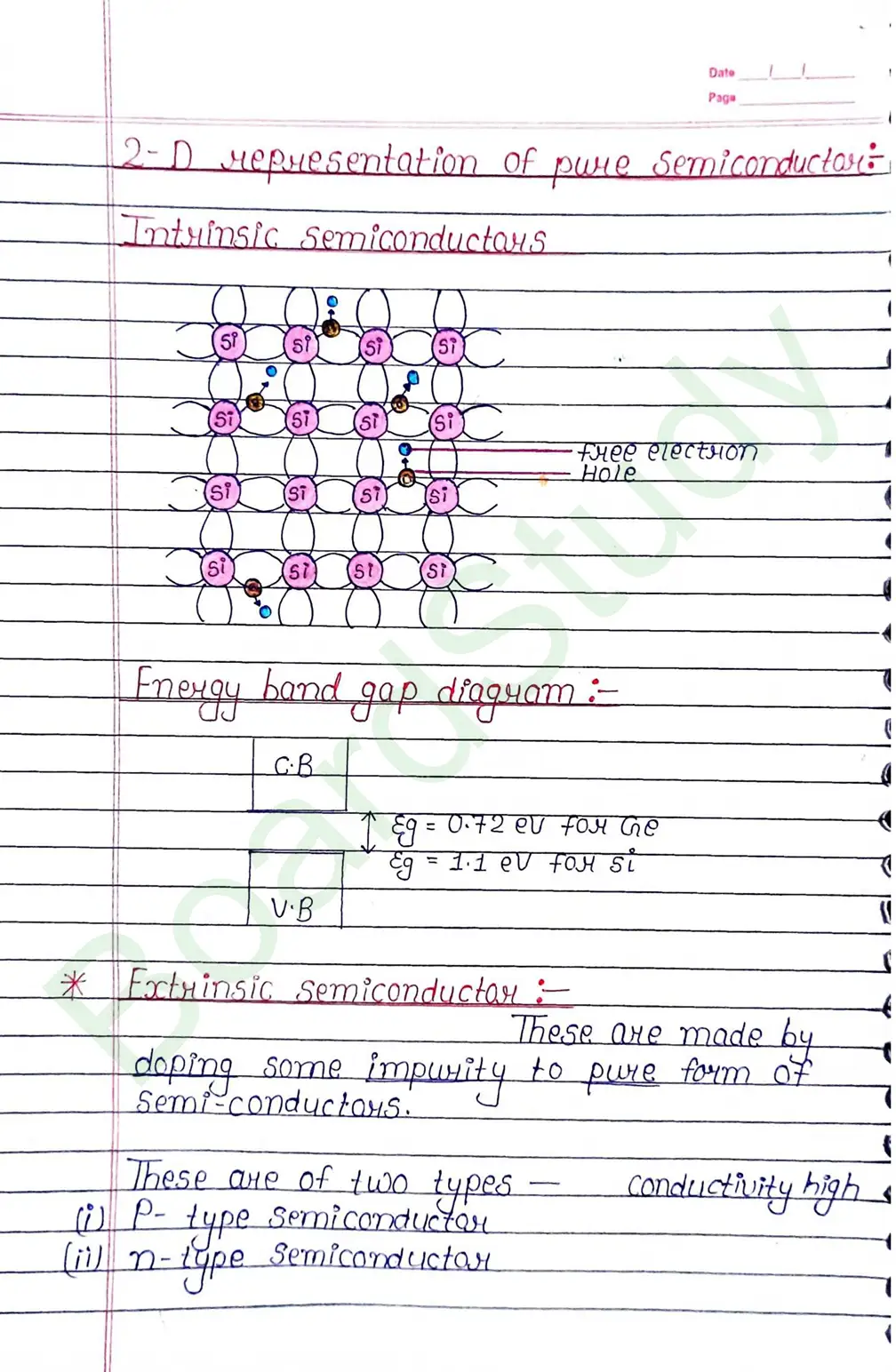
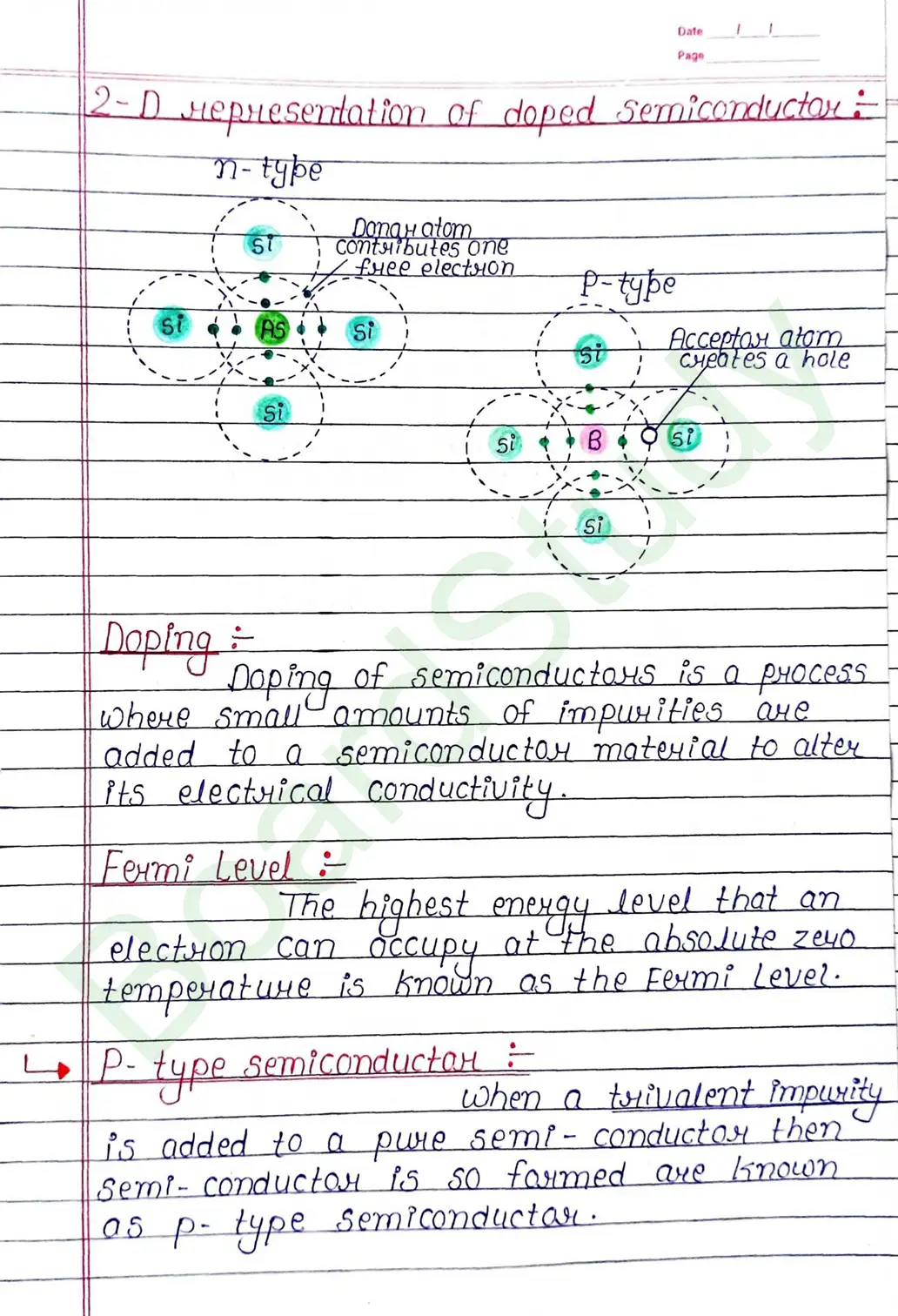
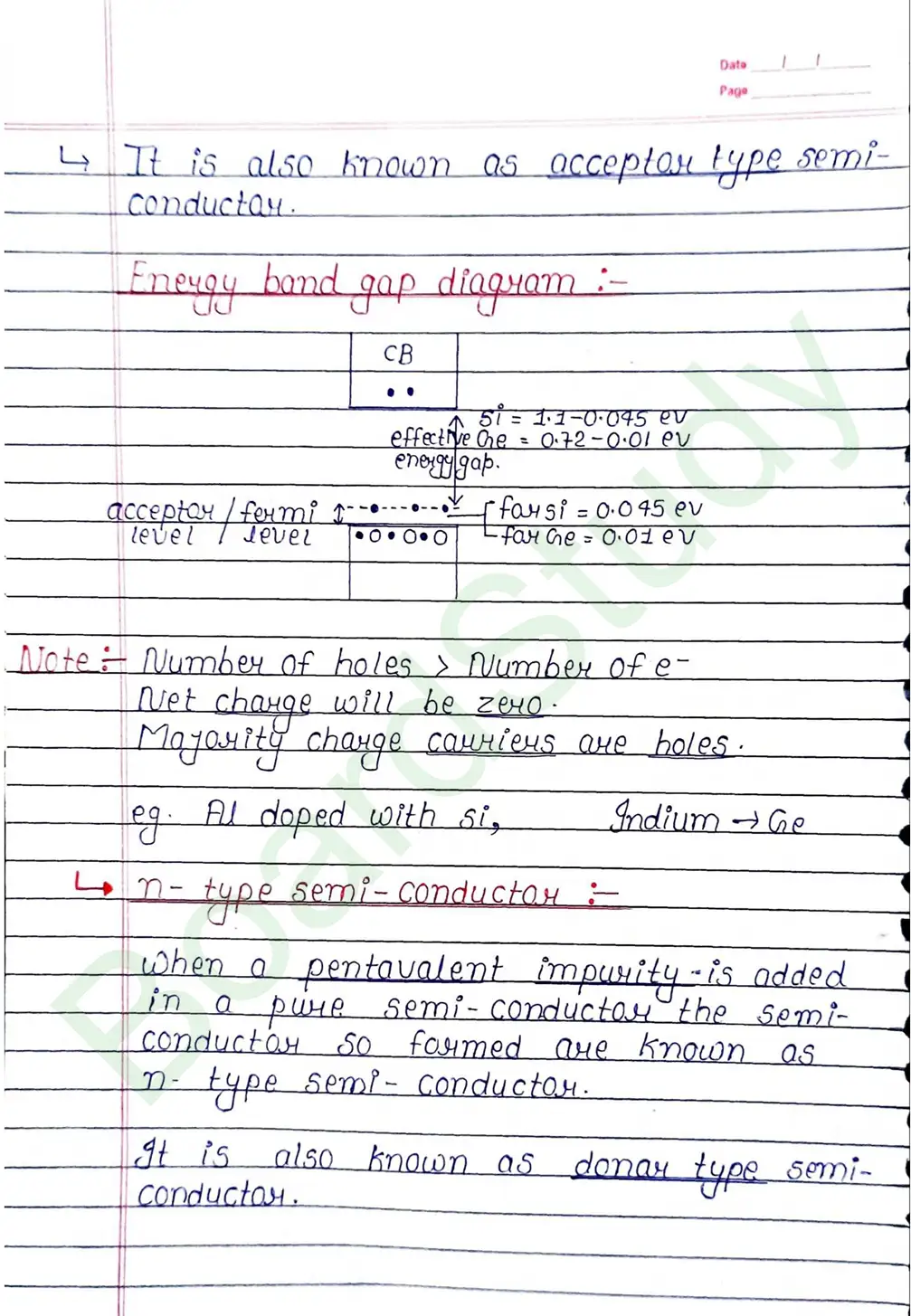
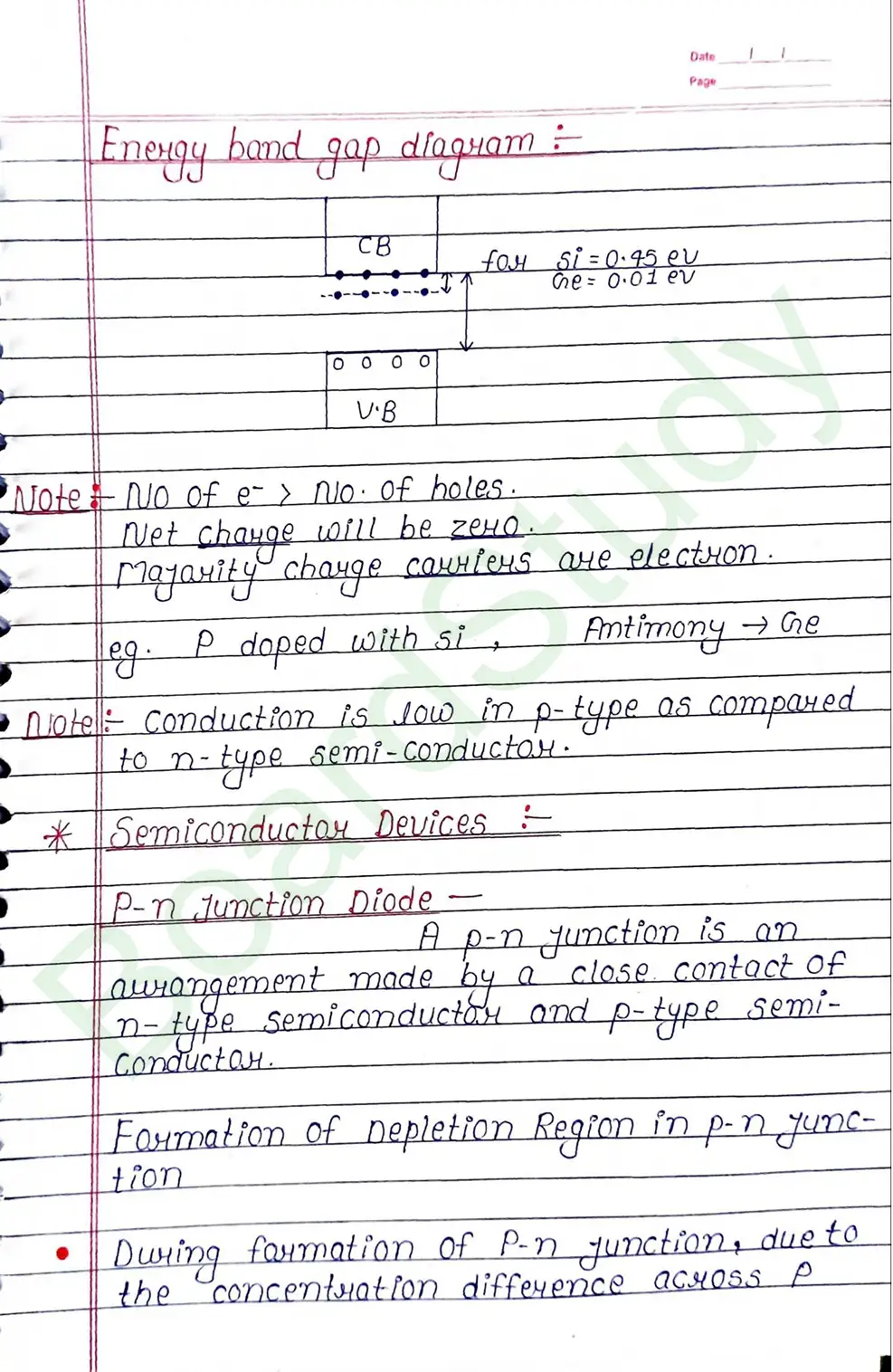
Energy Band Diagrams :- The electrons in the same orbit exhibit different energy levels. The grouping of these different energy levels is known as the energy band.
Valence band The valence electrons contain a series of energy level and form an energy band known as the valence band. The valence band has the highest occupied energy.
Conduction Band :- The valence electrons are not tightly held to nucleus due to which a few of these valence electrons leave the outermost orbit even at room temp. and become free electron to conduct the current and are known as conduction e-
Energy gap band : Energy gap between conduction band and Valence band in solid is called energy gap.
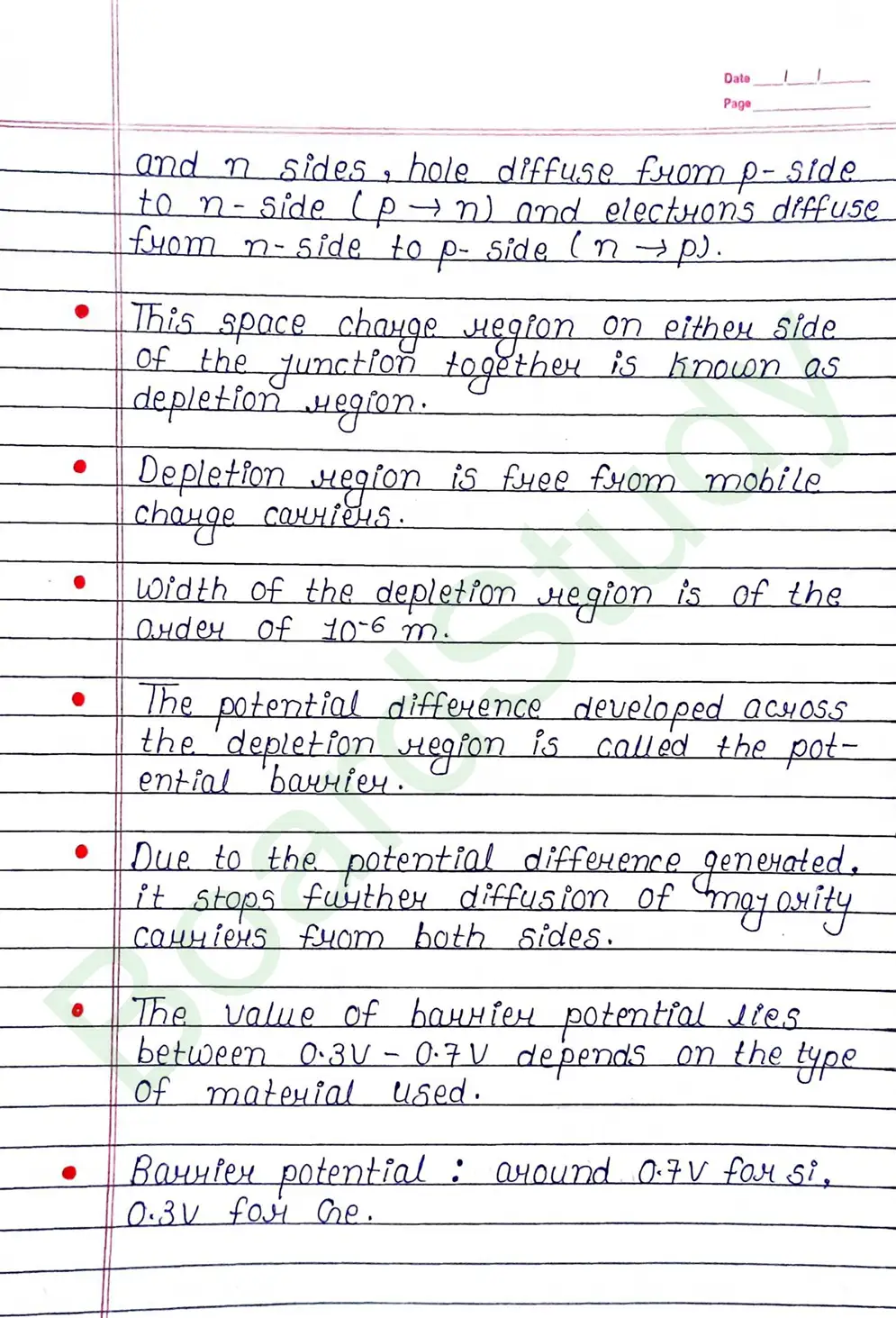
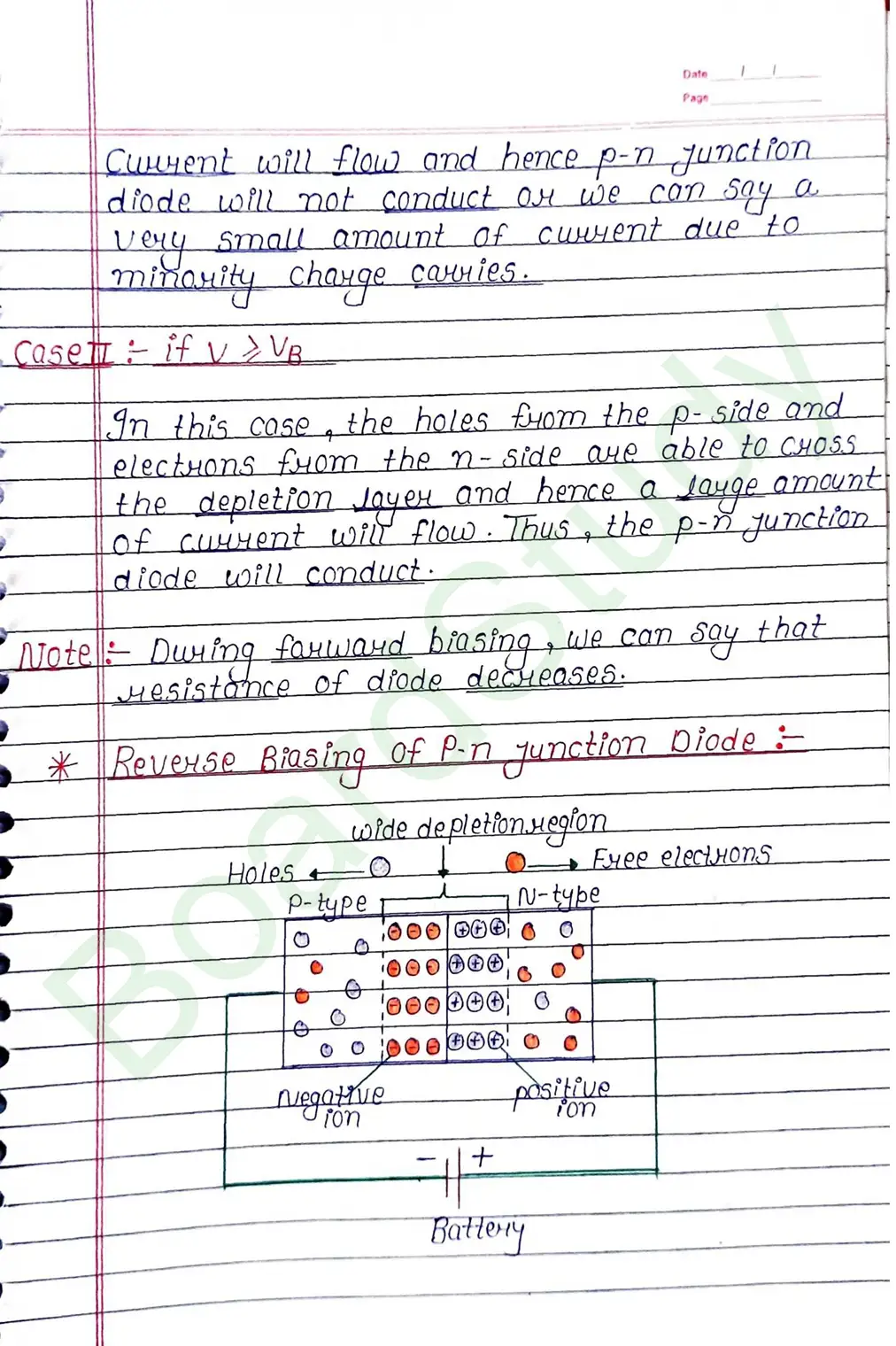
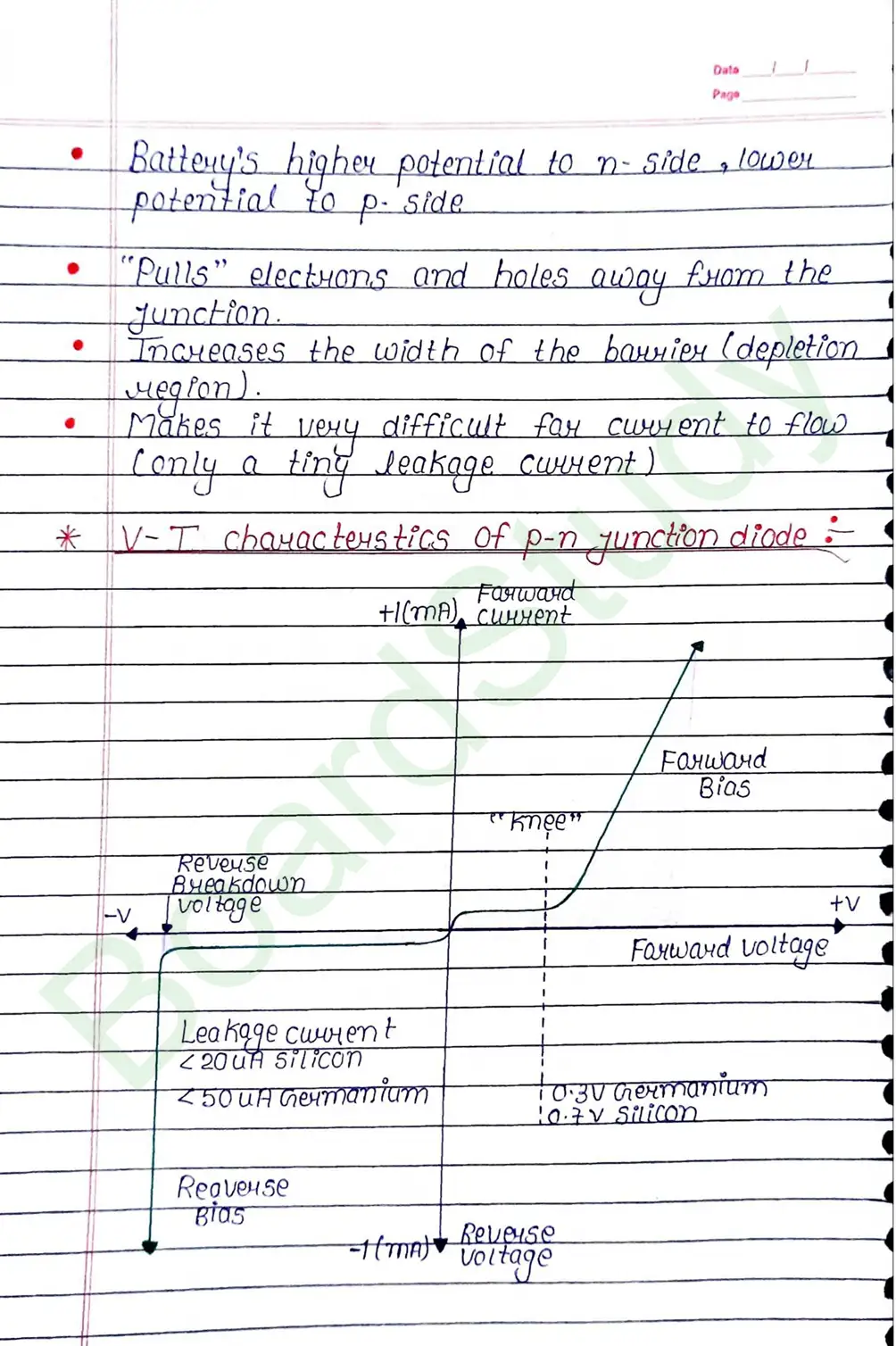
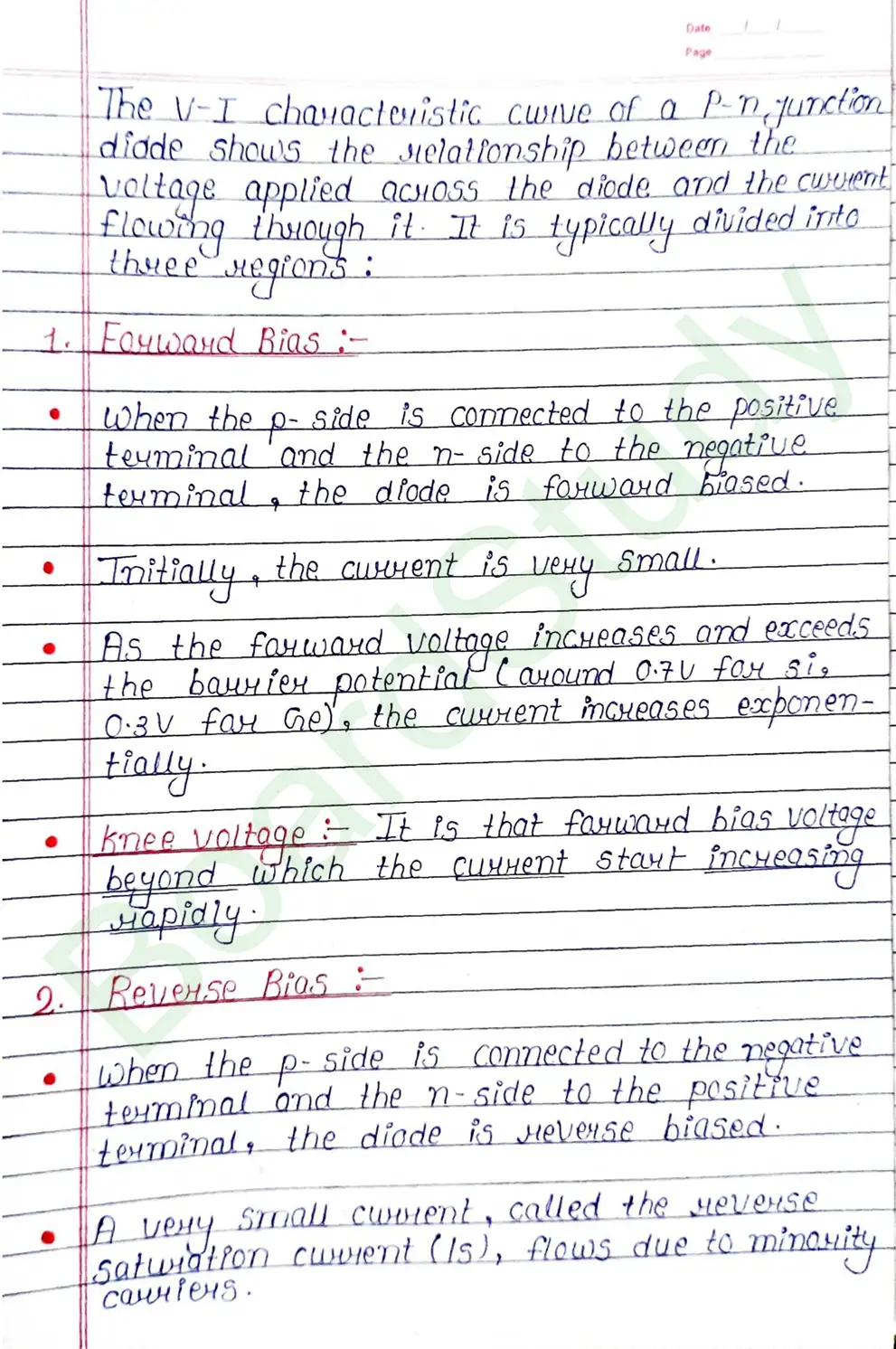
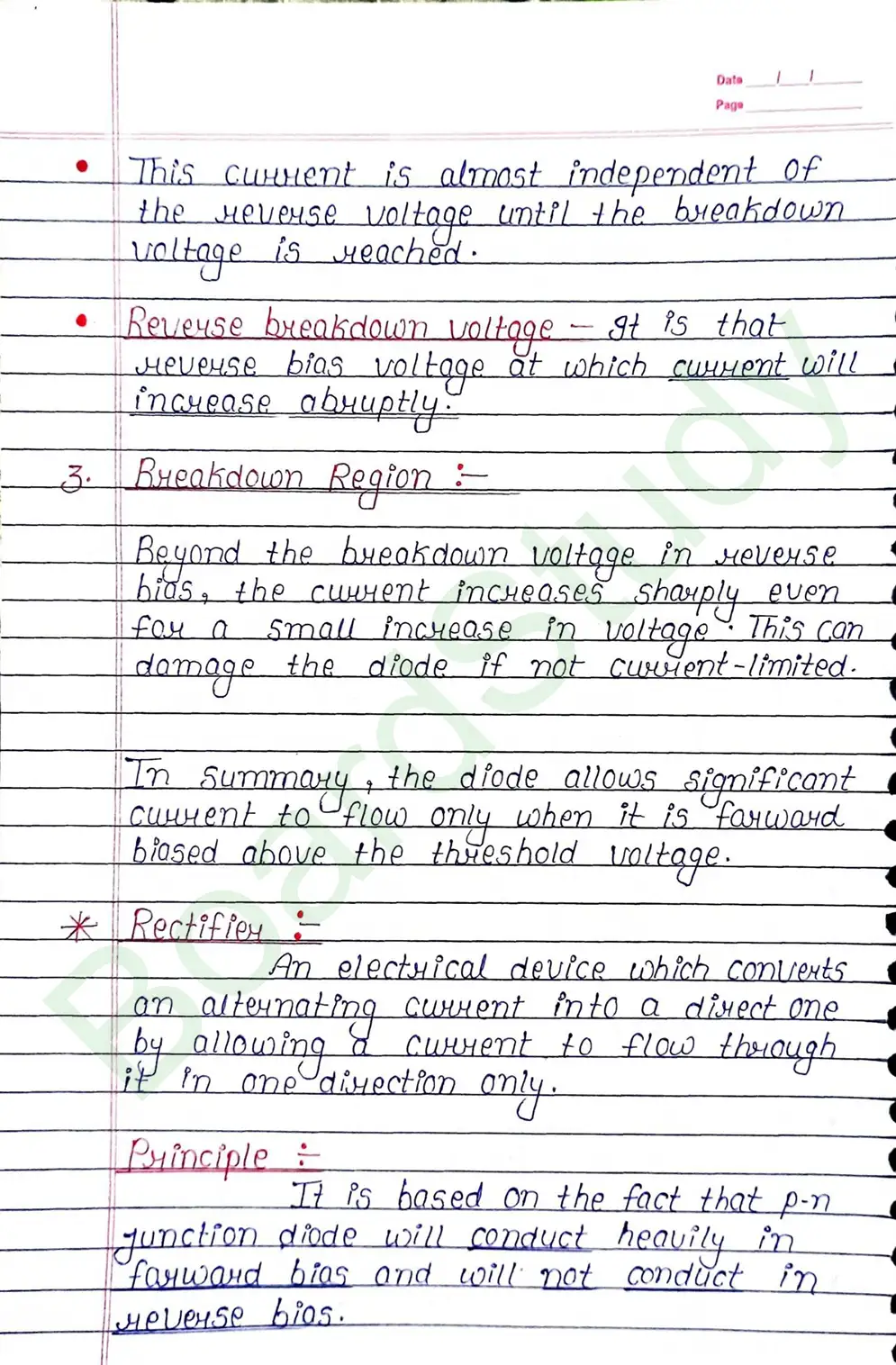
Breakdown Region : Beyond the breakdown voltage in reverse hids, the current increases sharply even for a small increase in voltage. This can damage the diode if not current-limited.
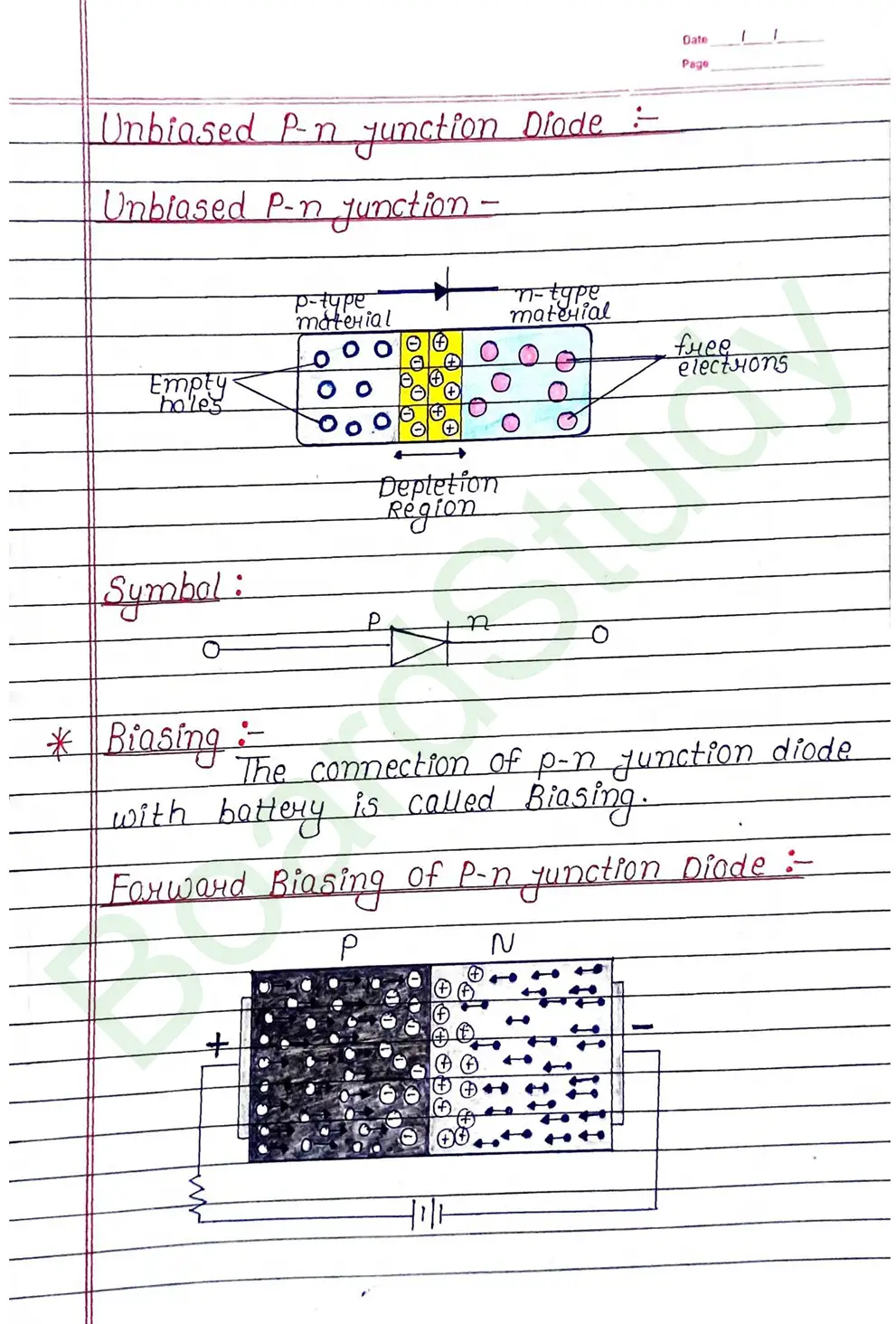
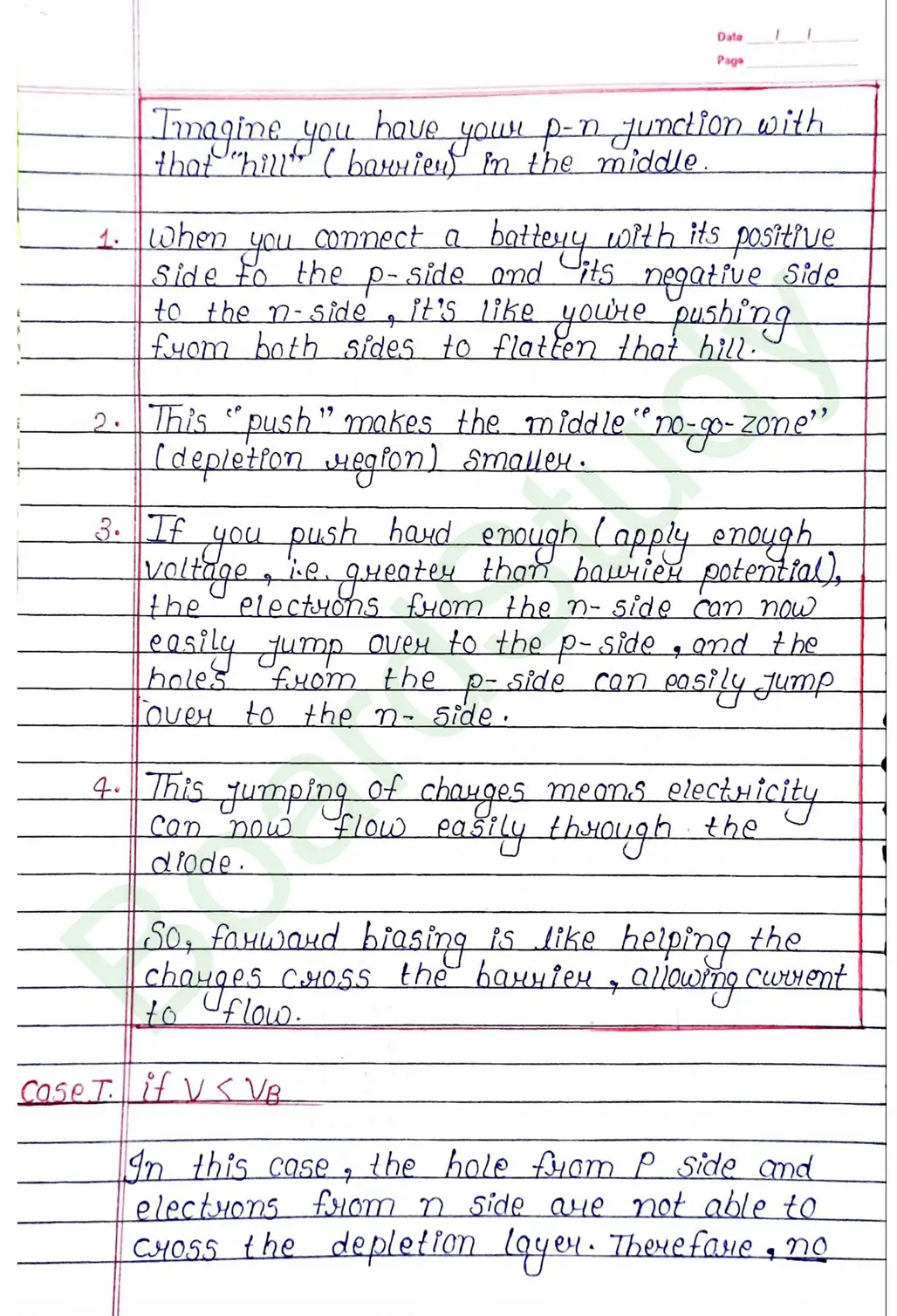
In summary, the diode allows significant current to flow only when it is farward biosed above the threshold voltage.
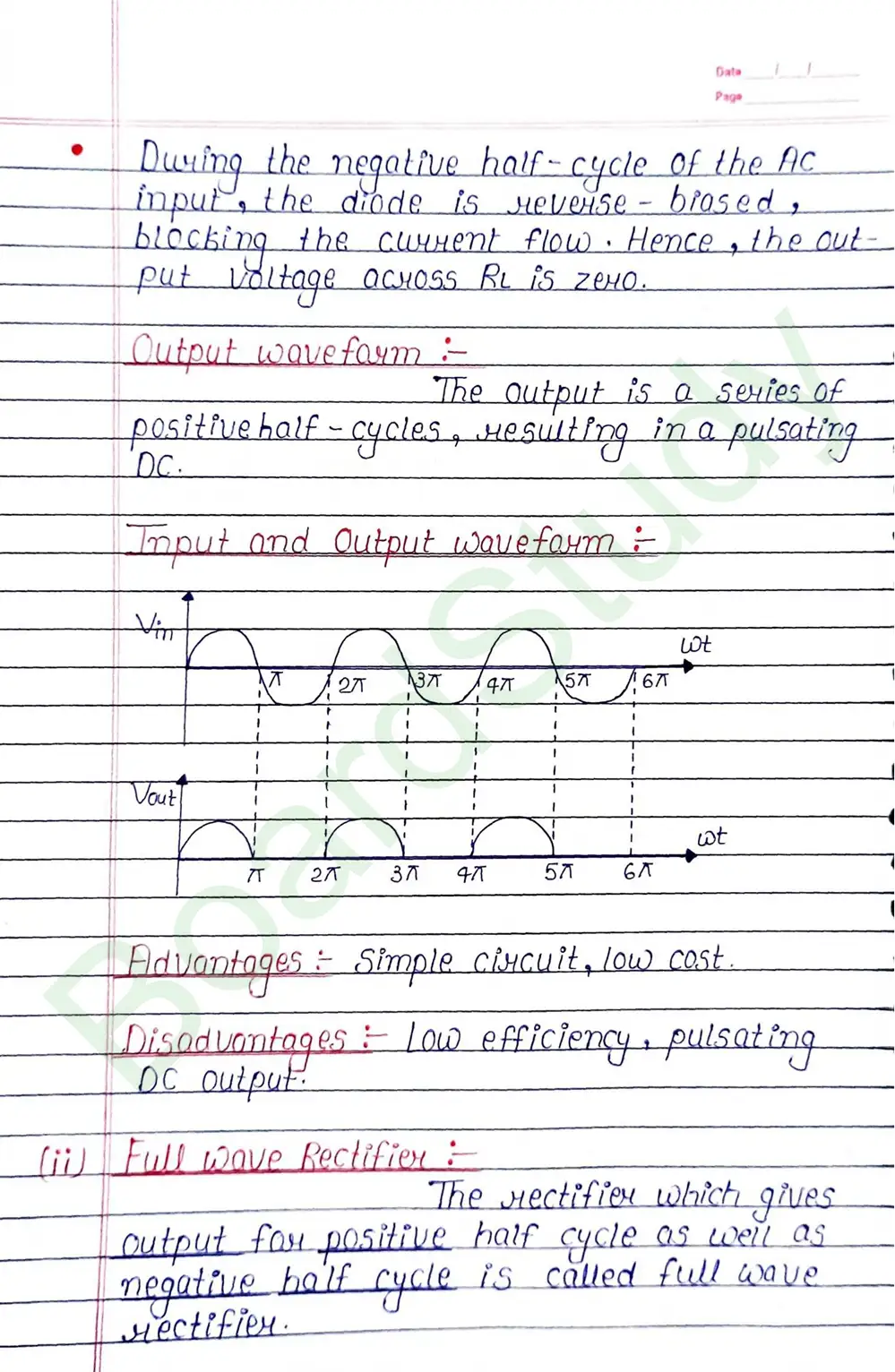
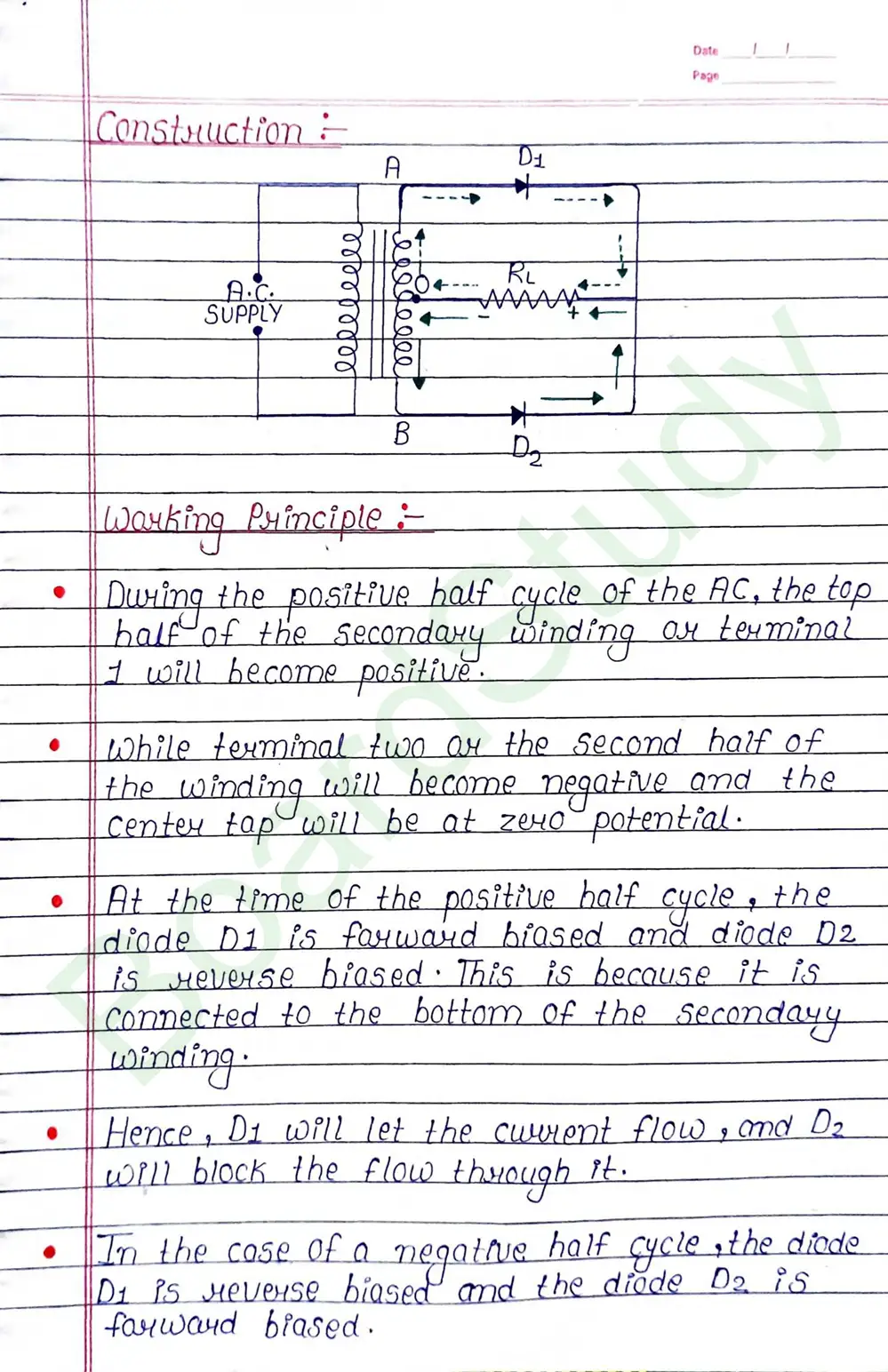
Rectifier: An electrical device which converts alternating current into a direct one by allowing a current to flow through it in one direction only.
Type of Rectifier
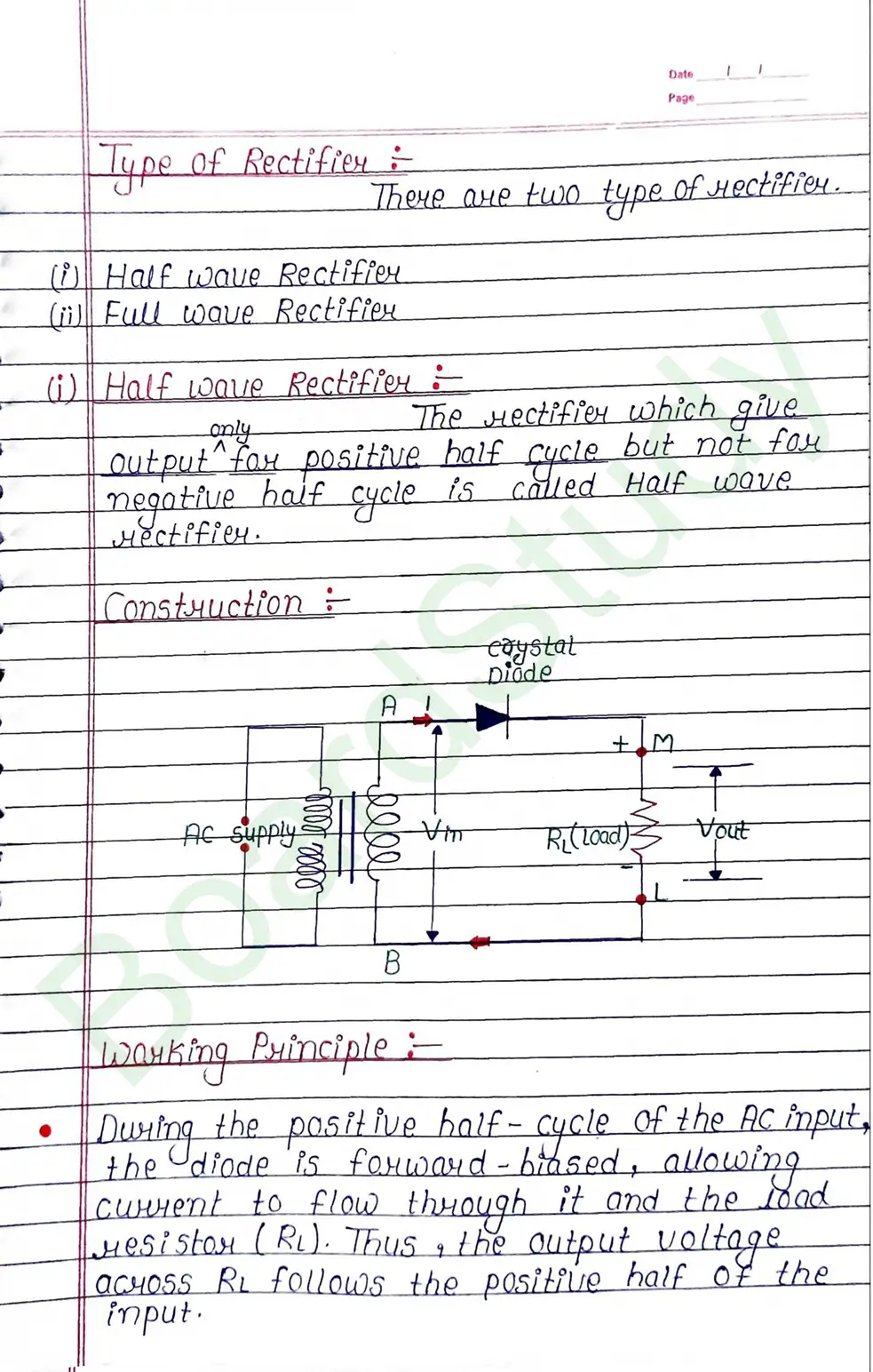
- Half wave Rectifier : The rectifier which give output for positive half cycle only but not for negative half cycle is called Half wave rectifier.
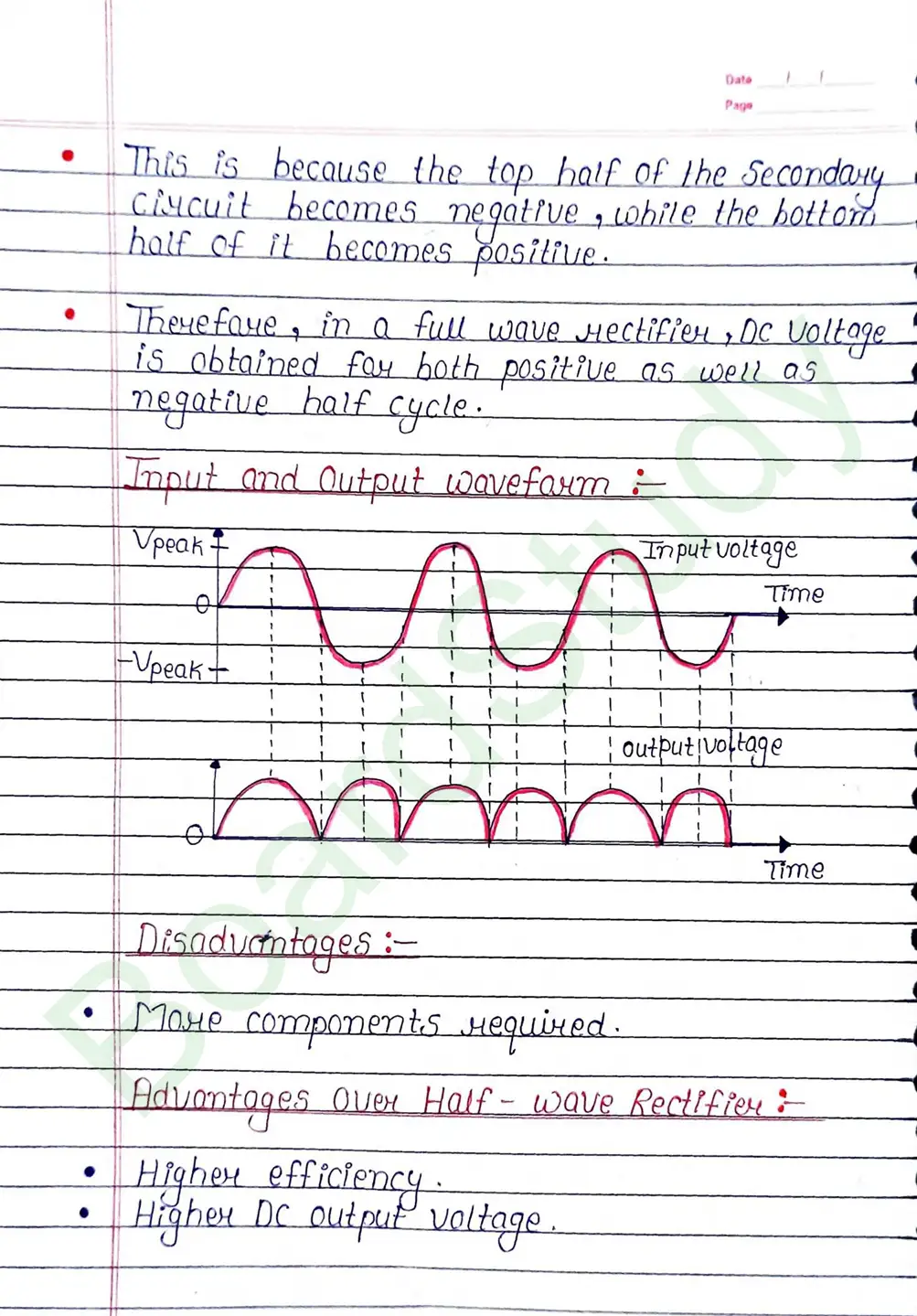
- Full wave Rectifier: The rectifier which gives output for positive half cycle as well as negative half cycle is called full wave rectifier.
Features of Notes
- Students can use Semiconductor Electronic notes for last minute revision.
- In the last few days of the exam, students feel very stressed due to the pressure of the exam. Notes will be very helpful for managing the stress in the last days of the exam.
- All notes are totally free of cost and students can access notes anytime on our for totally free of cost..
- Semiconductor Electronic Notes PDF are created very carefully so you can rely on this notes.
Summary
| Chapter | Semiconductor Electronic |
| Chapter Number | 14 |
| Subject | Physics |
| Class | 12 |
| Medium | English |
FAQ
What is Semiconductors ?
They have resistivity or conductivity intermediate to metals and insulators.
What is Insulators ?
Insulators : They have high resistivity (or low conductivity)
Are these notes sufficient for board exam?
Semiconductor Electronic handwritten notes are created by topper’s and expert teacher keeping board exam in mind so you can score maximum in board exam.
Are Semiconductor Electronic Handwritten notes according to NCERT latest syllabus?
Yes notes are created according to the NCERT latest syllabus.
How can i download Semiconductor Electronic Notes PDF?
For downloading Semiconductor Electronic Notes PDF click on Download PDF button.
VERY nice sir no mistakes