Physics is a very important subject for students. It may be hard for some students. For helping students here we have shared NCERT Class 12 Physics Chapter 11 Dual Nature of Radiation and Matter Handwritten Notes.
The Dual Nature of Radiation and Matter notes is a best resource for students who are preparing for their board exam because it compile the entire lesson in short and include every important topic.
NCERT Class 12 Physics Chapter 11 Dual Nature of Radiation and Matter Notes
Next Chapter: Atoms
Previous Chapter: Wave Optics
Other Subjects:
Class 12 Biology Notes
Class 12 Chemistry Notes
Students who are studying physics in class 12 should definitely use this note and you can access this notes anytime on our website for free of cost. If you found notes helpful, you can also help your friends by sharing with them
Dual Nature of Radiation and Matter Notes PDF
We have also shared the PDF of Dual Nature of Radiation and Matter Notes so students don’t feel any difficulty in reading the notes. You can ask your doubts in the comment section. We will be happy to help you.
Key Points: Dual Nature of Radiation and Matter Notes PDF
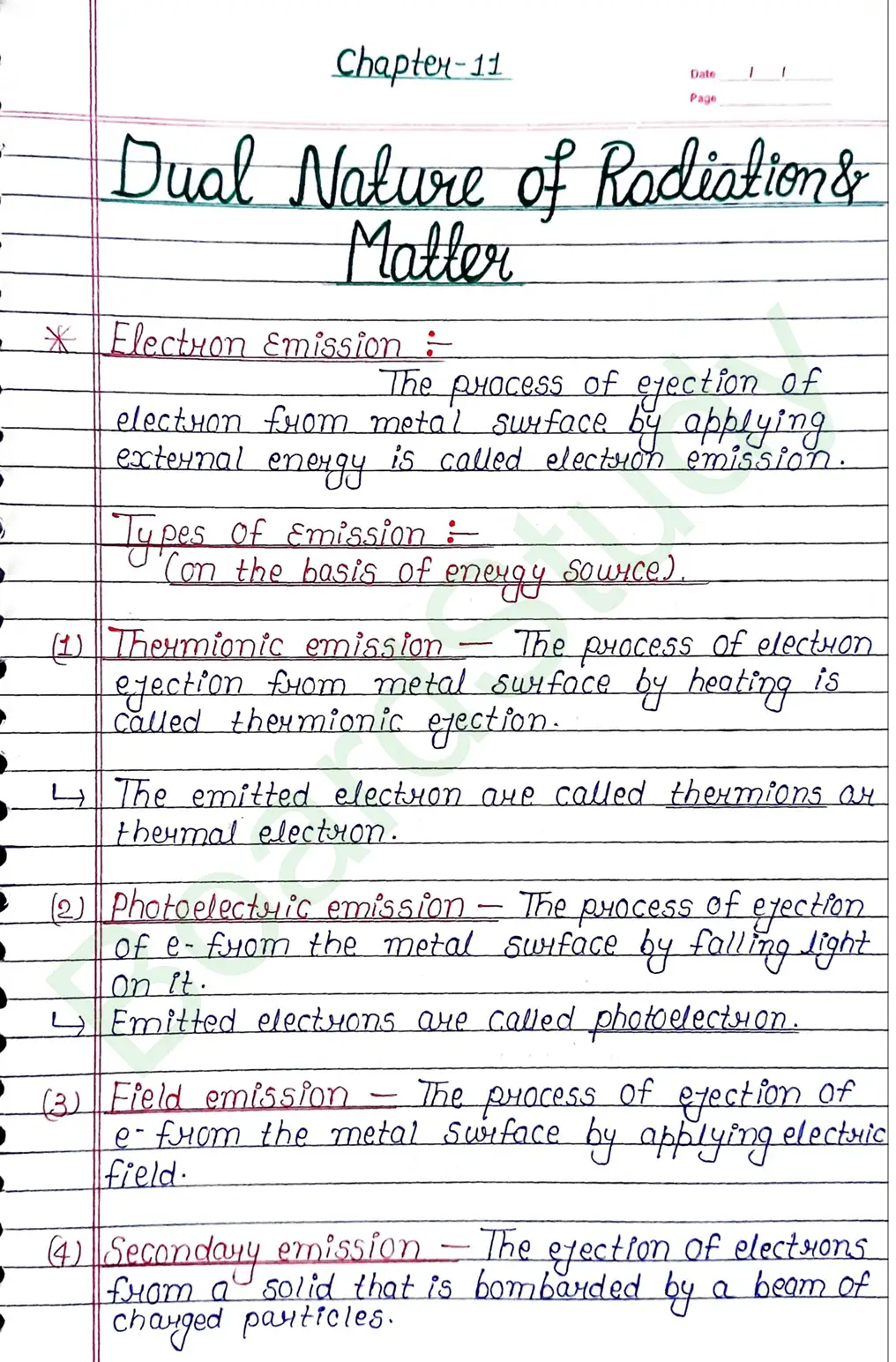
Electron Emission: The process of ejection of electron from metal surface by applying external energy is called electron emission
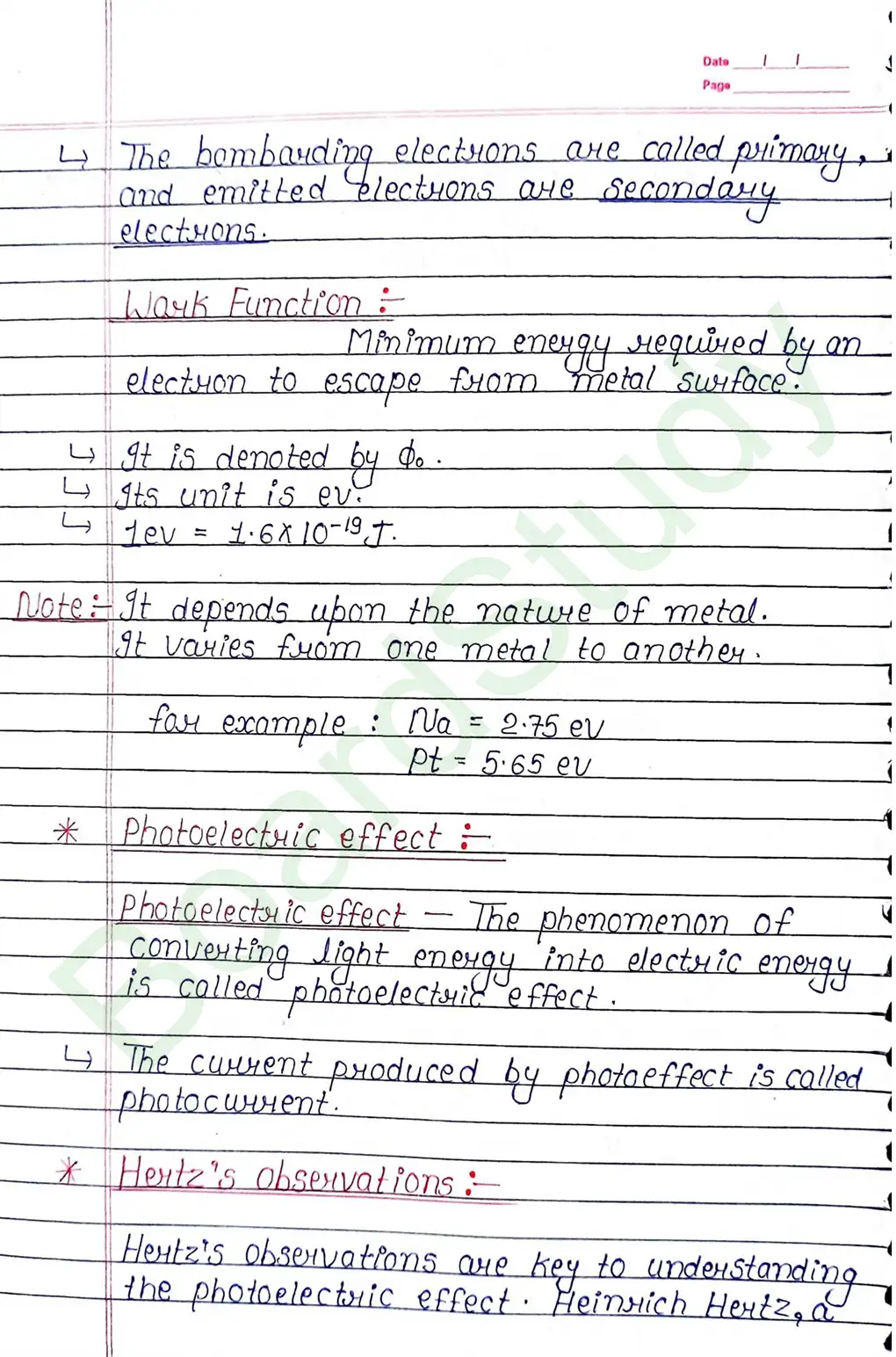
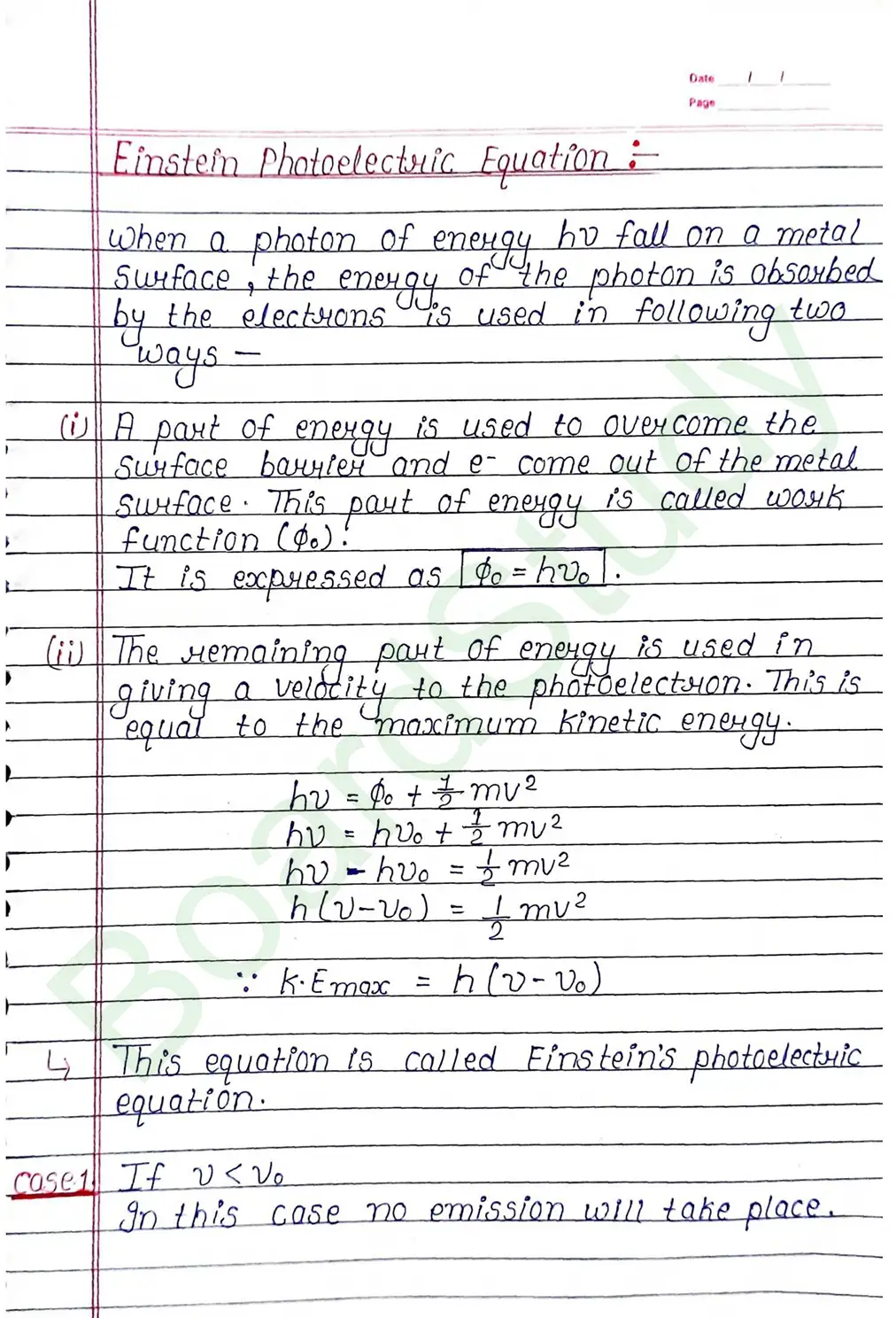
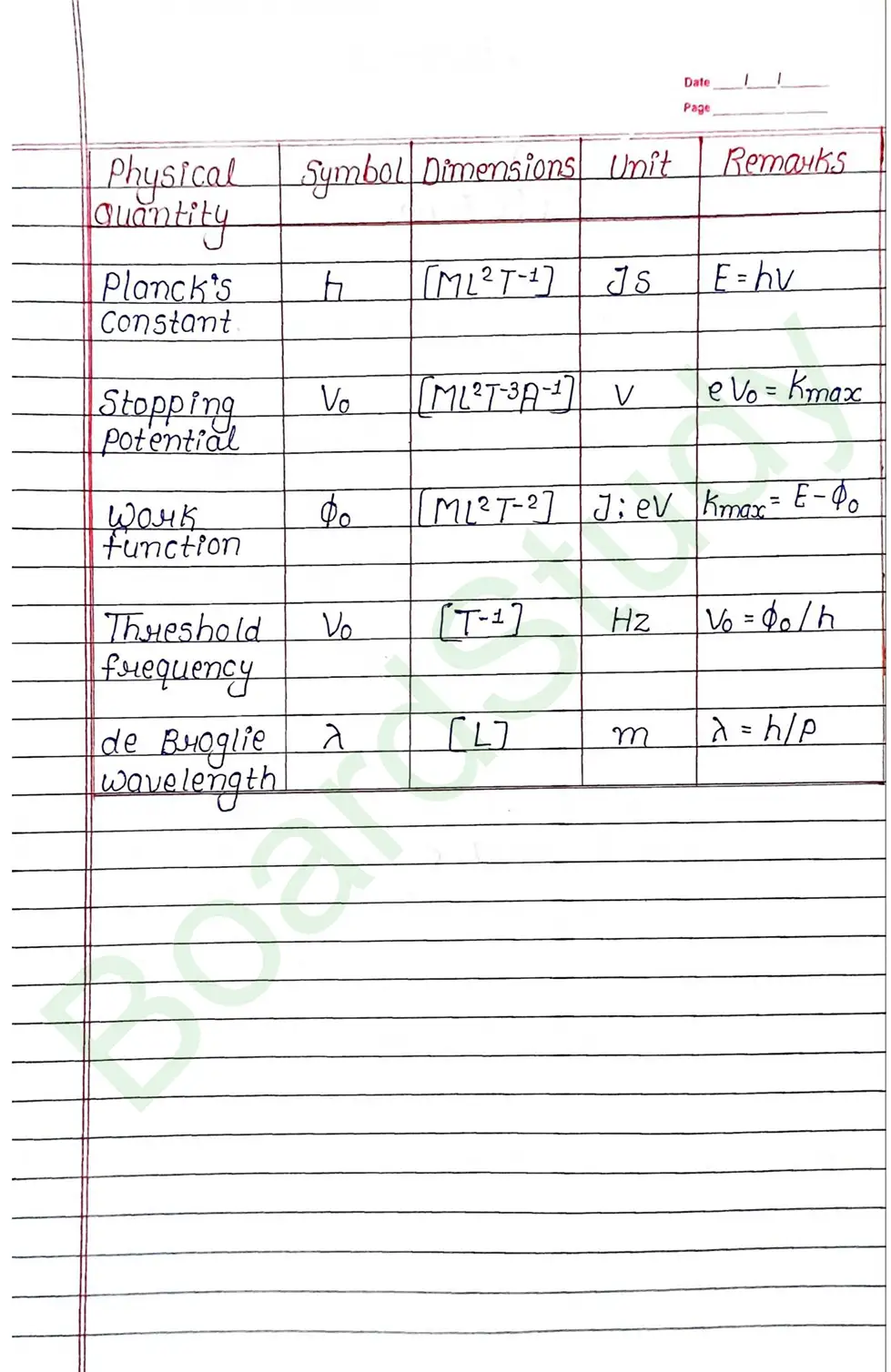
Work Function: Minimum energy required by an electron to escape from metal surface.
Photoelectric effect : Photoelectric effect – The phenomenon of converting light energy into electric energy is called photoelectric effect.
The current produced by photoeffect is called photocurrent.
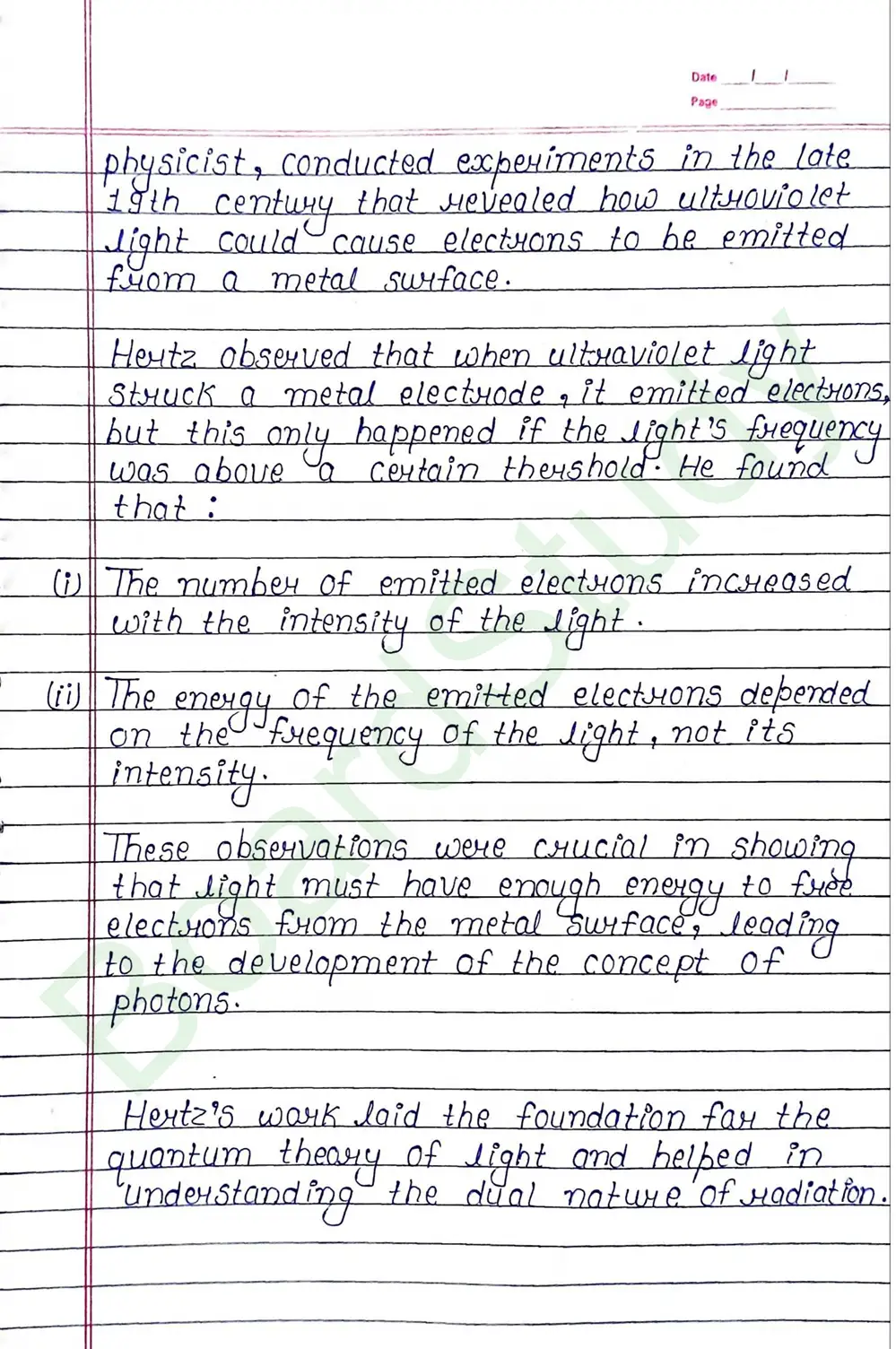
Hertz’s observations:- Hertz’s observations are key to understanding the photoelectric effect.
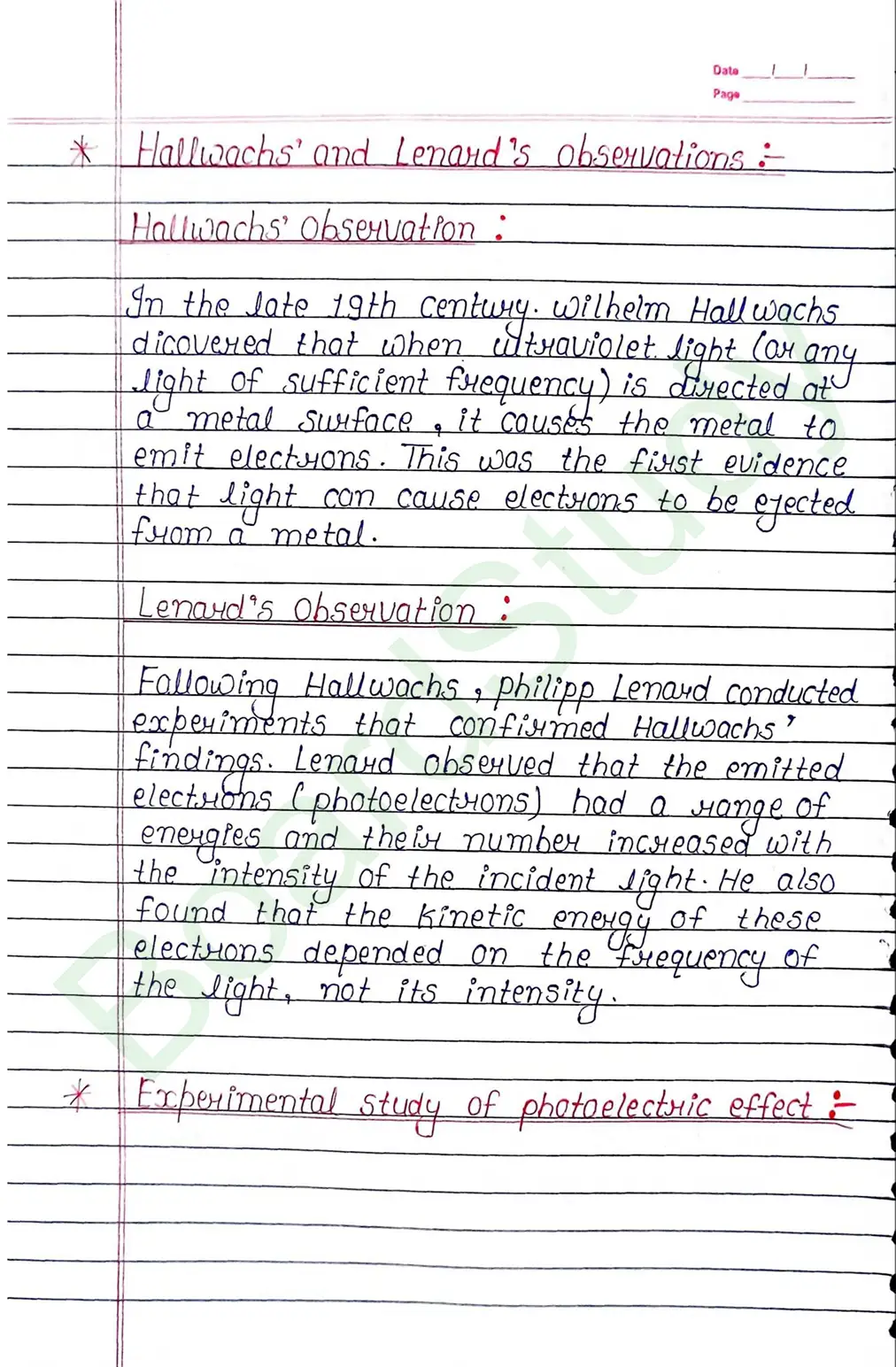
Hallwachs’ and Lenard’s observations:
Hallwachs’ Observation: In the late 19th century, Wilhelm Hallwachs discovered that when ultraviolet light (or any light of sufficient frequency) is directed at a metal surface, it causes the metal to emit electrons. This was the first evidence that light can cause electrons to be ejected from a metal.
Lenard’s Observation : Following Hallwachs, Philipp Lenard conducted experiments that confirmed Hallwachs’ findings. Lenard observed that the emitted electrons (photoelectrons) had a range of energies and their number increased with the intensity of the incident light. He also found that the kinetic energy of these electrons depended on the frequency of the light, not its intensity.
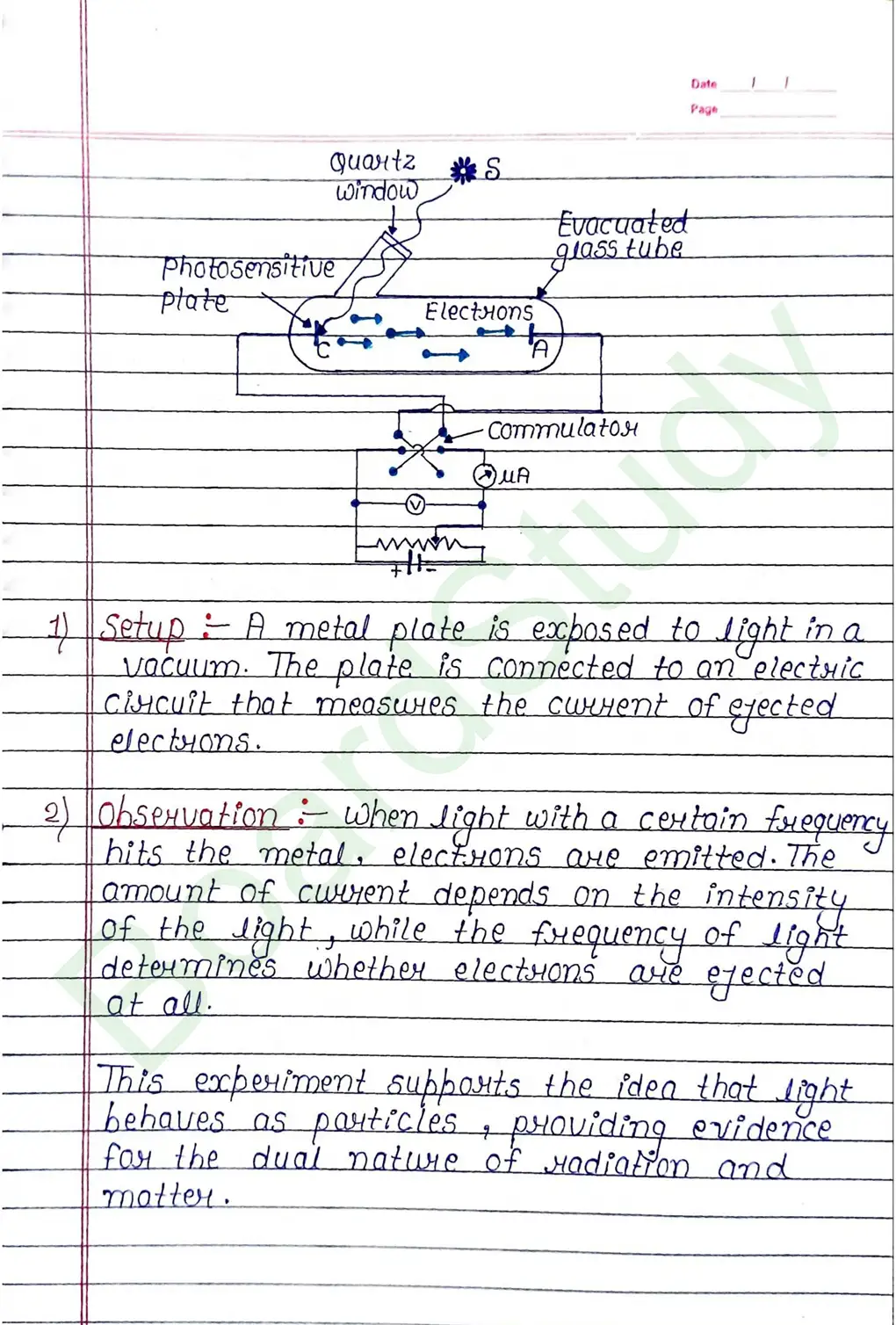
Experimental study of photoelectric effect :
- Setup
- Observation
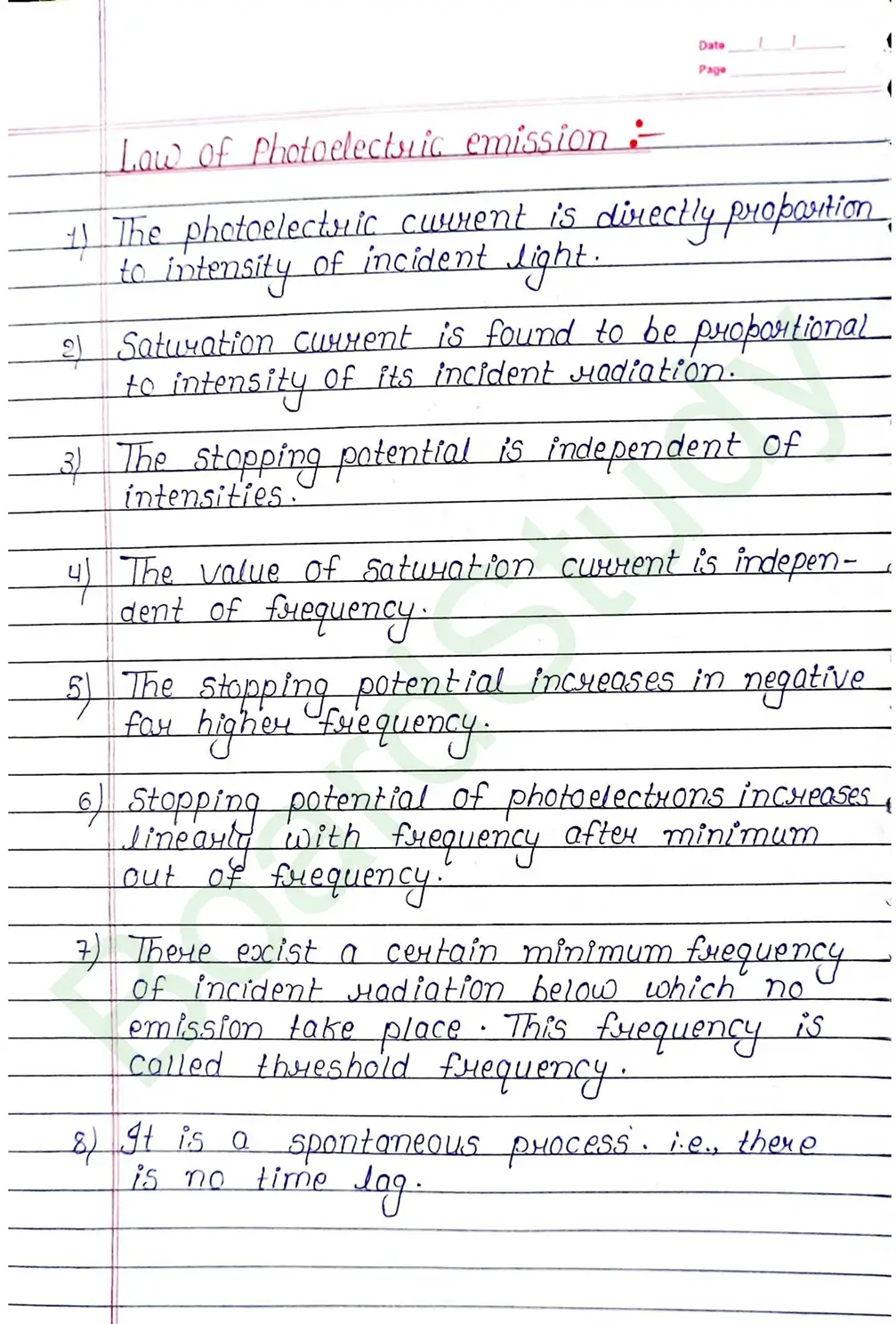
Law of Photoelectric emission :-
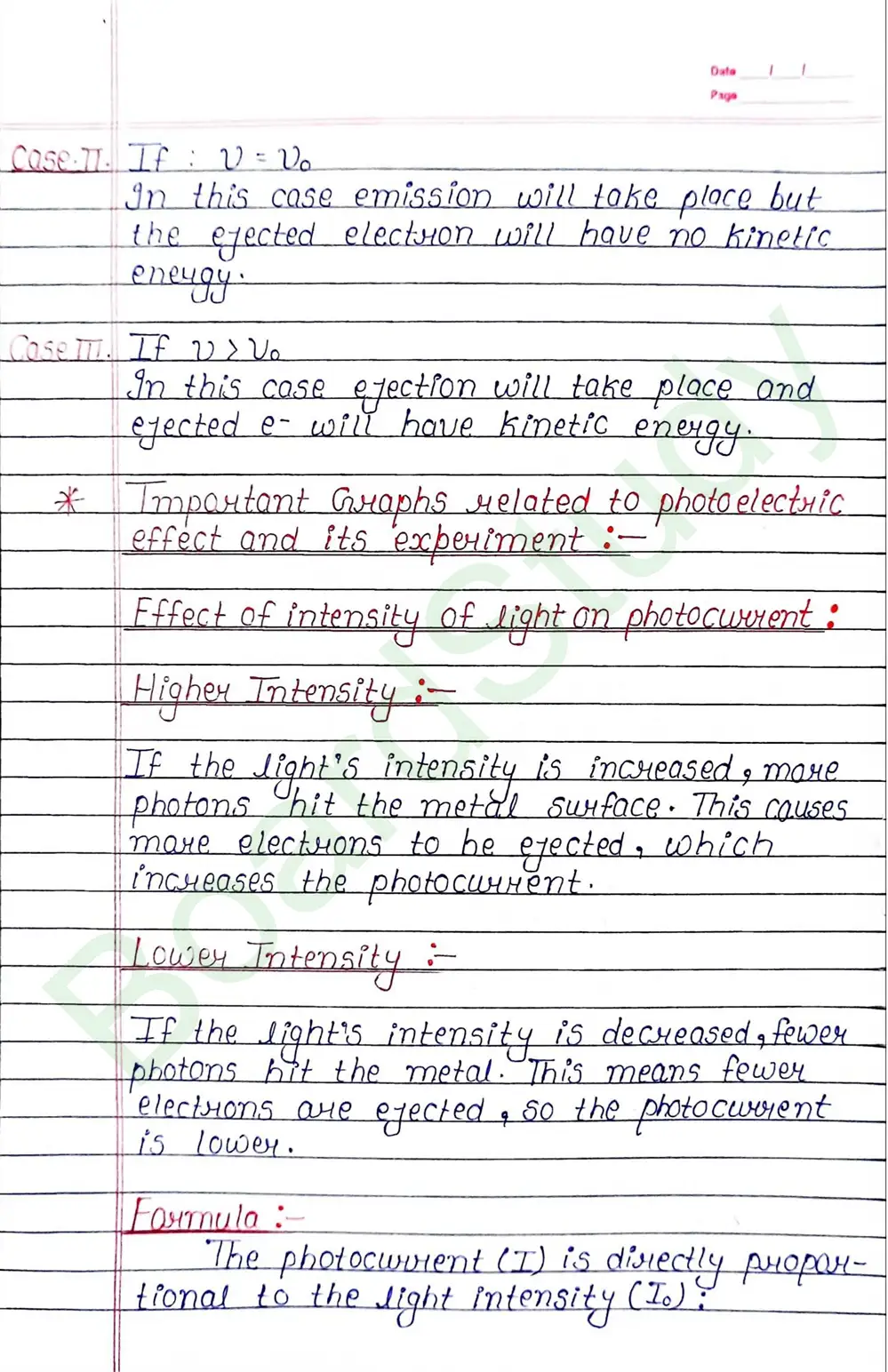
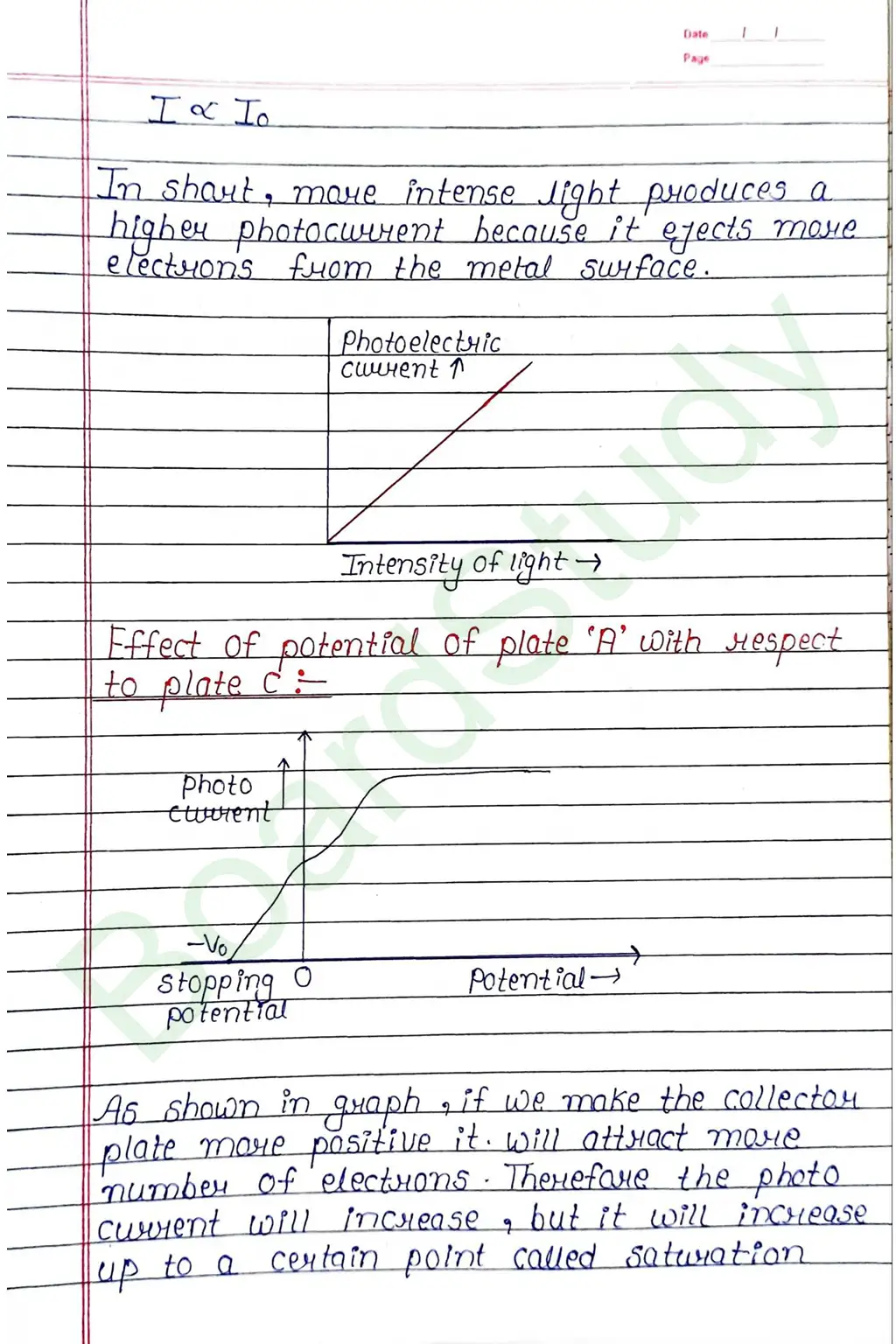
- The photoelectric current is directly proportion to intensity of incident light.
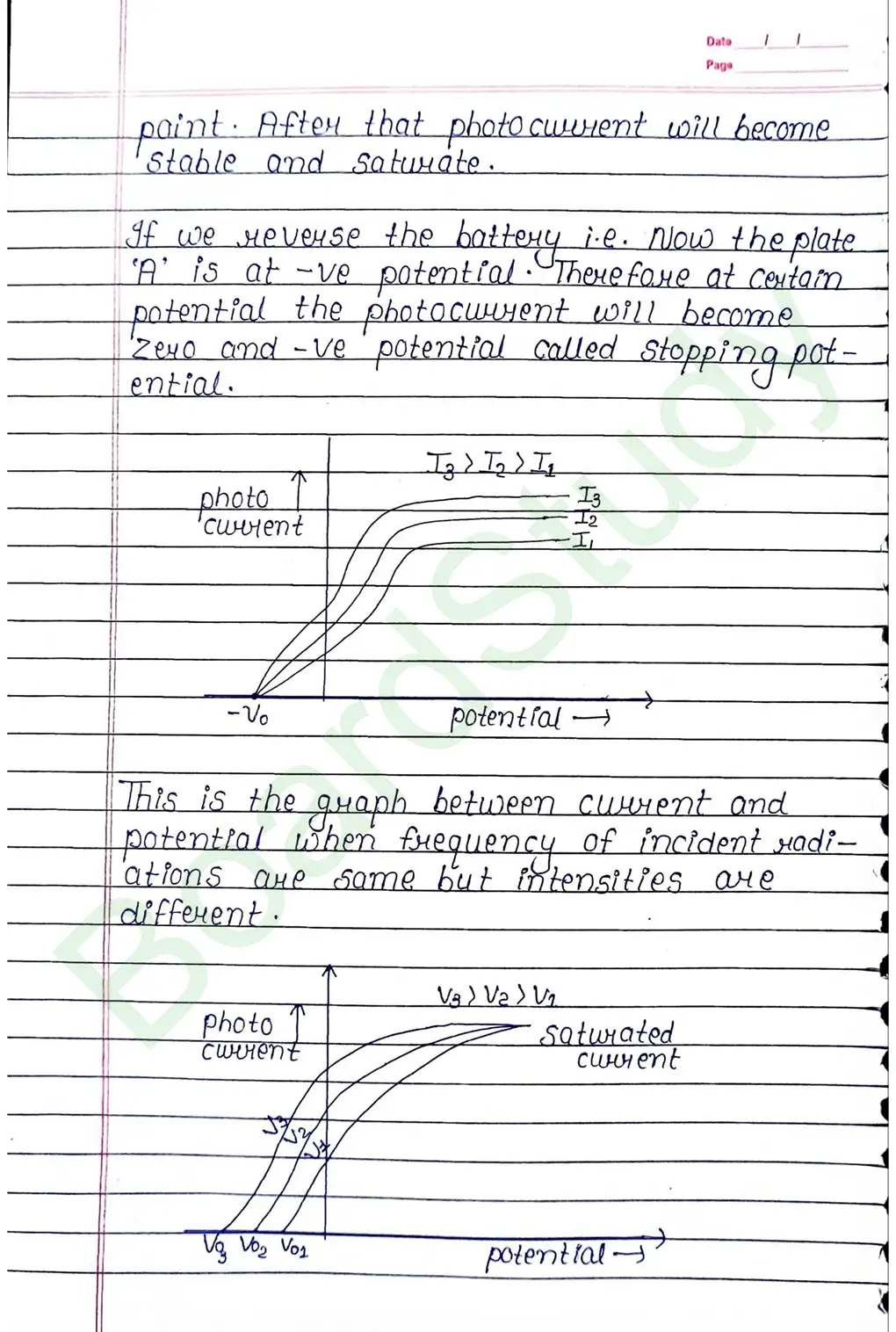
- Saturation current is found to be proportional to intensity of its incident radiation.
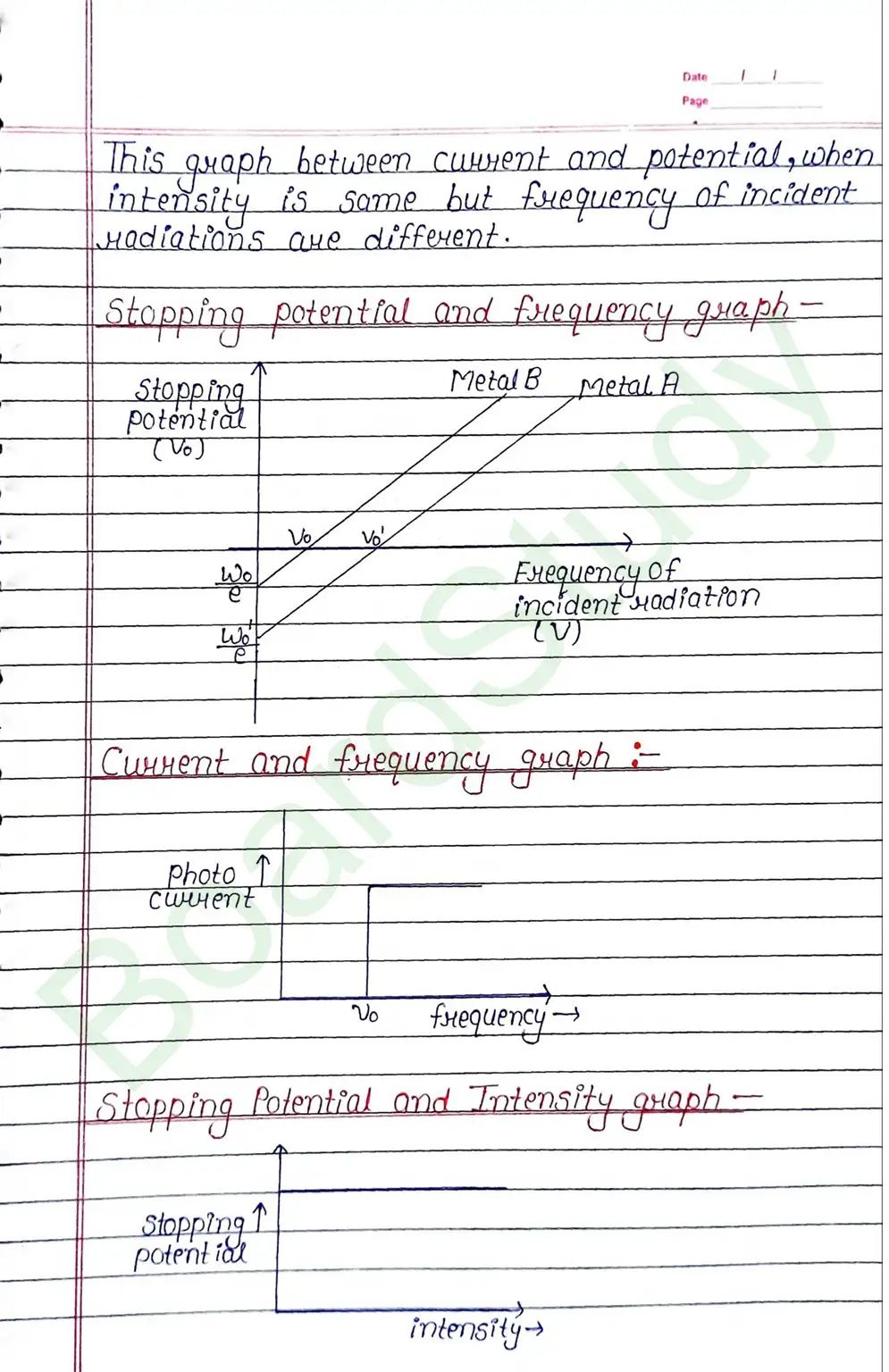
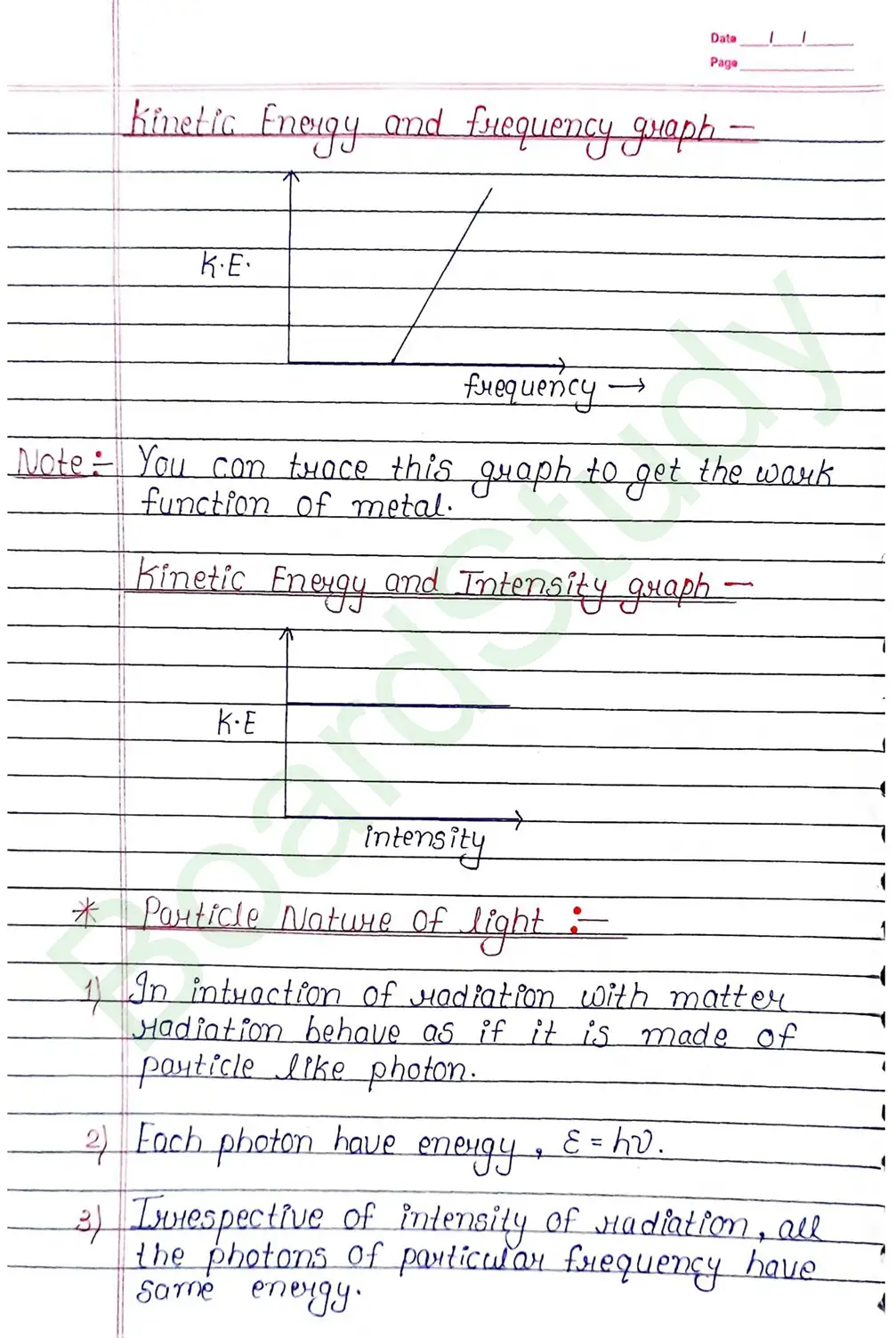
- The stopping potential is independent of intensities.
- The value of saturation current is independent of frequency.
- The stopping potential increases in negative for higher frequency.
- Stopping potential of photoelectrons increases linearly with frequency after minimum out of frequency.
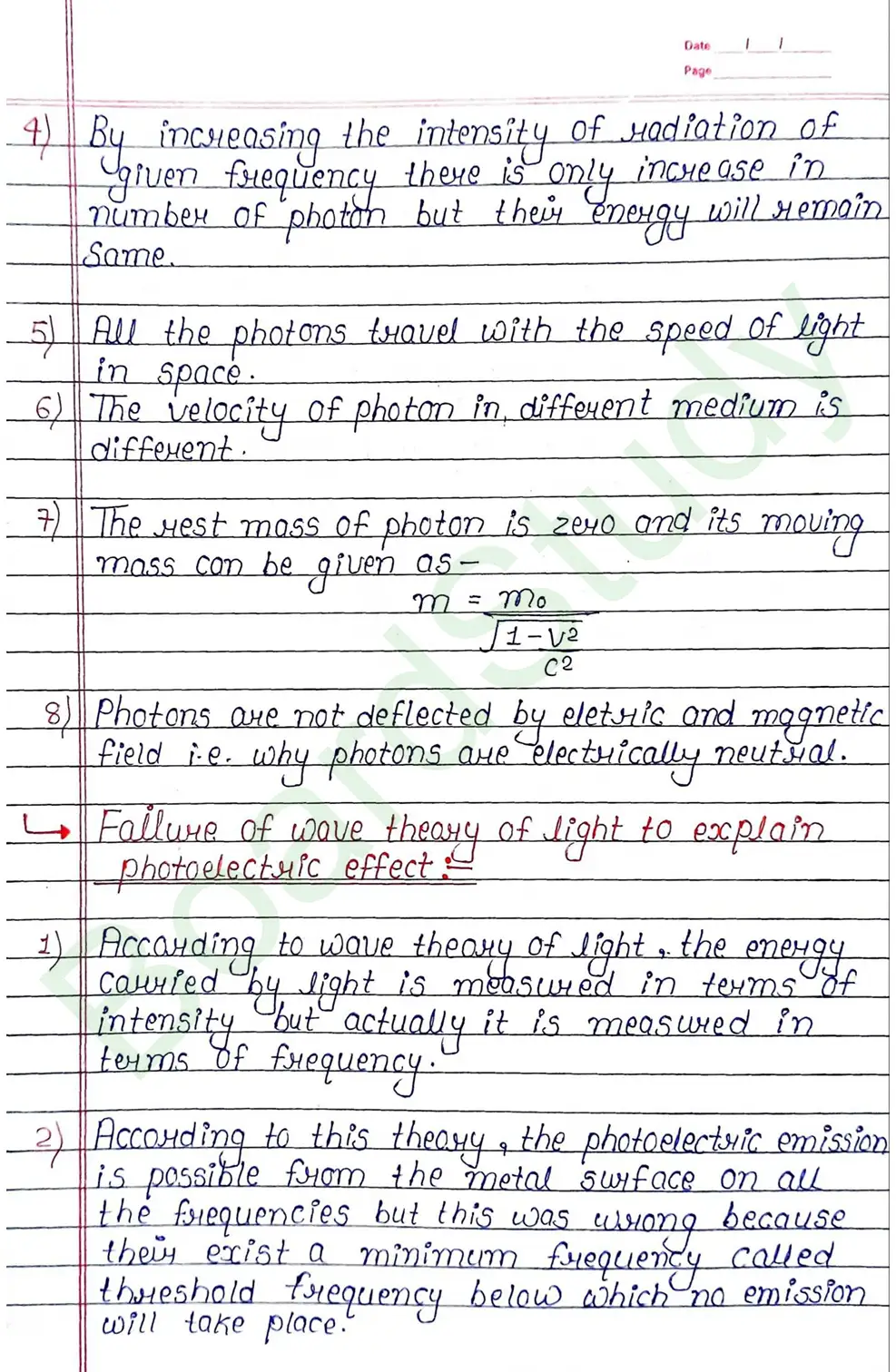
- There exist a certain minimum frequency of incident radiation below which no emission take place. This frequency is called threshold frequency.
- It is a spontaneous process. i.e., there is no time lag.
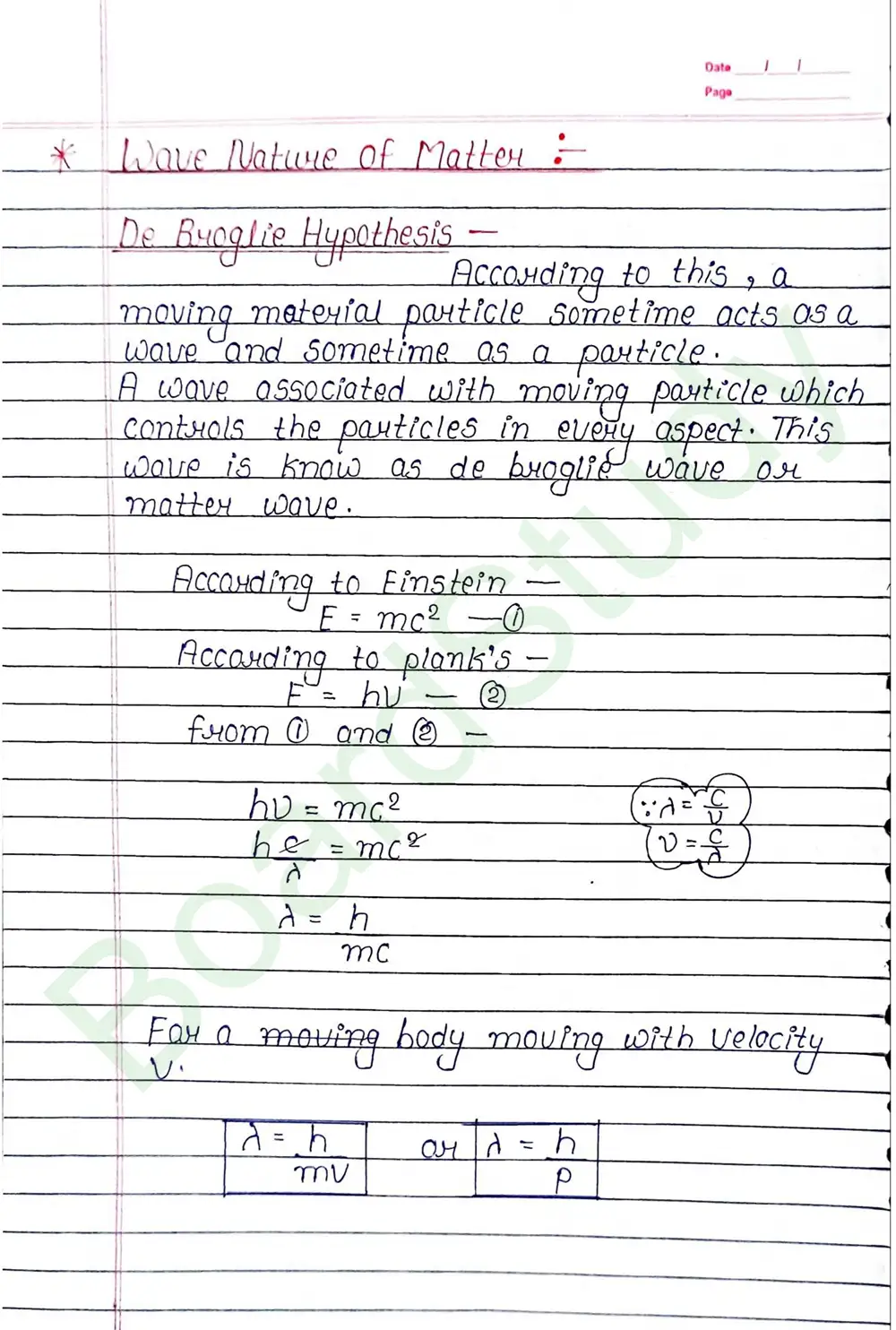
Wave Nature of Matter : De Broglie Hypothesis According to this, a moving material particle sometime acts as a wave and sometime as a particle. This wave is know as de broglie wave or matter wave.
Features of Notes
- Students can use Dual Nature of Radiation and Matter notes for last minute revision.
- In the last few days of the exam, students feel very stressed due to the pressure of the exam. Notes will be very helpful for managing the stress in the last days of the exam.
- All notes are totally free of cost and students can access notes anytime on our for totally free of cost..
- Dual Nature of Radiation and Matter Notes PDF are created very carefully so you can rely on this notes.
Summary
| Chapter | Dual Nature of Radiation and Matter |
| Chapter Number | 11 |
| Subject | Physics |
| Class | 12 |
| Medium | English |
FAQ
What is Electron Emission ?
The process of ejection of electron from metal surface by applying external energy is called electron emission.
What is photoelectric effect ?
The phenomenon of converting light energy into electric energy is called photoelectric effect.
Are these notes sufficient for board exam?
Dual Nature of Radiation and Matter handwritten notes are created by topper’s and expert teacher keeping board exam in mind so you can score maximum in board exam.
Are Dual Nature of Radiation and Matter Handwritten notes according to NCERT latest syllabus?
Yes notes are created according to the NCERT latest syllabus.
How can i download Dual Nature of Radiation and Matter Notes PDF?
For downloading Dual Nature of Radiation and Matter Notes PDF click on Download PDF button.