
Mathematics can be both fantastic and challenging at the same time. Specially in class 10 when students have to give board paper. So our NCERT class 10 Mathematics Chapter 2 Polynomials notes will provide conceptual clarity to the students. It will work like a bridge for students between class room theory lecture and solving exercise at home.
These Class 10 Chapter 2 Polynomials Notes is a masterstroke for students who want to pursue a career in science, like becoming an engineer, scientist etc. Most of the concept given in class 11 maths have already been introduced in class 10 maths. So these notes are also the foundation of class 11 math.
NCERT Class 10 Maths Chapter 2 Polynomials Notes
Chapter 1: Real Numbers Notes
Chapter 3: Pair of Linear Equations in Two Variables Notes
Below we have also given most important topics of NCERT Class 10 Mathematics chapter 2 Polynomials Notes. Students should revise these notes regularly to remember the chapter properly.
Important Topics of Polynomials
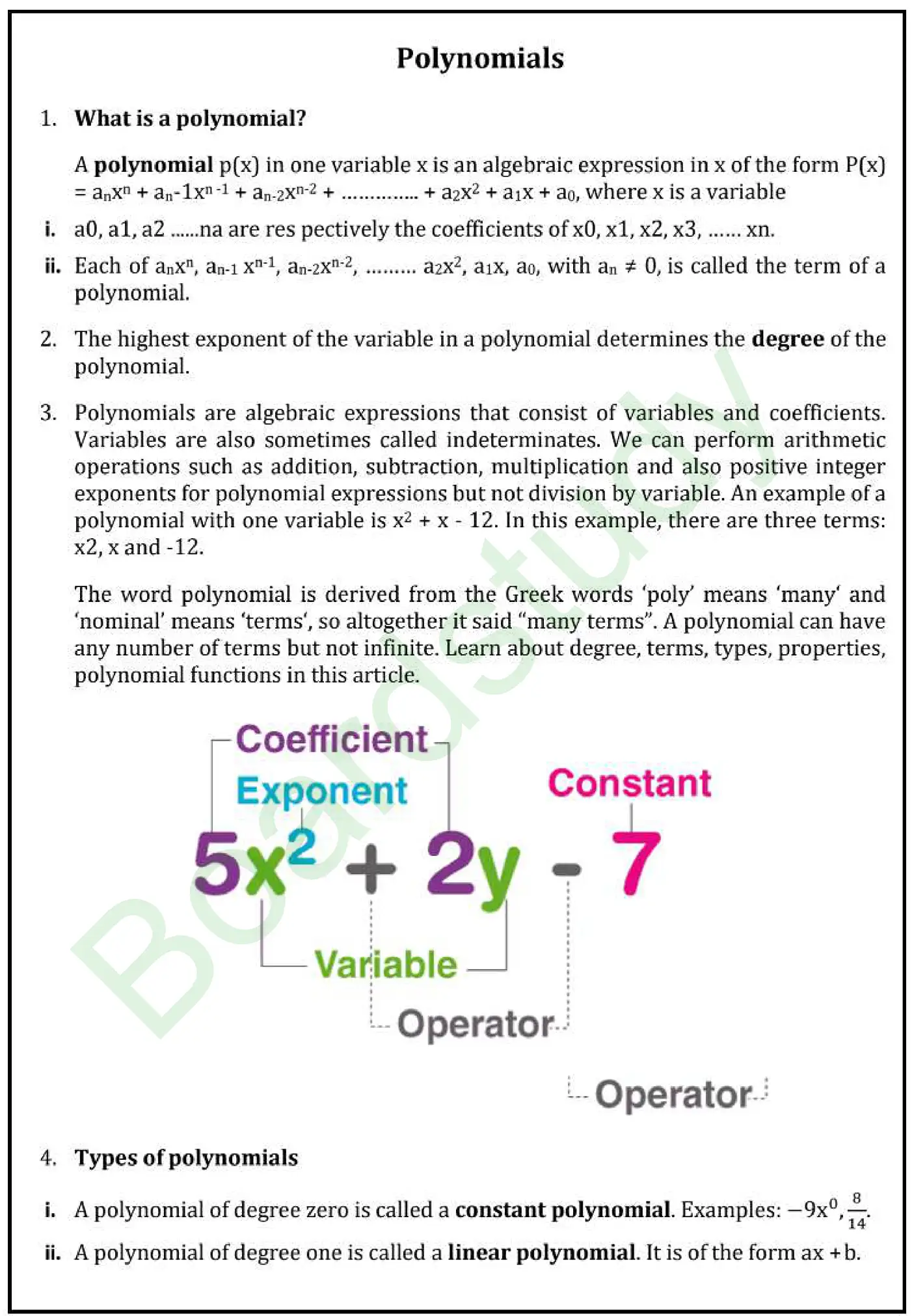
Here is an overview and breakdown of the mathematical concepts presented in the image:
1. Definition and Standard Form
A polynomial in a single variable $x$ is an algebraic expression represented in the standard general form:
- Coefficients: The real numbers
represent the coefficients corresponding to the terms with variable powers
Terms: Each individual part separated by an addition or subtraction sign—such as
(where the leading coefficient
—is designated as a term of the polynomial.
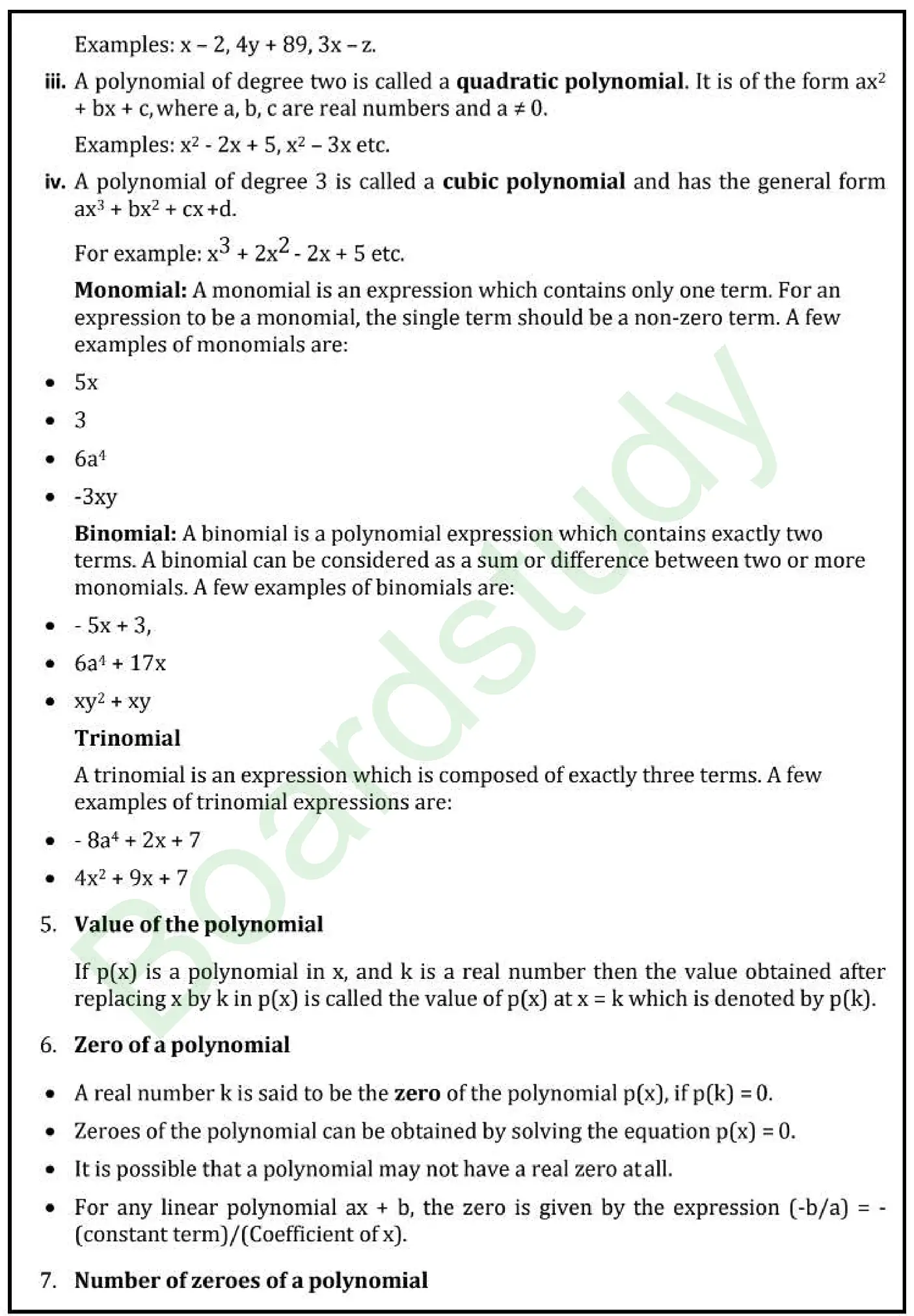
2. Degree of a Polynomial
- The degree of a polynomial is determined by the highest exponent (power) of the variable that possesses a non-zero coefficient.
3. Characteristics & Allowable Operations
- Variables & Indeterminates: The variable component is often referred to as an indeterminate.
- Permitted Operations: Polynomials support standard arithmetic operations:
- Addition
- Subtraction
- Multiplication
- Non-negative integer powers (whole number exponents only: 0, 1, 2, )
- Restrictions: Division by a variable is not permitted (terms cannot have negative exponents or variables in the denominator).
- Example: In the expression x^2 + x – 12, there are three distinct terms: x^2, x, and -12.
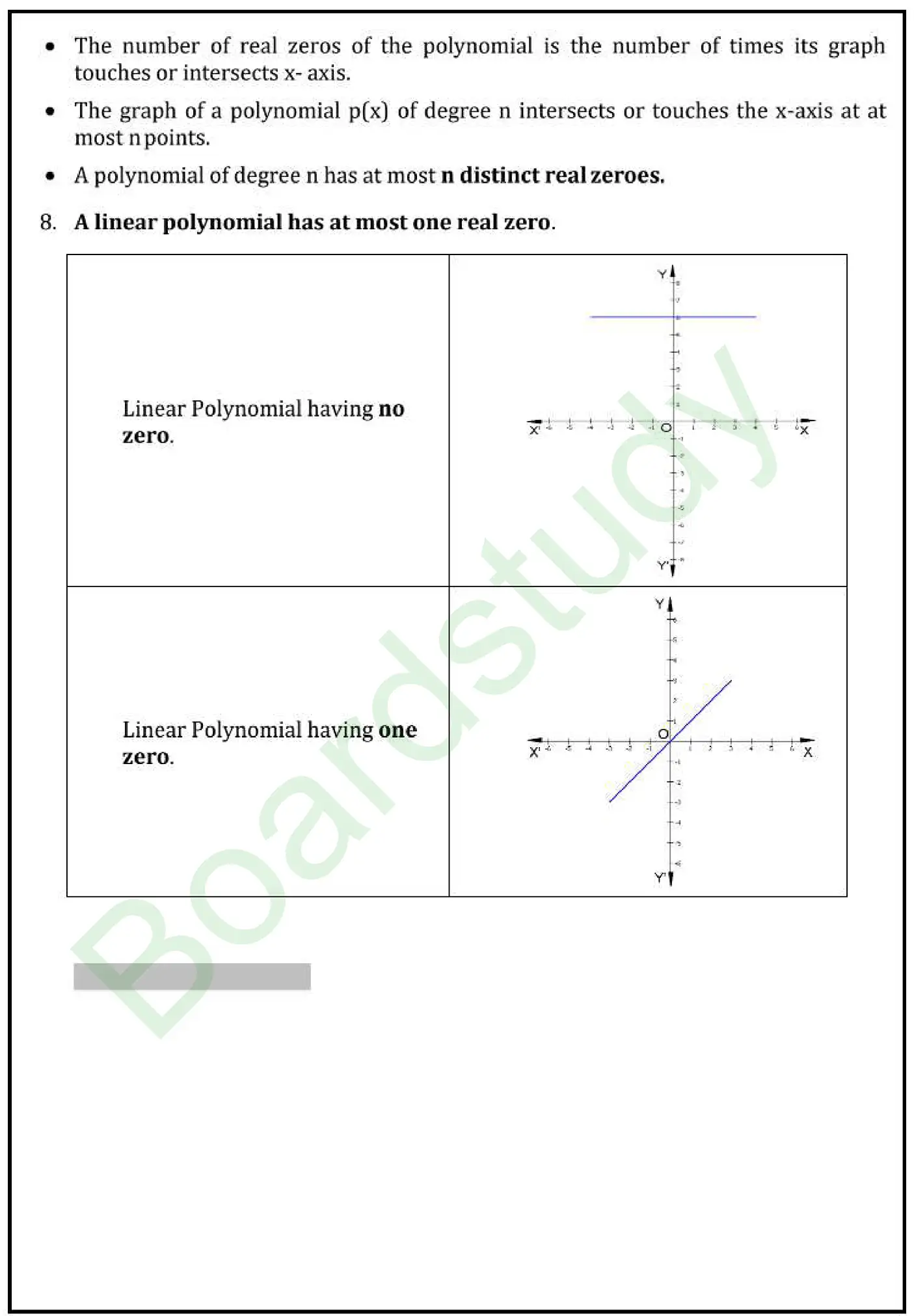
4. Etymology
- Origin: Derived from the Greek roots:
- poly-: meaning many
- -nomial (via Latin nomen / Greek term distribution): meaning terms or names
- Together, it signifies an expression having many terms (finite in count, not infinite).