
This article contains the CBSE class 10 Science PYQ 2019 (Set 1 & 2) with solutions. Practicing this PYQ will increase confidence in students before exam and eventually students can score higher marks in exam. These papers will give insight about exam pattern, difficulty level of question asked in board exam and students can manage their time in a very efficient way during exam time.
After completing Class 10 Science syllabus students should start practicing of class 10 Science PYQ 2019. This will help students to evaluate themself before exam, finding important topics for exam. Below we have given class 10 Science PYQ 2019 SET 1 and 2 with solutions.
CBSE Class 10 Science PYQ 2019 SET 1 Question with Solution
CBSE Class 10 Science PYQ 2019 SET 2 Question with Solution
CBSE Class 10 Science PYQ 2019 SET 1 Question with Solution










CBSE Class 10 Science PYQ 2019 SET 2 Question with Solution
CBSE Class 10 Science PYQ 2025
CBSE Class 10 Science PYQ 2026
Students can also find class 10 Science handwritten notes on our website. These handwritten notes are prepared by experts teacher and topper’s students. At the time of solving these PYQ students should teat it as a real board paper and should solve accordingly.
Important Question of CBSE Class 10 Science PYQ 2019
Question :
A white powder is added while baking cakes to make it soft and spongy. Name its main ingredients. Explain the function of each ingredient. Write the chemical reaction taking place when the powder is heated during baking.
Solution :
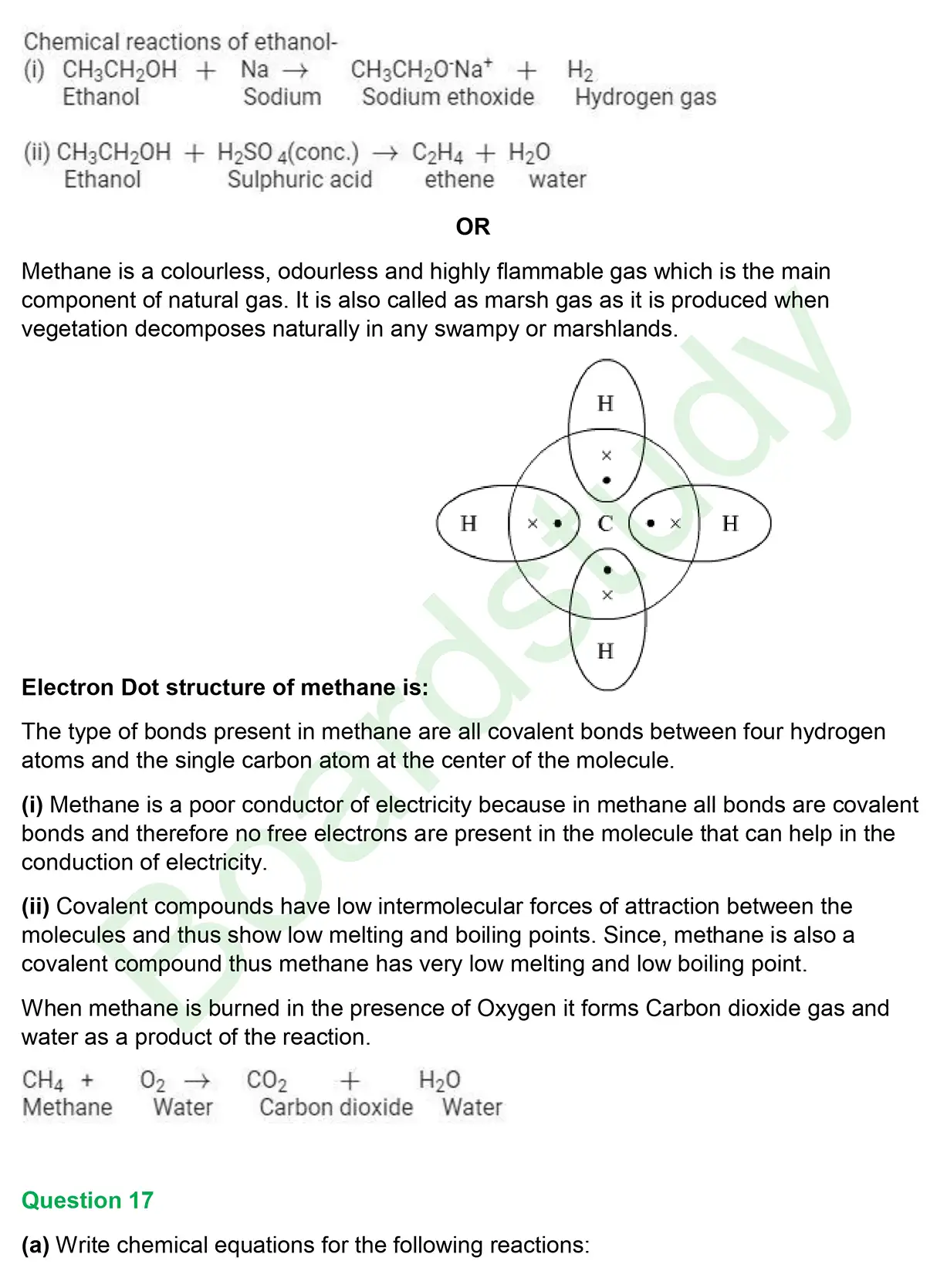
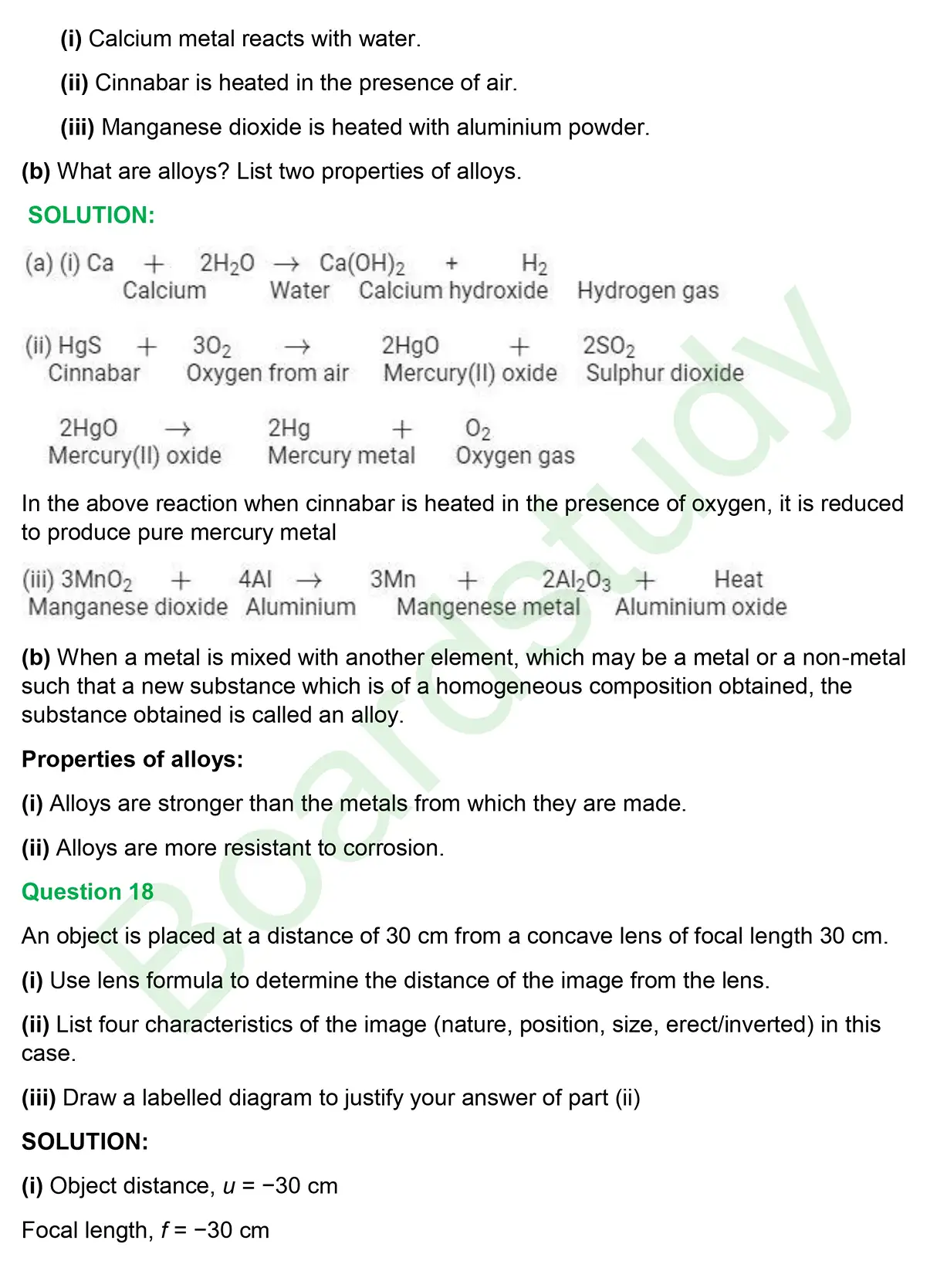
The white powder which is added while baking cakes to make it soft and spongy is called Baking soda. Its chemical formula is NaHCO3. Its main ingredients are Sodium hydrogen carbonate, tartarate salt and starch.
The function of each ingredient: The following reaction takes place when heated during cooking,
Carbon dioxide produced during the reaction causes bread or cake to rise making them soft and spongy.
The function of the tartarate salt – When the baking powder comes in contact with water the tartaric acid gets active and reacts with the sodium bicarbonate and carbon dioxide gas is evolved in this reaction which is the reason of puffiness of the cake and bread.
The function of corn starch in the baking soda is to act a filler, it absorbs any extra moisture and prevents the baking soda from acting too quickly.
Question :
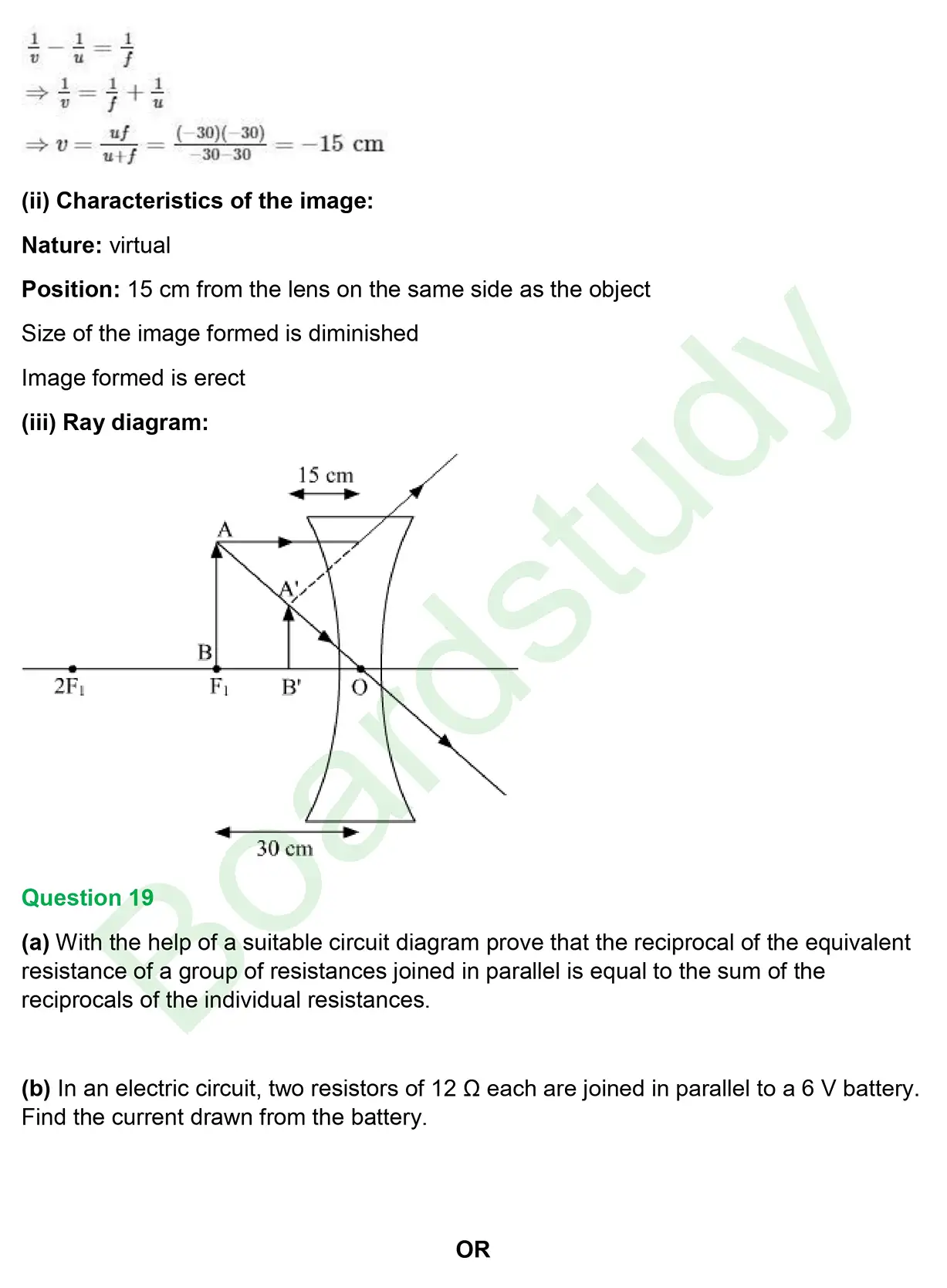
An object is placed at a distance of 30 cm from a concave lens of focal length 30 cm.
Use lens formula to determine the distance of the image from the lens.