
This article contains the CBSE class 10 Science PYQ 2026 (Set 1 & 2) with solutions. Practicing this PYQ will increase confidence in students before exam and eventually students can score higher marks in exam. These papers will give insight about exam pattern, difficulty level of question asked in board exam and students can manage their time in a very efficient way during exam time.
After completing Class 10 Science syllabus students should start practicing of class 10 Science PYQ 2025. This will help students to evaluate themself before exam, finding important topics for exam. Below we have given class 10 Science PYQ 2025 SET 1 and 2 with solutions.
CBSE Class 10 Science PYQ 2025 SET 1 Question
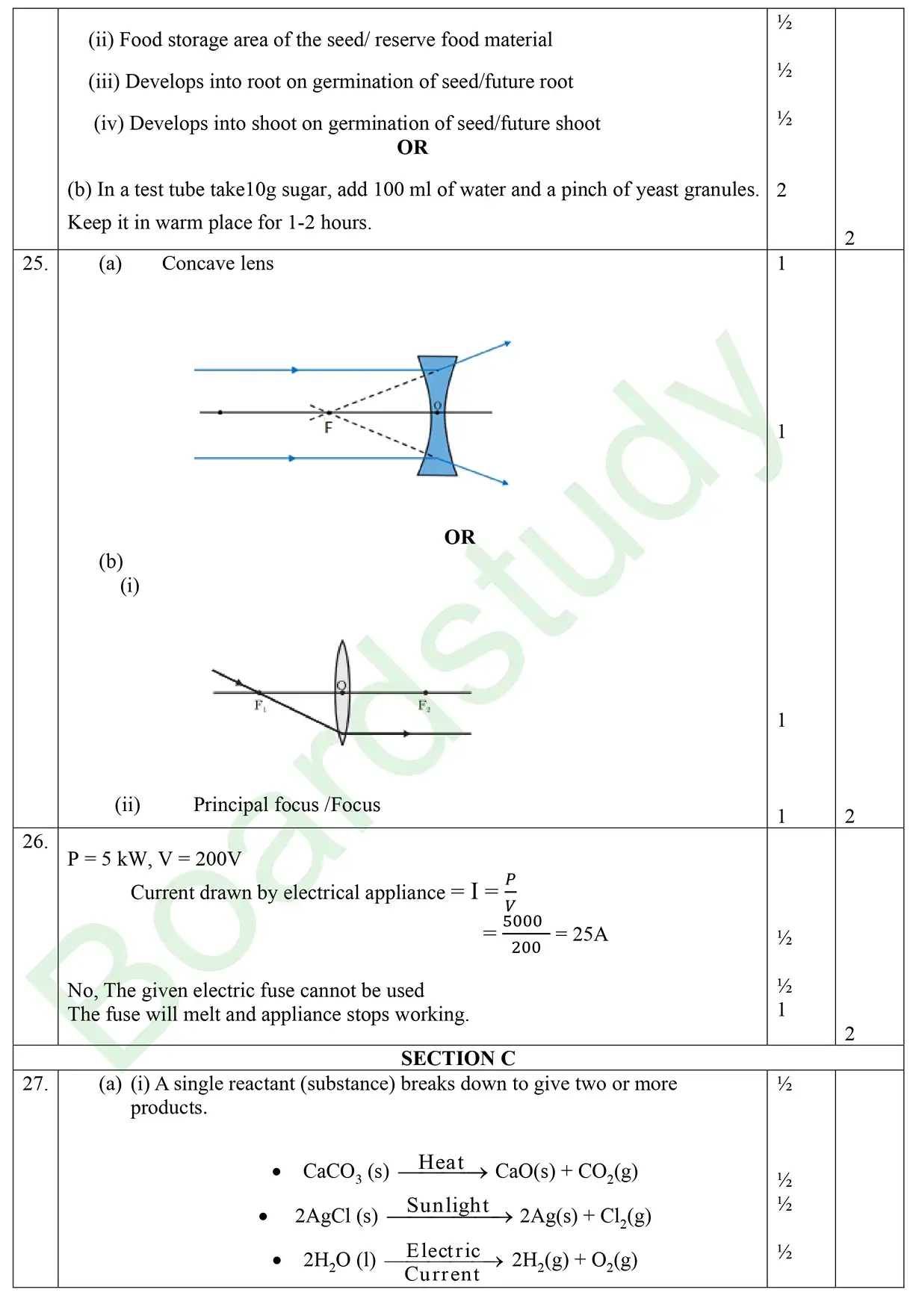
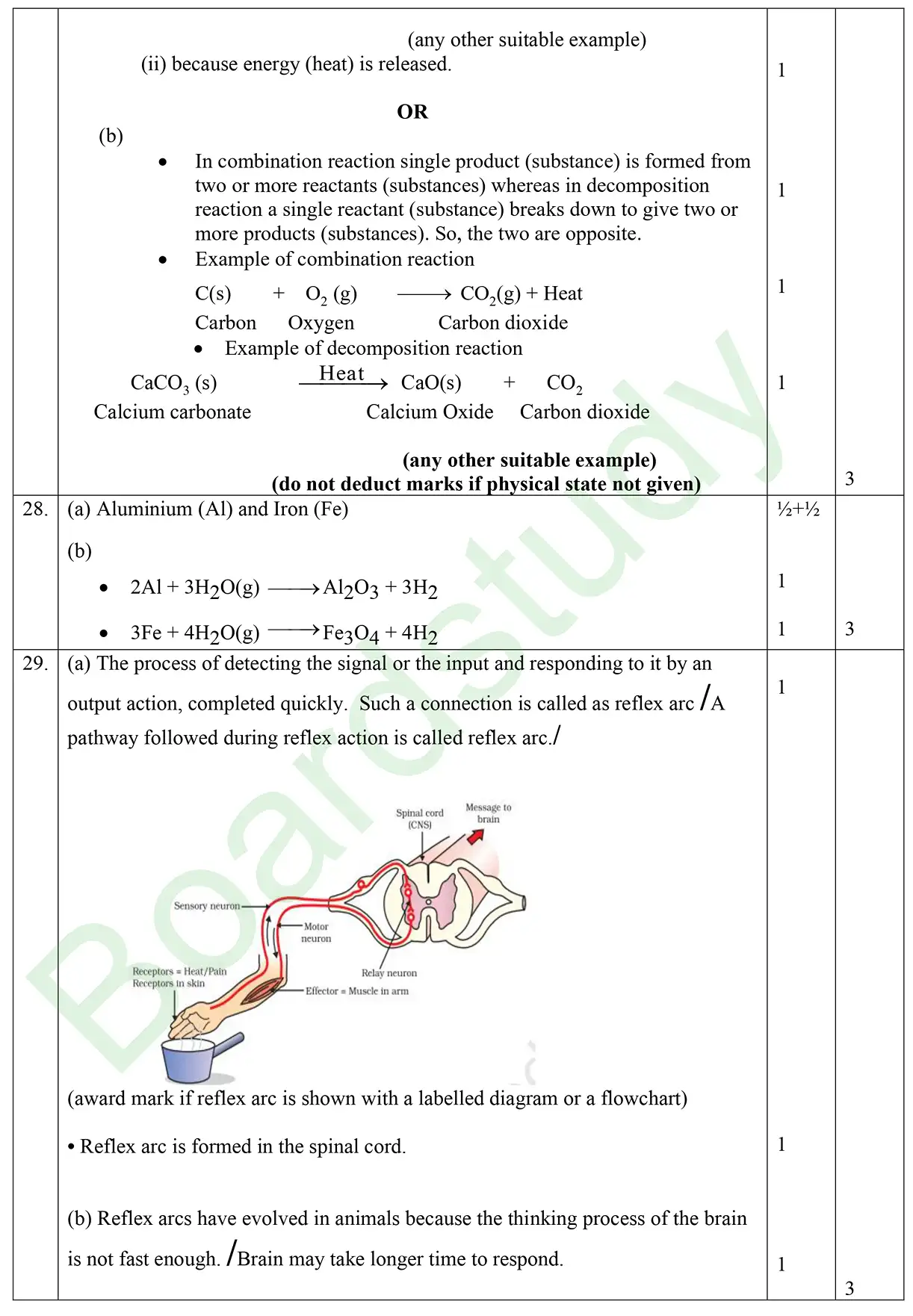
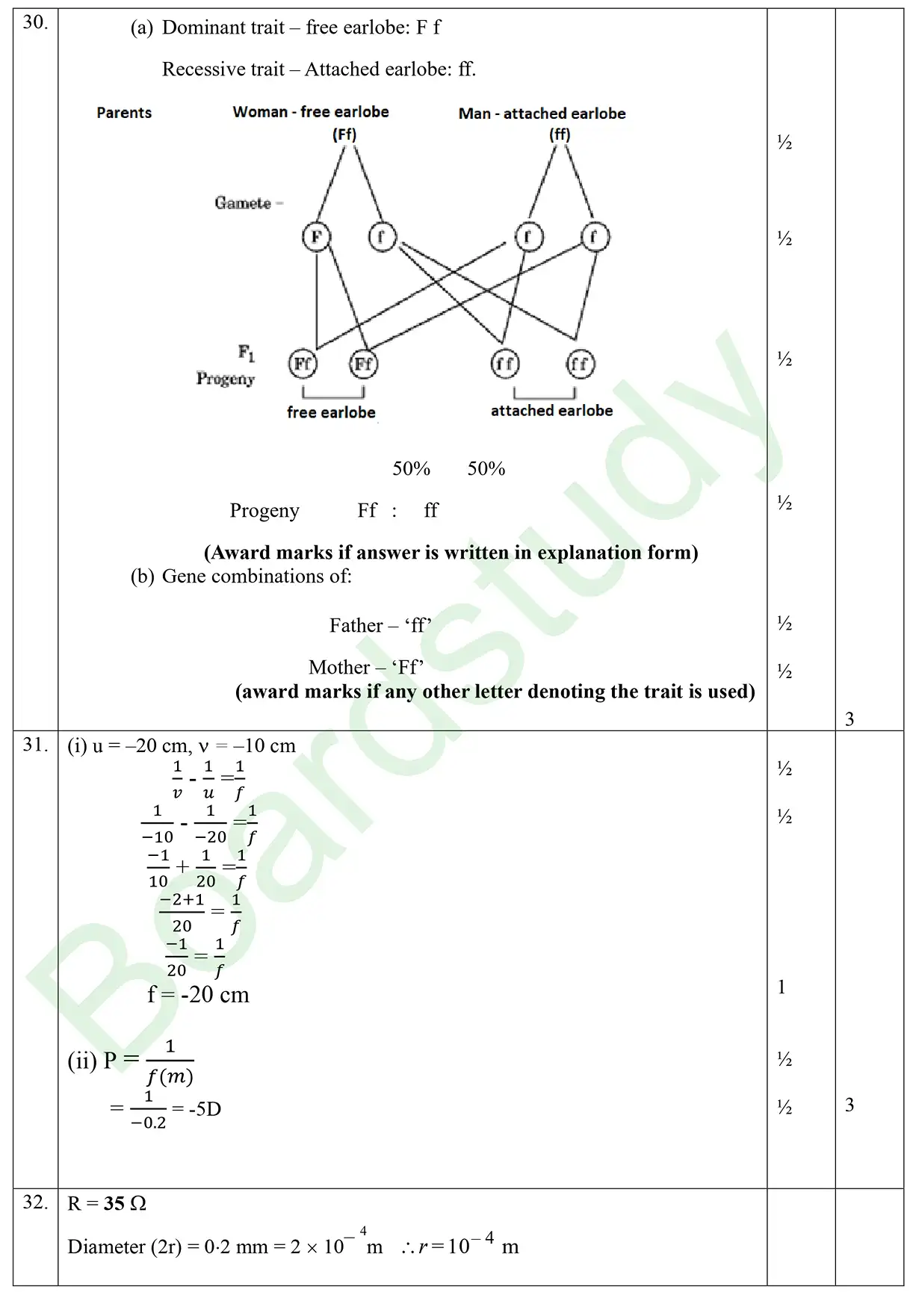
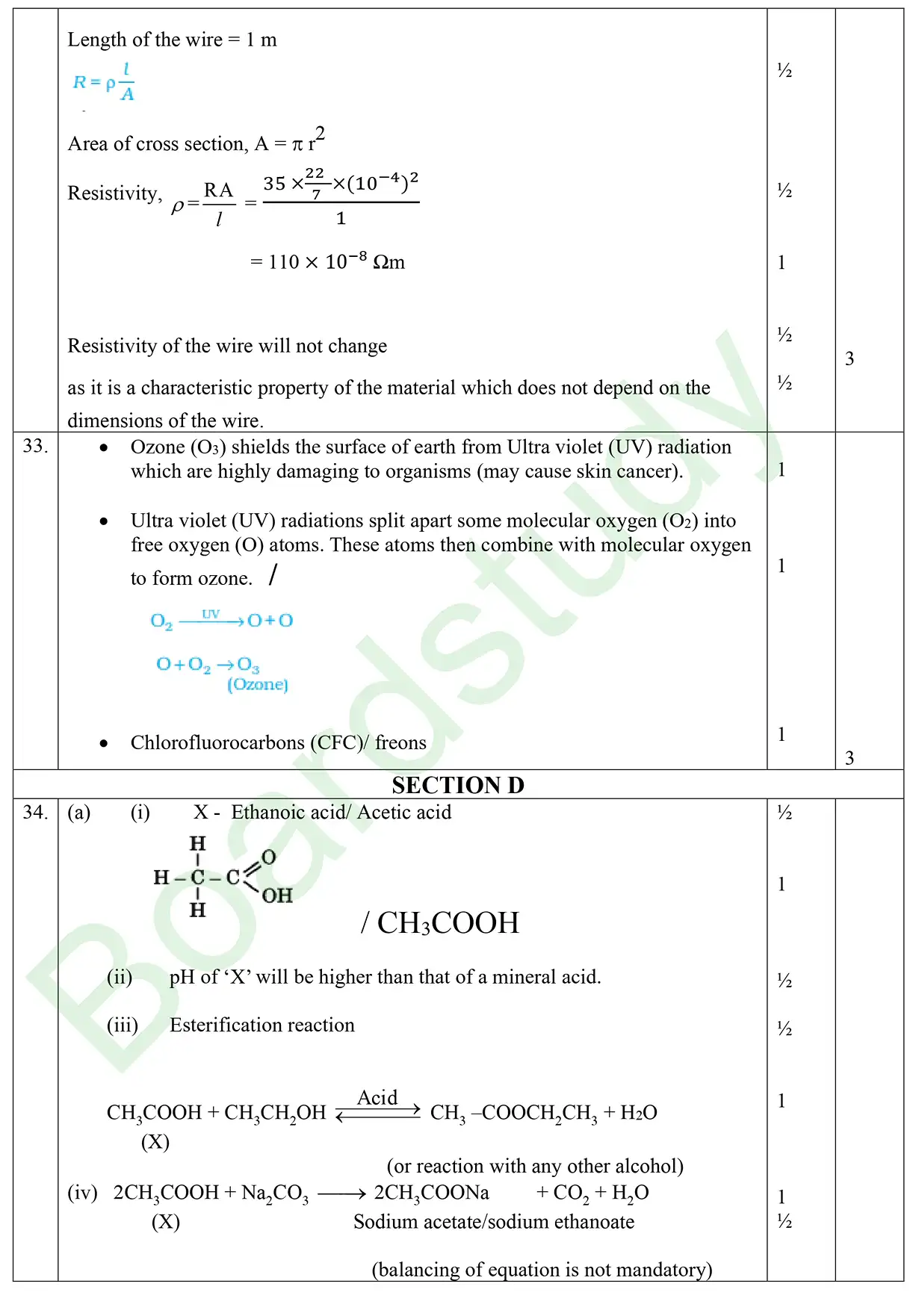
CBSE Class 10 Science PYQ 2025 SET 1 Solution
CBSE Class 10 Science PYQ 2025 SET 2 Question
CBSE Class 10 Science PYQ 2025 SET 2 Solution
CBSE Class 10 Science PYQ 2025 SET 1 Question
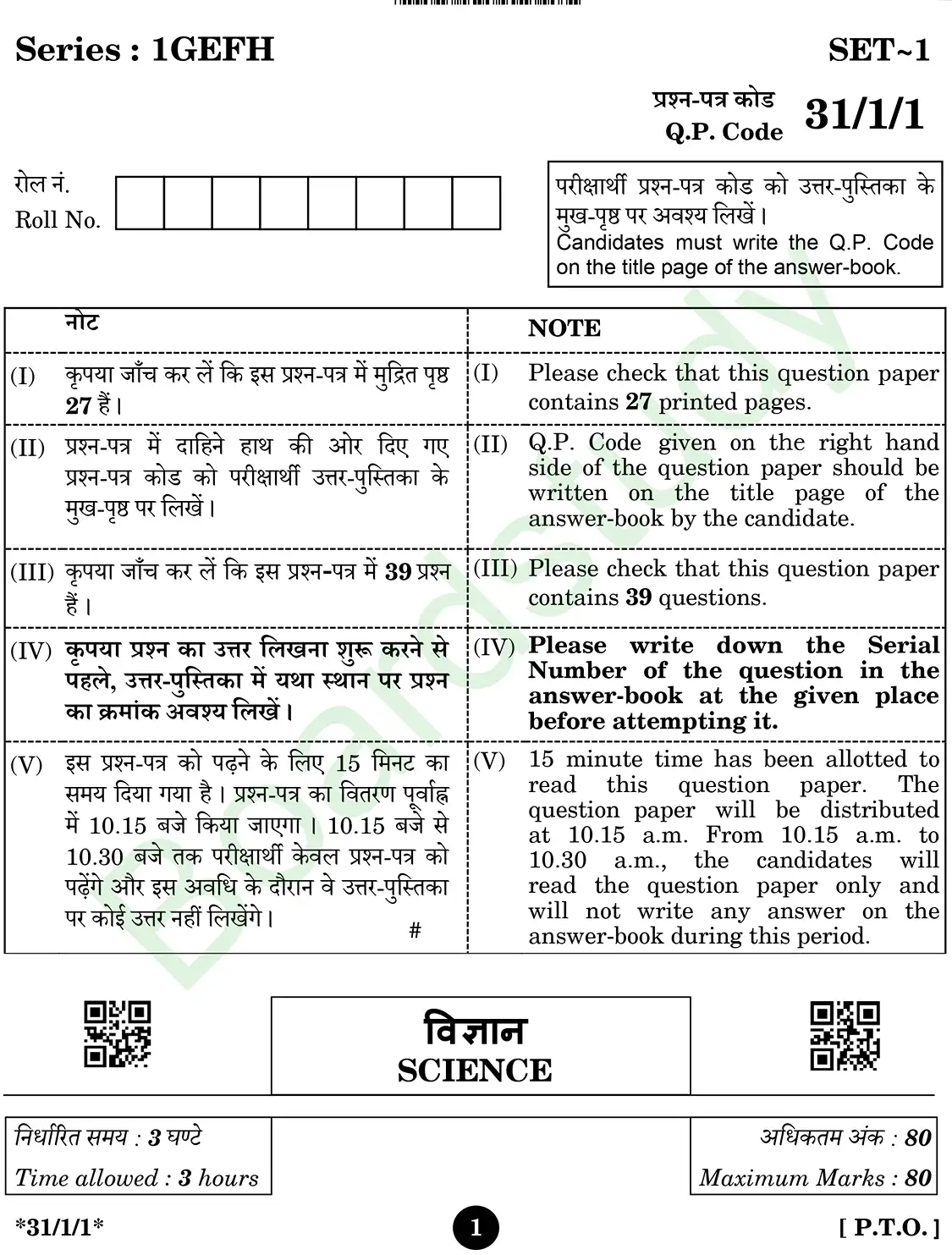
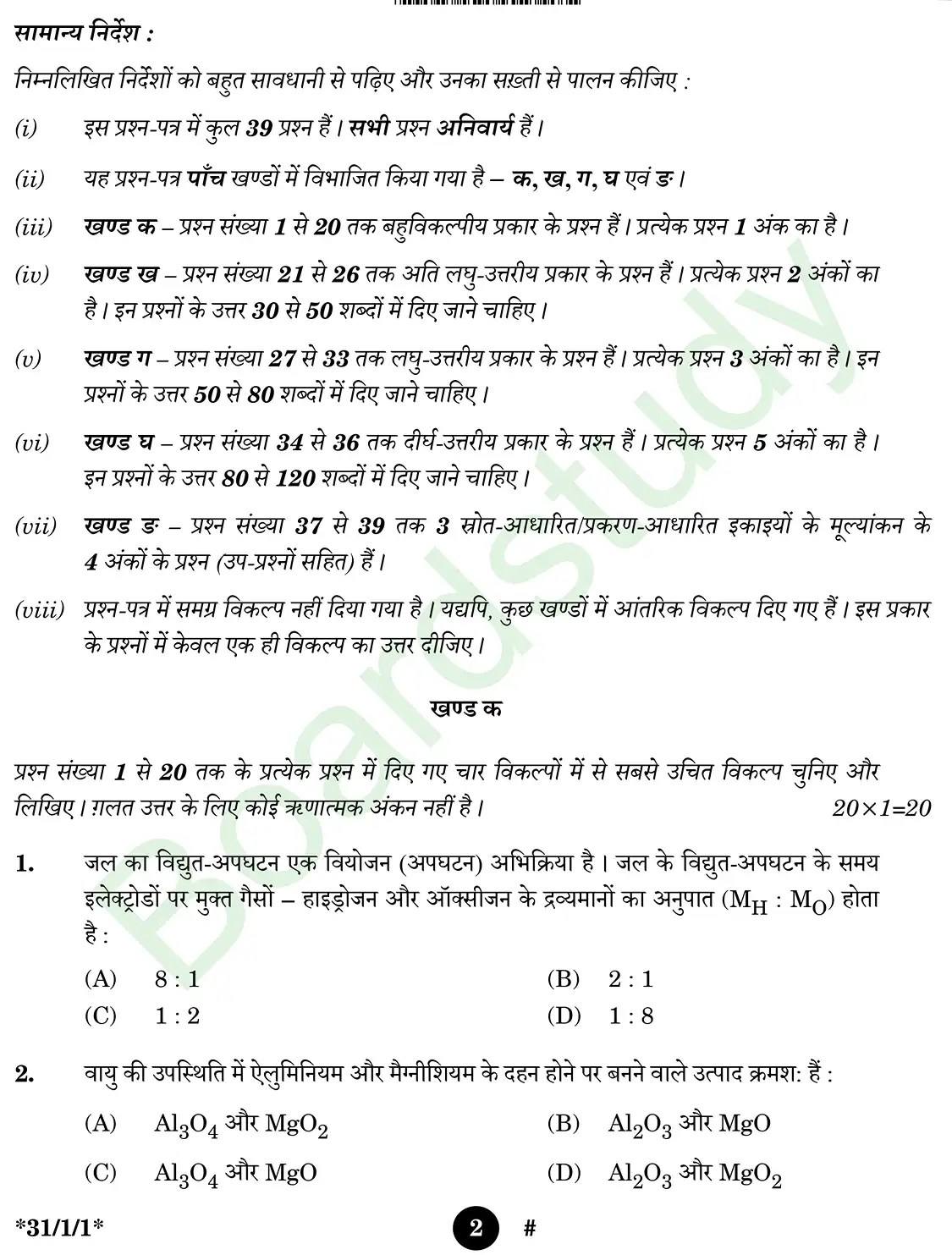
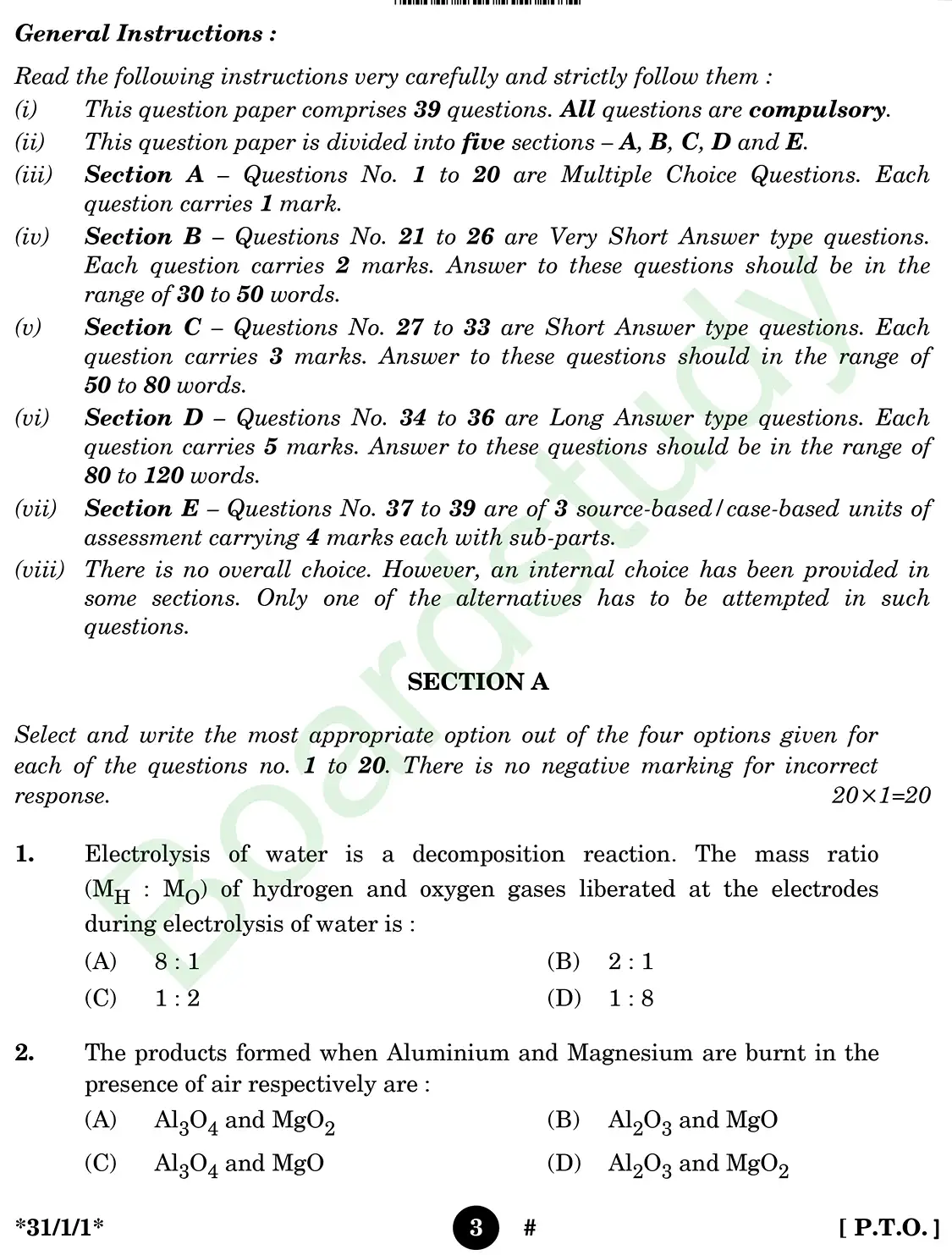
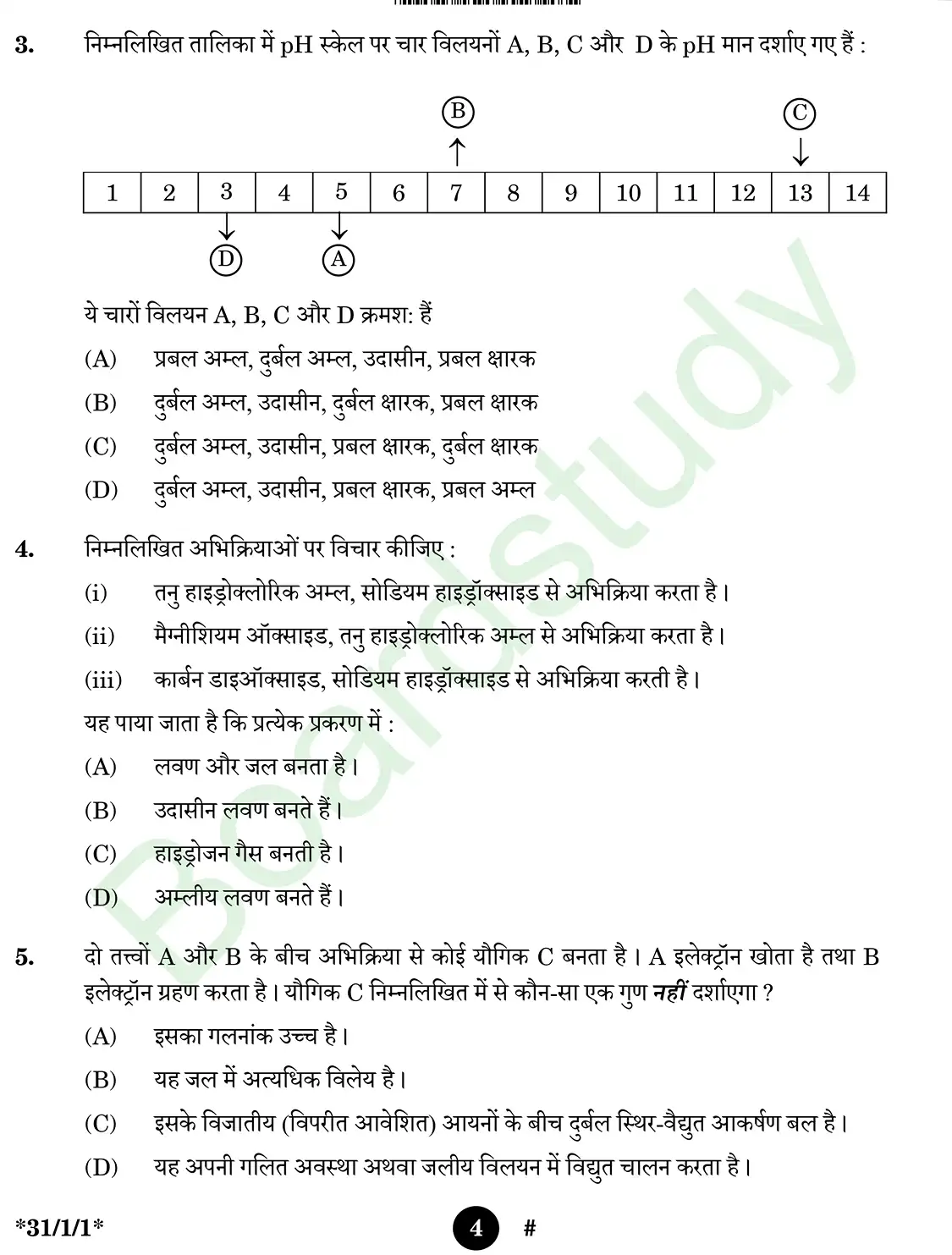
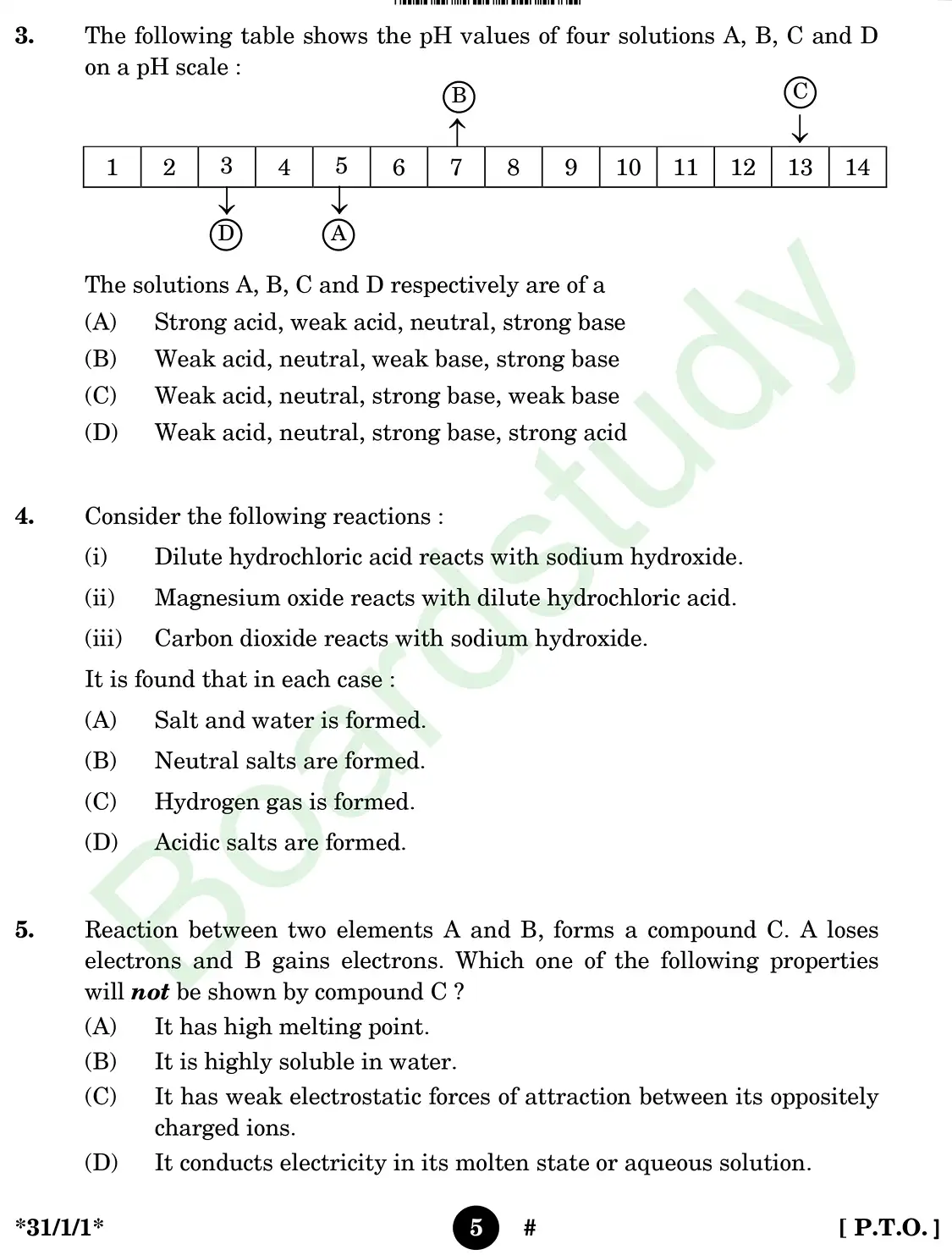
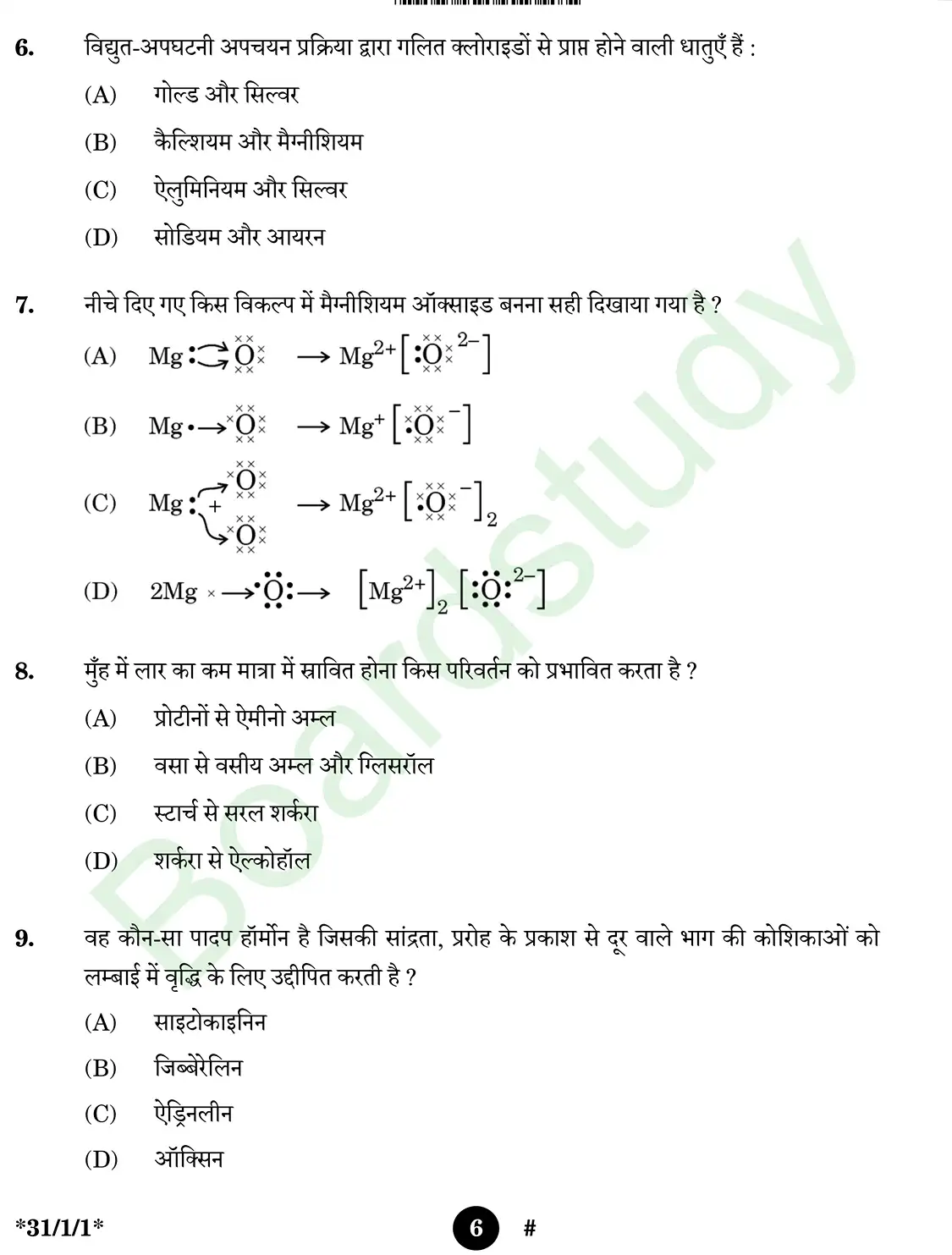
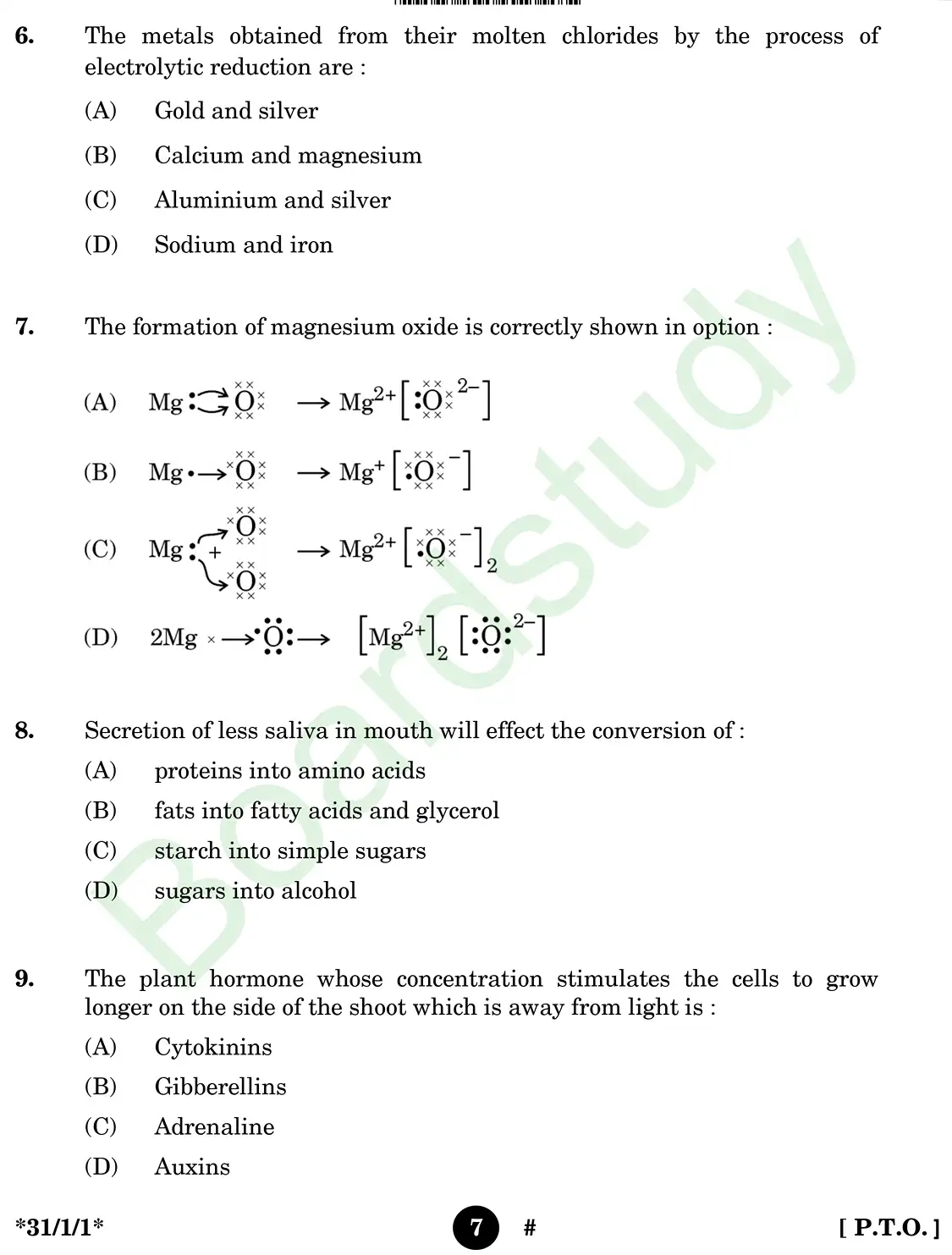
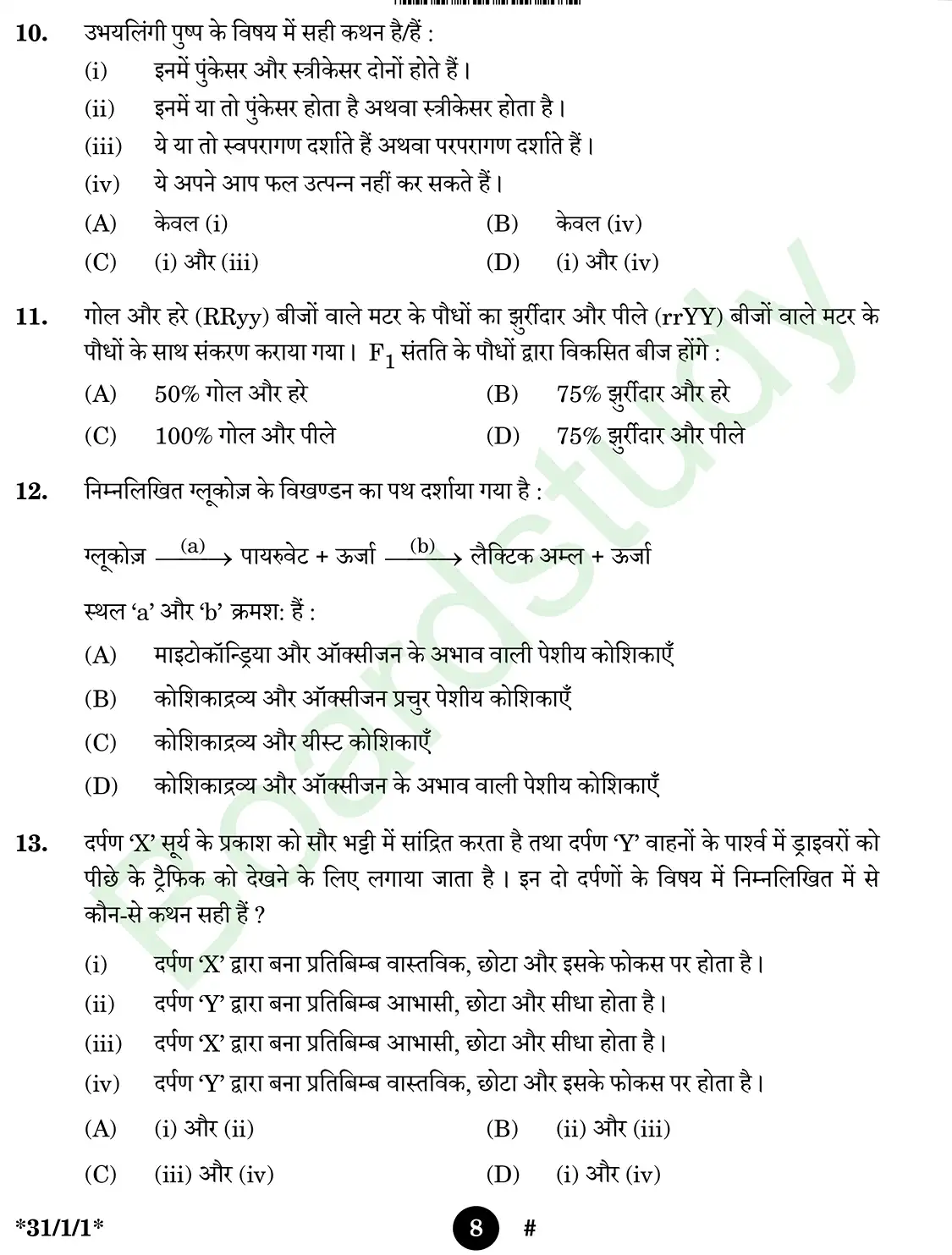
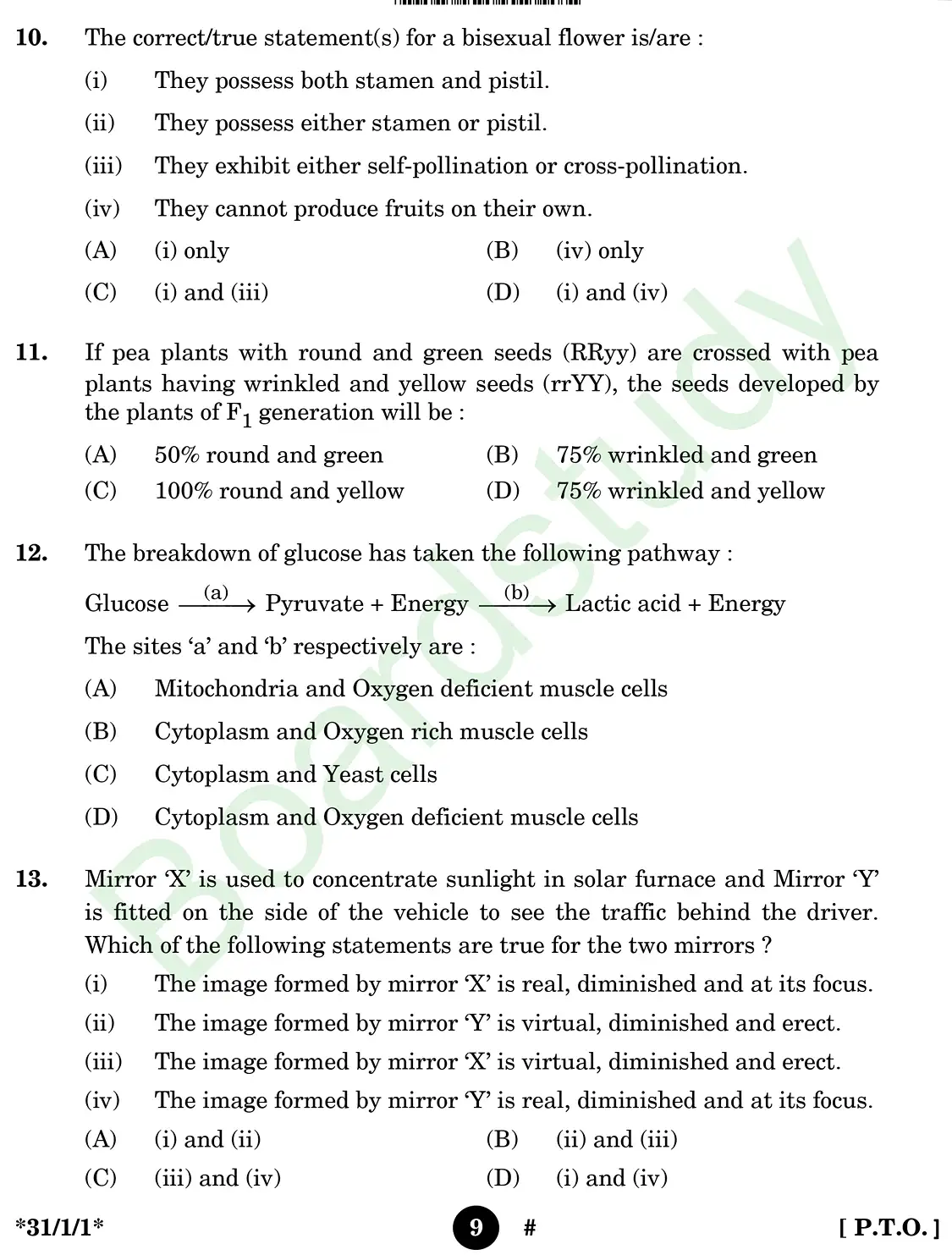
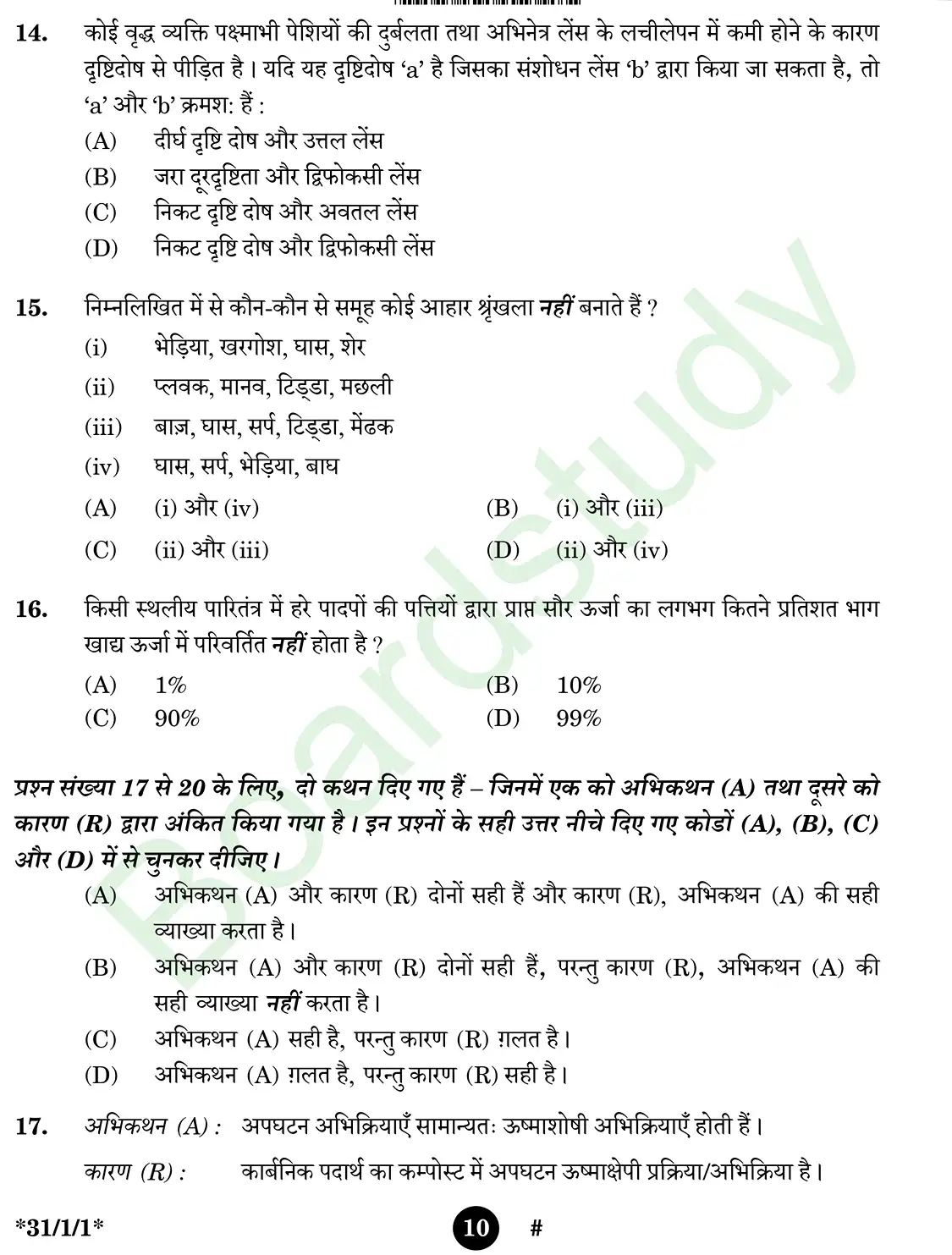
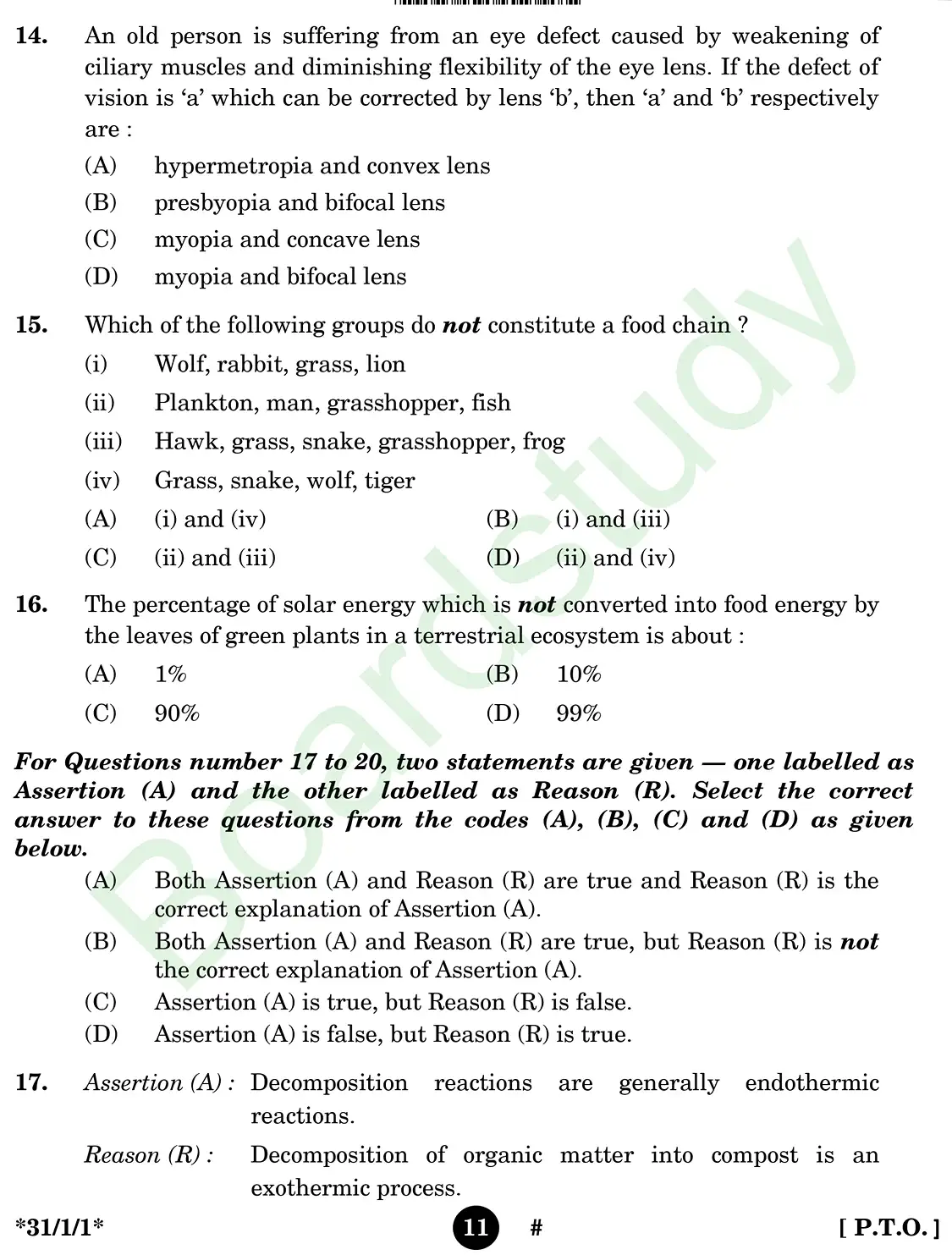
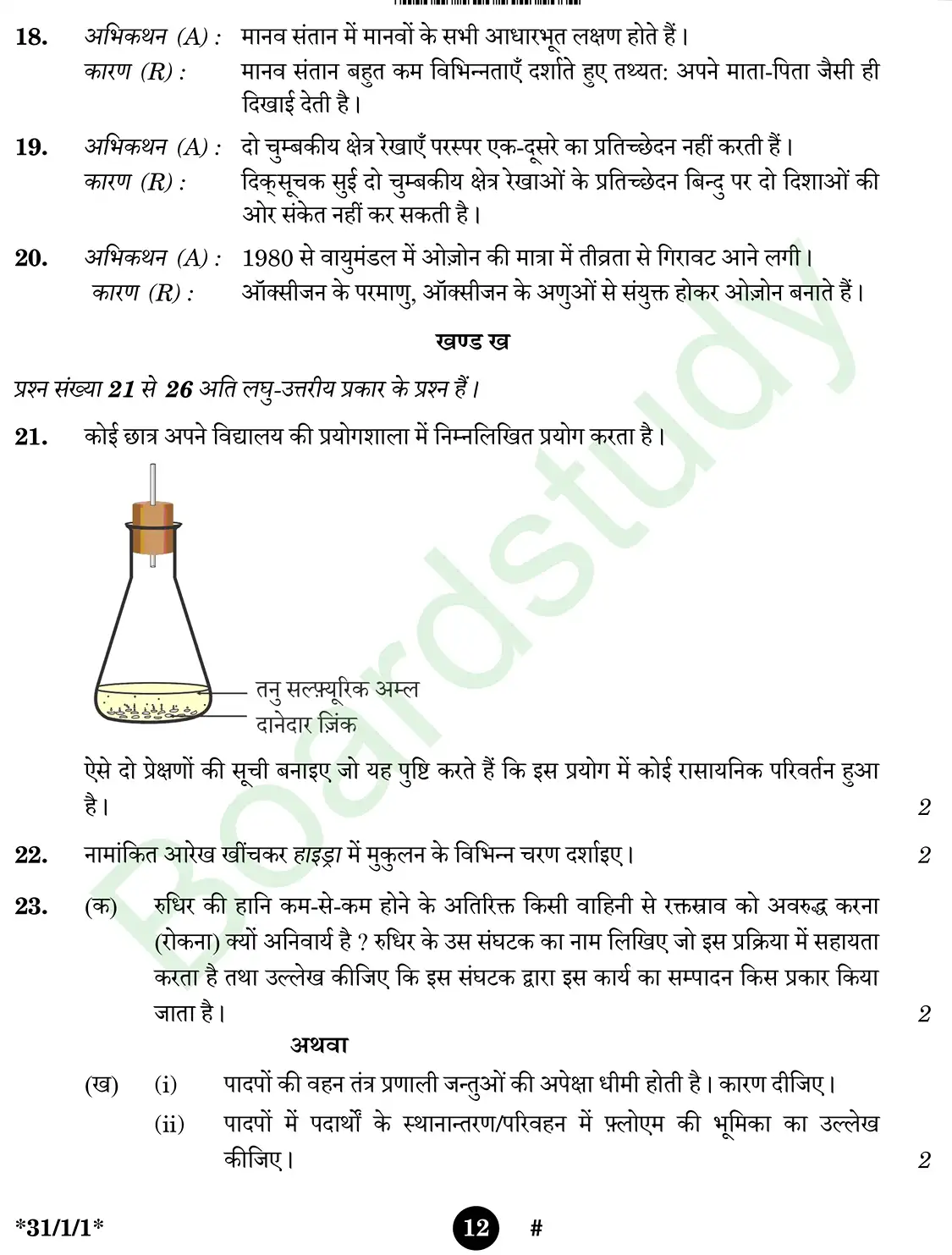


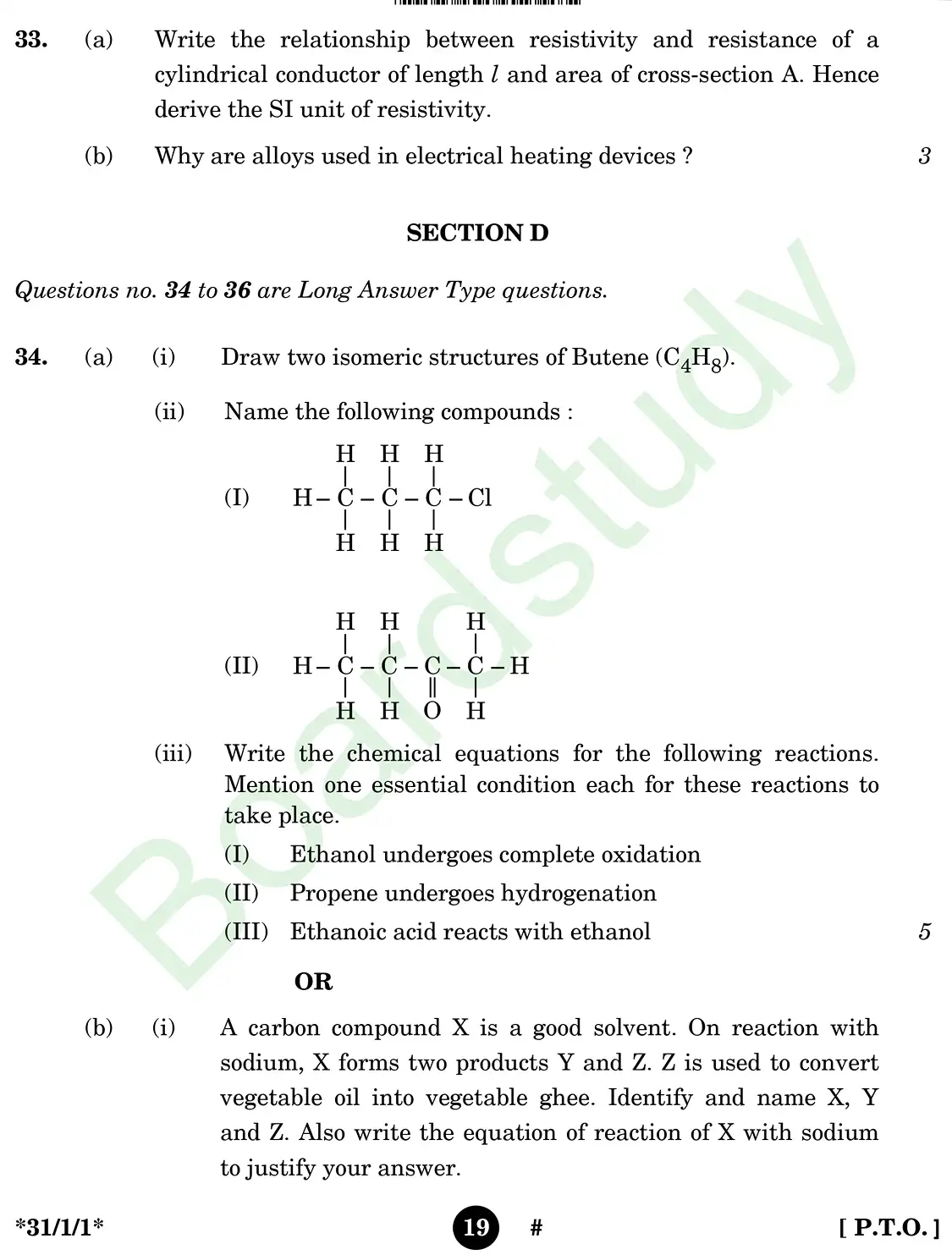

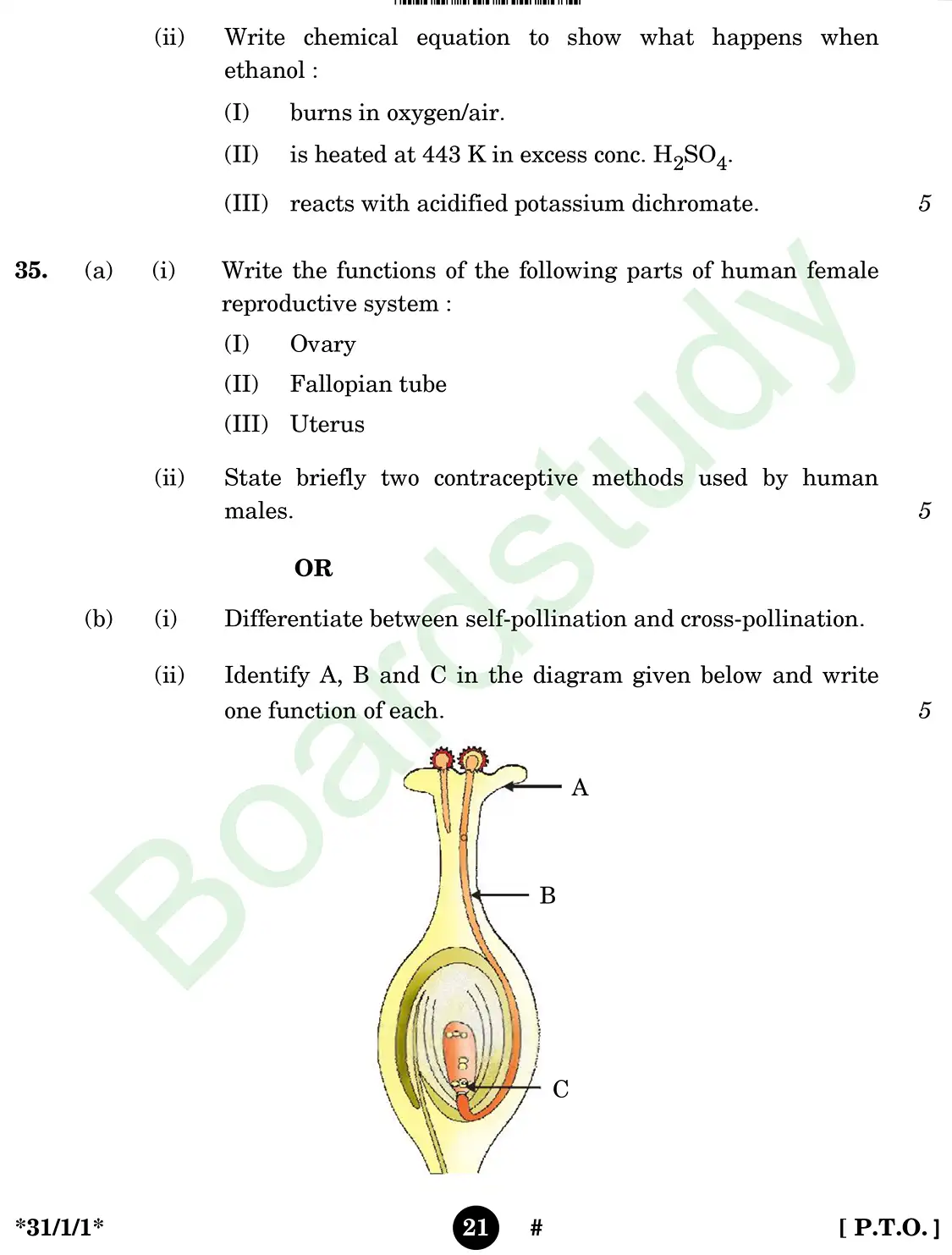
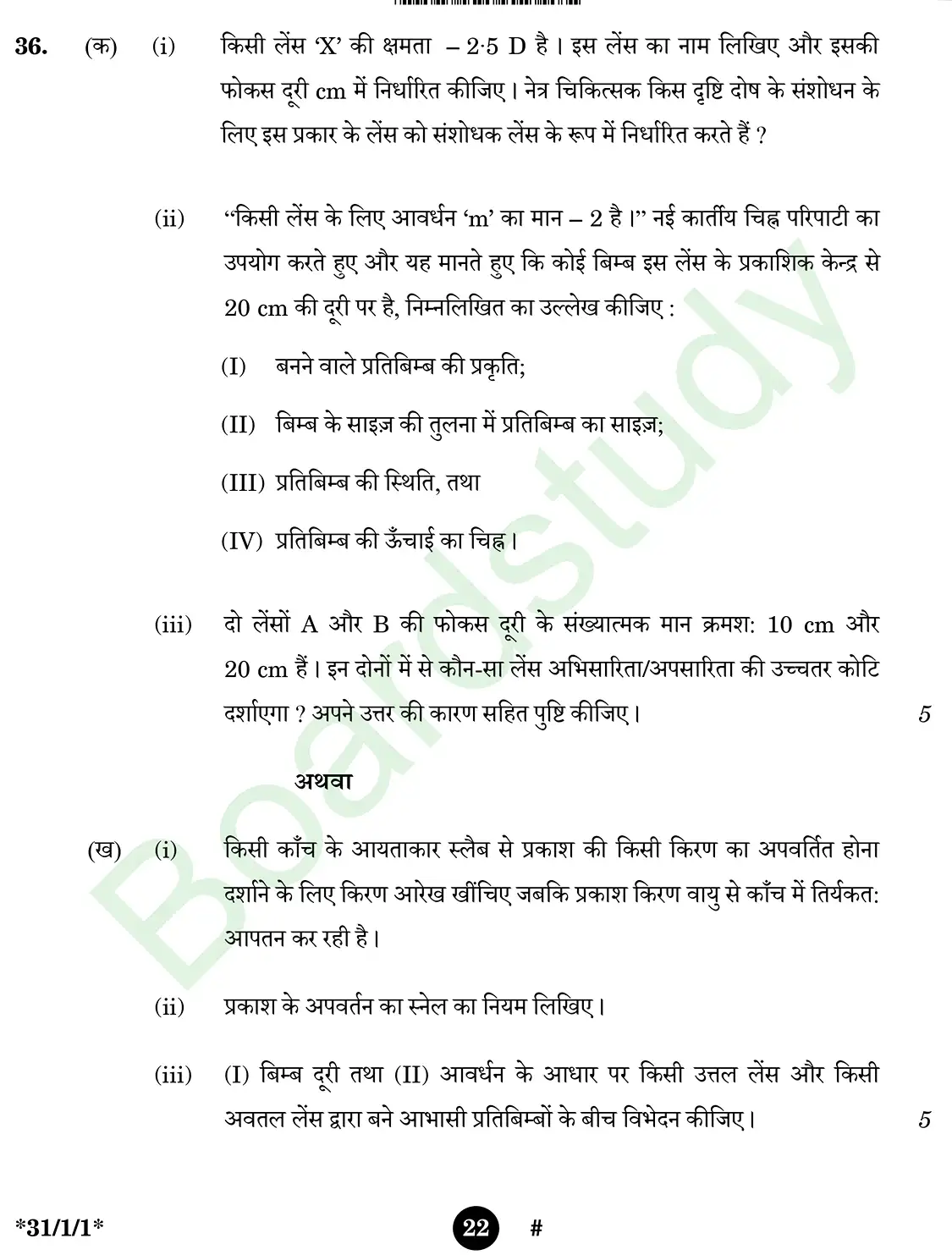

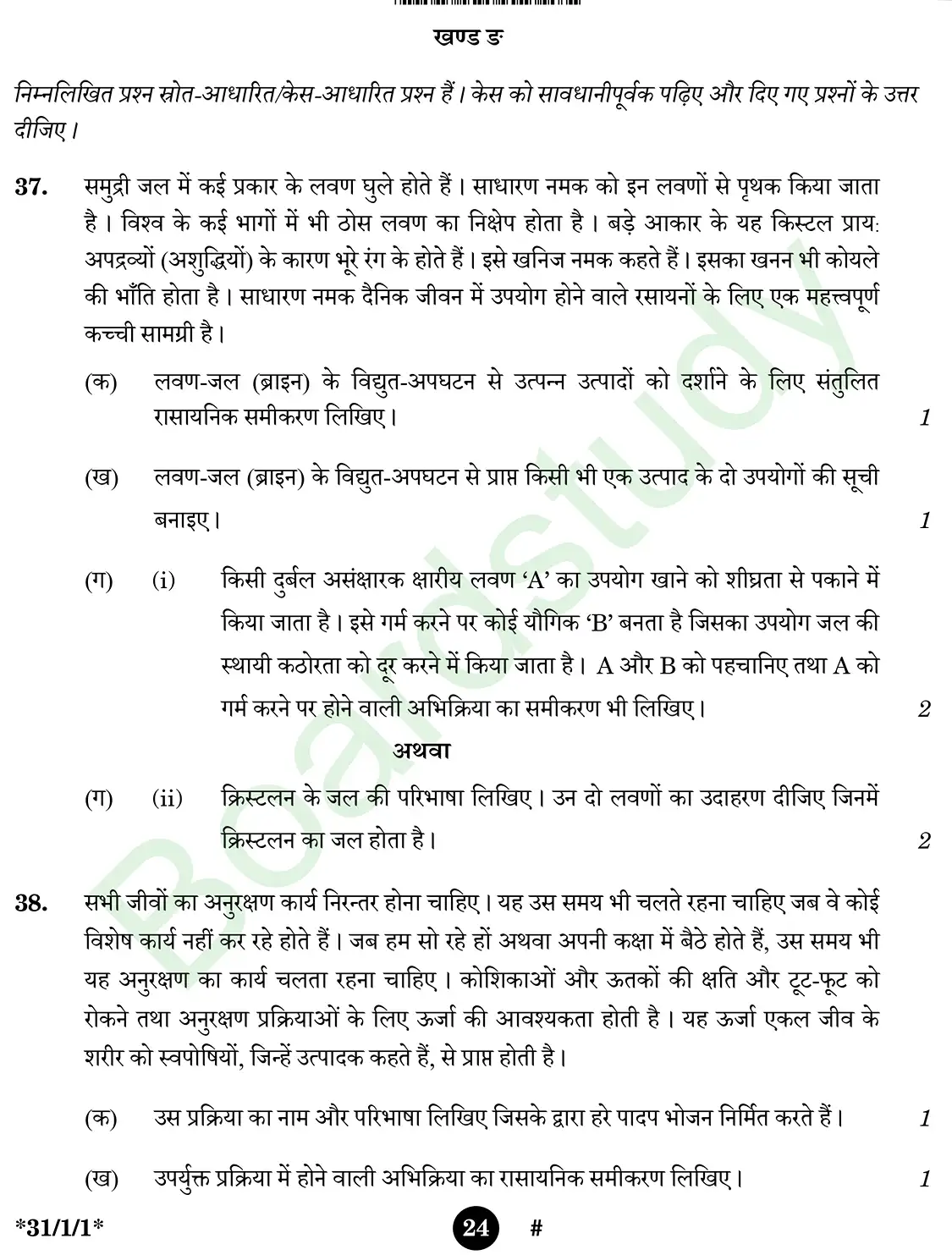
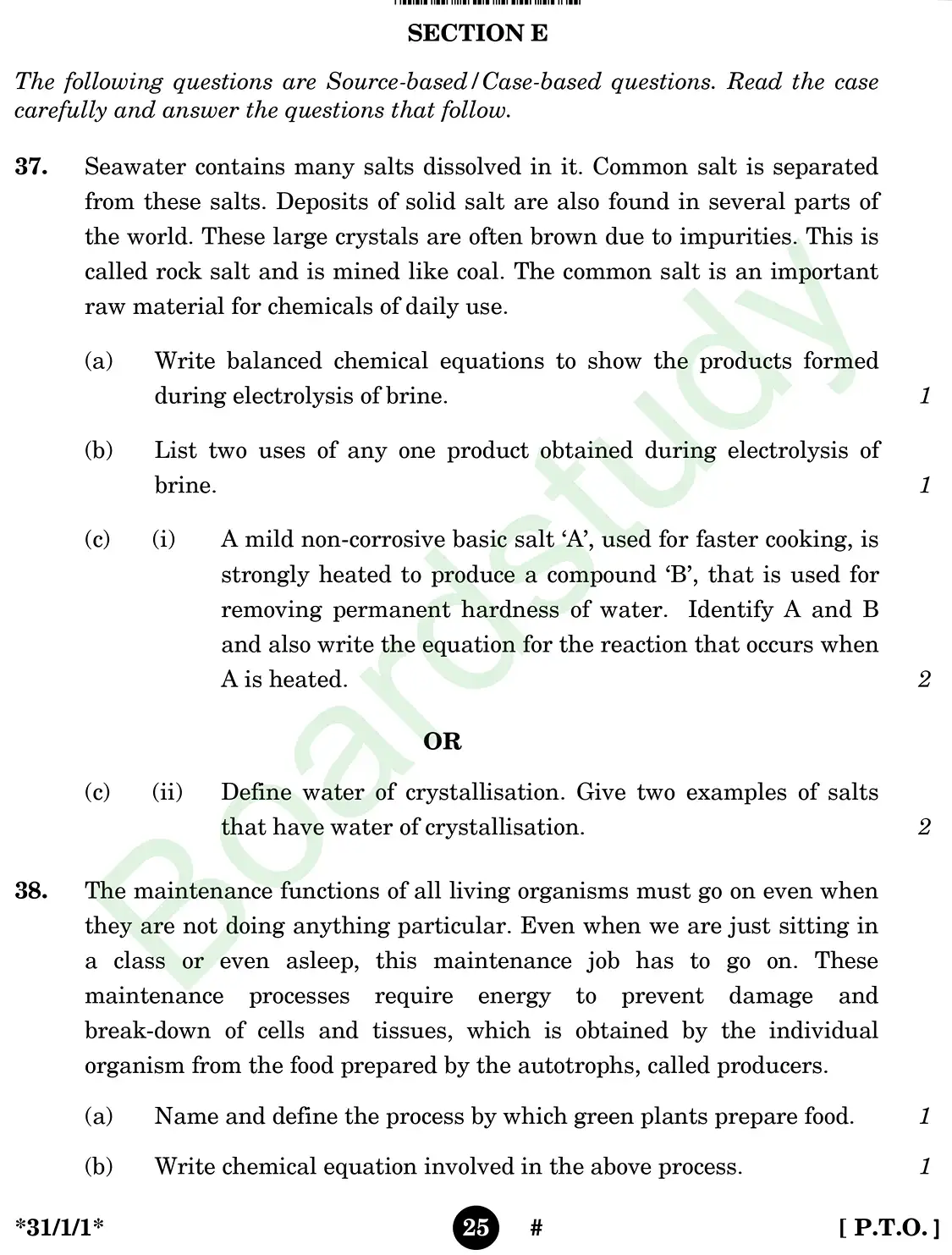
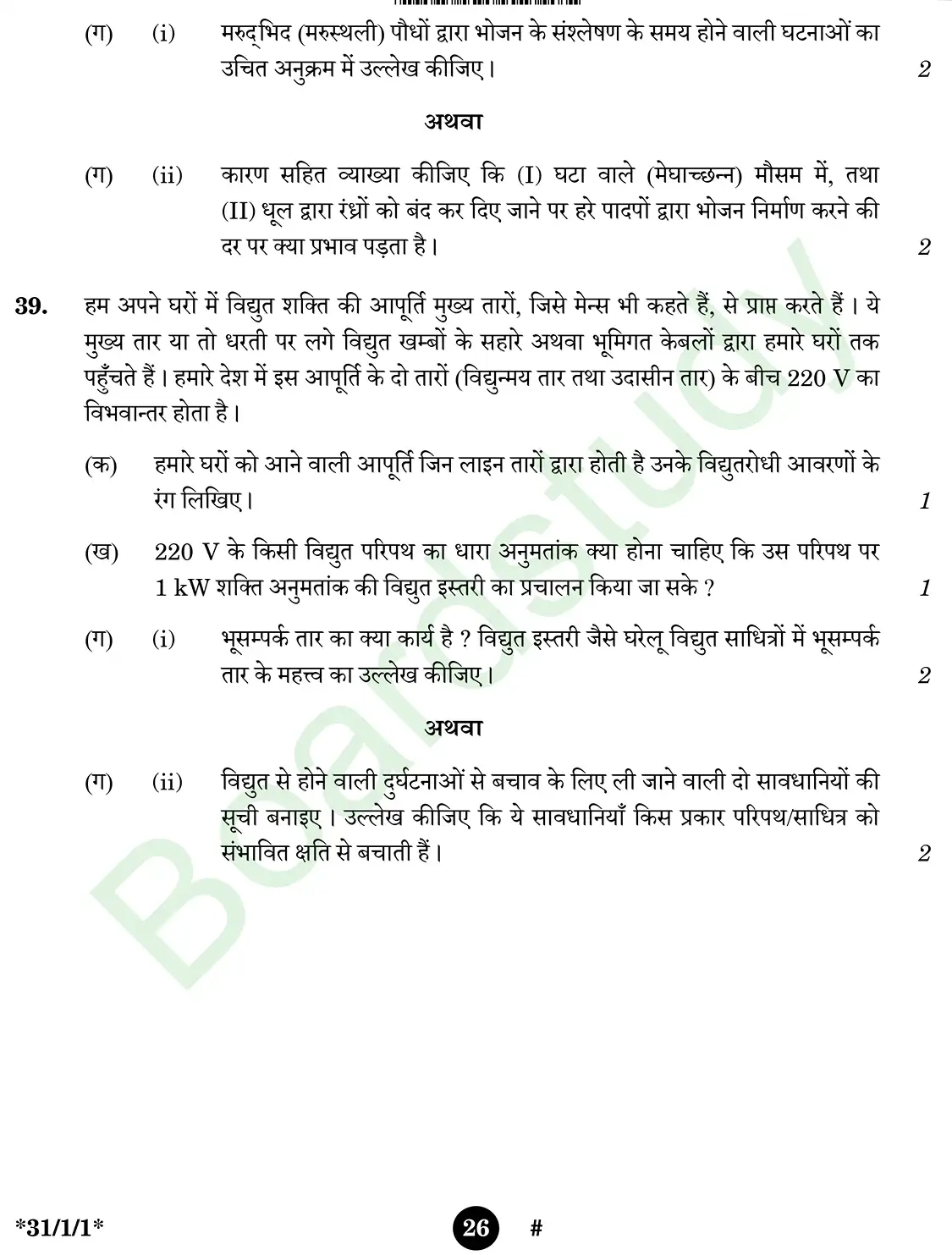
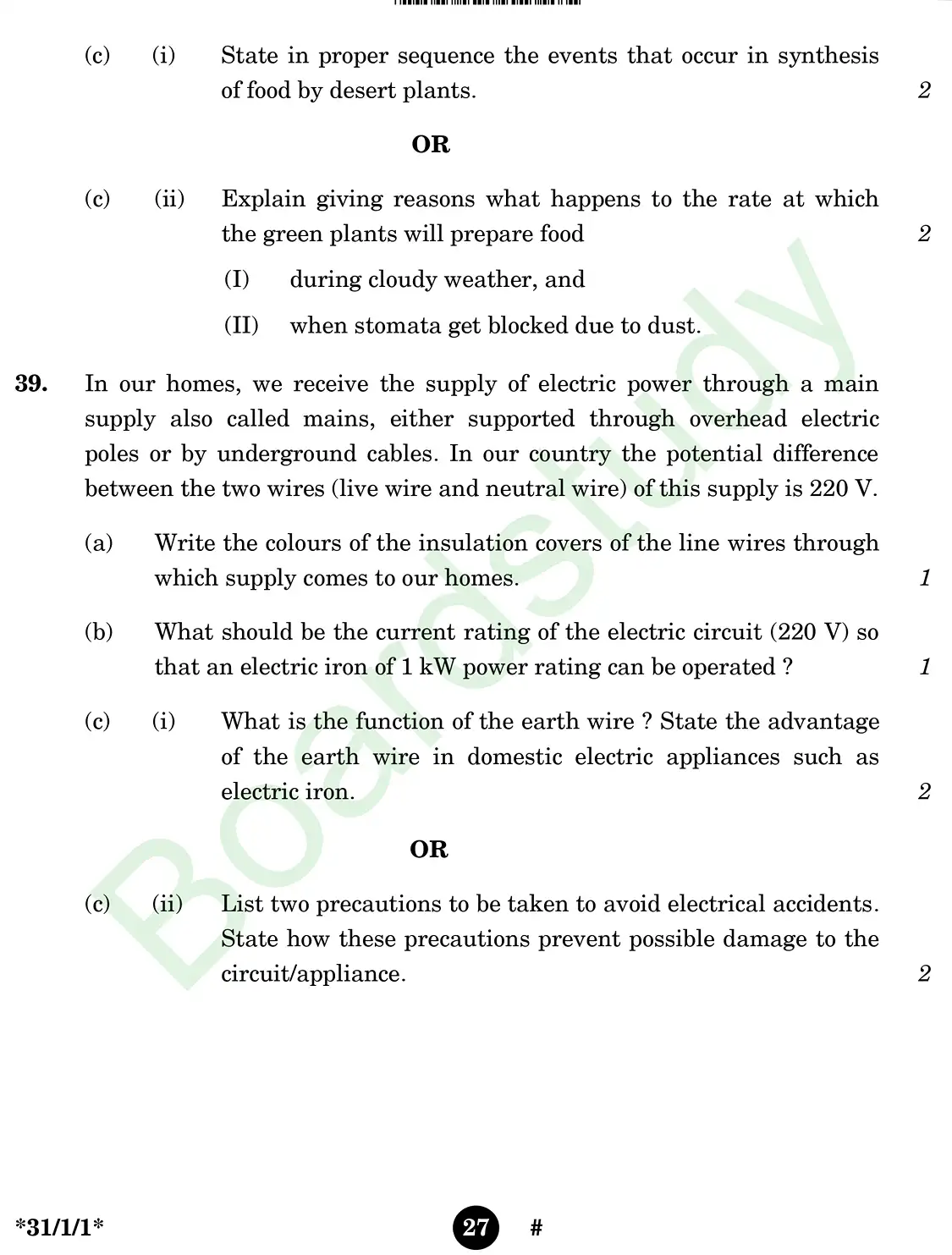
CBSE Class 10 Science PYQ 2025 SET 1 Solution
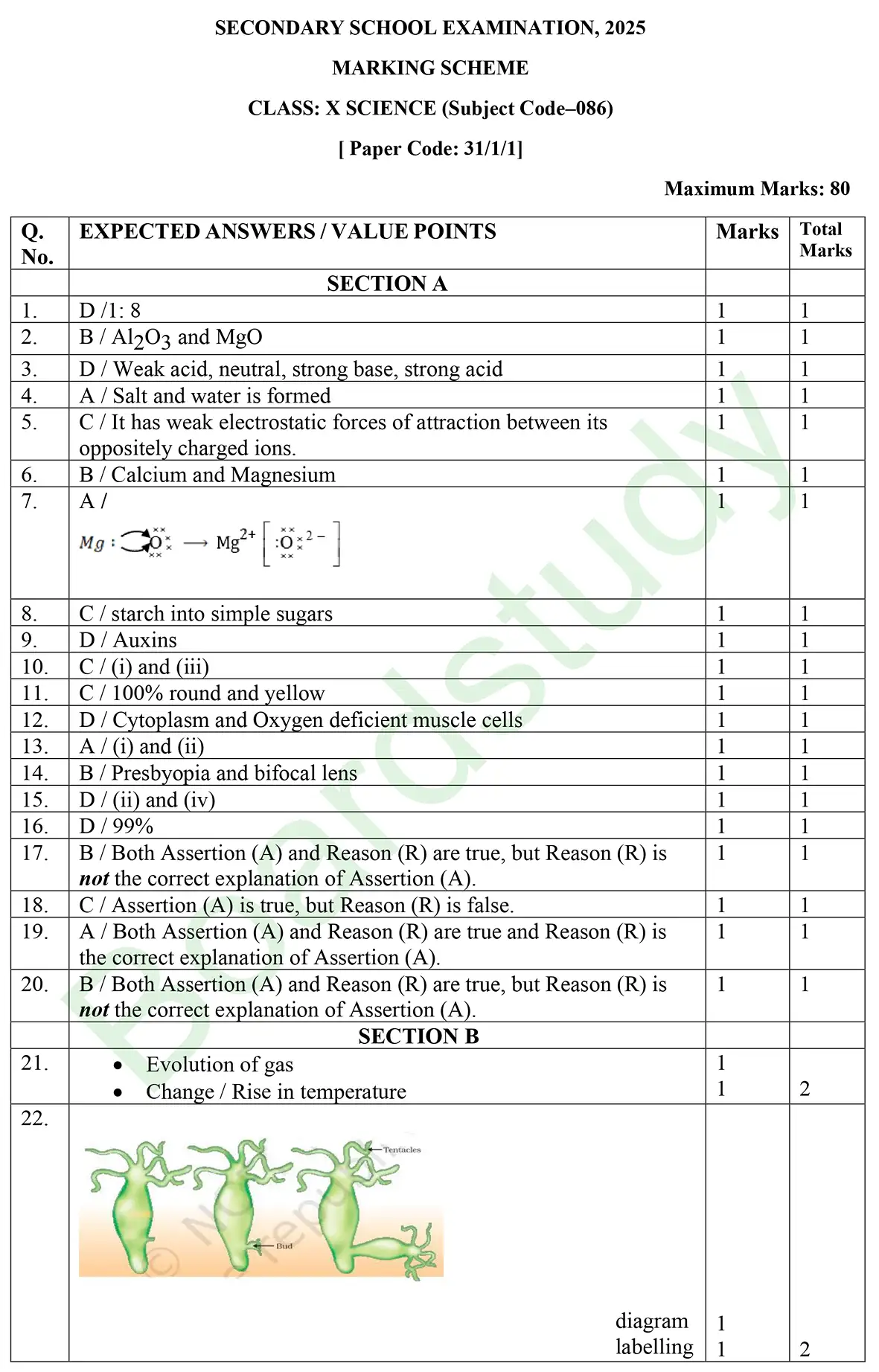
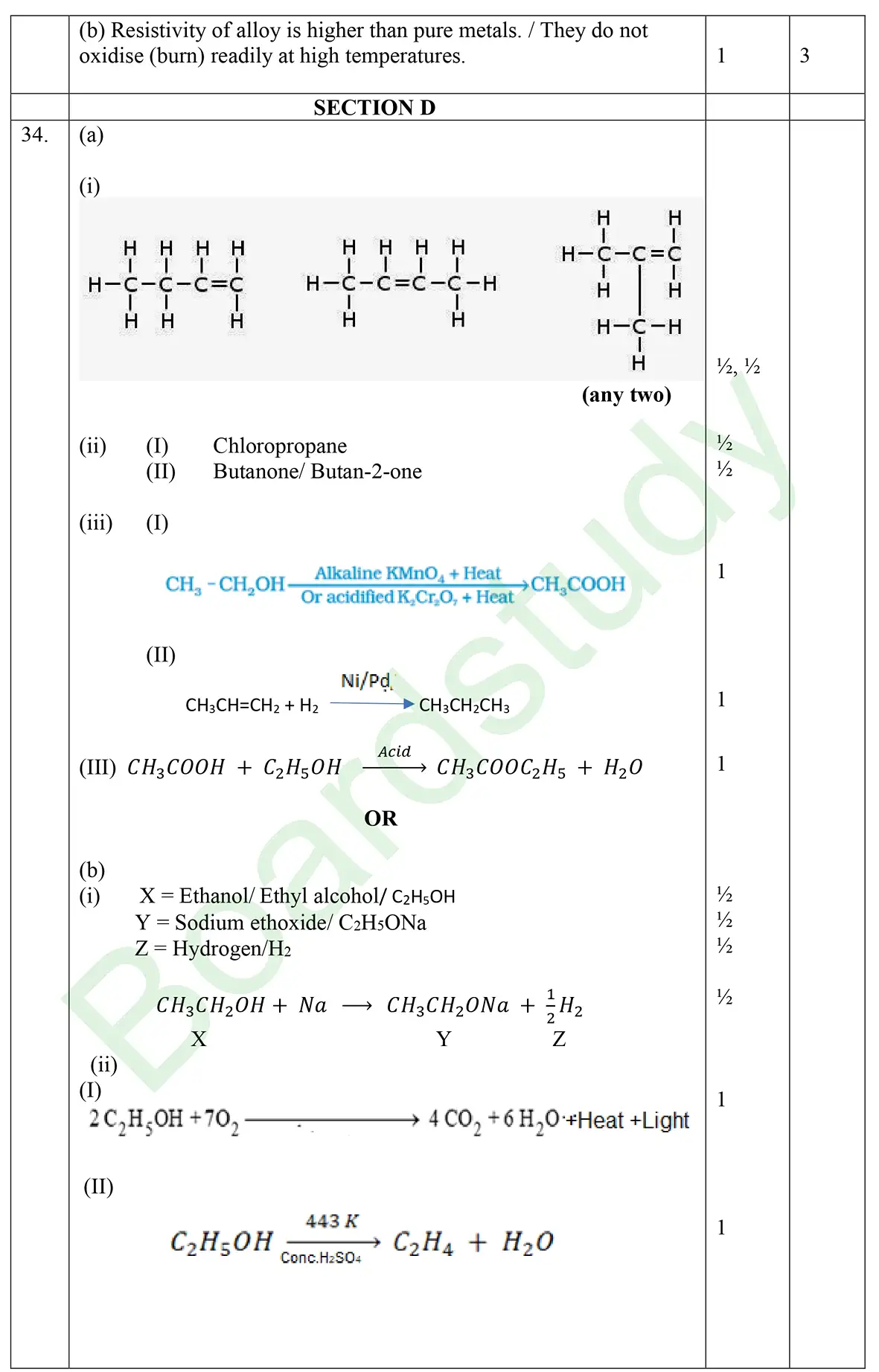
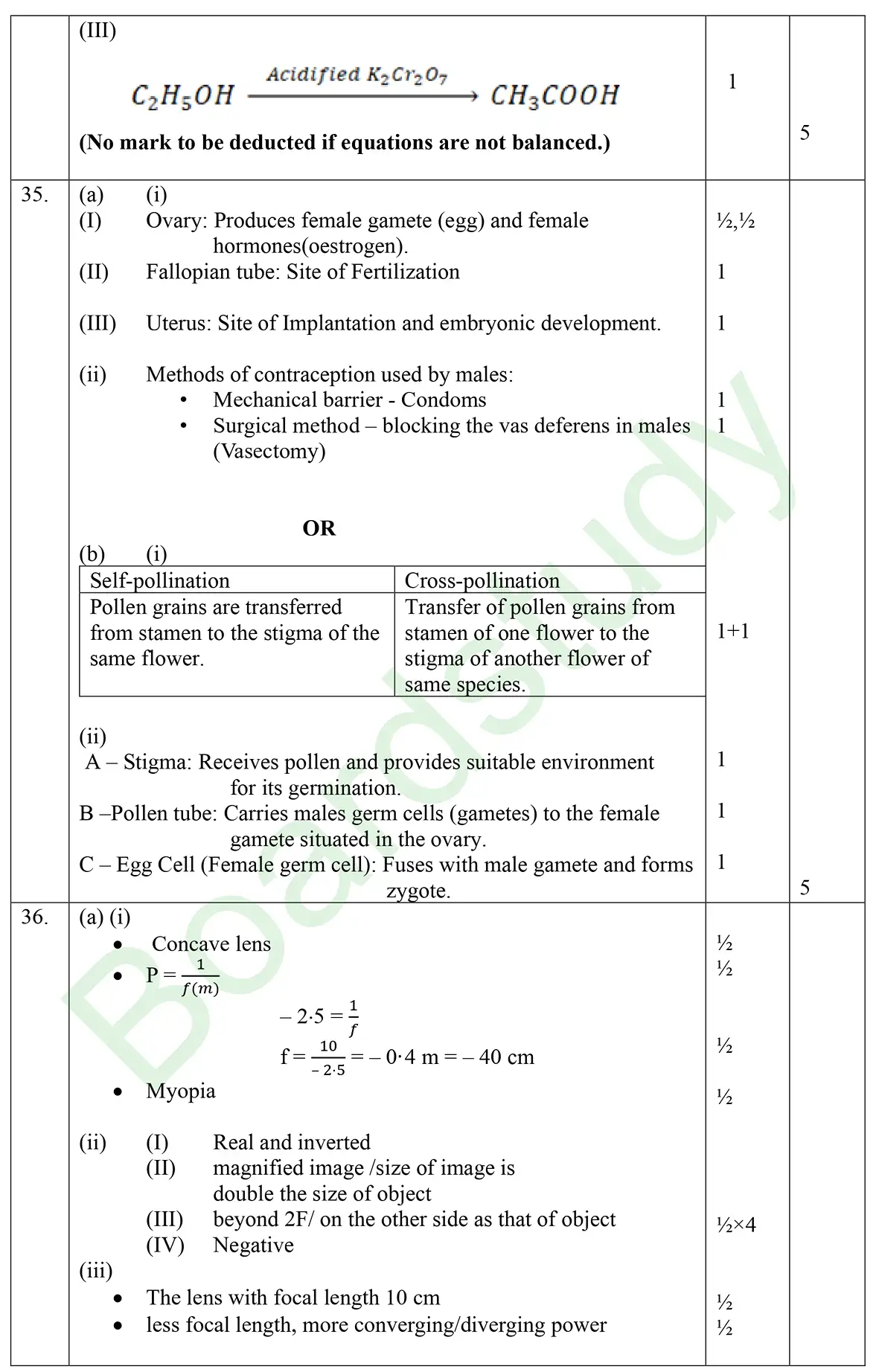
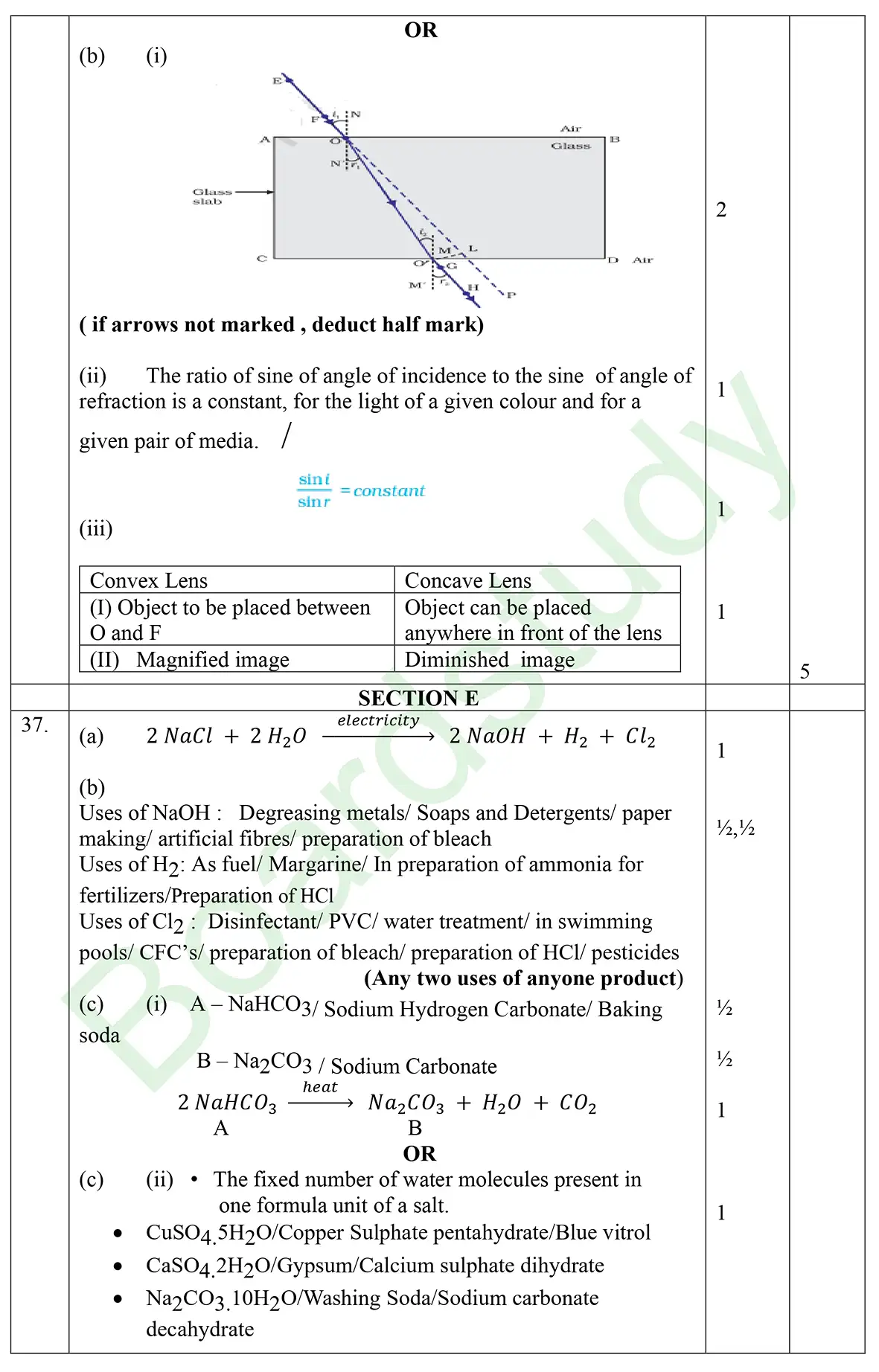
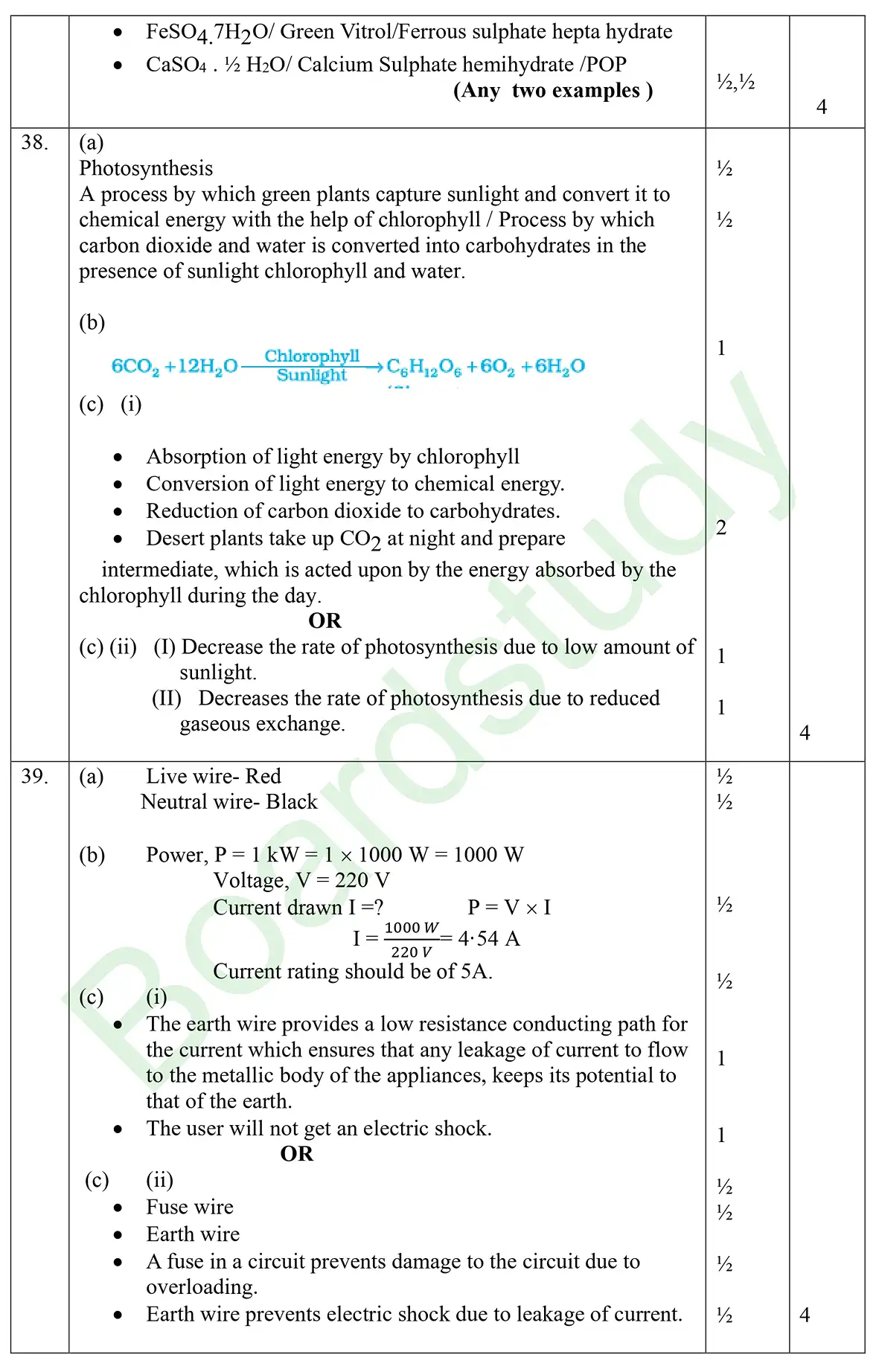
CBSE Class 10 Science PYQ 2025 SET 2 Question
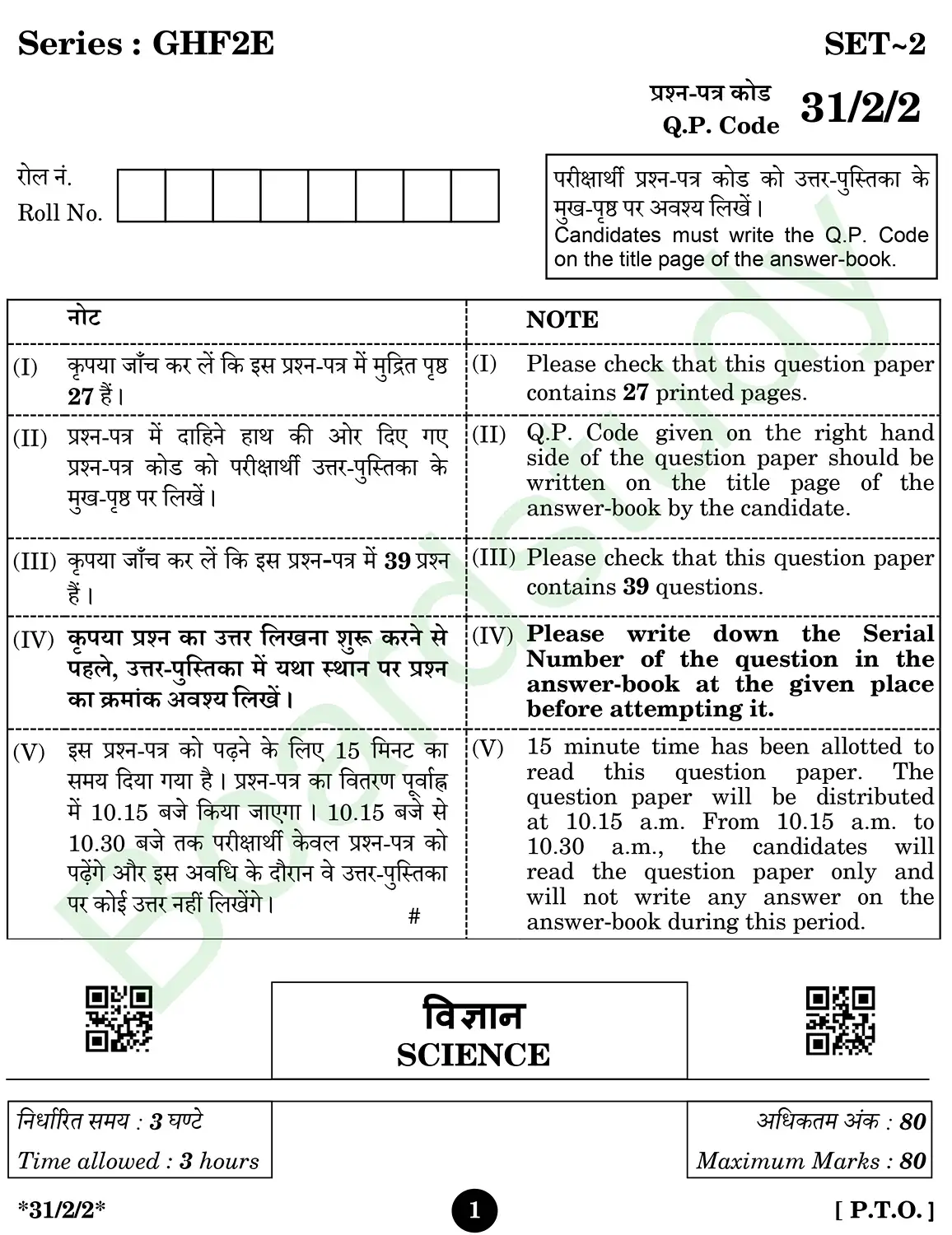
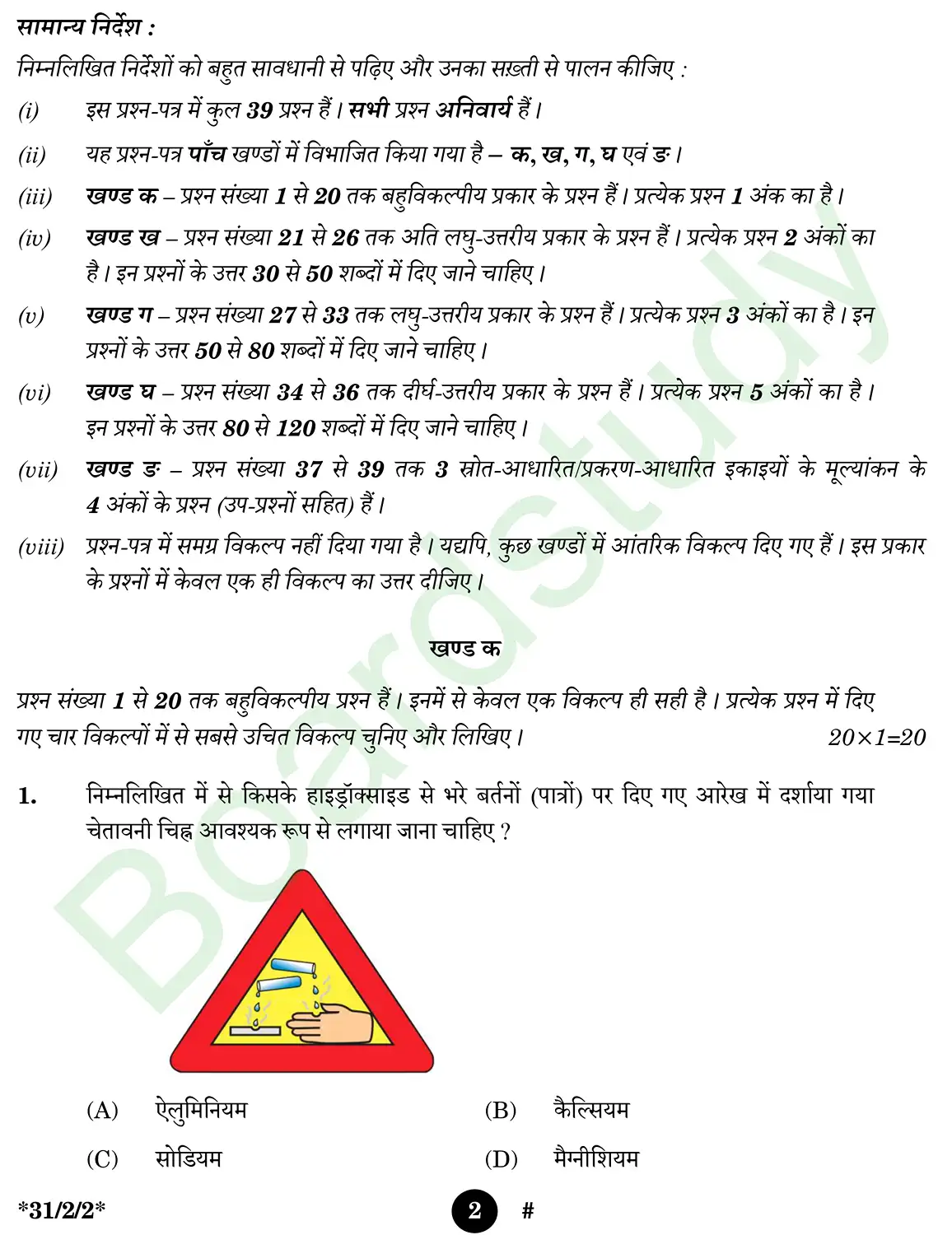
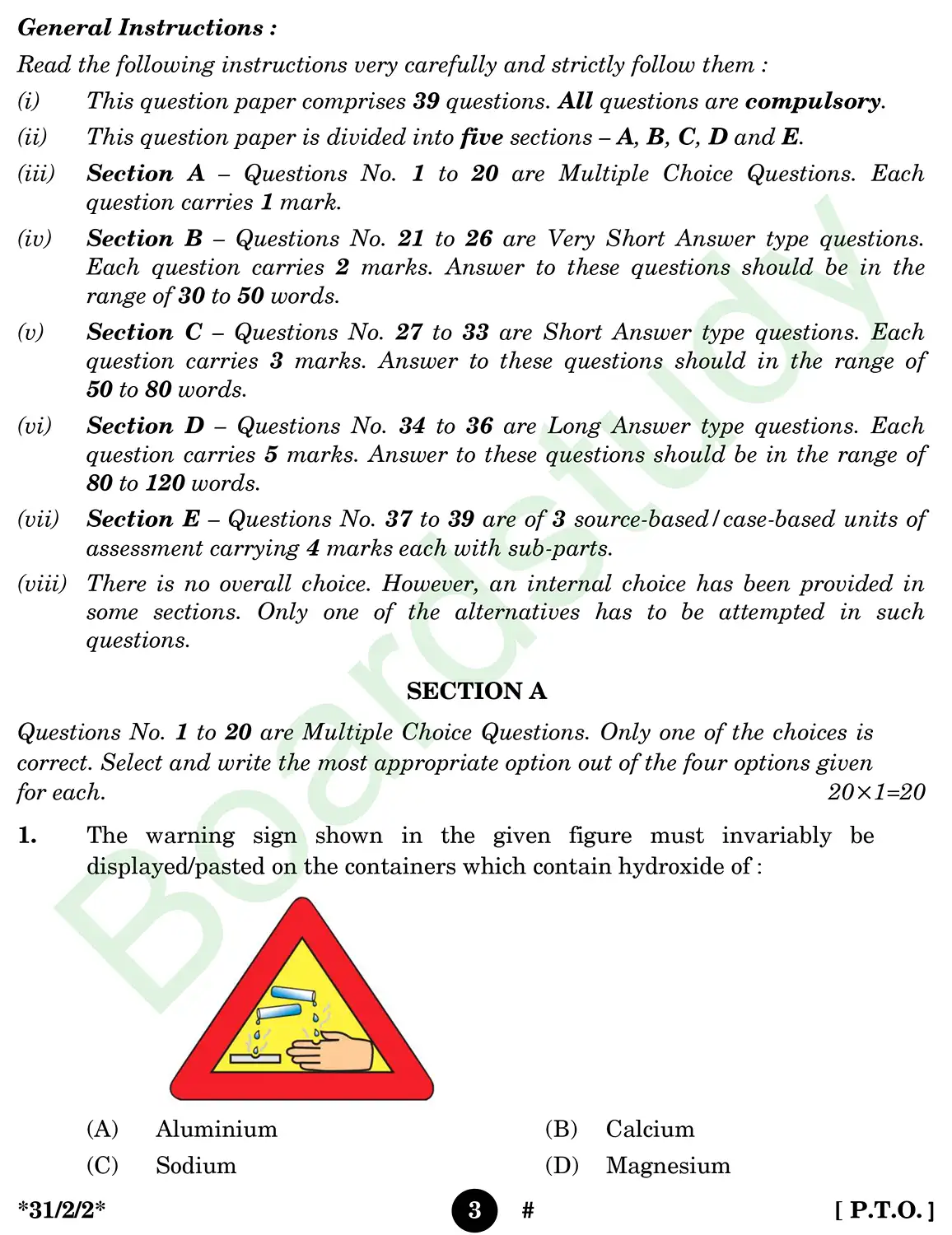
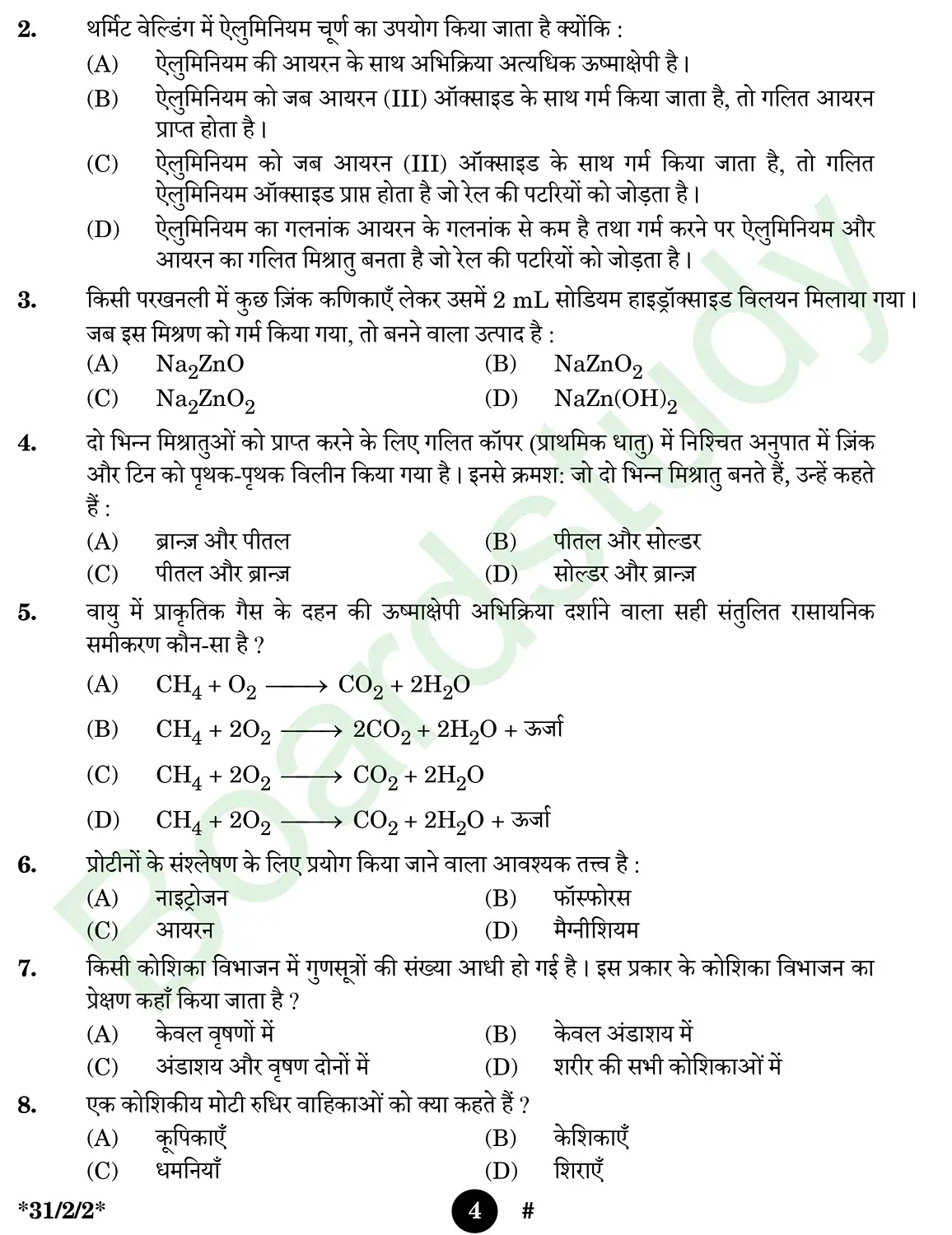
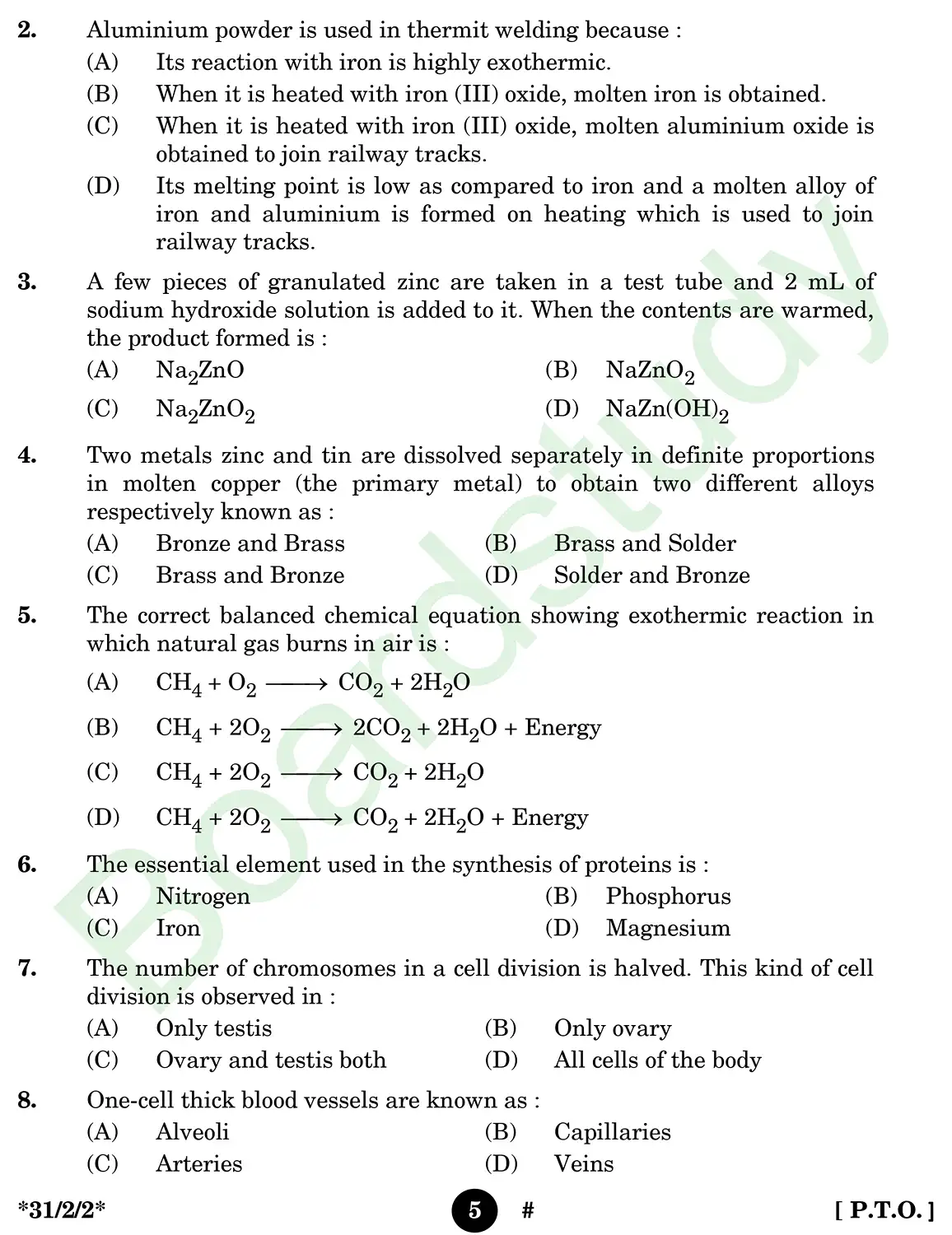
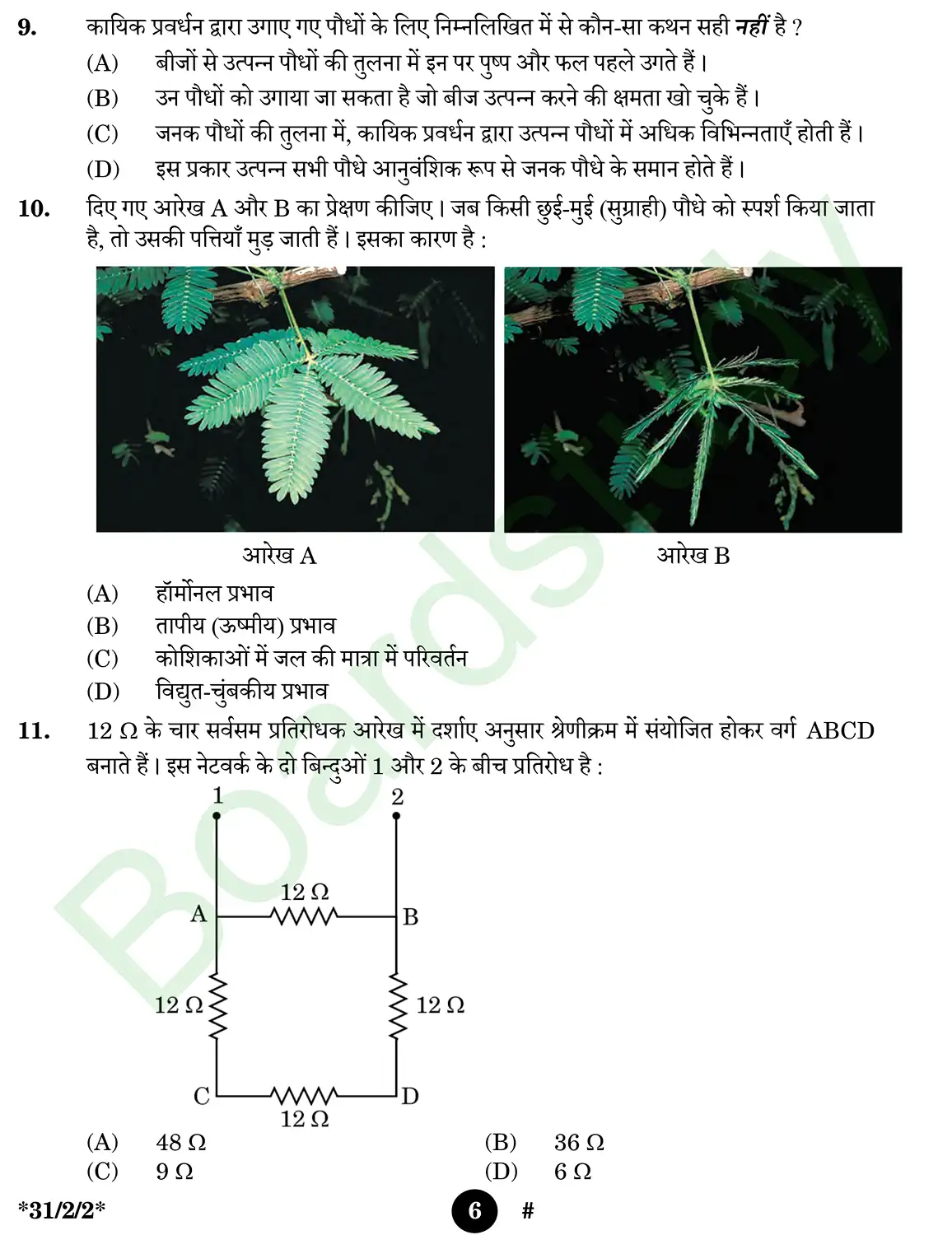
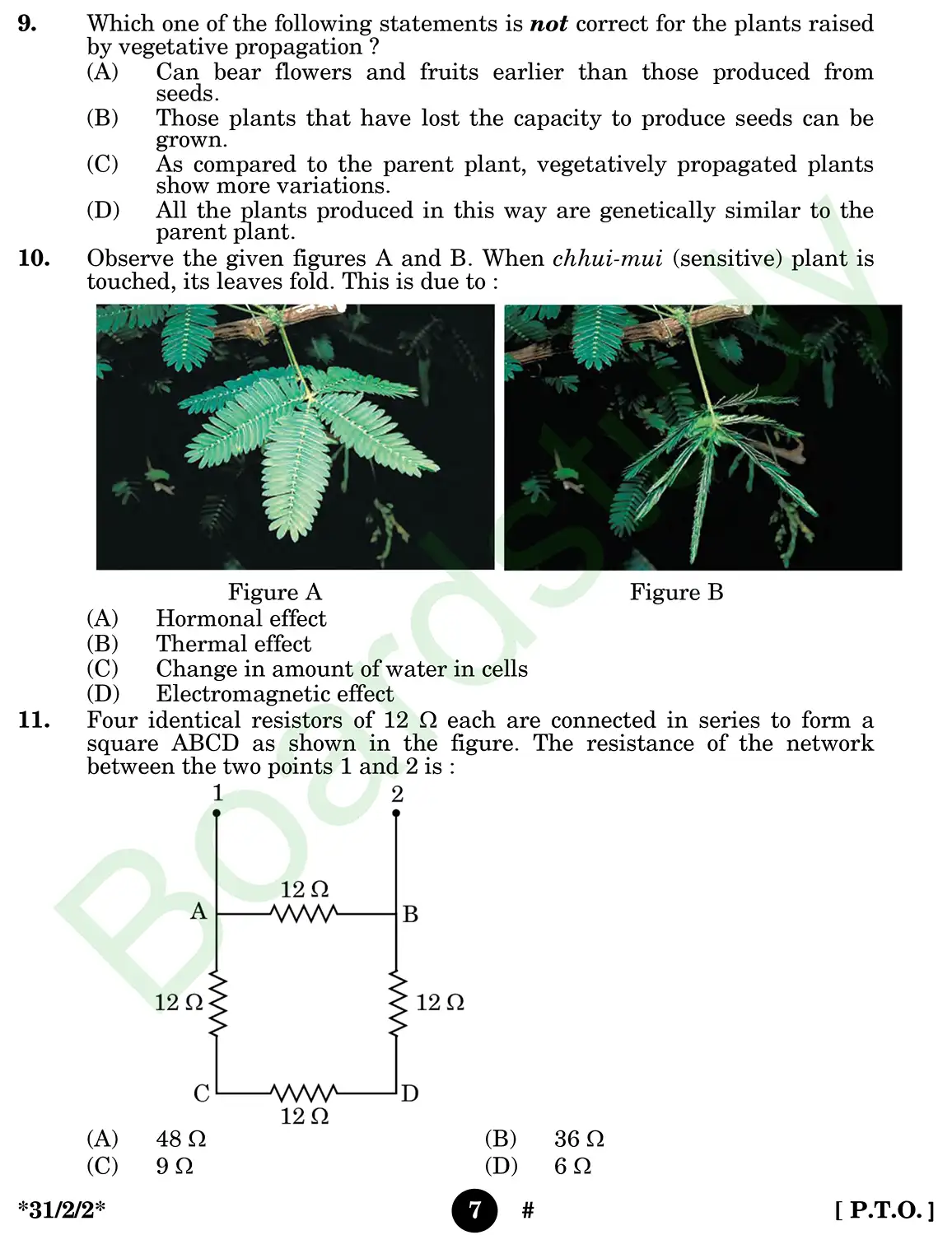
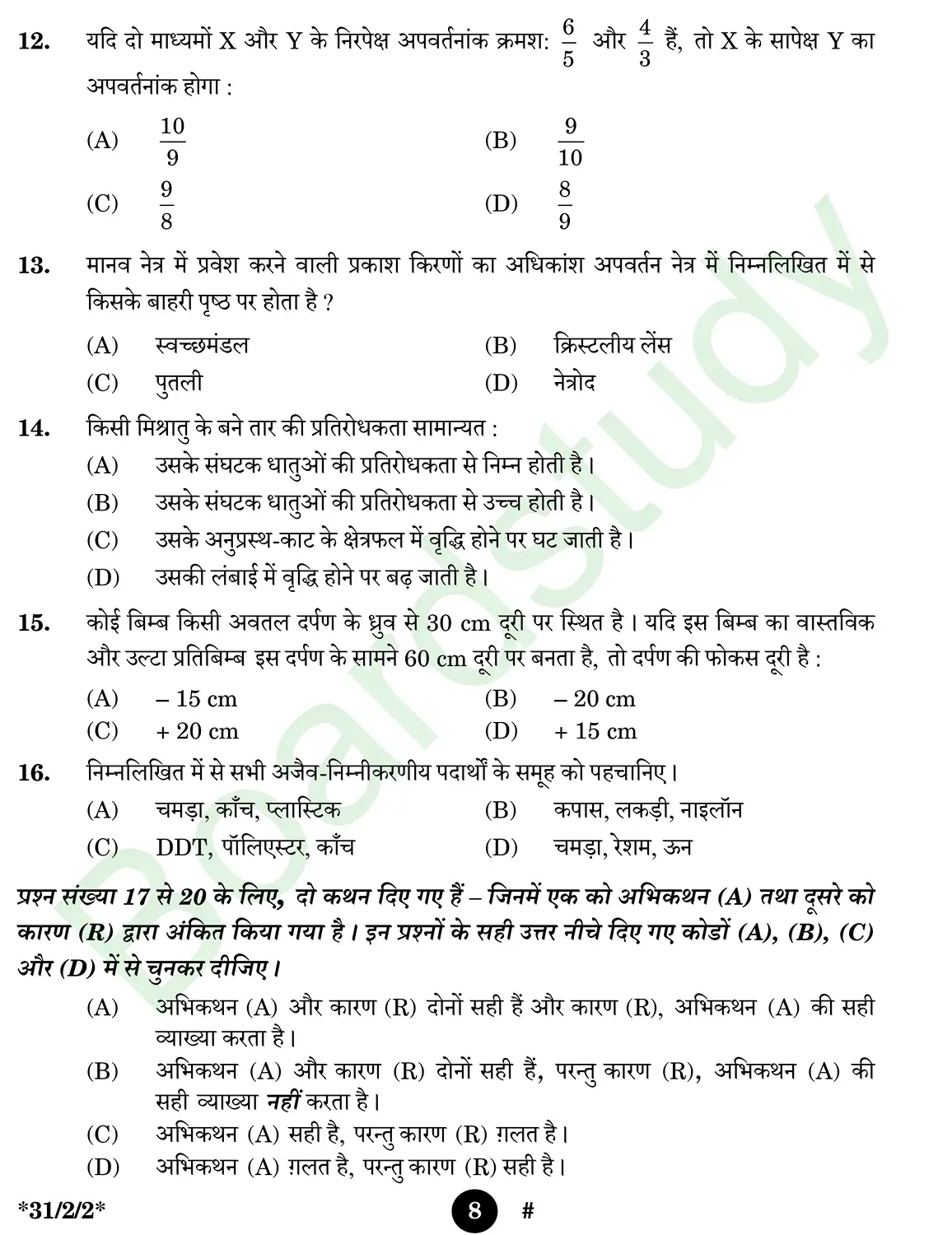
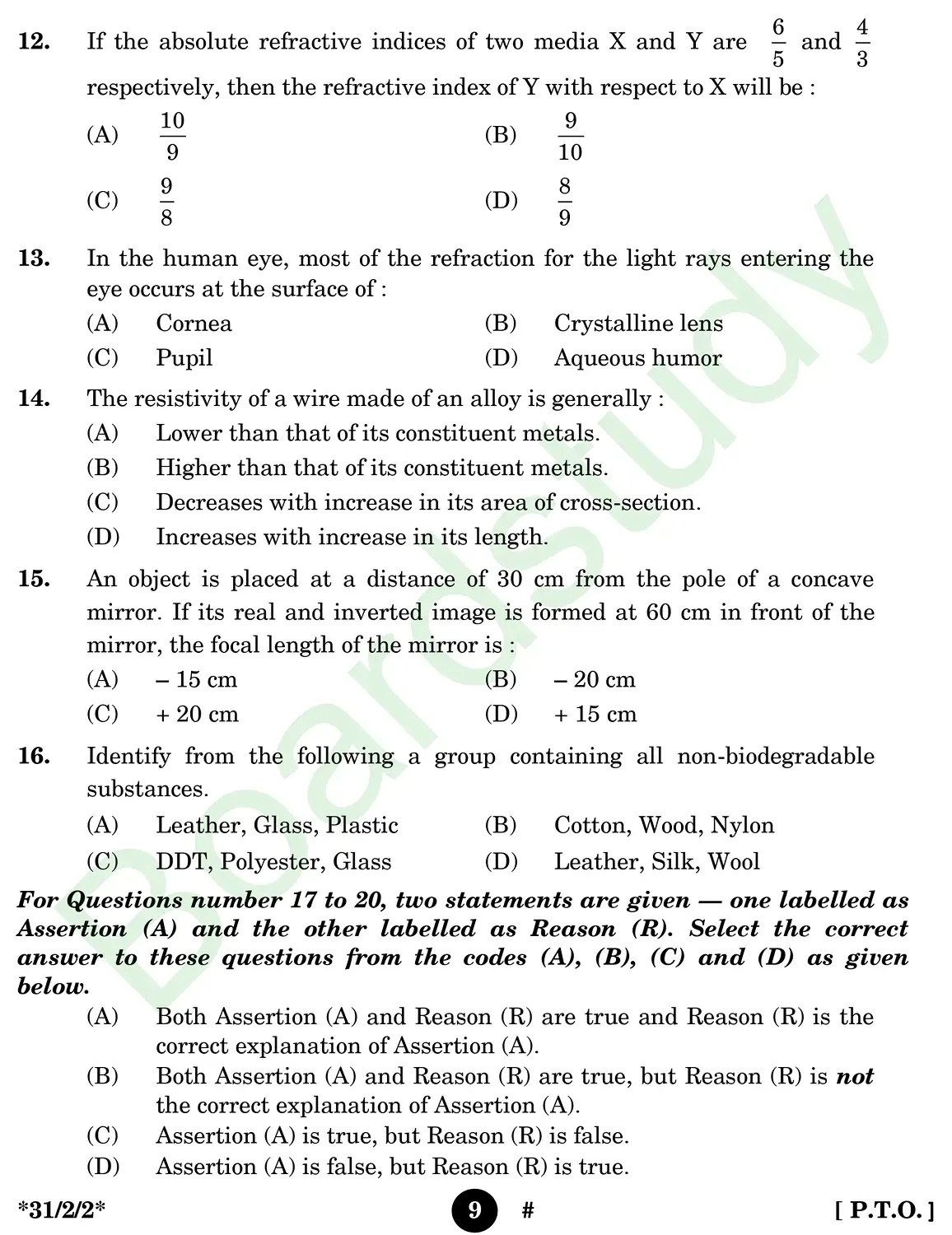
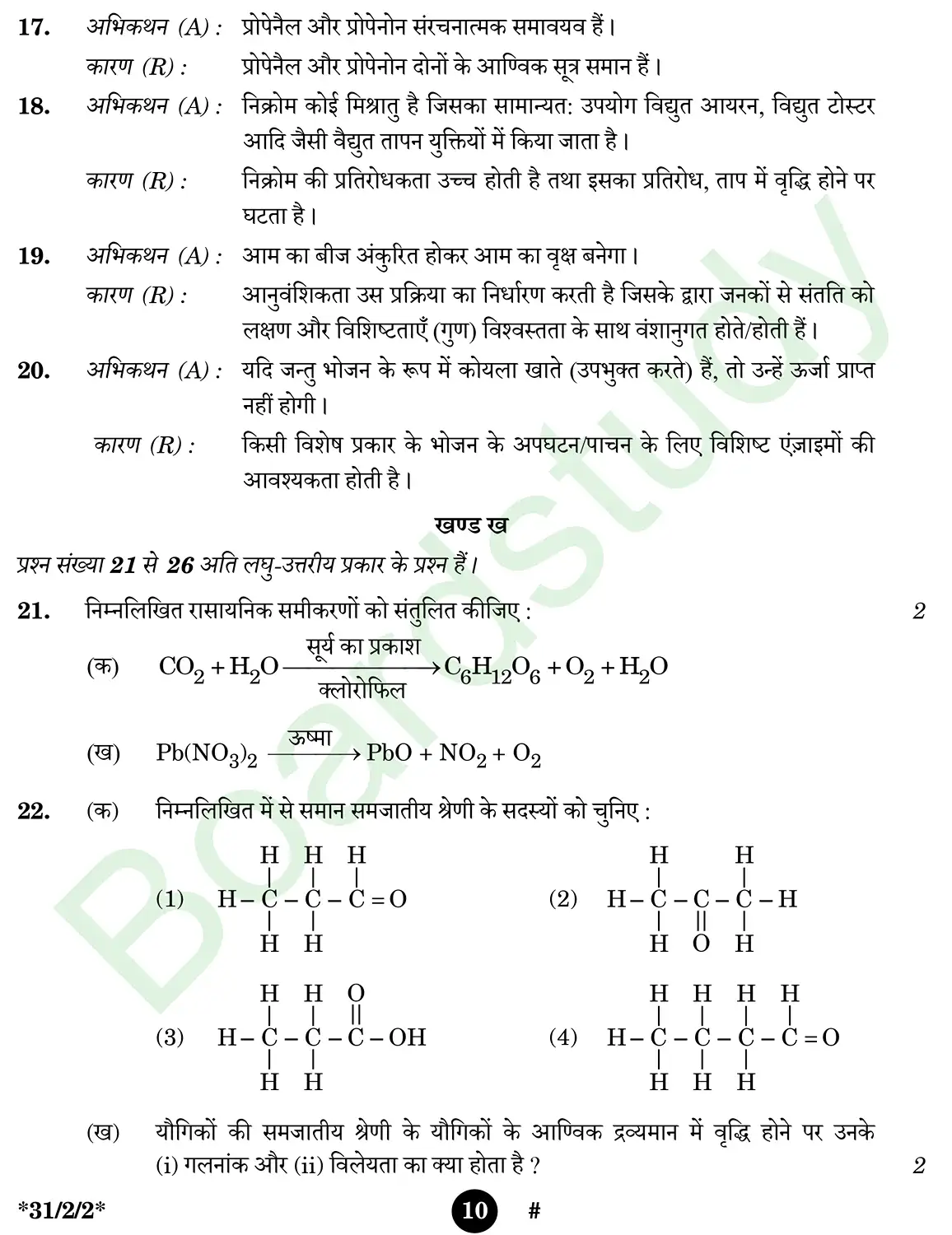
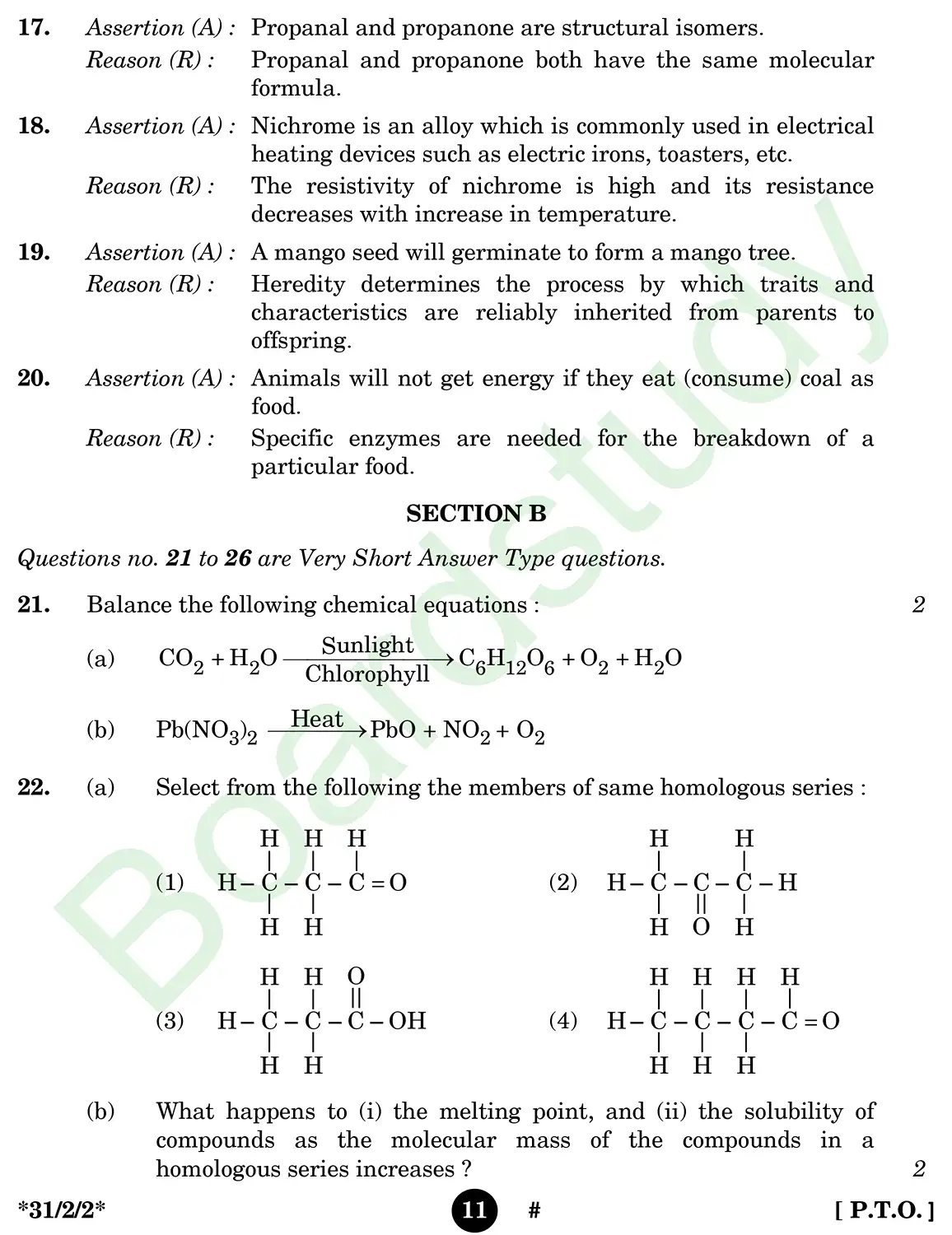
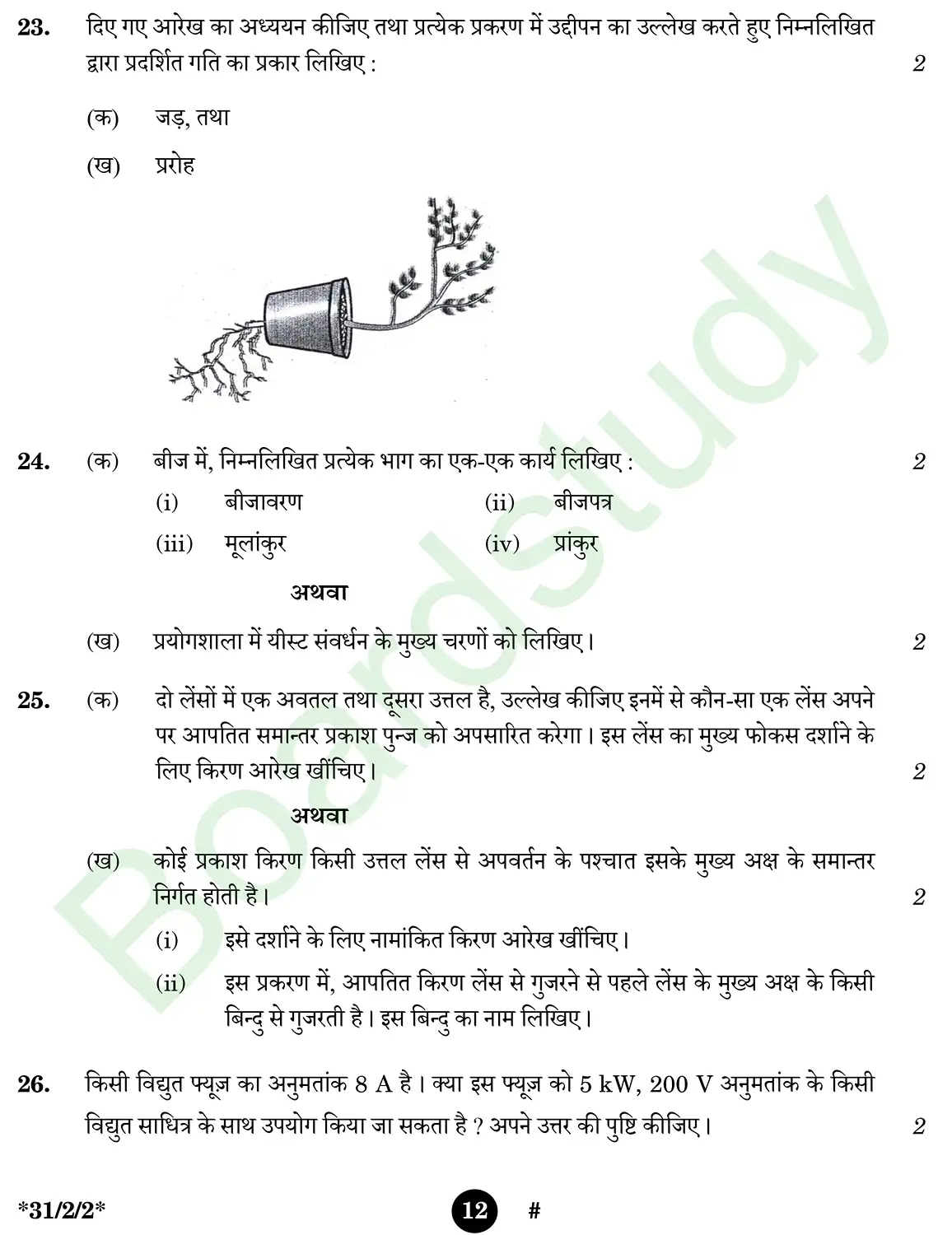
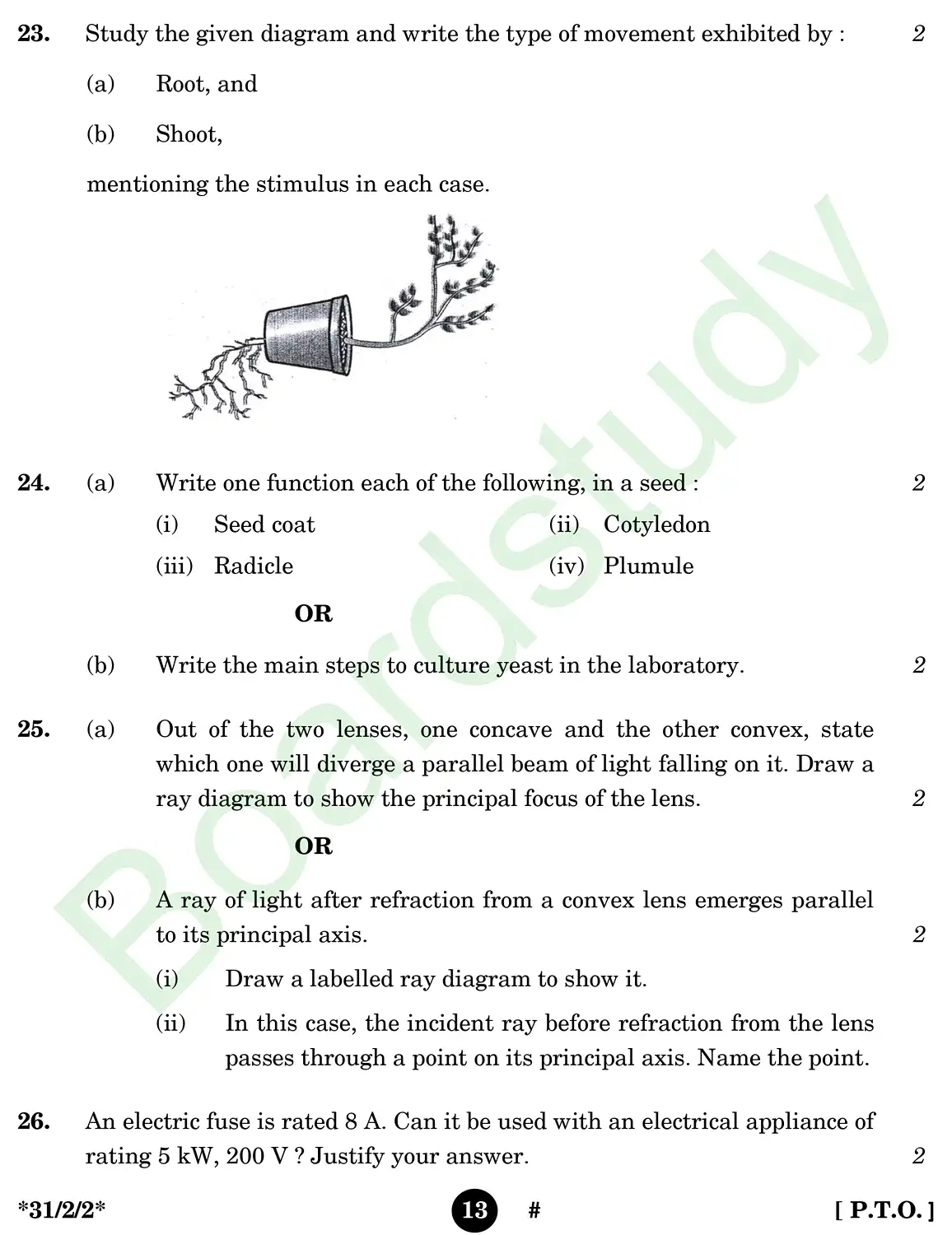
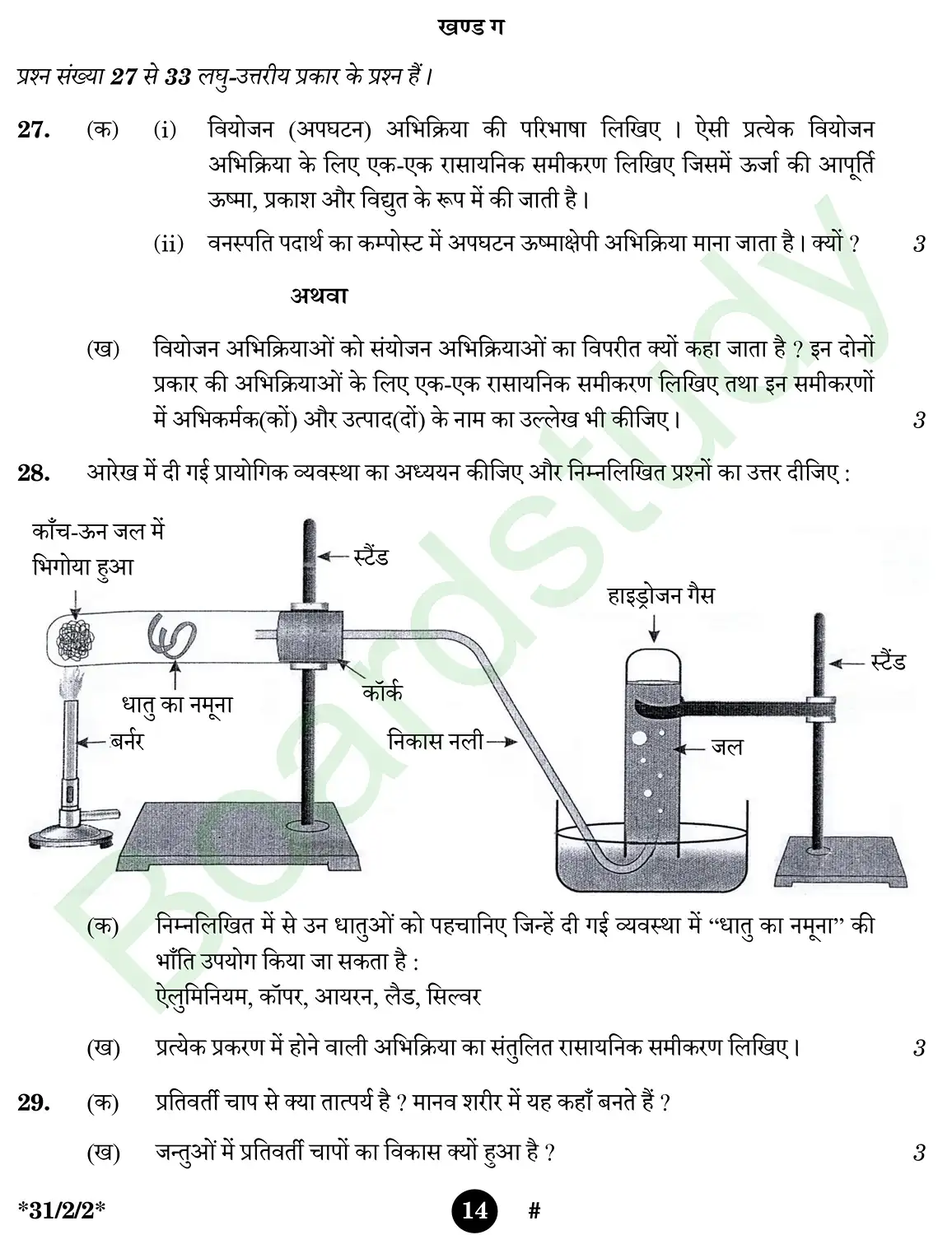
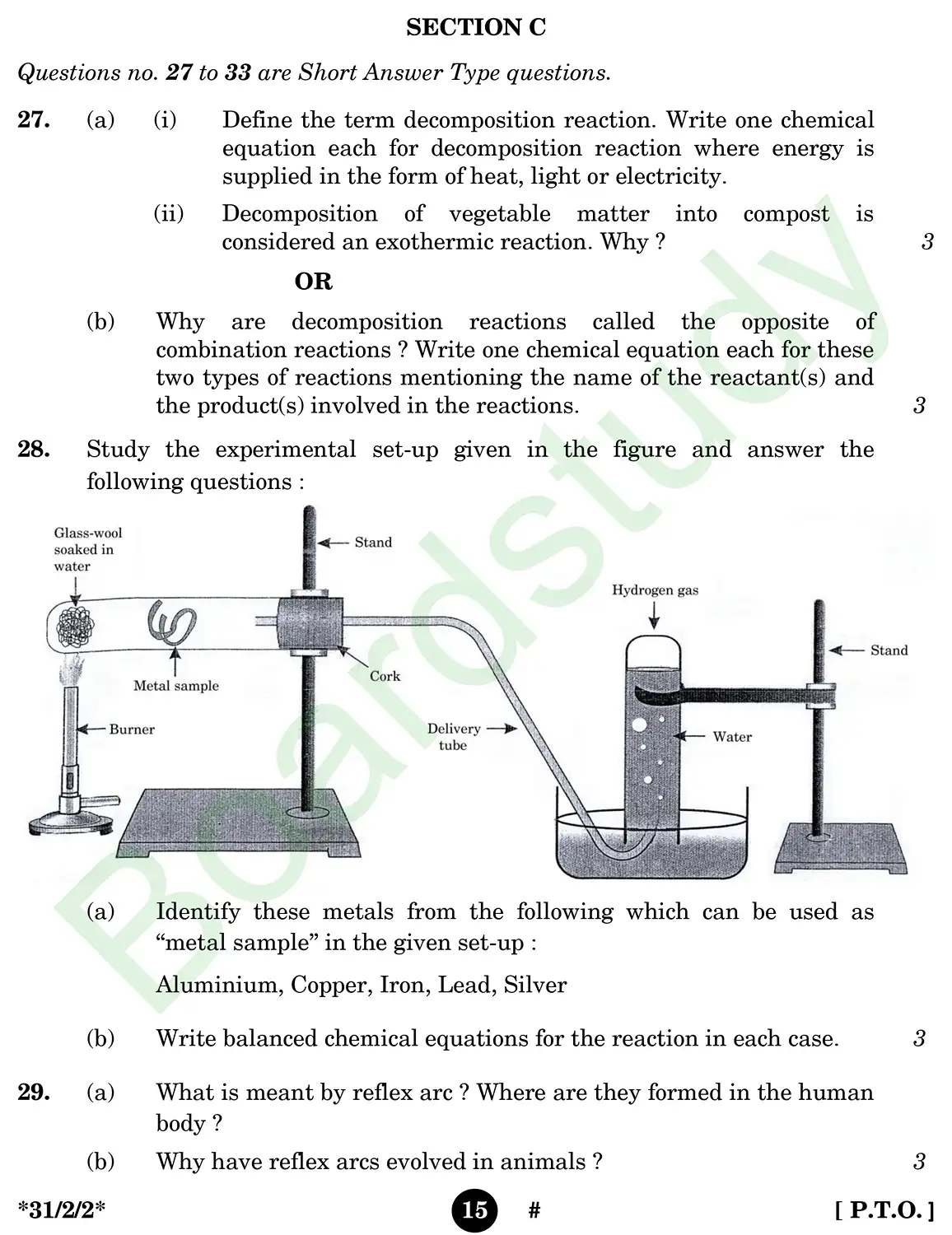
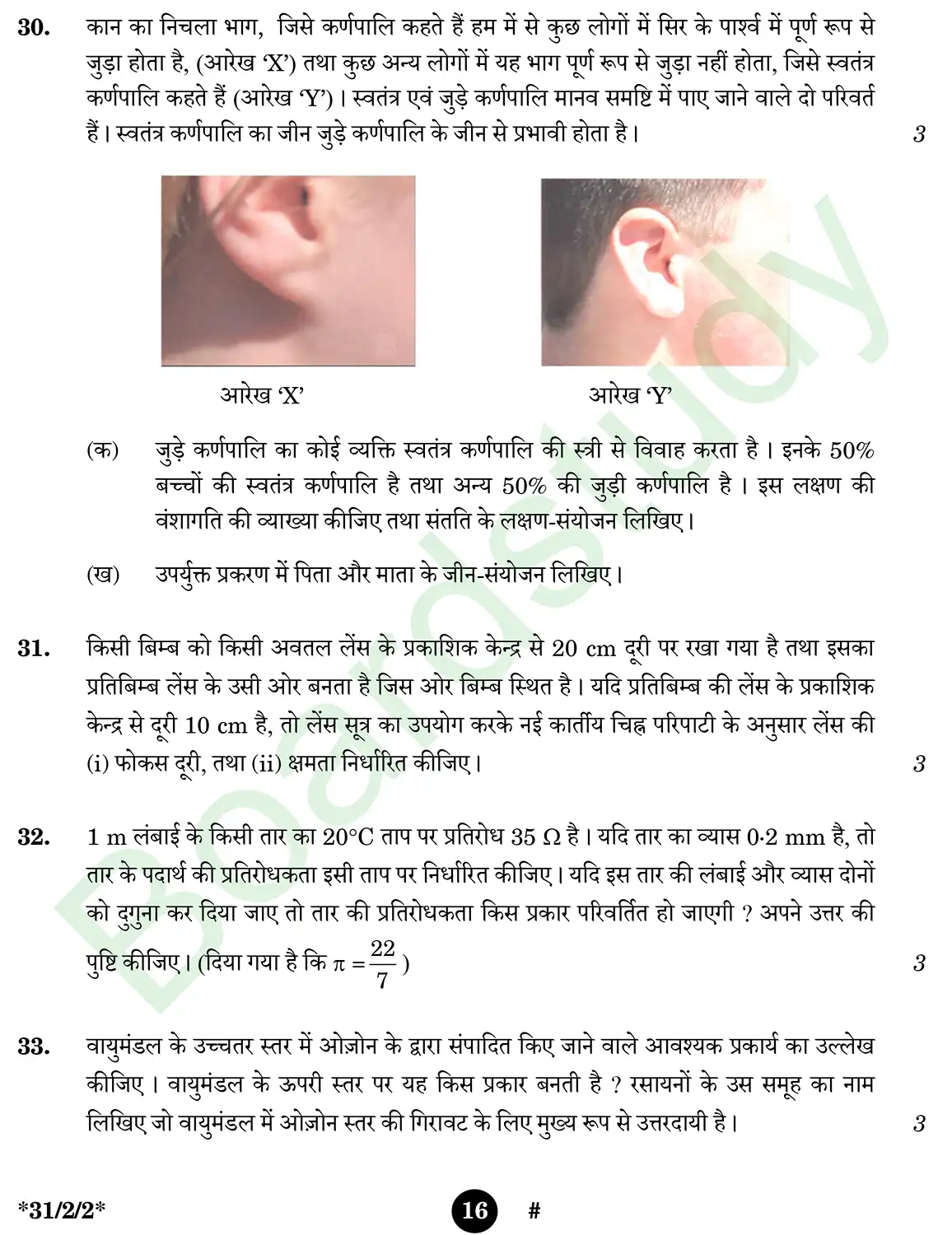
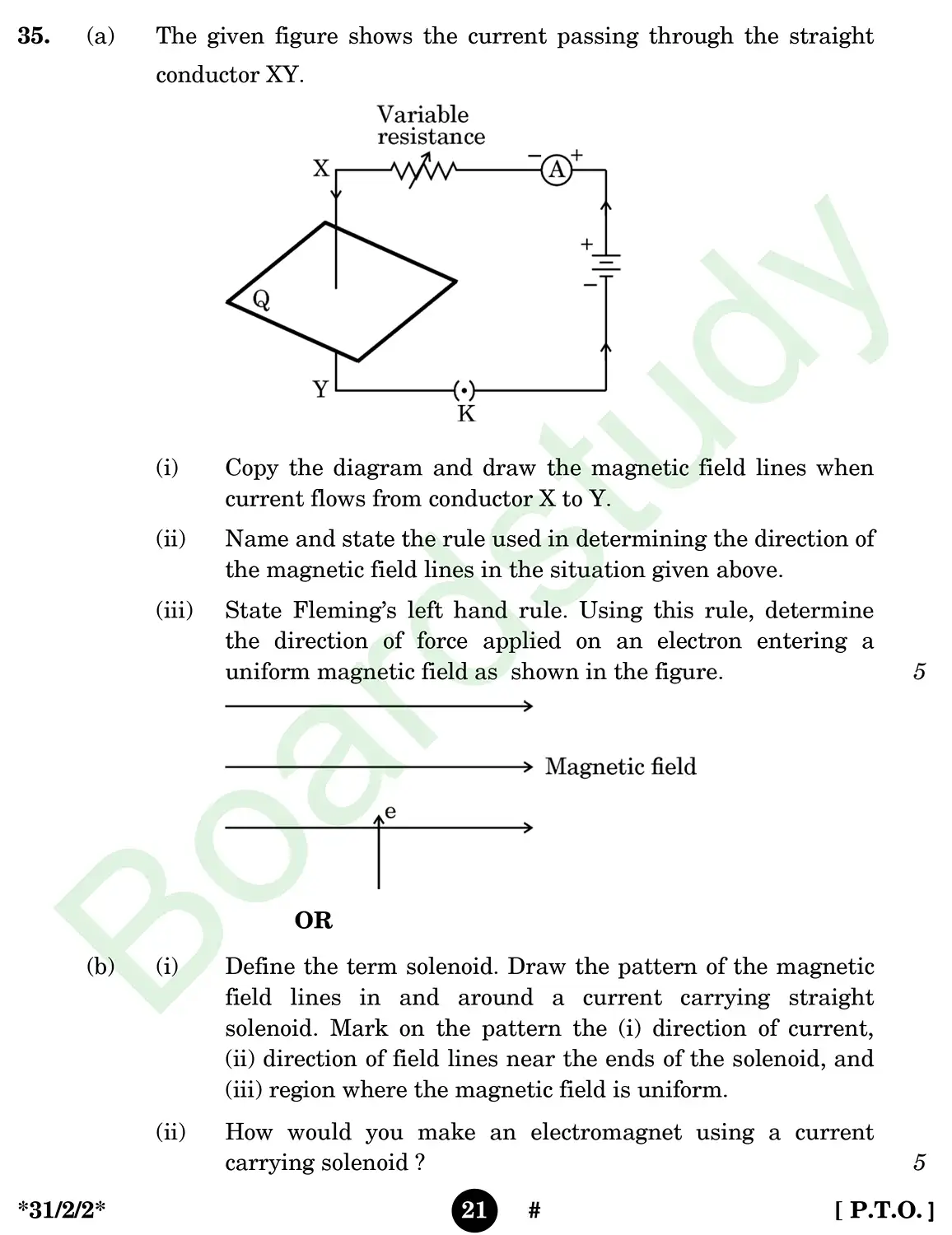
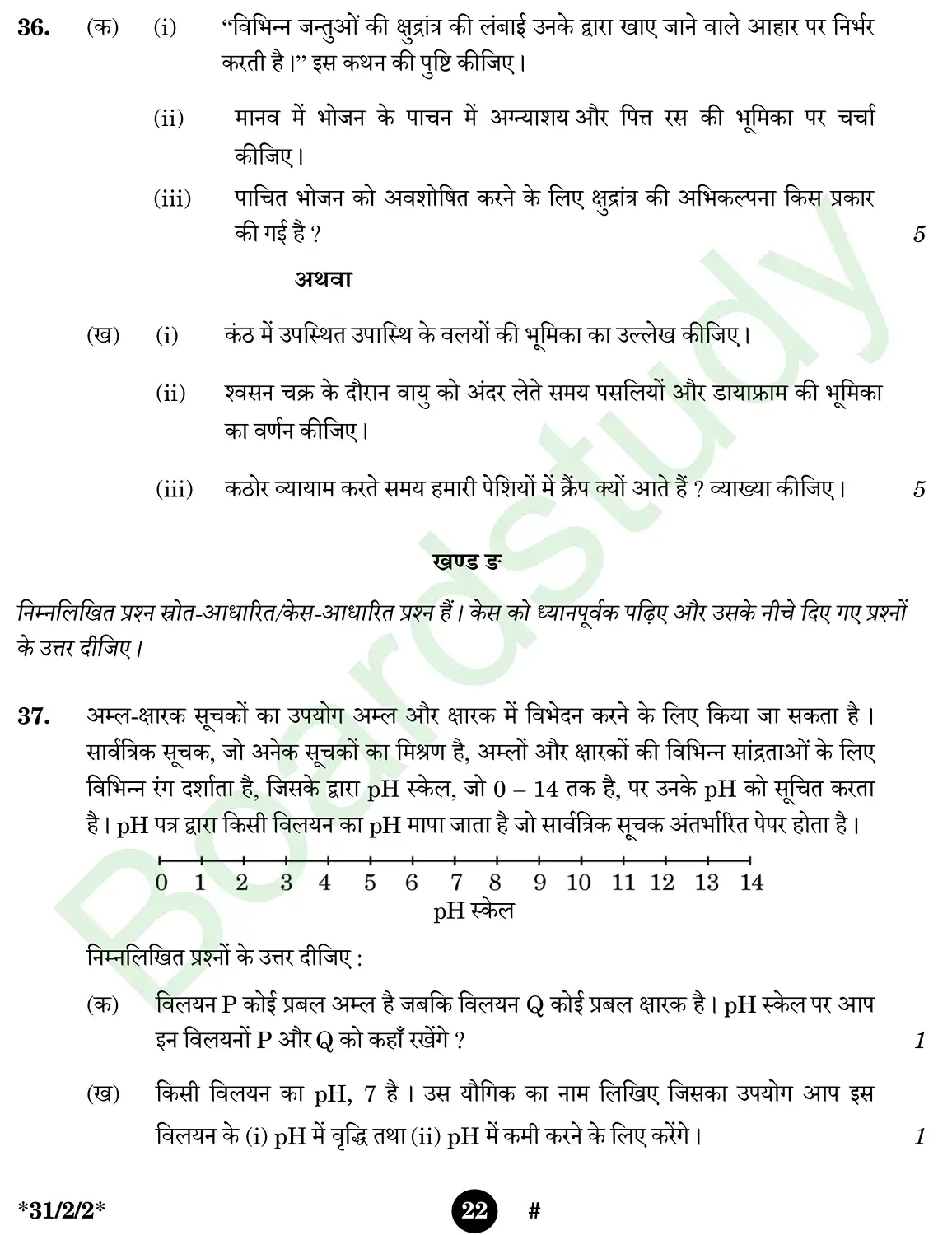
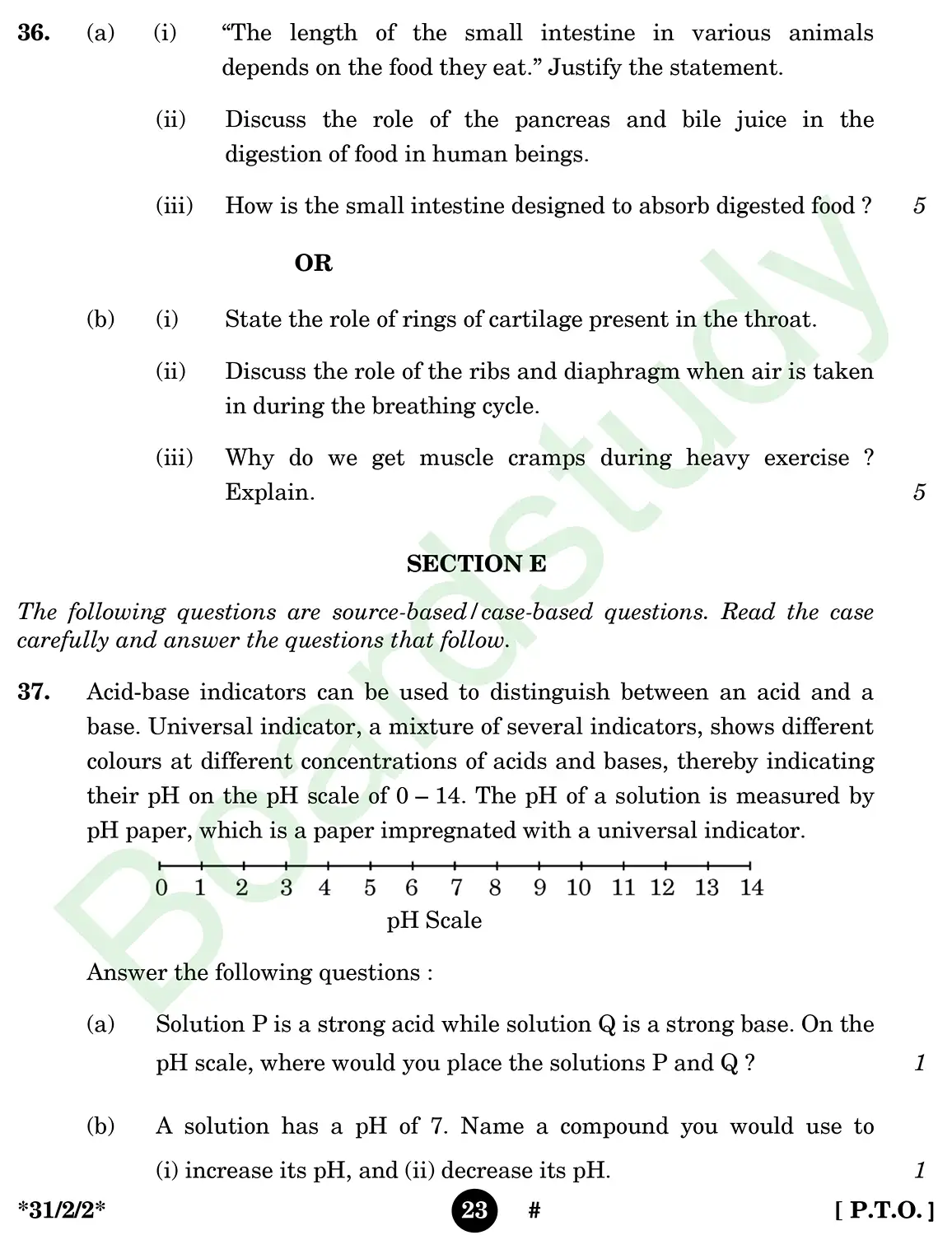
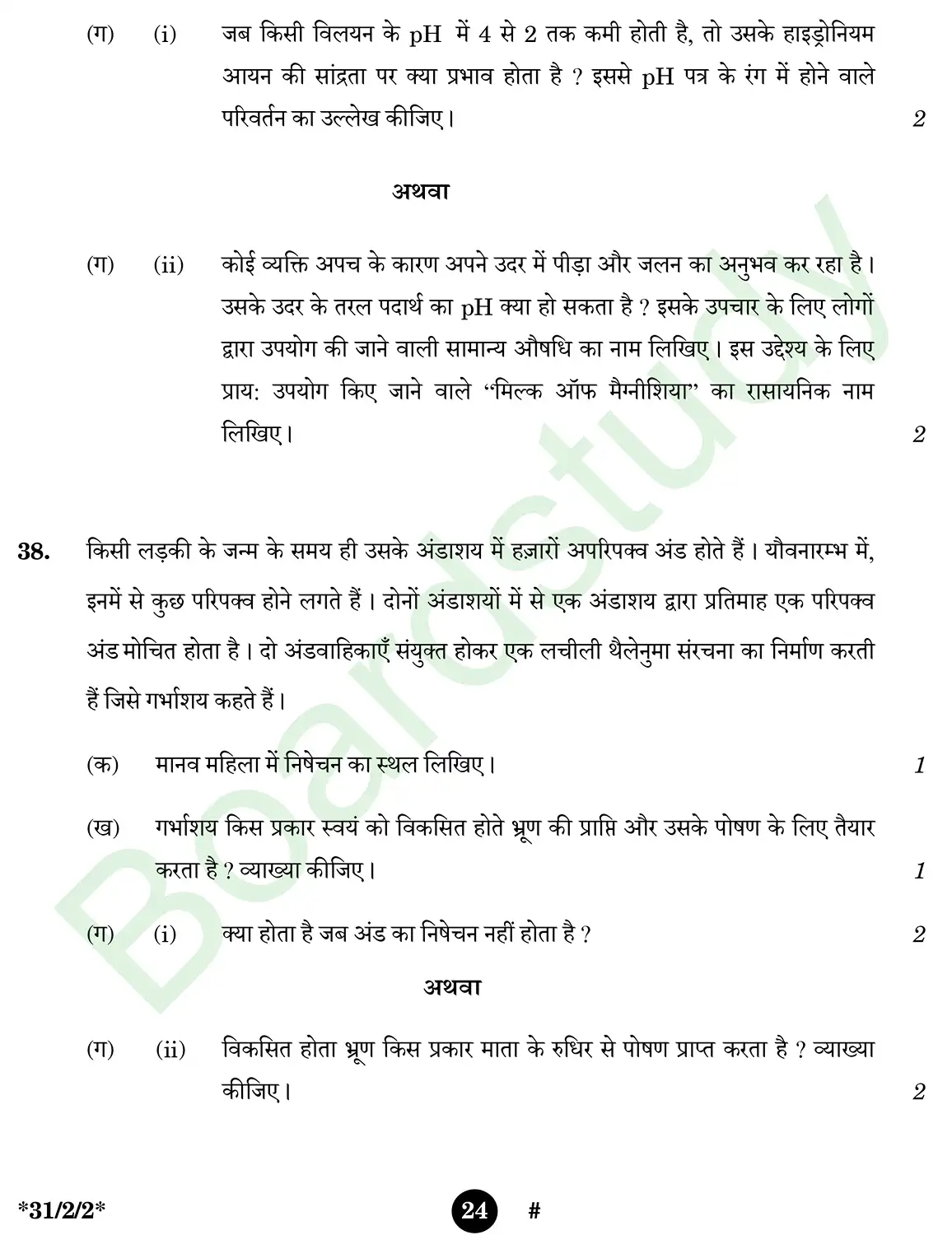
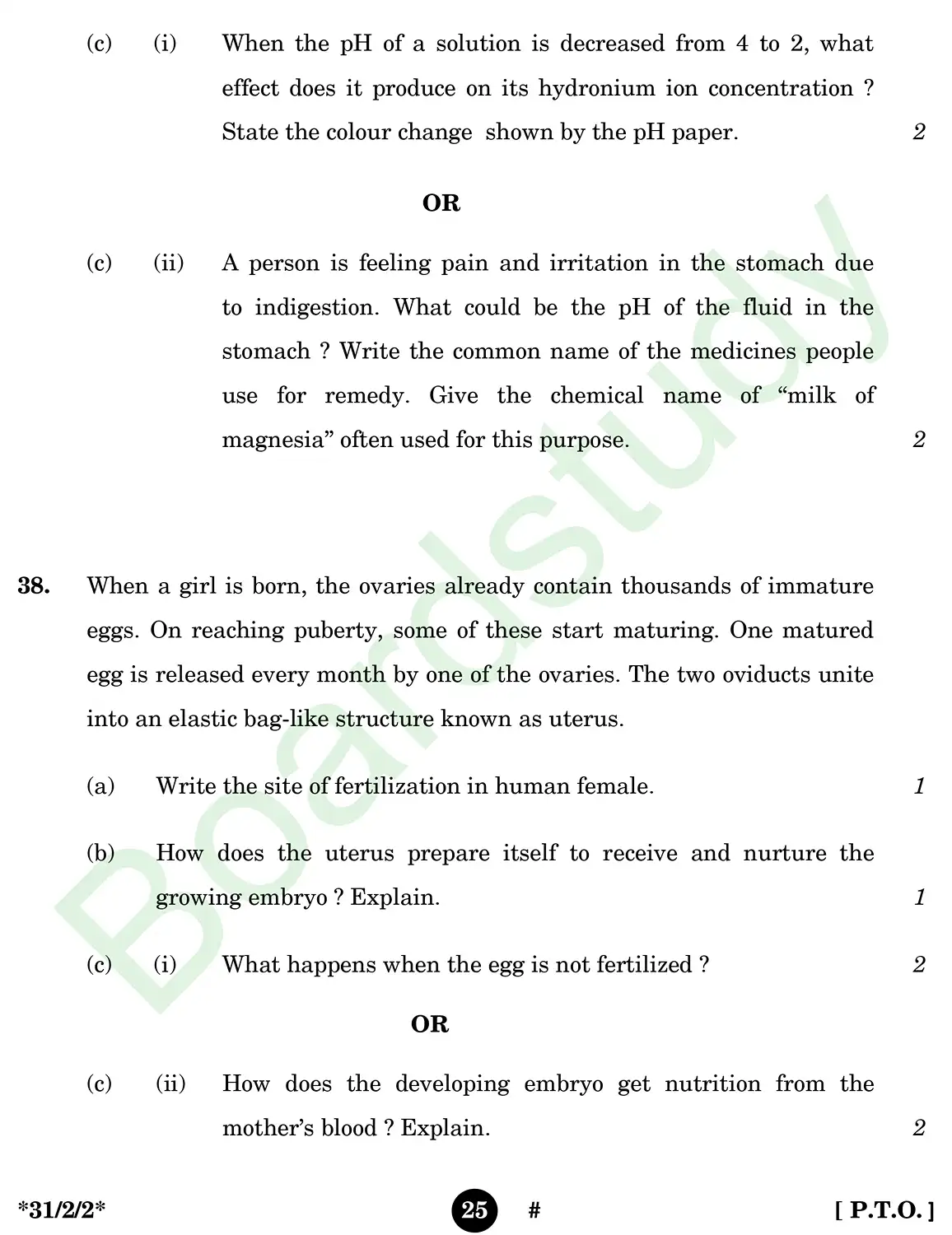
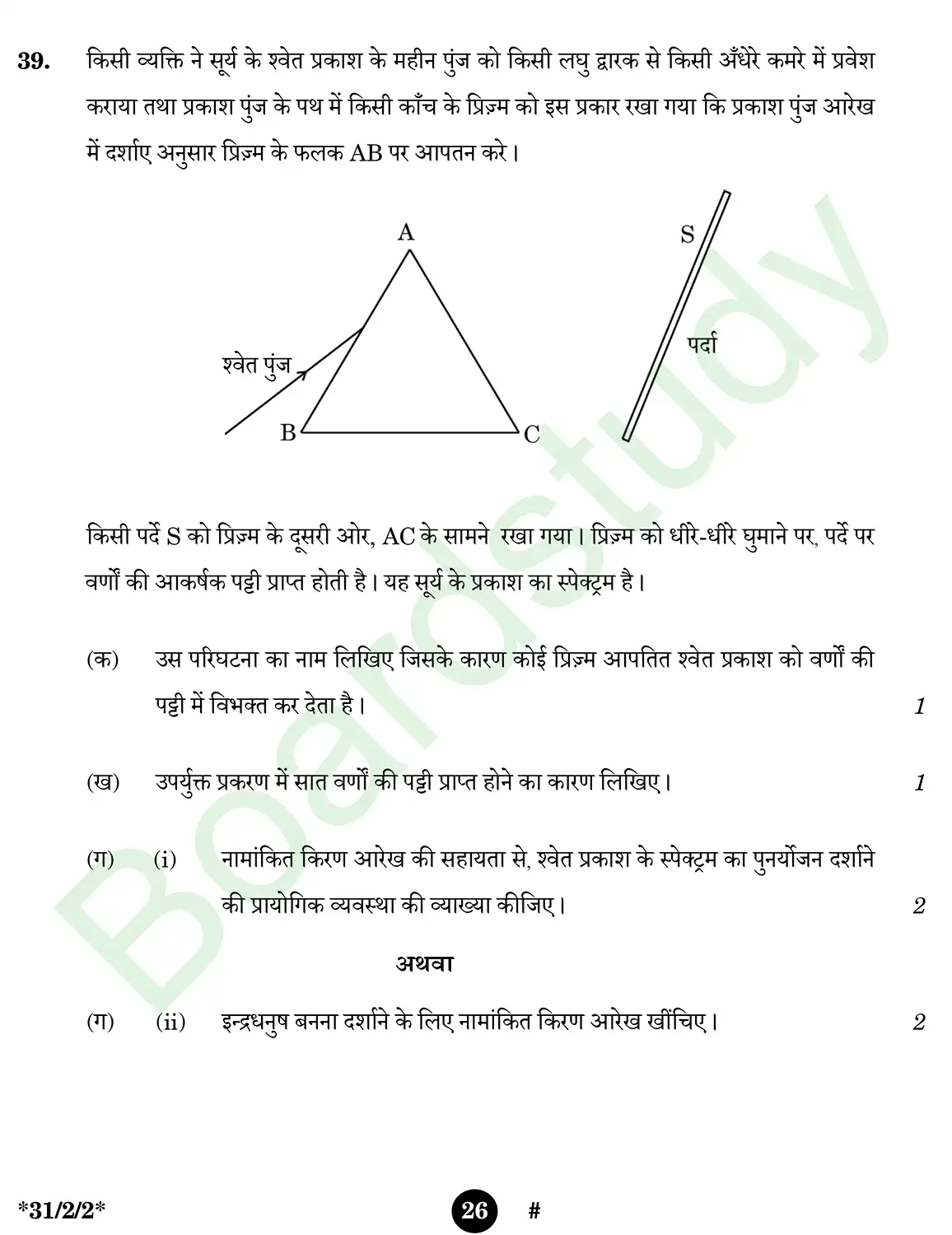
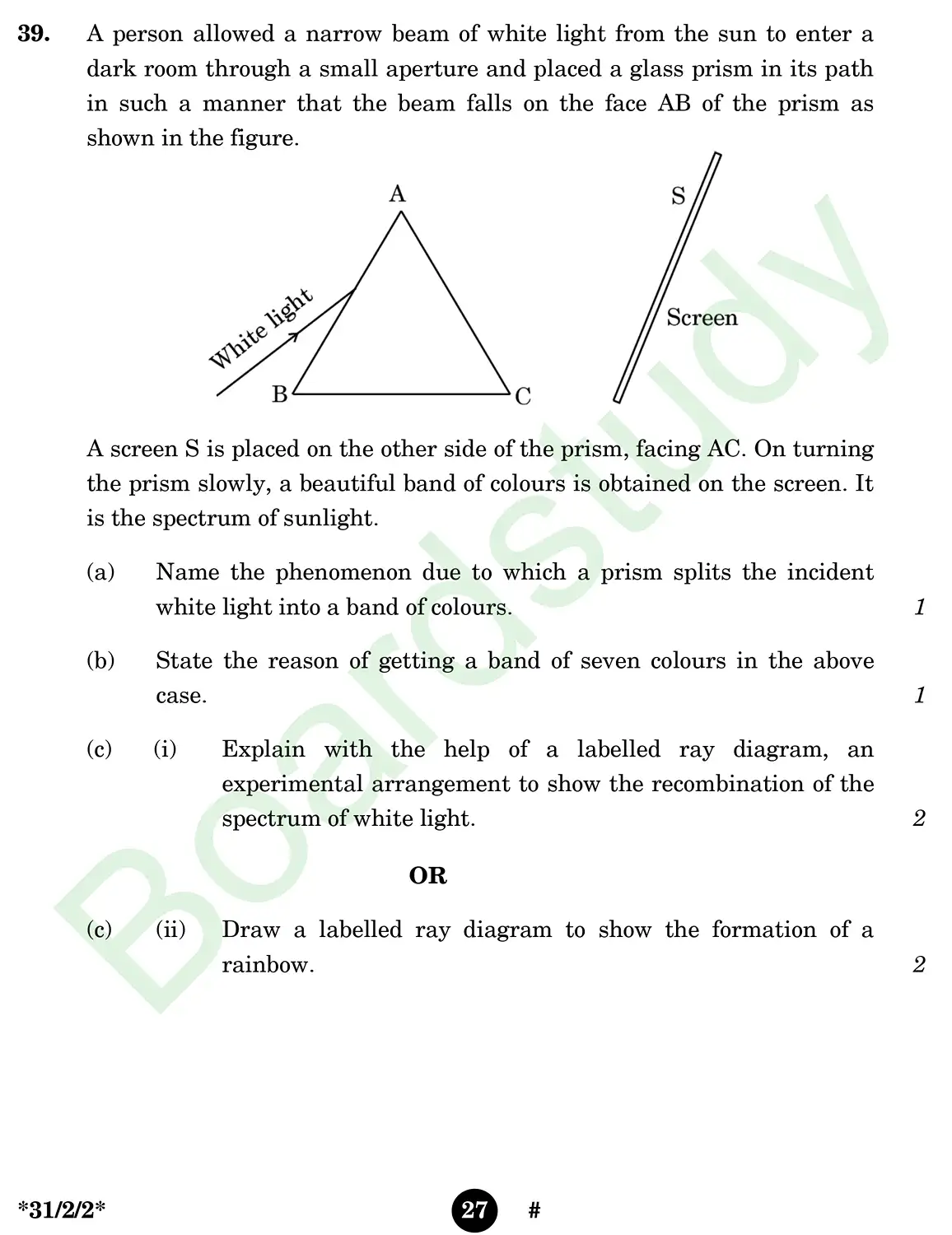
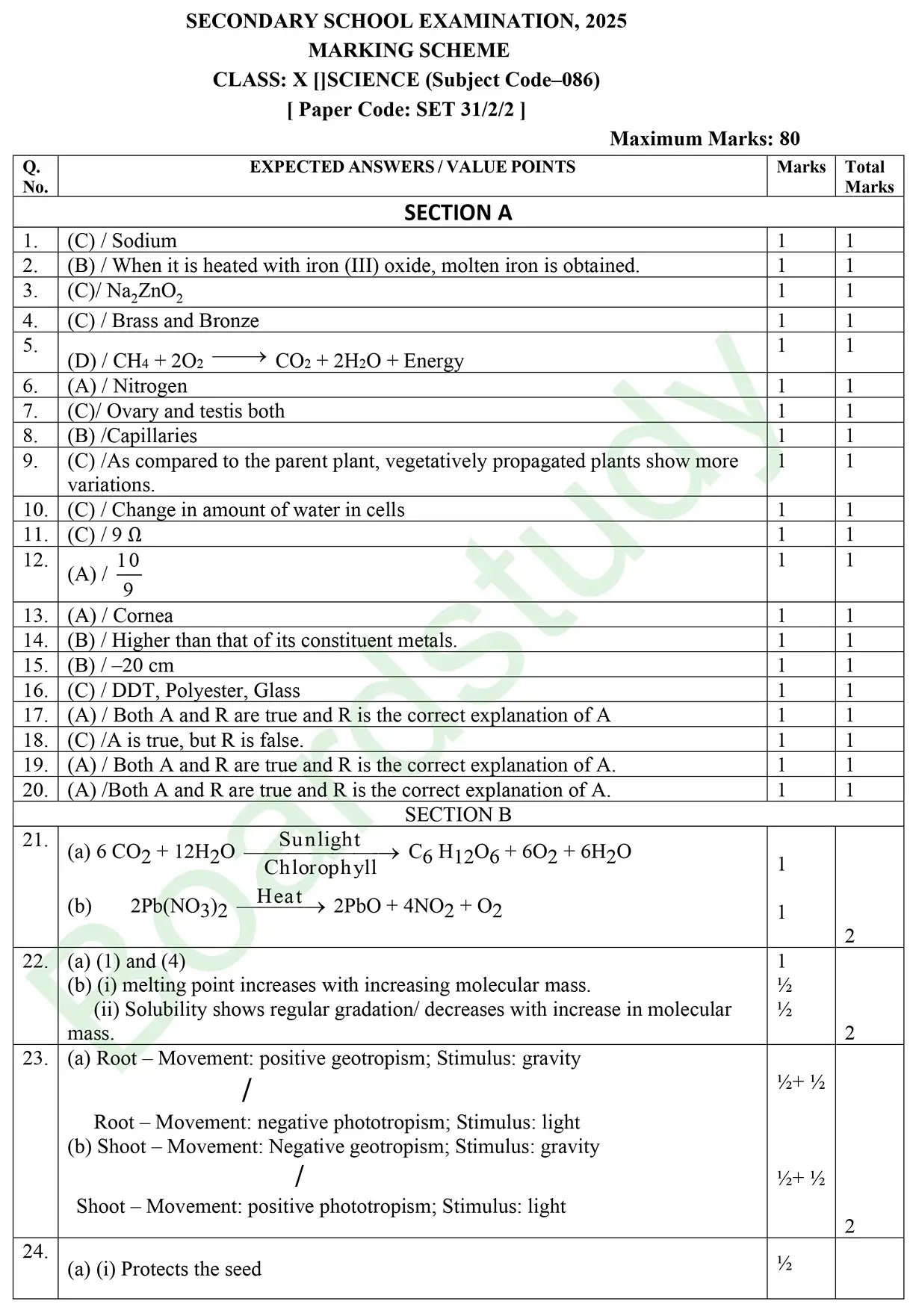
CBSE Class 10 Science PYQ 2025 SET 2 Solution
CBSE Class 10 Science PYQ 2019
CBSE Class 10 Science PYQ 2026
Students can also find class 10 Science handwritten notes on our website. These handwritten notes are prepared by experts teacher and topper’s students. At the time of solving these PYQ students should teat it as a real board paper and should solve accordingly.
Important Question of CBSE Class 10 Science PYQ 2025
Question :
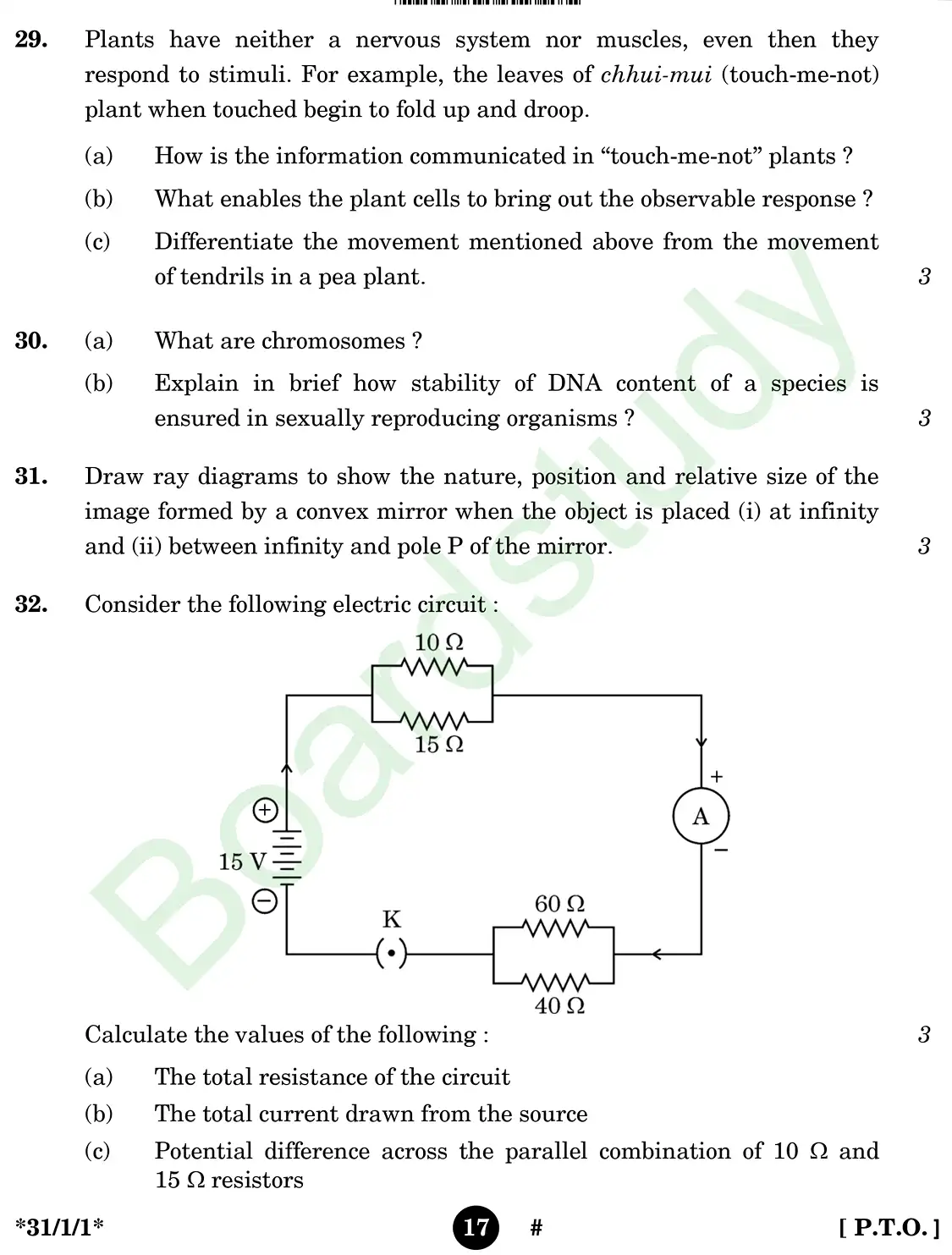
Plants have neither a nervous system nor muscles, even then they respond to stimuli. For example, the leaves of chhui-mui (touch-me-not) plant when touched begin to fold up and droop.
(a) How is the information communicated in “touch-me-not” plants ?
(b) What enables the plant cells to bring out the observable response ?
(c) Differentiate the movement mentioned above from the movement of tendrils in a pea plant.
Solution :
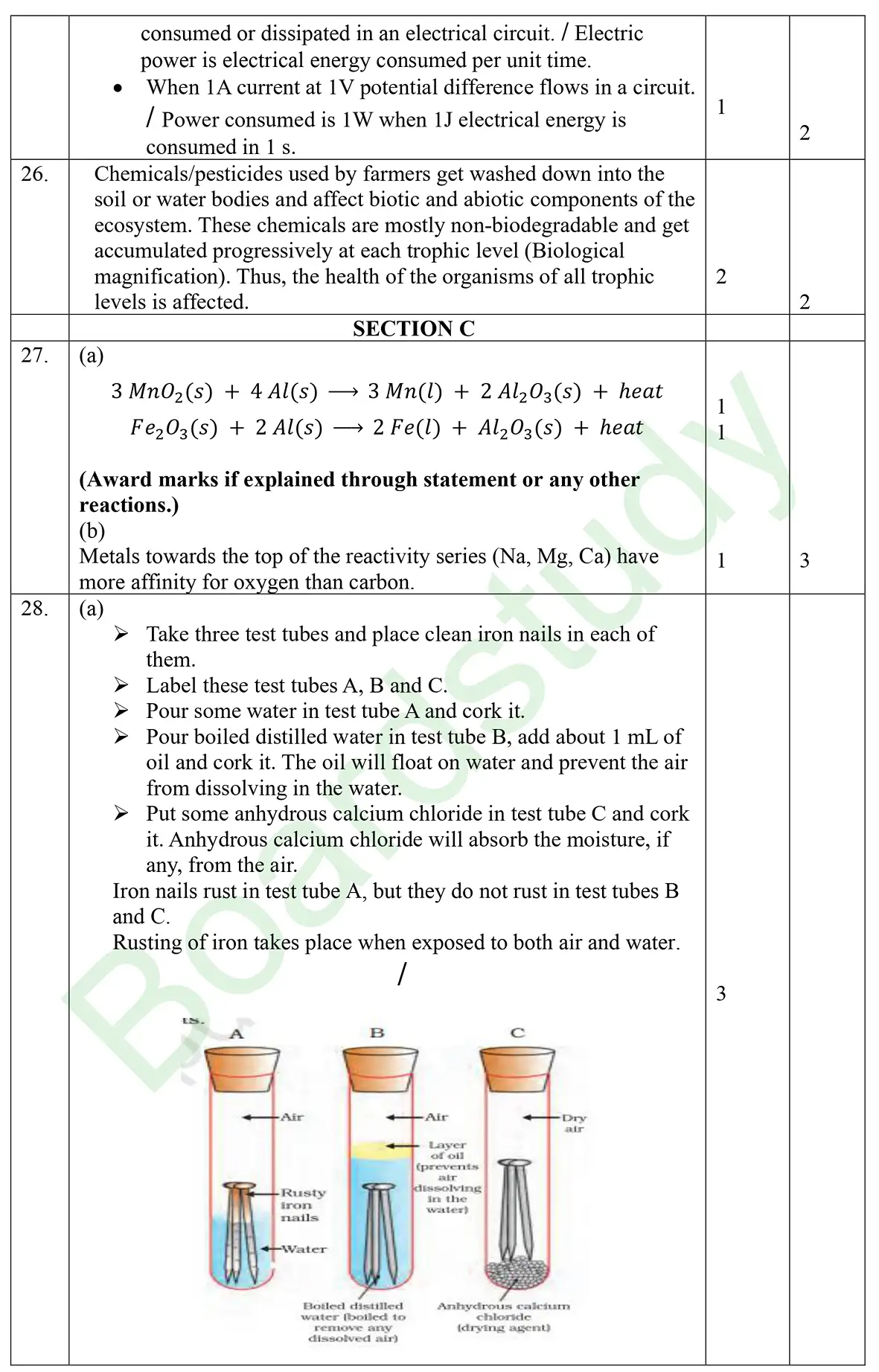
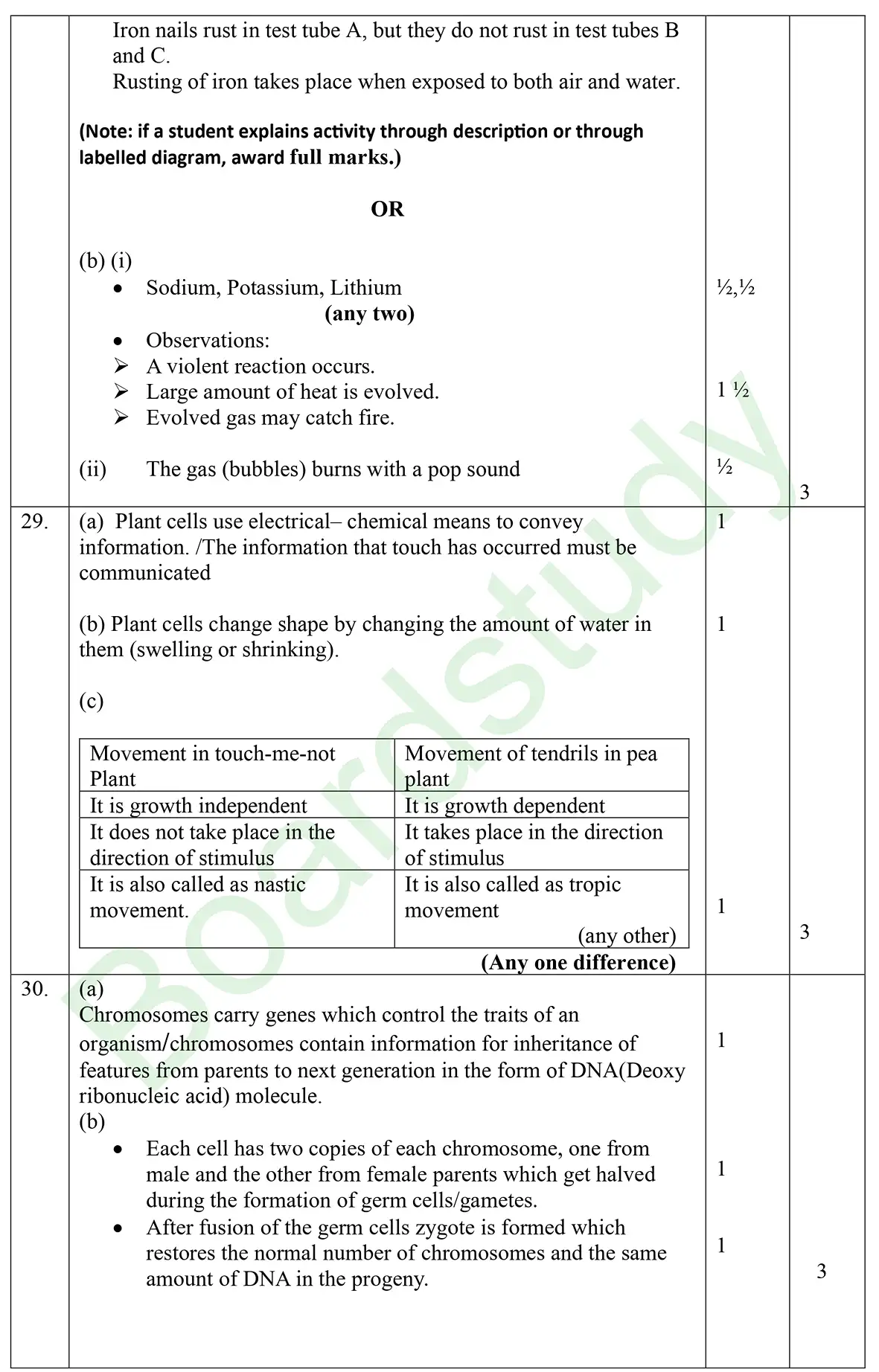
(a) Plant cells use electrical– chemical means to convey information. /The information that touch has occurred must be communicated
(b) Plant cells change shape by changing the amount of water in them (swelling or shrinking).
(c)
| Movement in touch-me-not Plant | Movement of tendrils in pea plant |
| It is growth independent | It is growth dependent |
| It does not take place in the direction of stimulus | It takes place in the direction of stimulus |
| It is also called as nastic movement. | It is also called as tropic movement |
Question :
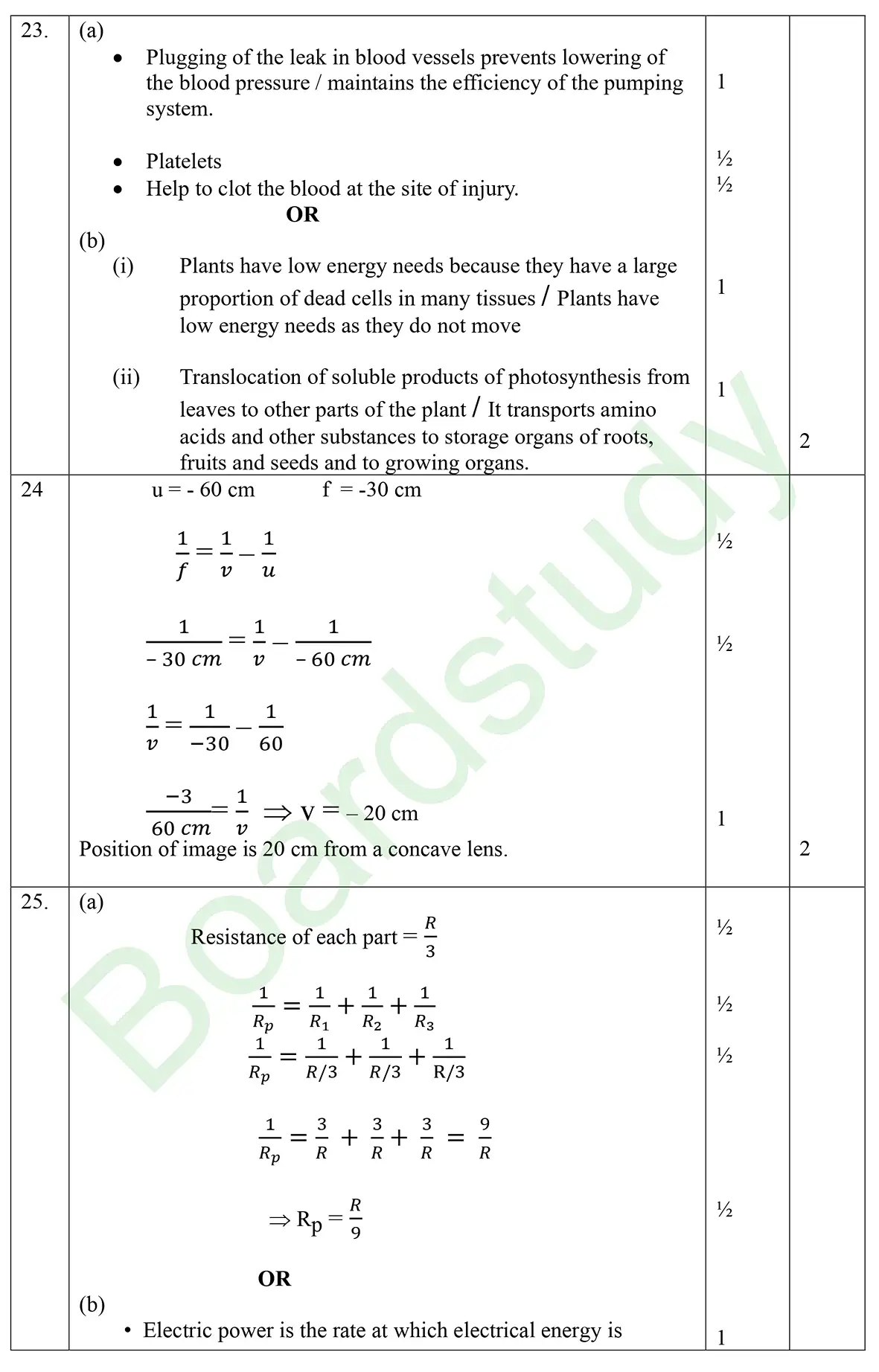
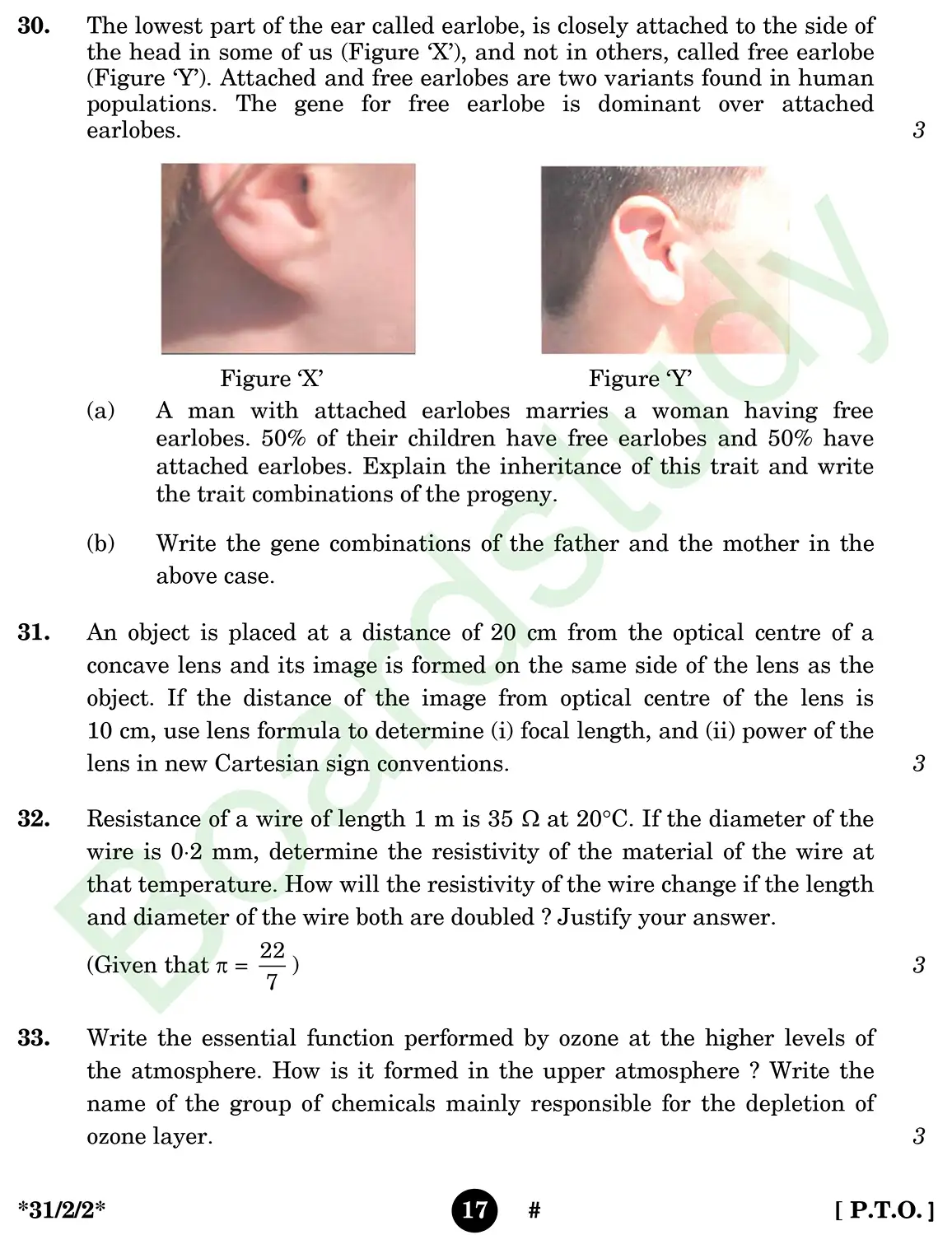
An object is placed at a distance of 20 cm from the optical centre of a concave lens and its image is formed on the same side of the lens as the object. If the distance of the image from optical centre of the lens is 10 cm, use lens formula to determine (i) focal length, and (ii) power of the lens in new Cartesian sign conventions.