
Here, Class 10 Math Chapter 9 Some Applications of Trigonometry Solutions are provided. Subject matter experts have created these solutions to help students in their board exam. They have created solutions in such a way that students can revise the entire solutions in very little time and can score good marks in the board exam. Every solution is provided in detail and in very simple language.
Class 10 Math Chapter 9 Some Applications of Trigonometry Solutions are very important for board exam. Solving these Some Applications of Trigonometry solutions will boost the confidence and students can score better in exam. Solutions are provided according to latest NCERT syllabus. Experts created these step-by-step solutions, which will definitely be helpful for students.
Some Applications of Trigonometry Solutions
Exercise 9.1
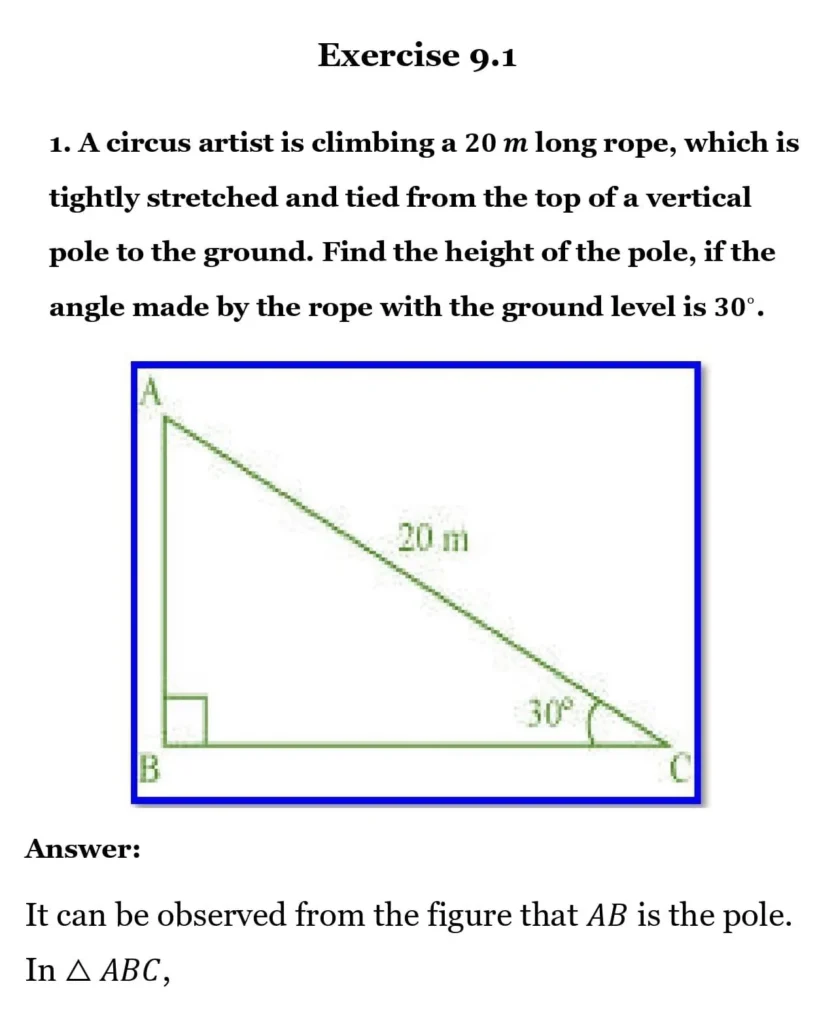
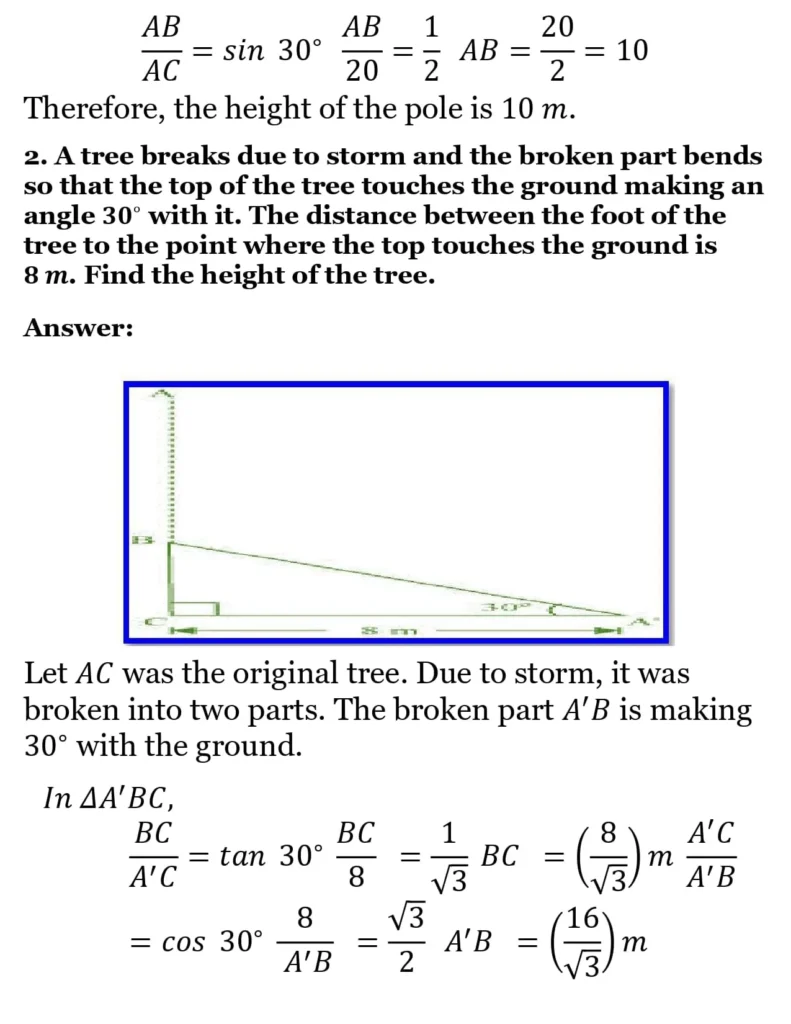
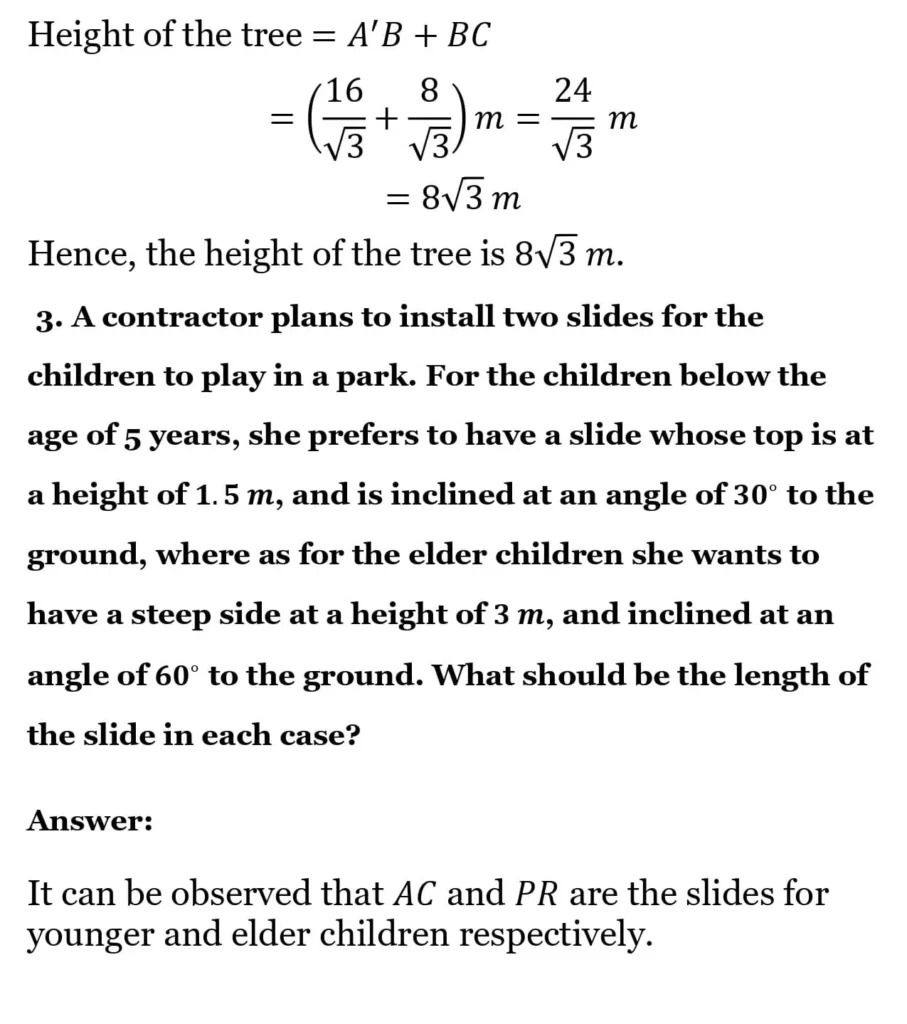
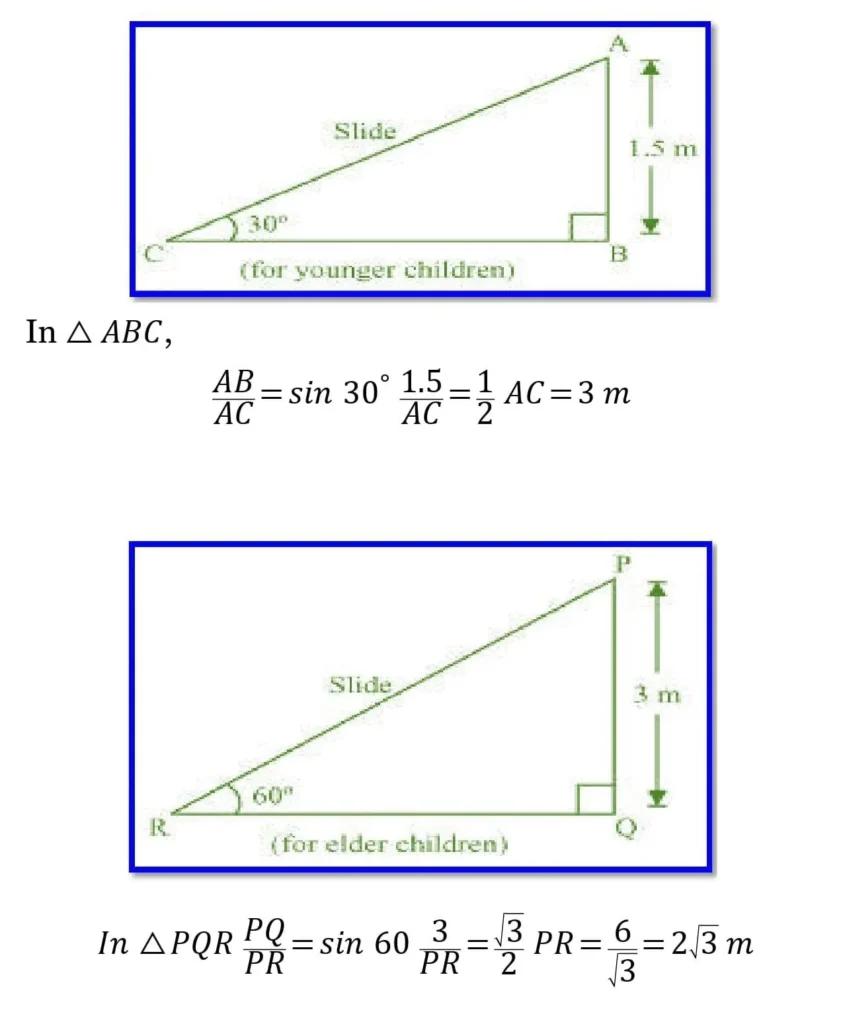
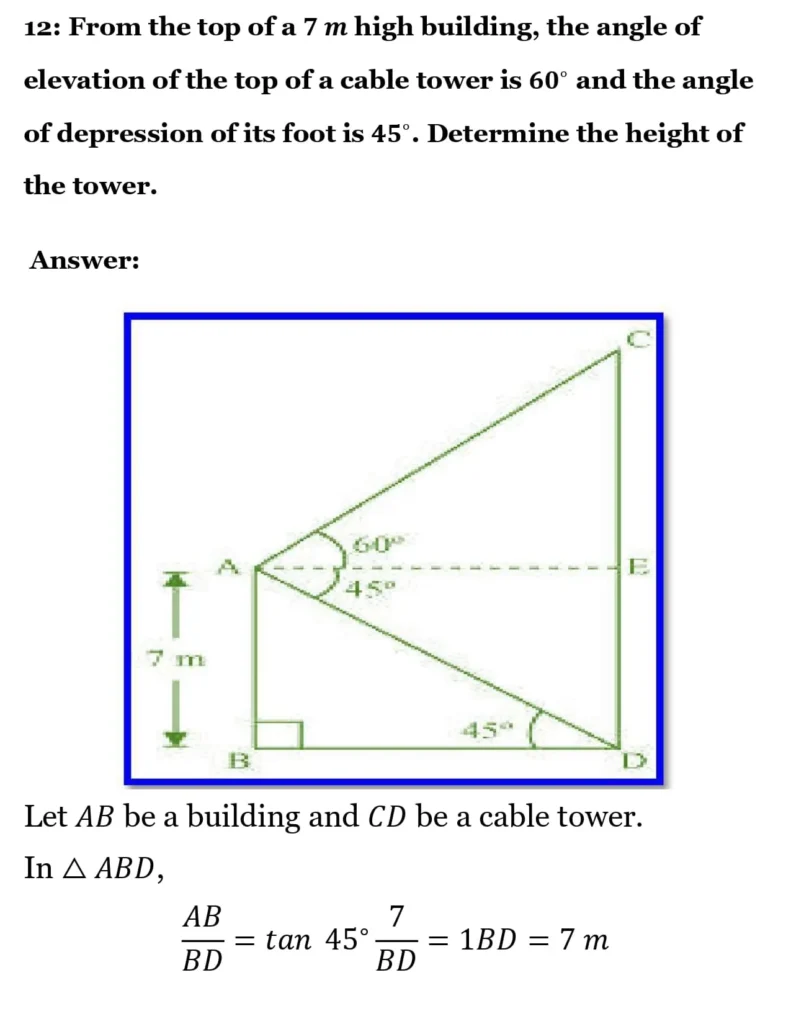
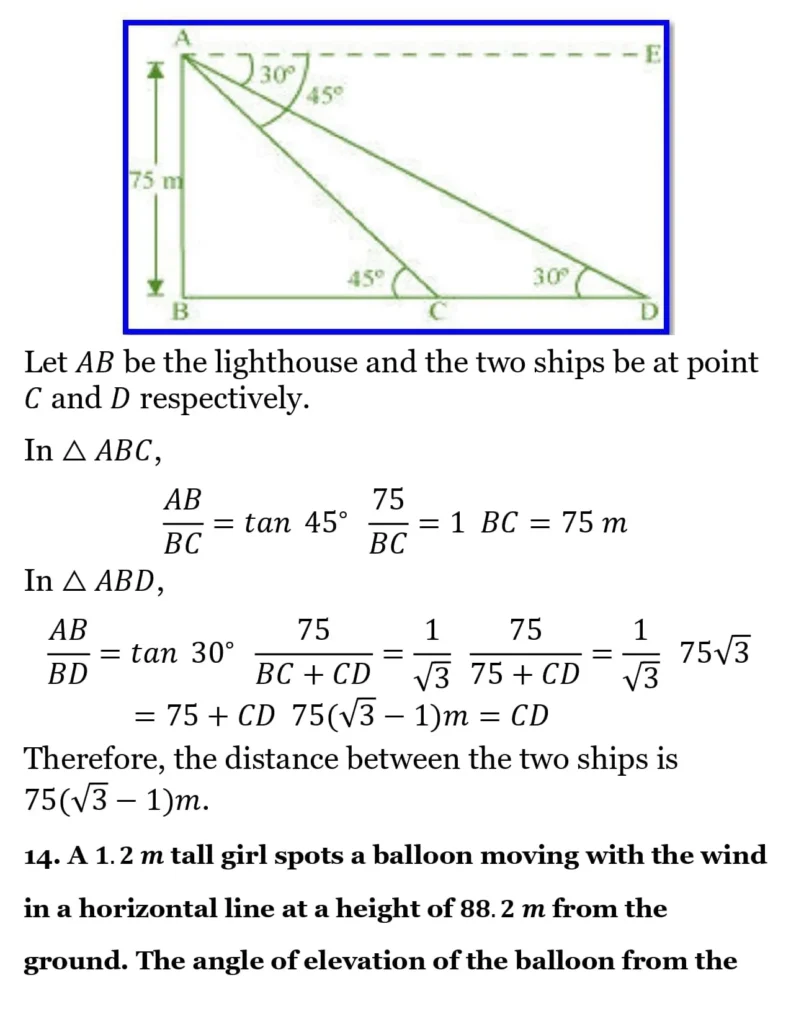
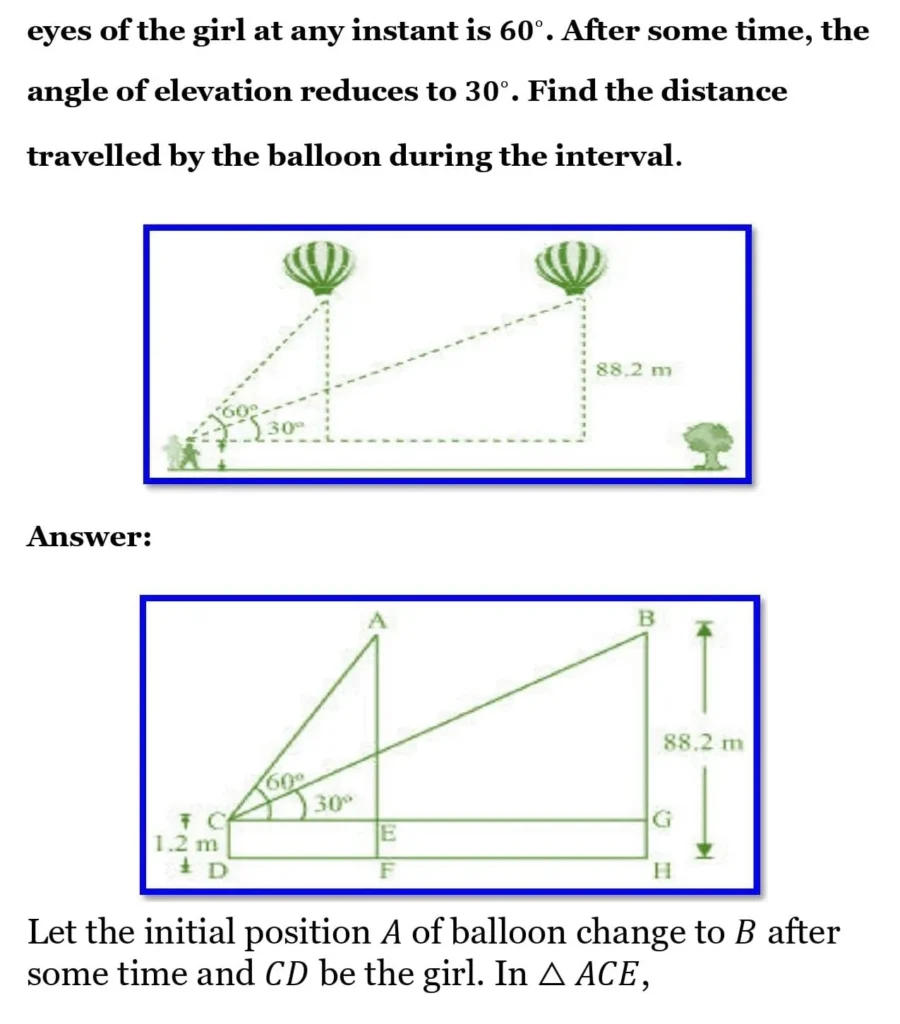
Chapter 8: Introduction to Trigonometry Solutions
Chapter 10: Circles Solutions
We have given solutions of all exercise of class 10 math chapter 9. These solutions will be helpful for students understanding core concept of Introduction to Trigonometry.
To understand the chapter thoroughly, it is essential to practice all the questions provided within it, as well as any additional questions. Solving previous years’ question papers also proves to be very helpful in exam preparation. You can also find other study material resources on our website.
Important Questions for NCERT Chapter 9: Some Applications of Trigonometry
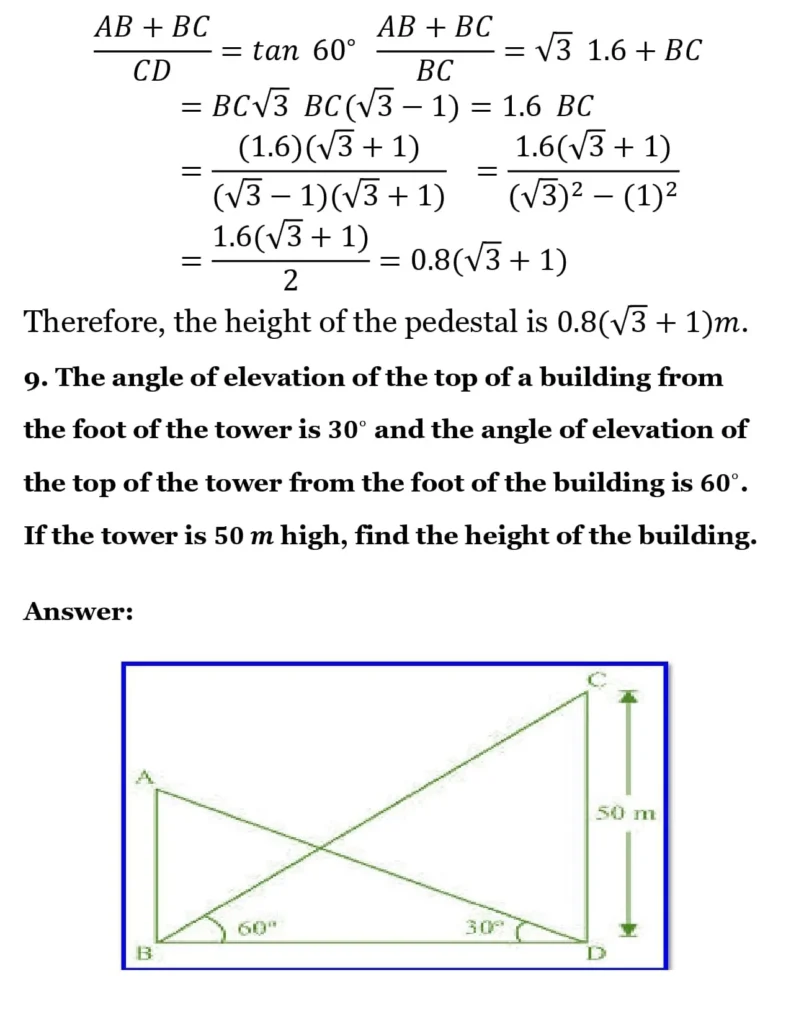
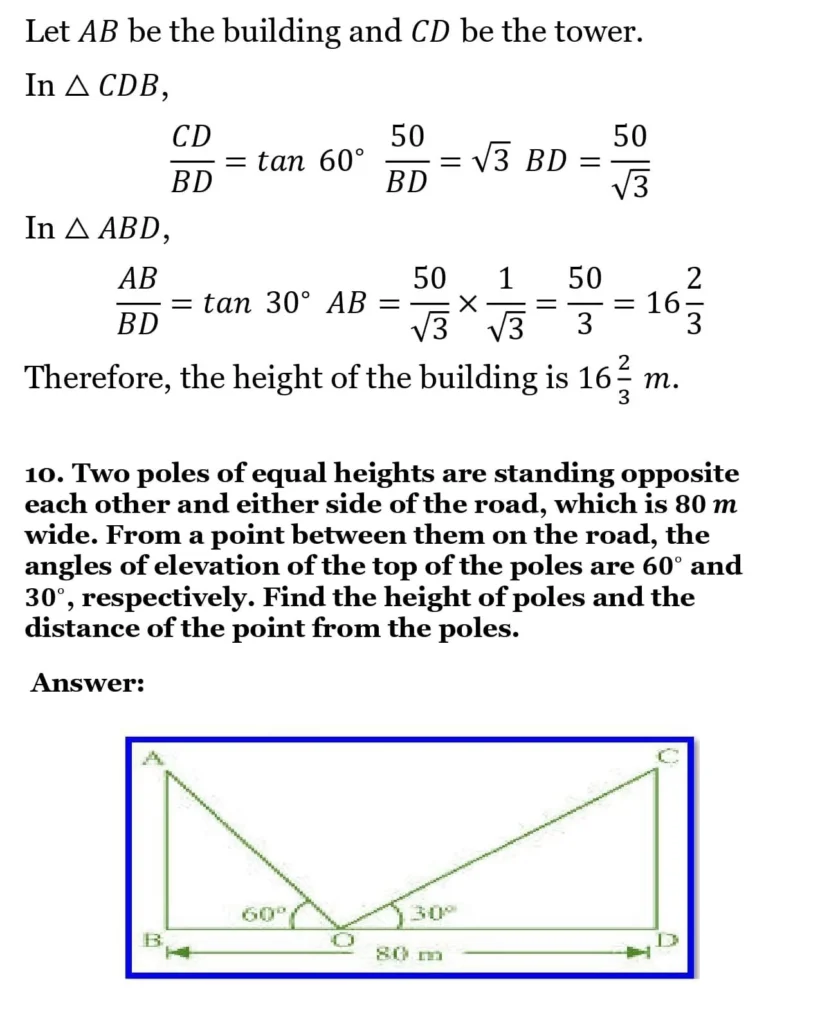
Question :The angle of elevation of the top of a building from the foot of the tower is 30° and the angle of elevation of the top of the tower from the foot of the building is 60°. If the tower is 50 m high, find the height of the building.
Answer :
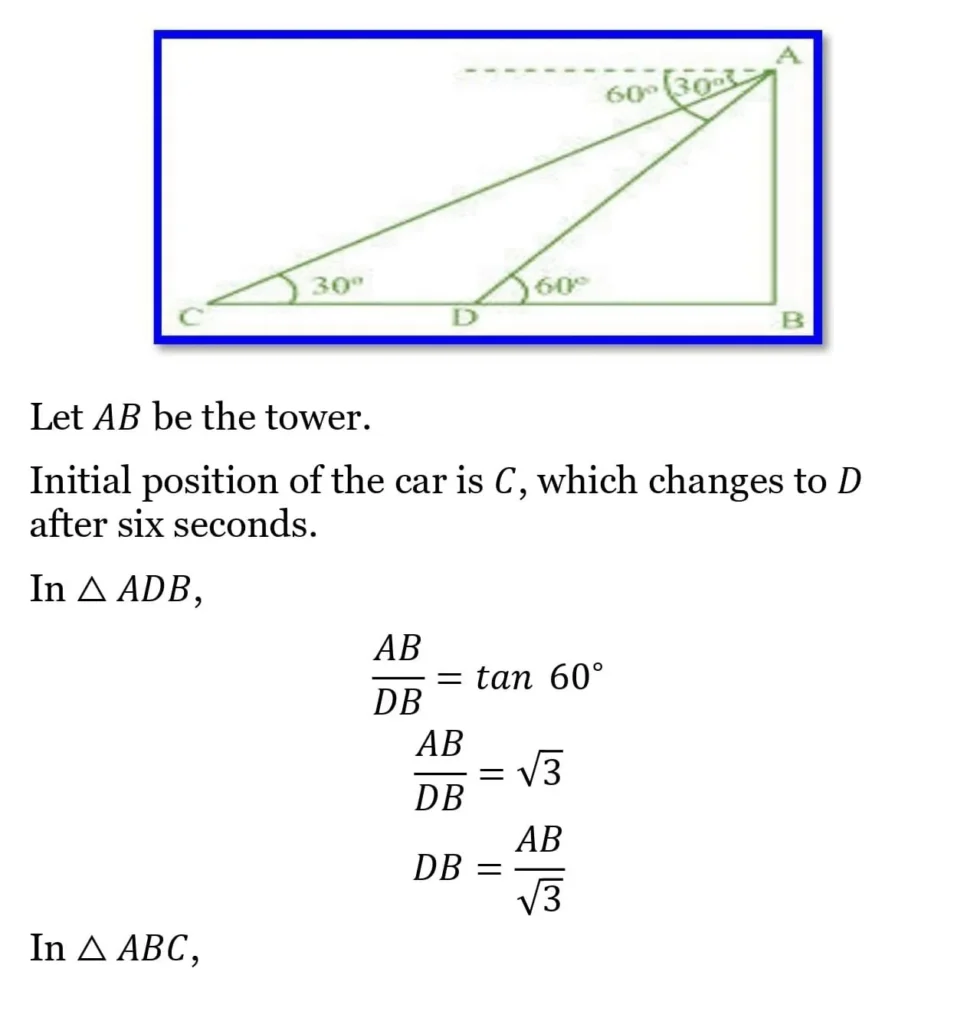
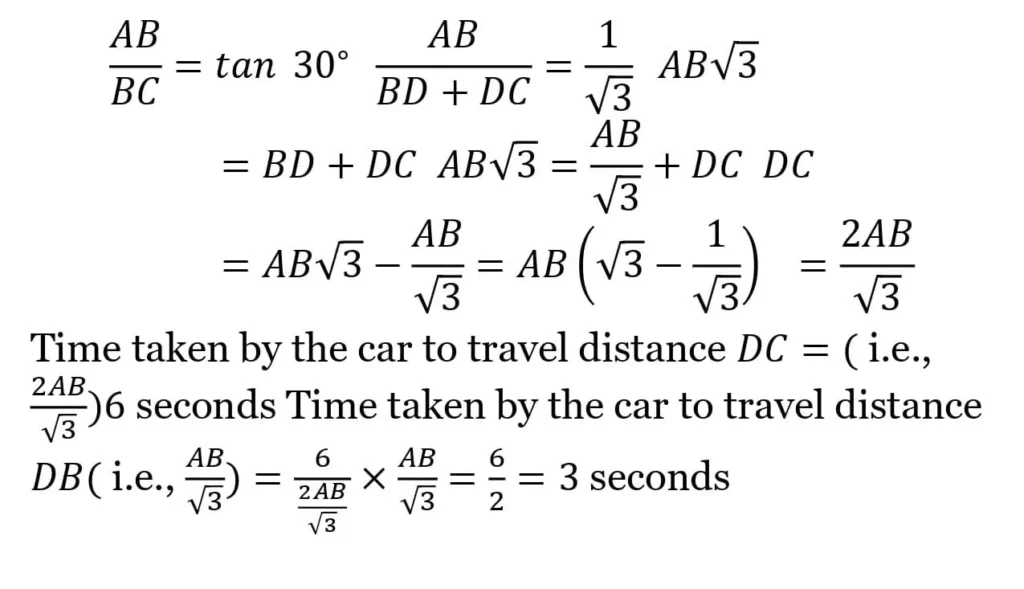
Question :A straight highway leads to the foot of a tower. A man standing at the top of the tower observes a car as an angle of depression of 30°, which is approaching the foot of the tower with a uniform speed. Six seconds later, the angle of depression of the car is found to be 60°. Find the time taken by the car to reach the foot of the tower from this point.
Answer :